Café Caron

A Michelin Plate-recognised address on Frans Halsstraat, Café Caron delivers classic French cooking at the €€ price point in Amsterdam's De Pijp neighbourhood.
Pearl is the En Primeur Club membership app — saves, bookings, and concierge access live there. Same editors, same standards.
- Address
- Frans Halsstraat 28, 1072 BS Amsterdam, Netherlands
- Phone
- +31 20 675 8668
- Website
- cafecaron.nl
- Directions
- Get directions
 Saves & bookings on Pearl
A French Bistro in De Pijp's Street-Level Register
De Pijp has long operated as Amsterdam's most neighbourhood-scaled quarter, a grid of narrow streets where independent restaurants compete on consistency rather than spectacle. Frans Halsstraat, which runs through the heart of the district, carries that character at every turn: small façades, moderate covers, a local clientele that returns weekly rather than booking once for a special occasion. Within that context, Café Caron occupies a position that French bistros have traditionally claimed in European cities, the honest middle register, where the cooking is technically grounded and the format asks nothing theatrical of the diner.
Amsterdam's recognised restaurant tier skews heavily toward creative and contemporary formats at the upper price points. Ciel Bleu (€€€€ · Creative), Flore (€€€€ · Contemporary), Spectrum (€€€€ · Creative), and Vinkeles (€€€€ · Creative) all operate at the €€€€ level with Michelin recognition and tasting-menu formats. Café Caron sits two price tiers below that bracket, in a category where the Michelin Plate recognition in both 2024 and 2025 signals commitment to cooking quality without the ceremony of a full-star establishment. That distinction matters for how you read the room: this is a place to eat rather than to perform the act of dining.
What the Menu Architecture Reveals
The classification of Classic French tells you something specific about how a kitchen is organised. Unlike the Modern Dutch or farm-to-table formats that define many of Amsterdam's €€€ and €€€€ addresses, De Kas at €€€, Bolenius at €€€€, Classic French cuisine commits to a body of inherited technique: stocks that take time, sauces built by reduction, proteins treated according to established method rather than improvised season-by-season. The menu structure at a restaurant operating in this tradition tends to follow the French three-course architecture that European bistros codified over decades: a starter that tests the kitchen's precision on something cold or lightly cooked, a main that demonstrates the depth of the sauce work, and a dessert drawn from the pastry repertoire.
At the €€ price point, that architecture functions as a filter. A kitchen that prices itself modestly and holds Michelin Plate recognition in consecutive years is signalling that it has found a way to deliver that technique without the premium sourcing costs that drive prices upward at starred addresses. The editing process, deciding which dishes to include and which to leave out, becomes the central creative act. What remains on the menu is there because the kitchen can execute it reliably, not because it photographs well or reads as innovative. That restraint is, in the Classic French tradition, a form of confidence.
At that volume of responses, a 4.6 aggregate is not the result of occasional extraordinary meals; it reflects a baseline of consistent delivery across a wide spread of visits and expectations.
Placing Café Caron in the Dutch French Bistro Set
The Classic French bistro format at the €€ tier has a small but stable peer group across the Netherlands. Bistro Madeleine, €€ · Classic French in Utrecht and Le Nord, €€ · Classic French in Bilthoven represent the same price-and-category positioning in other Dutch cities. What separates addresses within that comparable set is neighbourhood density and the frequency of the local dining market: Amsterdam's De Pijp generates more covers per week than smaller-city equivalents, which gives a kitchen more opportunity to sharpen its timing and reduce waste, and more pressure to perform without variation.
Within Amsterdam itself, Veneur represents another point of reference in the French-leaning category. The broader Dutch fine-dining circuit, which extends to addresses like De Librije in Zwolle, 't Nonnetje in Harderwijk, Aan de Poel in Amstelveen, Brut172 in Reijmerstok, De Bokkedoorns in Overveen, and De Groene Lantaarn in Staphorst, mostly operates at higher price tiers with different format expectations. The restaurant is not competing in that conversation; it is doing something more specific and, in its own terms, more demanding: sustaining a classic tradition at accessible prices with enough consistency to earn back Michelin recognition year on year.
Planning a Visit
Frans Halsstraat 28 sits in a walkable section of De Pijp, accessible from central Amsterdam in under twenty minutes on foot or a short tram ride. The neighbourhood's restaurant density means competition for covers is high and walk-in availability on weekday evenings is worth testing, though weekend sittings at recognised addresses in this part of the city tend to fill. The restaurant sits at the €€ price tier, which positions it as a practical choice for both midweek dining and casual weekend meals where the focus is on the food rather than occasion-marking. Hours run Monday through Thursday from 6 PM to 12 AM, Friday and Saturday from 6 PM to 1 AM, and Sunday from 12 to 2 PM and 6 PM to 12 AM; reservations are recommended. For a broader picture of where the restaurant sits in the city's full dining map, our Amsterdam restaurants guide covers the category from street level to starred tables.
The Short List
Comparable venues nearby, for context on price, style, and recognition.
| Venue | Cuisine | Price | Notes |
|---|---|---|---|
| Café CaronThis venue — the venue you are viewing | Frans Halsbuurt, Classic French Bistro | $$$ | Not listed |
| Watergang | Not listed | $$$ | Weteringbuurt, Modern French-European Tasting Menu |
| THE DUCHESS | Not listed | $$$$ | Spuistraat Zuid, Nouveau-Niçoise Brasserie |
| Tannay | Not listed | $$$ | Westelijke Eilanden, Classic French Burgundy |
| Beulings | Not listed | $$$$ | Leidsegracht Zuid, Modern French with Cantonese influences |
| Oud-Zuid | Cornelis Schuytbuurt, French Bistro | $$$ | Not listed |
Recognition history
Dated appearances from independent guides and award organizations, with the underlying list record or original source where available.
Michelin Plate
Michelin
Michelin Plate
Michelin
Continue exploring
More in Amsterdam
Restaurants in Amsterdam
Browse all →
Bars in Amsterdam
Browse all →
Hotels in Amsterdam
Browse all →
Wineries in Amsterdam
Browse all →
At a Glance
- Cozy
- Romantic
- Classic
- Intimate
- Date Night
- Business Dinner
- Open Kitchen
- Extensive Wine List
Current opening hours
- Monday
- 6 PM–12 AM
- Tuesday
- 6 PM–12 AM
- Wednesday
- 6 PM–12 AM
- Thursday
- 6 PM–12 AM
- Friday
- 6 PM–1 AM
- Saturday
- 6 PM–1 AM
- Sunday
- 12–2 PM, 6 PM–12 AM
Hours can change for holidays and private events. Last verified .
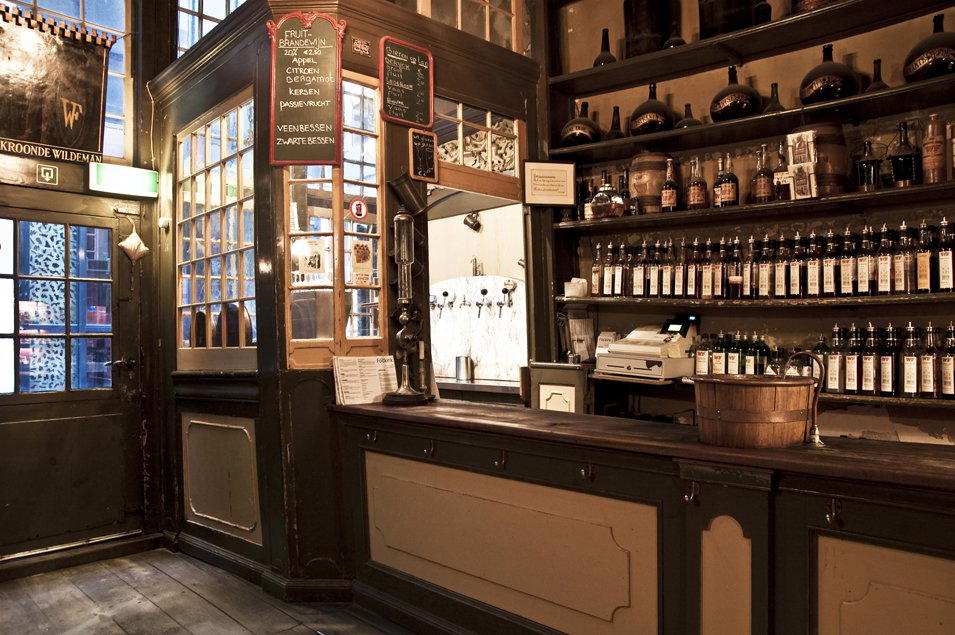
Cozy and relaxed French bistro atmosphere with warm welcome, wooden tables, and a romantic terrace.