C J's Cafe
A neighbourhood fixture on West Pico Boulevard, C J's Cafe sits in a stretch of Los Angeles where unpretentious cooking and community loyalty matter more than press coverage. The cafe operates in the tradition of the American short-order counter, where regulars return not for novelty but for consistency. For those eating their way through the city's less-chronicled dining corridors, it represents a different kind of value than the Michelin-tracked rooms further west.
Pearl is the En Primeur Club membership app — saves, bookings, and concierge access live there. Same editors, same standards.
- Address
- 5501 W Pico Blvd, Los Angeles, CA 90019
- Phone
- +1 323 936 3216
- Website
- cjscafe.shop
- Directions
- Get directions
 Saves & bookings on Pearl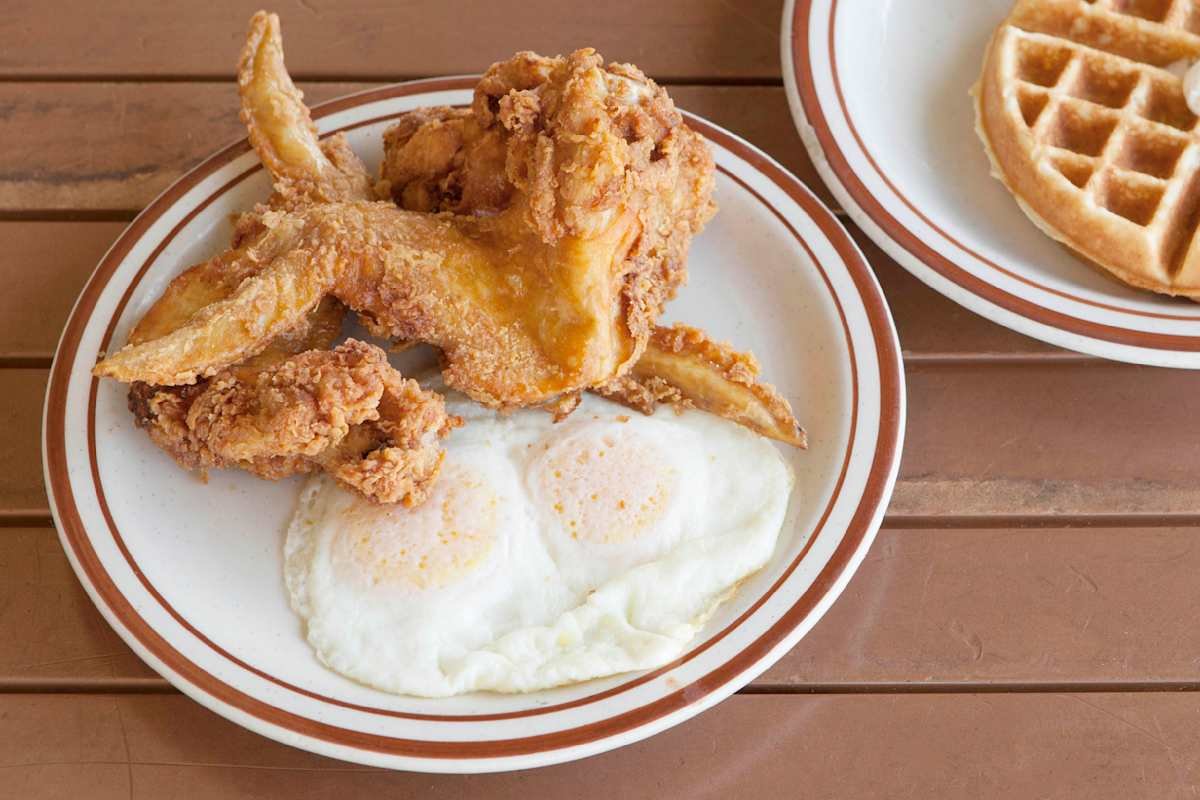
West Pico and the Tradition of the Neighbourhood Cafe
C J's Cafe is a casual Southern Soul Food Breakfast restaurant in Los Angeles, on West Pico Boulevard at 5501 W Pico Blvd. What that coverage consistently underserves is the parallel city: the corridors of Mid-City and South LA where cafes serve their blocks with a directness that no reservation system or press release will ever capture. West Pico Boulevard is one of those corridors, and C J's Cafe, at 5501 W Pico Blvd, belongs to it.
The physical approach to a place like this tells you something before you sit down. On a stretch that mixes auto shops, beauty supply stores, and older storefronts, a neighbourhood cafe signals its priorities through what it doesn't have: a design-forward exterior, a curated social media presence, a host stand. What you find instead is the kind of room where the layout is dictated by function rather than atmosphere, and where the customer base is drawn from the surrounding blocks rather than from across the city. That self-containment is not a limitation. It is the defining characteristic of a particular American dining tradition.
Ingredient Sourcing and the Short-Order Ethic
The sourcing conversation in American dining has been largely colonised by fine dining. Operations like Single Thread Farm in Healdsburg or Smyth in Chicago have built entire identities around direct producer relationships and documented supply chains. But the neighbourhood cafe operates under a different sourcing logic, one that is older and, in its own way, equally coherent: proximity, reliability, and price discipline that allows the cafe to remain accessible to the community it actually serves.
In the Mid-City corridor, that means working with the distributors and markets that service this part of Los Angeles rather than the specialty purveyors that supply kitchens to the west. The trade-off is legible and honest. You are not getting single-origin grains or heritage-breed proteins with provenance documents. You are getting food prepared and priced for people who eat here regularly, not occasionally. That distinction matters when thinking about what a cafe like this is actually for. The sourcing is community-scaled, which is a category of its own.
Compare this to the sourcing models at operations like Addison in San Diego or Frasca Food and Wine in Boulder, where ingredient sourcing is both a culinary commitment and a marketing signal. At C J's, sourcing is invisible in the way that infrastructure is invisible: you notice it only when something goes wrong. The aim is consistency, not narration.
Where C J's Sits in the Los Angeles Dining Spread
Los Angeles has developed, over the past decade, among the more genuinely plural dining cultures in the United States. At the high end, rooms like Providence (contemporary seafood, Michelin-starred) and Kato (New Taiwanese, $$$$) represent the city's claim on serious fine dining. Tasting-menu formats have proliferated, from the molecularly precise program at Somni to the Japanese kaiseki discipline at Hayato. Meanwhile, Osteria Mozza holds a middle register: ingredient-driven Italian with broad appeal and sustained critical attention.
C J's operates in a different register entirely, one that rarely earns editorial column inches precisely because it is not trying to. Neighbourhood cafes at this price point compete on familiarity and reliability rather than on novelty or ambition. The regulars who sustain a place like this are not comparison-shopping against the kaiseki counter at Hayato or the tasting menu at Le Bernardin in New York. They are looking for a consistent breakfast or lunch at a price that makes sense for a workday. That is a meaningful category of restaurant, and Los Angeles has fewer of them on the Westside than it did twenty years ago, as rents have pushed affordable operators eastward or out of the city altogether.
For context on how the neighbourhood-cafe model survives in expensive American cities, it is worth noting what the alternative looks like. In New Orleans, places like Emeril's anchor a different kind of community relationship, one built on the chef's public profile. The neighbourhood cafe model bypasses that entirely. Its authority is purely local and purely accumulated through repetition.
The West Pico Corridor as a Dining Context
West Pico Boulevard through this section of Los Angeles is a working commercial street, not a dining destination in the way that Melrose or Abbot Kinney function. That means foot traffic is largely residential and employment-based rather than driven by out-of-neighbourhood dining tourism. The restaurants and cafes that survive here do so because they are genuinely woven into the daily rhythms of the surrounding community, not because they have attracted a broader audience. This is a harder business model in some respects and a more stable one in others: the customer base is loyal because the cafe is functionally necessary, not because it is fashionable.
For a broader orientation to eating across the city, our full Los Angeles restaurants guide maps the dining culture across neighbourhoods and price tiers, from the kaiseki rooms of the Westside to the taco stands of East LA. C J's sits at one end of that spectrum, in the category that city guides most often skip and that locals most reliably depend on.
It is also worth placing this in a national frame. The kind of sourcing and service model that C J's represents has analogs in every American city: the breakfast counter in a working neighbourhood, the short-order cafe that has outlasted three waves of gentrification by remaining useful rather than interesting. Operations like Lazy Bear in San Francisco or Atomix in New York City represent the opposite end of the intentionality spectrum, where every sourcing decision is documented and every dish carries a provenance narrative. Neither model is inherently superior. They serve different communities with different needs at different price points.
Planning a Visit
C J's Cafe is located at 5501 W Pico Blvd, Los Angeles, CA 90019, in the Mid-City area. It is accessible by car along Pico Boulevard and sits close enough to Mid-City and Pico-Robertson to draw from both communities. Walk-in dining is the expected model.
Fast Comparison
Comparable venues nearby, for context on price, style, and recognition.
| Venue | Cuisine | Price | Notes |
|---|---|---|---|
| C J's CafeThis venue — the venue you are viewing | Southern Soul Food Breakfast | $$ | Not listed |
| Leora | Health-Conscious All-Day Cafe | $$ | Golden Triangle |
| Cole's | Classic French Dip Sandwiches | $$ | Old Bank District |
| Tart | Cozy American Comfort | $$ | Beverly Grove |
| Verve Coffee Roasters | Specialty Coffee Roasters & Cafe | $$ | Beverly Grove |
| Factor's Famous Deli | Classic Jewish Deli | $$ | South Robertson |
Continue exploring
More in Los Angeles
Restaurants in Los Angeles
Browse all →
Bars in Los Angeles
Browse all →
Hotels in Los Angeles
Browse all →
Wineries in Los Angeles
Browse all →
At a Glance
- Cozy
- Brunch
- Casual Hangout
Current opening hours
- Monday
- 6:30 AM–5 PM
- Tuesday
- 6:30 AM–5 PM
- Wednesday
- 6:30 AM–5 PM
- Thursday
- 6:30 AM–5 PM
- Friday
- 6:30 AM–5 PM
- Saturday
- 6:30 AM–5 PM
- Sunday
- 7 AM–5 PM
Hours can change for holidays and private events. Last verified .
Casual breakfast cafe atmosphere with fresh juices and hearty soul food plates.