Buckeye Roadhouse
A Mill Valley institution on Shoreline Highway, Buckeye Roadhouse has anchored the Marin dining scene for decades with its American roadhouse cooking and wood-fired approach. The setting sits at the edge of the highway with a distinctly California-casual register, drawing both locals from the surrounding hills and visitors making the crossing from San Francisco. For those mapping the Marin County restaurant circuit, it belongs on the list alongside Boo Koo and Playa.
 Discover on Pearl
Pearl is the En Primeur Club membership app — saves, bookings, and concierge access live there. Same editors, same standards.
- Address
- 15 Shoreline Hwy, Mill Valley, CA 94941
- Phone
- +14153312600
- Website
- buckeyeroadhouse.com
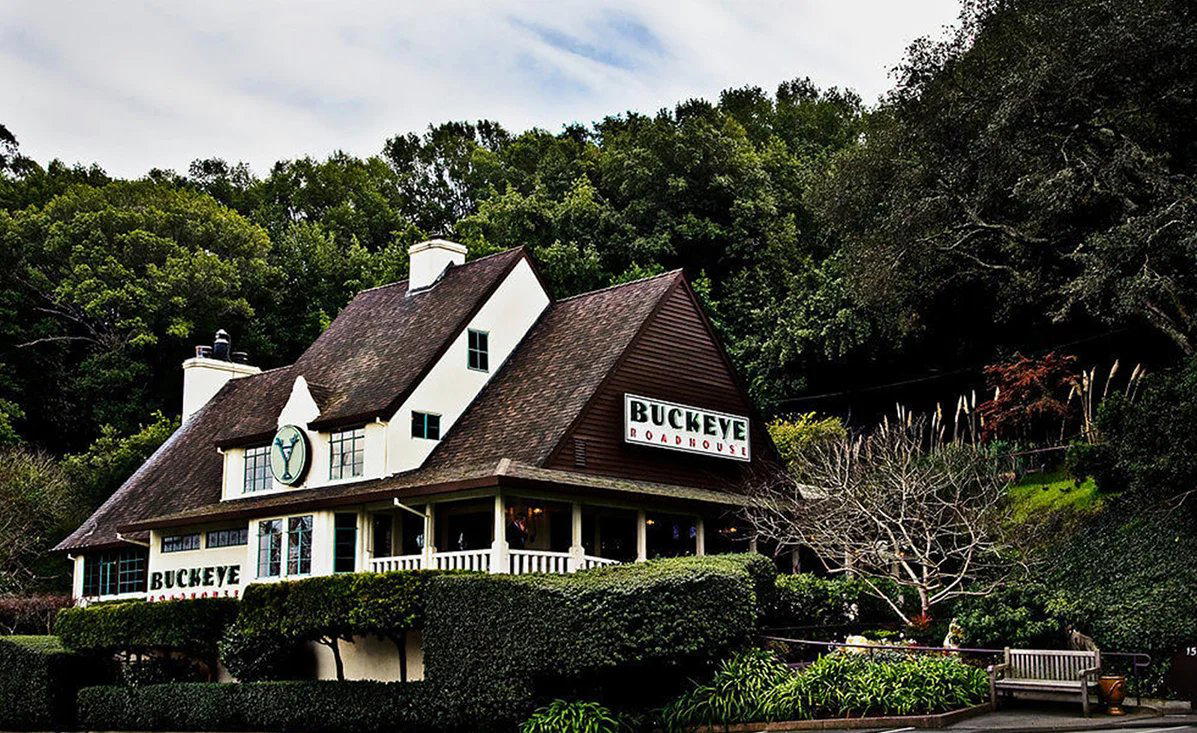
Where the Highway Meets the Hills
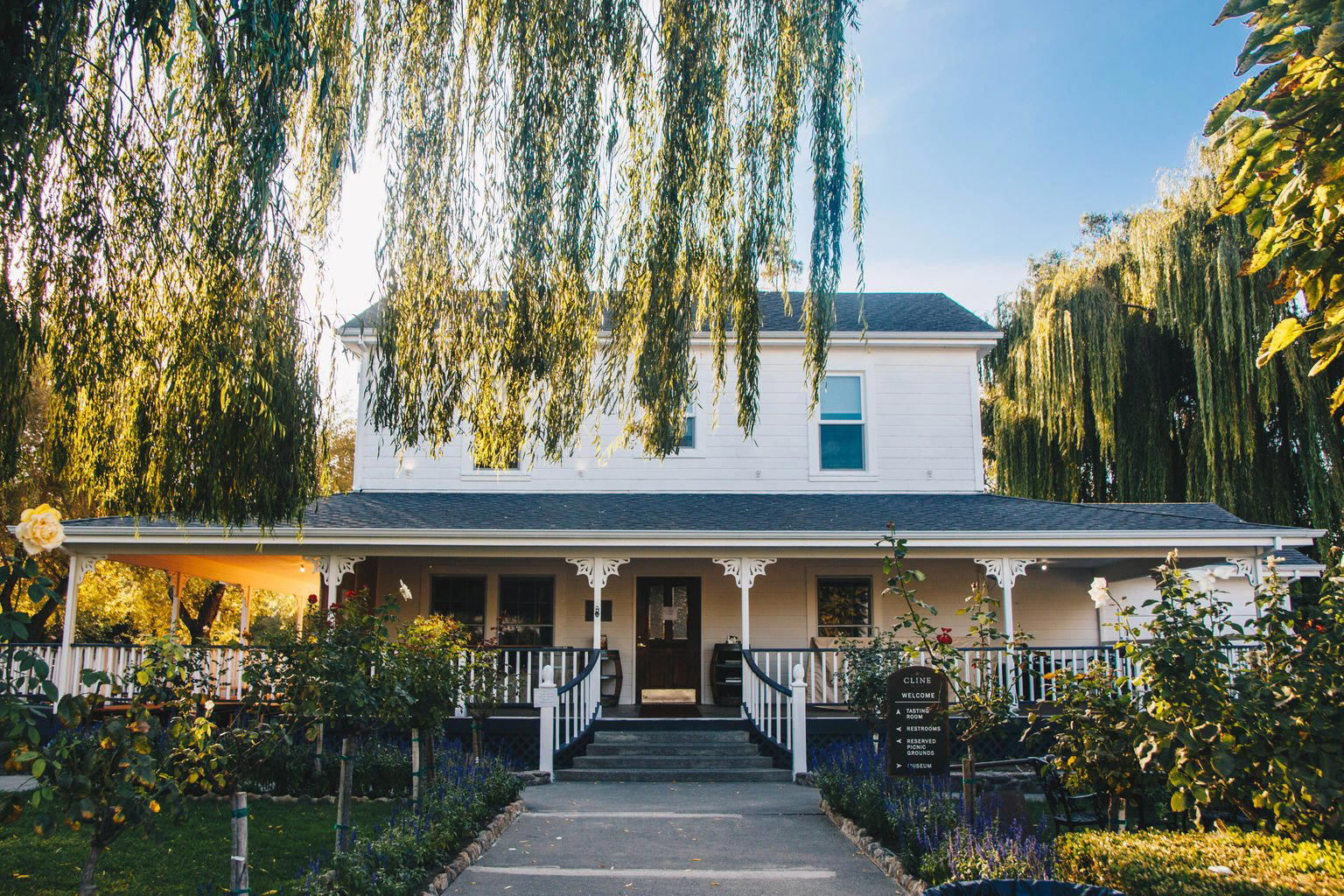
The approach to Buckeye Roadhouse sets expectations clearly. Shoreline Highway curves along the edge of the Richardson Bay wetlands before Mill Valley proper begins, and the restaurant sits at that threshold: a low-slung, wood-framed building that reads as deliberately unhurried. This is not the refined California-cuisine register of wine country, nor the urban density of the city across the Golden Gate. It occupies a category that the Bay Area has always maintained alongside its tasting-menu flagships, the well-executed American roadhouse, where the cooking is serious but the frame is relaxed.
Marin County's dining identity has long split between two modes. There is the farm-to-table earnestness that connects the county's ranching heritage to its restaurant tables, and there is the comfort-food anchor, the kind of place that a county of outdoor-oriented, relatively affluent residents returns to across seasons and decades. Buckeye operates in the second register, and has done so long enough that it functions more as a local institution than a dining destination in the destination-travel sense. That longevity is itself a signal: in a market as competitive and trend-sensitive as the San Francisco Bay Area, restaurants that persist across decades do so through consistency, not novelty.
The American Roadhouse Tradition in a California Context
The roadhouse as a dining format carries specific cultural weight in American food history. It emerged at the intersection of highway culture and regional cooking, places that existed outside city centers, served generous portions of regional standards, and built identity around the fireplace and the grill rather than the tasting counter. California absorbed that tradition and layered onto it the state's own obsessions: local sourcing, wood-fire cooking, and the kind of produce quality that makes simple preparations viable as the main event.
That context matters for understanding where Buckeye sits relative to the broader Bay Area restaurant field. Operations like Lazy Bear in San Francisco represent the progressive-American pole, where the format is theatrical and the price point reaches deep into the premium bracket. At the opposite end, casual neighborhood spots handle volume without ambition. Buckeye occupies the middle ground, a category of American cooking that takes its craft seriously without requiring the guest to take the experience ceremonially. The same positioning appears nationally at places like Emeril's in New Orleans, where American regional cooking is given a professional kitchen and a comfortable room without the formality of fine-dining service codes.
Marin as a Dining Region
Understanding Buckeye requires understanding Mill Valley's position in the Bay Area food geography. The town sits roughly twelve miles north of San Francisco, accessible via the Golden Gate Bridge, and functions as an affluent residential satellite with a dining scene that punches above its population size. The county's proximity to premium agricultural land, Marin Sun Farms, Cowgirl Creamery, and Point Reyes Farmstead are all nearby producers, gives restaurants here access to ingredients that would drive significant price premiums in urban markets.
That agricultural proximity has shaped the identity of Marin dining more broadly. The county does not have the concentration of Michelin-starred counters found in San Francisco proper, nor the destination-winery gravity of Sonoma and Napa, where venues like The French Laundry or Single Thread Farm in Healdsburg anchor tourism around the table. Marin's restaurant culture is more residential in character, venues that serve the community first and visitors secondarily. Buckeye fits that pattern precisely.
Within Mill Valley specifically, the restaurant field includes Boo Koo and Playa as peers in the local dining conversation, each representing different approaches to the town's appetite for cooking that feels grounded rather than performative.
American Comfort Cooking as Cultural Artifact
The broader American comfort-cooking tradition that Buckeye represents has proven more durable than many predicted when California's fine-dining boom peaked in the 1990s and early 2000s. Venues oriented around approachable, wood-fired American cooking have not ceded ground to the tasting-menu format in the way critics once anticipated. The persistence of this category reflects something real about how Americans actually eat when they are not eating ceremonially.
Nationally, the premium end of American cooking has diversified considerably. Smyth in Chicago, Providence in Los Angeles, and Addison in San Diego each represent the more formal expression of American fine dining, while Blue Hill at Stone Barns in Tarrytown has made the farm-as-restaurant the organizing concept. Further afield, The Inn at Little Washington, Frasca Food and Wine in Boulder, and The Wolf's Tailor in Denver show how American dining continues to evolve across regions. International reference points like Le Bernardin in New York City, ITAMAE in Miami, Atomix in New York City, and Atelier Moessmer Norbert Niederkofler in Brunico illustrate the spectrum against which American regional cooking defines itself. Buckeye's register is deliberately removed from all of that, it is not competing with those venues and does not need to.
Planning a Visit
Buckeye Roadhouse is located at 15 Shoreline Highway in Mill Valley, positioned at the southern approach to town and most easily reached by car from San Francisco via the Golden Gate Bridge, a journey that takes approximately twenty to thirty minutes under normal traffic conditions. The Shoreline Highway address places it slightly apart from Mill Valley's downtown pedestrian core, which makes it more natural as a destination than a walk-in. Visitors arriving from the city who plan to continue north into Marin's hiking trails or the coast road find it a logical first or last stop. Current hours are Mon: 4-8:30 PM; Tue: 4-8:30 PM; Wed: 4-8:30 PM; Thu: 4-8:30 PM; Fri: 4-9 PM; Sat: 12-9:30 PM; Sun: 11 AM-8:30 PM. Reservations are recommended.
Price Lens
Comparable venues nearby, for context on price, style, and recognition.
| Venue | Cuisine | Price | Awards |
|---|---|---|---|
| Buckeye RoadhouseThis venue — the venue you are viewing | |||
| Le Bernardin | French, Seafood | $$$$ | Michelin 3 Star |
| Lazy Bear | Progressive American, Contemporary | $$$$ | Michelin 2 Star |
| Atomix | Modern Korean, Korean | $$$$ | Michelin 2 Star |
| Per Se | French, Contemporary | $$$$ | Michelin 3 Star |
| Masa | Sushi, Japanese | $$$$ | Michelin 3 Star |
Continue exploring
More in Mill Valley
Restaurants in Mill Valley
Browse all →
Bars in Mill Valley
Browse all →
Hotels in Mill Valley
Browse all →

At a Glance
- Classic
- Cozy
- Rustic
- Family
- Group Dining
- Special Occasion
- Historic Building
- Extensive Wine List
- Local Sourcing
Cozy wood-paneled rooms with red booths, old beams, and warm lighting creating a classic, inviting atmosphere.