Brett


On Great Western Road, Brett has evolved from a natural wine bar into one of Glasgow's most considered neighbourhood restaurants, earning a Michelin Plate in 2024. Around 15 fire-cooked dishes draw from Scotland's larder with real technical ambition, while counter seating, raw-linen napkins, and an infectious kitchen energy keep things grounded in the neighbourhood. The two-course lunch at £32 makes the cooking accessible; three courses with drinks can comfortably reach £100.
Pearl is the En Primeur Club membership app — saves, bookings, and concierge access live there. Same editors, same standards.
- Address
- 321 Great Western Rd, Glasgow G4 9HR, United Kingdom
- Phone
- +44 141 406 0284
- Website
- brettrestaurant.co.uk
- Directions
- Get directions
 Saves & bookings on Pearl
A Counter on Great Western Road
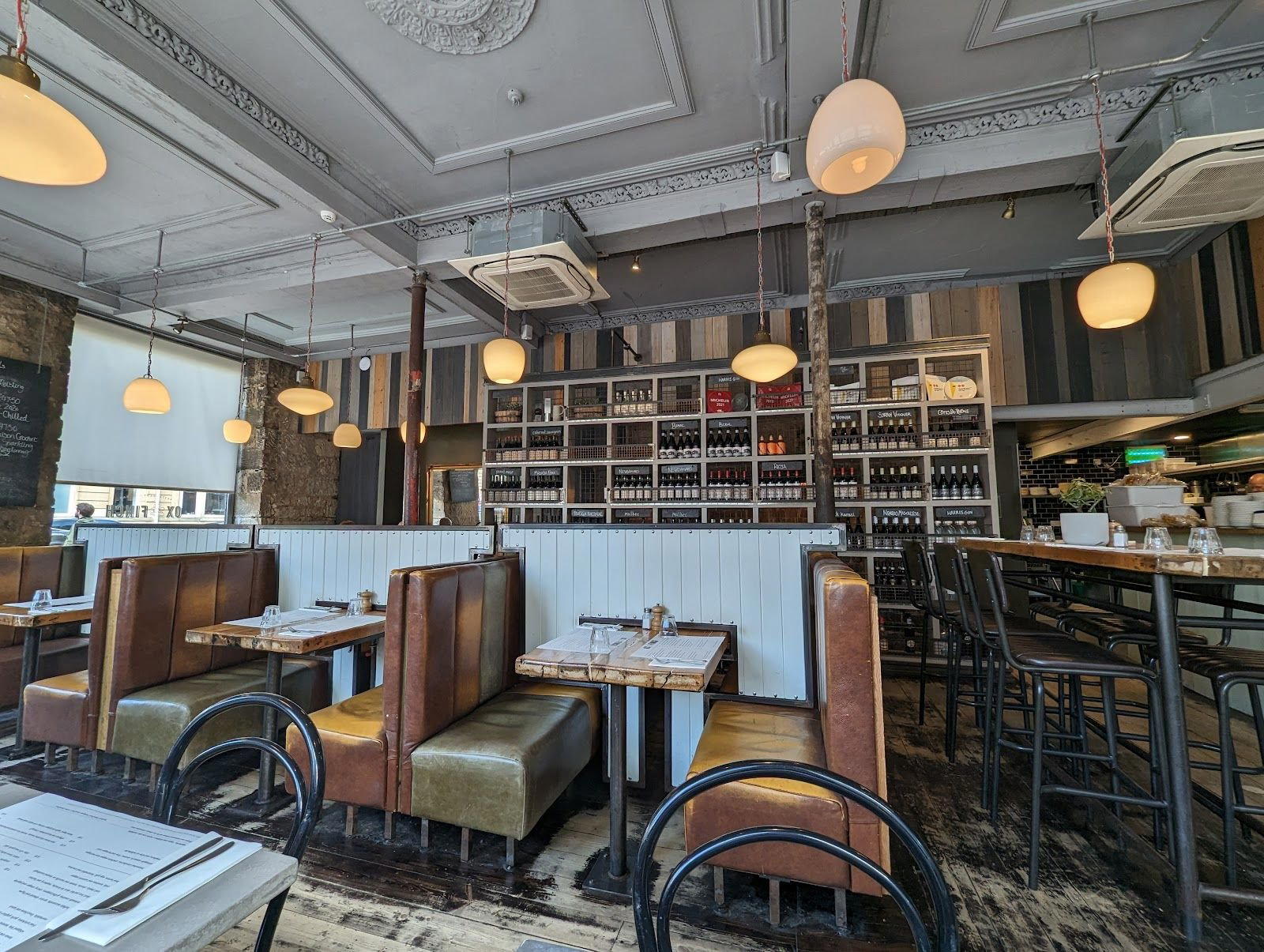
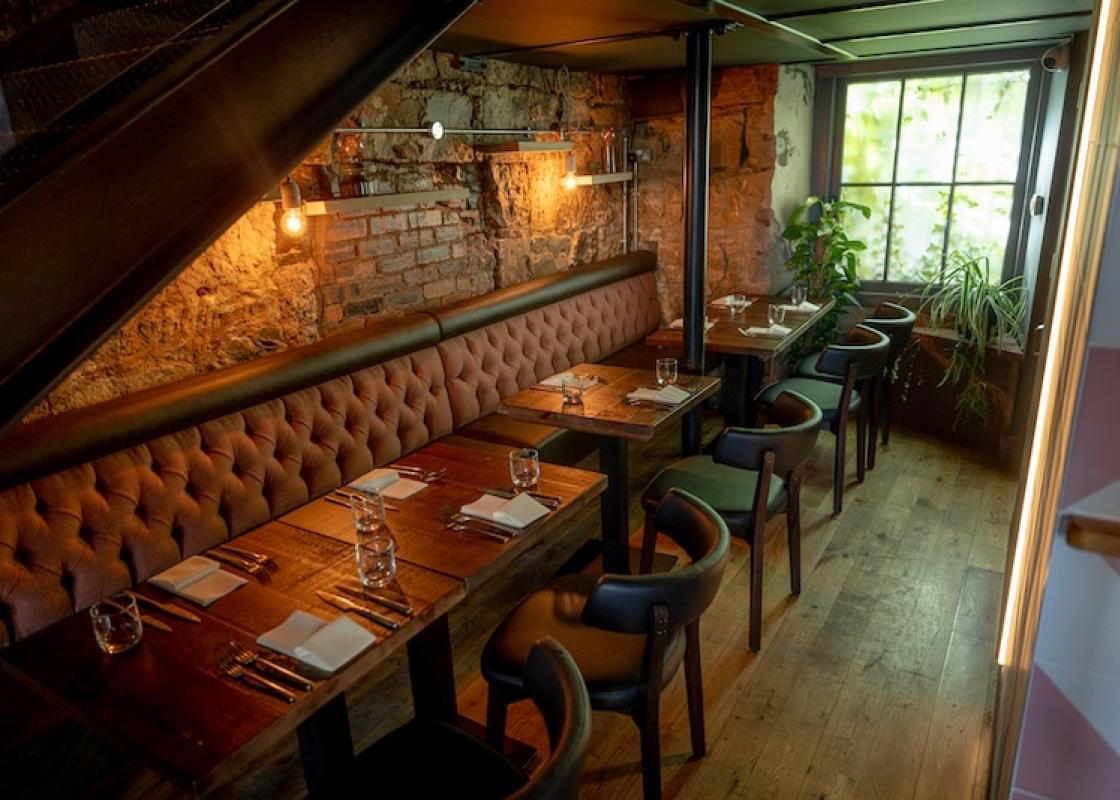
Great Western Road has a particular character in Glasgow's dining geography: long enough to absorb several distinct neighbourhood identities, but with a stretch around the G4 postcode that has quietly accumulated some of the city's most interesting restaurants. Brett sits at 321 Great Western Road with a compact terrace facing the street, a detail that matters in Glasgow, where a few tables on the pavement on a clear afternoon signals something more casual and confident than the white-tablecloth register. The building's exposed stonework does most of the decorative work inside; monochrome surfaces and raw-linen napkins do the rest. It is an unfussy room that communicates intent clearly: the cooking is the event, not the setting.
The dining room's defining feature is a large counter wrapped around the open kitchen, where the grills are in constant use and the chefs in plain view. Counter seating in a room this size creates an intimacy that is rare in neighbourhood restaurants, and the energy that crosses from kitchen to diner — reviewers have specifically noted the enthusiasm of the chefs as something diners appreciate — is part of what distinguishes Brett from the more composed, hushed register of Glasgow's higher-priced rooms like Unalome by Graeme Cheevers or Cail Bruich, under the same ownership.
The Fire Kitchen and Scotland's Larder
The dominant force in Brett's kitchen is fire. Cooking over open grills is not decorative here; it defines the texture and temperature profile of much of the menu. Around 15 dishes at any given service showcase what the kitchen calls the breadth of Scotland's larder, which in practice means Orkney scallops, Scottish lamb, and seasonal produce treated with more technical complexity than the relaxed room might suggest.
Approach fits squarely into a broader shift in Modern British cooking, one that has been gathering momentum since chefs at gastropubs in England, venues like Hand and Flowers in Marlow demonstrated that serious kitchen craft and an informal atmosphere were not in conflict. Brett occupies a similar position in Glasgow's market: the cooking has the ambition of a destination restaurant, the room has the feel of a neighbourhood local. That tension, handled well, is exactly what the best of this genre delivers. Handled badly, it reads as inconsistency. Brett holds the balance.
Snacks anchor the experience before the main courses arrive: a Basque-influenced gilda of skewered olives, anchovies, and spicy pickled pepper on a chicken-fat croûton is the kind of thing that signals kitchen confidence early. Flame-scorched barbecued lamb breast with Scotch bonnet and aubergine miso does more: it introduces both the fire cooking and a willingness to reach across culinary traditions without forcing the combinations. Extended skin-contact orange wine works as an aperitif alongside these early plates, and the natural wine list throughout is a deliberate signal about the kitchen's sensibility rather than a fashionable afterthought.
Among starters, the mushroom XO linguine has earned particular attention. Made with Cantabrian anchovies and aged Parmesan, finished with crispy leek angel-hair, it is a dish that manages richness without heaviness, and it appears consistently across multiple sources as the plate visitors are most directed toward. For mains, a stuffed chicken preparation served ballotine-style with Orkney scallop, morel purée, and a consommé built from chicken bone and scallop illustrates what the kitchen does with technical skill: French method, Scottish ingredients, a result that reads as neither purely classical nor wilfully modern. Desserts follow the same logic. A golden mango and Flor de Caña brûlée with crispy milk skin and pulled toffee demonstrates imagination without novelty for its own sake.
The Modern British Register in Glasgow
Glasgow's restaurant scene has developed a recognisable tier of Modern British cooking that sits below the formal tasting-menu rooms but well above casual dining. Brett, The Gannet, and Elements all operate in this middle register, where the competitive pressure is less about Michelin stars and more about whether the room delivers a complete experience at a price point that neighbourhood diners will return to regularly. Brett's Michelin Plate recognition in 2024 confirms external acknowledgement of its cooking quality, placing it in identifiable company with other UK gastropub-register restaurants that have attracted inspector attention without converting to the full tasting-menu format.
That format distinction matters. The à la carte structure Brett has settled into, evolved from its earlier wine-bar-with-small-plates period under executive chef Colin Anderson, is a deliberate choice about accessibility and pace. Diners who want to eat three courses and leave in under two hours can do that. Diners who want to occupy counter seats and watch the kitchen through a longer meal can do that too. The same flexibility underpins why the pavement tables remain a draw on clear evenings: Brett functions in multiple modes without losing its core identity.
At the higher end of British dining, the conversation about locality, fire, and seasonal Scottish produce connects Brett to a national conversation that includes L'Enclume in Cartmel and Moor Hall in Aughton at one extreme, and CORE by Clare Smyth and The Ledbury in London at another. Brett is not competing in that bracket on price or format, but it is participating in the same culinary argument: that British ingredients, handled with genuine technique and cooked with direct heat, produce food worth travelling for. The Michelin Plate is recognition that the argument is being made coherently.
Glasgow's dining alternatives around the same price tier are worth mapping for context. Celentano's operates at a lower price point with Italian focus, and Cail Bruich, under the same ownership as Brett, moves into the £££££ bracket with a more formal tasting format. Brett sits between those poles at £££, which in practice means three courses reach around £75 before drinks, and the full experience with wine can move past £100 per head without difficulty.
Planning a Visit
The two-course lunch option at £32 is the clearest entry point into the kitchen's cooking, and given the quality of ingredients and technique involved, it represents the kind of value that makes Brett worth scheduling around a trip to Glasgow rather than treating as a spontaneous drop-in. The full evening à la carte, with the wine list running from £29 for house bottles to north of £300 for Burgundy, plays to a different budget. Cocktails are distinctive and rotate with the kitchen's seasonal direction. Booking is advised, particularly for counter seats, which are the room's most active and most requested positions. Brett is at 321 Great Western Road, G4 9HR, accessible from the West End's main transport routes.
For visitors building a wider Glasgow itinerary, EP Club's full Glasgow restaurants guide covers the city's range from formal tasting menus to neighbourhood rooms. The Glasgow bars guide, hotels guide, wineries guide, and experiences guide round out the picture for longer stays.
- Clams with Chicken Wings
- Haggis with Veal Sweetbread
- Mushroom XO Linguine
- Monkfish
- Smoked Beetroot and Blackberry
- Duck Main Course
Side-by-Side Snapshot
| Venue | Cuisine | Price | Awards |
|---|---|---|---|
| BrettThis venue — the venue you are viewing | Modern British | £££ | Not listed |
| Cail Bruich | Modern Cuisine | ££££ | Michelin 1 Star |
| Unalome by Graeme Cheevers | Modern British | ££££ | Michelin 1 Star |
| Margo | Mediterranean Cuisine | ££ | Mediterranean Cuisine, ££ |
| Celentano's | Italian | ££ | Italian, ££ |
| GaGa | Malaysian | ££ | Malaysian, ££ |
Recognition history
Dated appearances from independent guides and award organizations, with the underlying list record or original source where available.
Michelin Plate
Michelin
Michelin Plate
Michelin
The Good Food Guide GFG Very Good
The Good Food Guide
Michelin Plate
Michelin
Continue exploring
More in Glasgow
Restaurants in Glasgow
Browse all →
Bars in Glasgow
Browse all →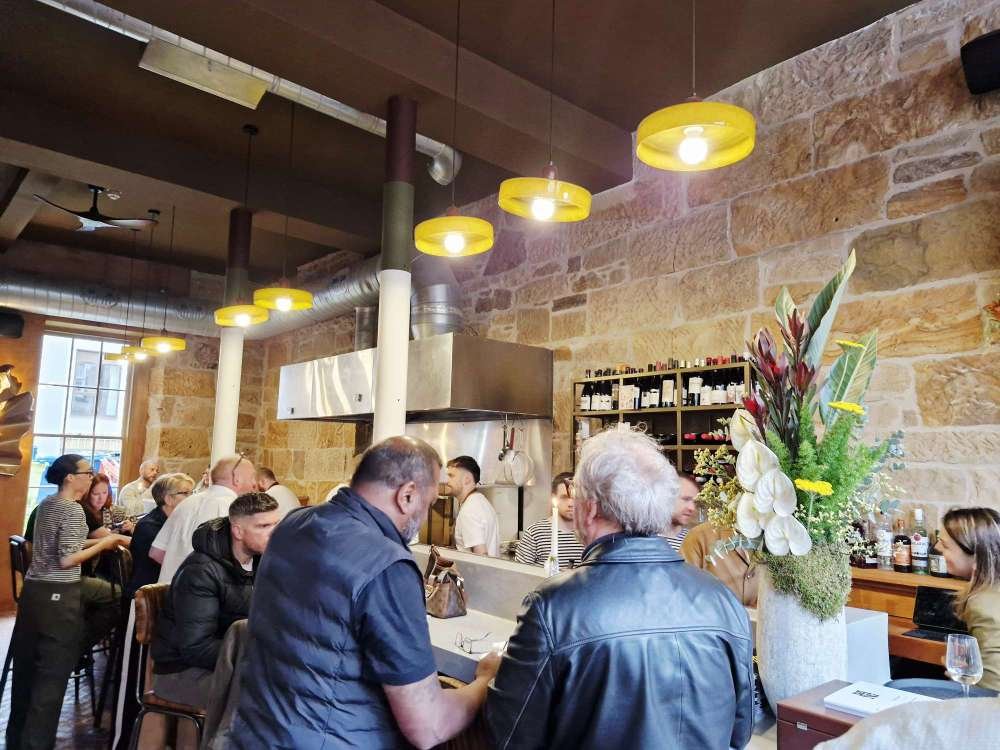
Hotels in Glasgow
Browse all →

Wineries in Glasgow
Browse all →
At a Glance
- Modern
- Sophisticated
- Lively
- Elegant
- Date Night
- Celebration
- Special Occasion
- Group Dining
- Open Kitchen
- Chefs Counter
- Standalone
- Extensive Wine List
- Natural Wine
- Sommelier Led
- Local Sourcing
Current opening hours
- Monday
- Closed
- Tuesday
- 6–11 PM
- Wednesday
- 6–11 PM
- Thursday
- 6–11 PM
- Friday
- 12–11 PM
- Saturday
- 12–11 PM
- Sunday
- Closed
Hours can change for holidays and private events. Last verified .
Modern, stylish, and relaxed with a slightly industrial vibe; bright and energetic with an open kitchen creating a lively, creative atmosphere that invites diners to relax and choose.