
Chef Raphaël Fumio Kudaka leads a kitchen that sits at an unusual intersection in São Paulo's dining scene, where Middle Eastern tradition meets a city built on immigrant culinary identity.
Pearl is the En Primeur Club membership app — saves, bookings, and concierge access live there. Same editors, same standards.
- Address
- Av. Pres. Juscelino Kubitschek, 545 - Itaim Bibi, São Paulo - SP, 04543-010, Brazil
- Phone
- +55 11 3040-8897
- Website
- brasserievictoria.com.br
- Directions
- Get directions
 Saves & bookings on Pearl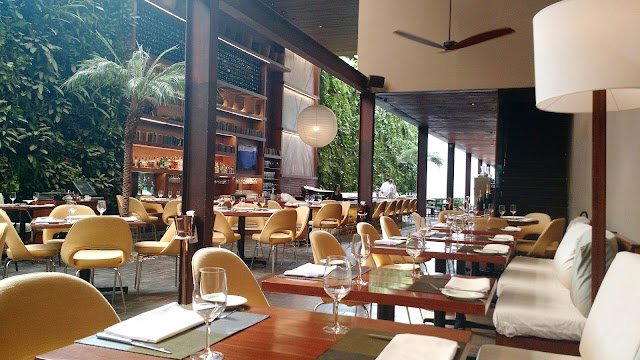
Lebanese in Itaim Bibi: What the Address Tells You
Avenida Presidente Juscelino Kubitschek is a reference point in São Paulo's financial and dining geography. The corridor running through Itaim Bibi carries the kind of foot traffic and commercial density that sustains serious restaurants at accessible prices, and it draws a crowd that knows what it's paying for. Brasserie Victória sits on this avenue at number 545, and the address alone frames a certain expectation: a room built for volume and return visits rather than special-occasion ceremony, in a neighbourhood where the competition is serious and the diner is informed.
Itaim Bibi has developed one of the more concentrated dining patches in the city, a stretch where a single block might hold a two-star tasting counter alongside a lunchtime counter serving workers from the surrounding office towers. That economic and social range is one of the things that makes São Paulo's food culture function at a higher register than most cities its size. Brasserie Victória operates in the middle of that range, priced at a single dollar sign against the four-dollar sign of nearby heavy-hitters like D.O.M. and Evvai, and validated twice over by Michelin's Bib Gourmand in 2024 and 2025.
The Bib Gourmand Signal and What It Means Here
The Bib Gourmand category is Michelin's most democratic designation: it marks a kitchen producing food of notable quality at a price that doesn't require a travel budget to visit. In São Paulo, the distinction carries weight because the city's Michelin presence is substantial and the inspectors cover a wide range of cuisines and price points. Earning the award in consecutive years is not automatic; it reflects a consistent kitchen, not a single good season.
That consistency places Brasserie Victória in a specific peer group: restaurants that compete on cooking quality rather than room investment or tasting-menu architecture. Compared to the starred bracket, Maní at one star and three dollars, or the two-star operators further up the scale, Brasserie Victória occupies a tier where the value proposition is explicit. The question Michelin is asking, and answering, is whether the food justifies a visit. Two consecutive Bib Gourmands say it does.
For context beyond São Paulo, Lebanese restaurants operating in the same Michelin ecosystem internationally, Al Mandaloun in Dubai and Almayass in Abu Dhabi, show how the cuisine holds up under critical scrutiny when the kitchen takes the tradition seriously. In Brazil, where Lebanese immigration has been a structural part of the country's culinary identity for over a century, that tradition has deep roots but variable execution. A Bib Gourmand in this city, for this cuisine, signals a kitchen working at the sharper end of those roots.
A Kitchen Built on Lebanese Tradition in a City Shaped by Immigration
Brazil received one of the largest Lebanese and Syrian immigrant populations in the world during the late nineteenth and early twentieth centuries, and São Paulo absorbed a significant share of them. That demographic history embedded Middle Eastern flavour patterns into the city's everyday eating long before any formal recognition attached to it. Kibbe, hummus, and esfiha moved into the mainstream of Paulistano street food and casual dining in ways that have no direct parallel in most Western cities.
The restaurant operates in that context but pitches itself above the casual end. The brasserie format, a French term applied here to a Lebanese kitchen, which is itself a signal of ambition and register, suggests a space designed for sustained meals rather than fast counters. Chef Raphaël Fumio Kudaka leads the kitchen, a name that reflects São Paulo's own layered immigration history: a Japanese-Brazilian chef working a Lebanese menu in a city that built its identity on exactly that kind of cultural intersection.
The cuisine is Lebanese, which here means a kitchen focused on the source tradition rather than a fusion interpretation. That specificity matters in a city where the cuisine is common enough that diners have a reference point. The restaurant is not introducing Lebanese food to a market that doesn't know it; it is making an argument for a higher level of execution within a cuisine the city already understands.
The Room, the Format, the Physical Experience
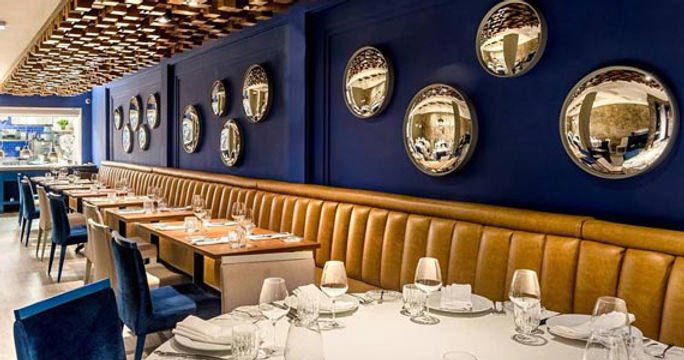
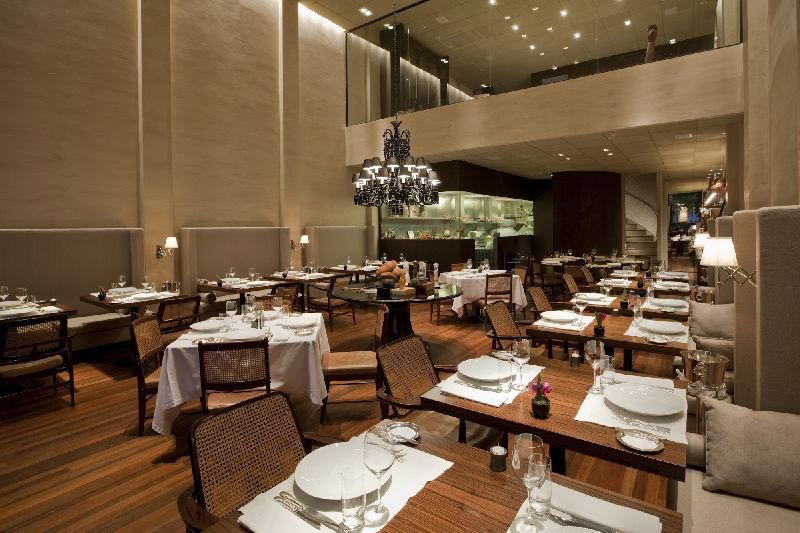
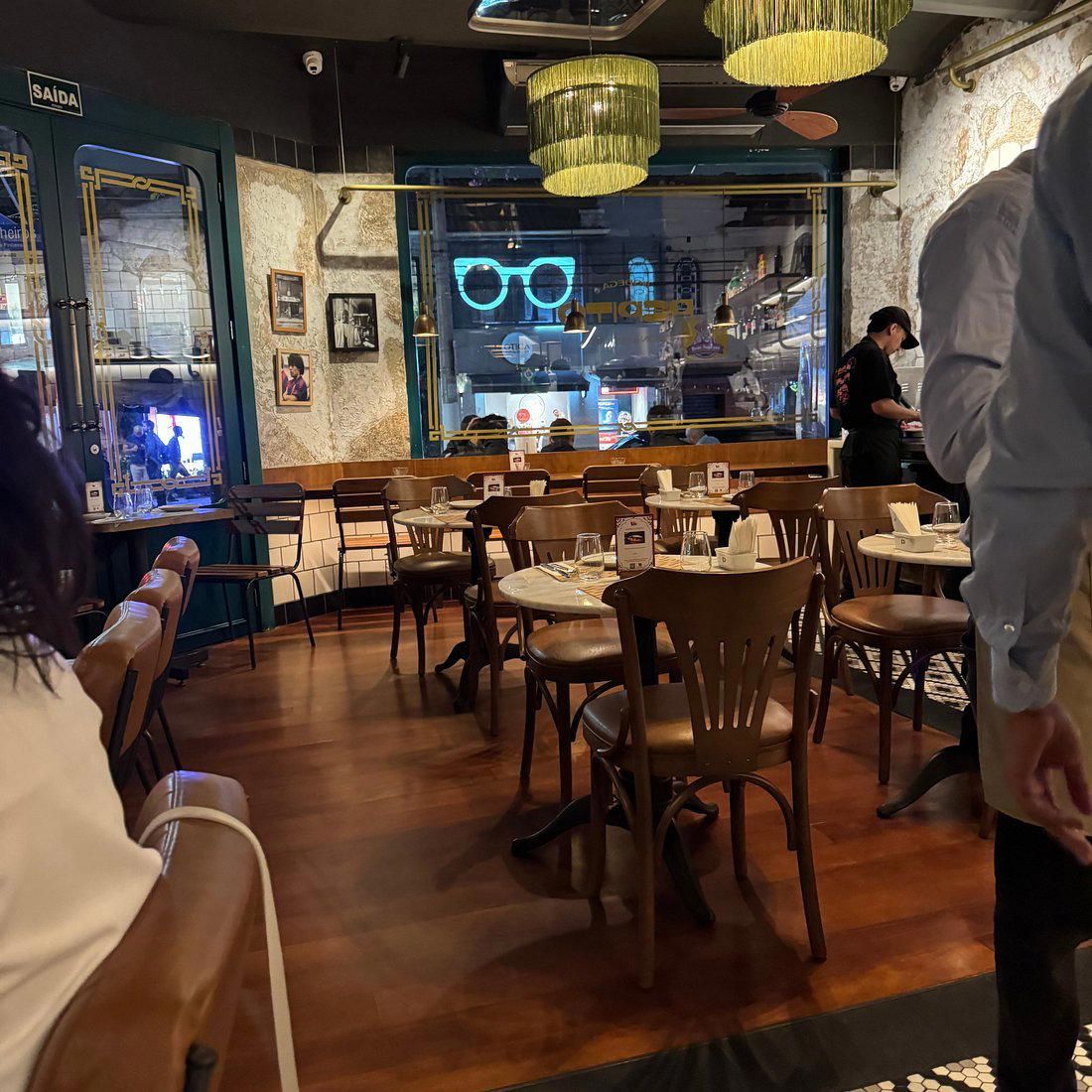
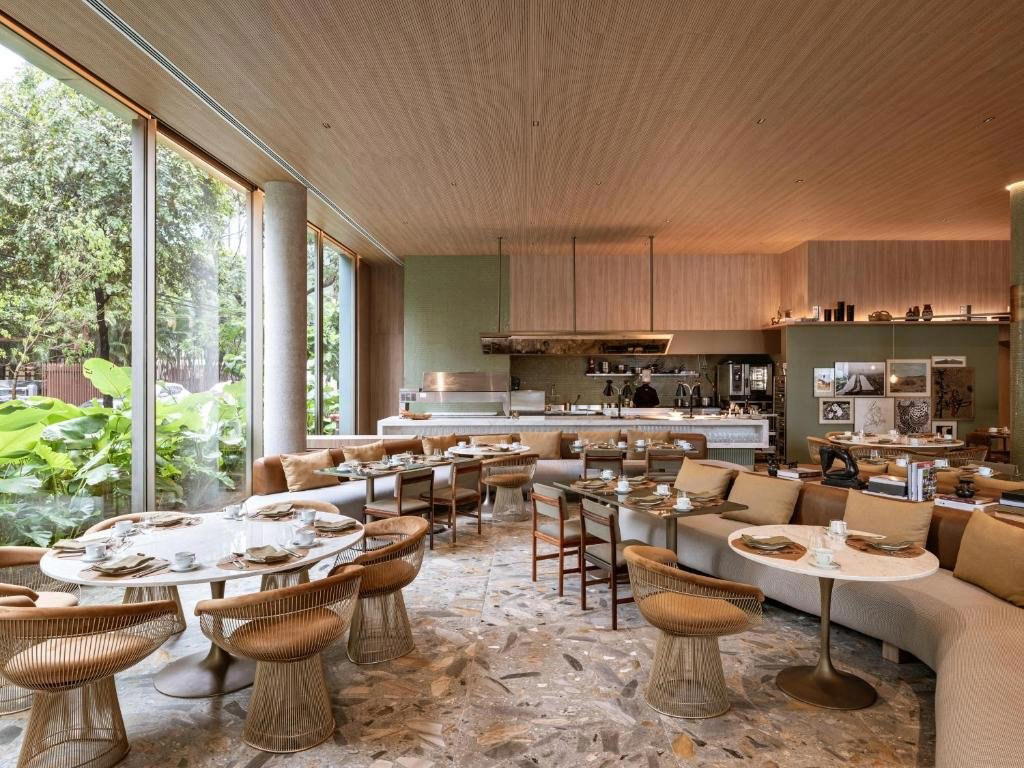
The brasserie designation carries physical implications. Where São Paulo's starred tasting rooms, Tuju, Fame Osteria, tend toward intimate seating and controlled pacing, a brasserie format typically means a larger floor, more tables, a room designed to feel alive at capacity rather than hushed and curated. On Avenida JK, that logic makes sense: the neighbourhood rewards restaurants that can handle a full room on a Tuesday as comfortably as a Saturday, and the single-dollar price point implies a model that depends on throughput as much as ticket size.
Room itself functions as the frame for the food. Lebanese mezze culture is inherently communal and table-covering rather than sequential and spare, and a brasserie-style space accommodates that format better than a tasting counter would. Wide tables, a degree of noise, the visual density of shared plates arriving without ceremony: these are not incidental features but structural ones, matching the architecture of the service to the architecture of the cuisine.
6 across 1,955 reviews adds a different kind of data point. That volume of responses at that score is not a snapshot; it is a sustained signal across many services and many types of diner. High-volume positive ratings on a single-dollar venue in a high-traffic neighbourhood suggest a room that works for the neighbourhood rather than against it.
Placing Brasserie Victória in São Paulo's Broader Scene
São Paulo's dining market has a reputation, accurate in its broad strokes, for depth at every price point. The city supports two-star operators like D.O.M. and Evvai alongside Bib Gourmand-level addresses and strong street-food and casual traditions. Lasai in Rio, Manu in Curitiba, and Manga in Salvador show that serious cooking exists across Brazil at regional scale, but São Paulo concentrates formal recognition in the country. Within that concentration, the Bib Gourmand tier represents an entry point into the critical mainstream.
For a visitor mapping a trip around food, the restaurant answers a specific question: where does serious, recognised cooking exist at a price that allows for multiple meals? The answer in Itaim Bibi, on Avenida JK, in a brasserie format running Lebanese cuisine with consecutive Michelin recognition, is here. Regional comparisons extend to Castelo Saint Andrews in Gramado, Mina in Campos do Jordão, and Orixás in Itacaré for a fuller picture of how serious restaurants are distributed across the state and beyond.
Standing Among Peers
Comparable venues nearby, for context on price, style, and recognition.
| Venue | Cuisine | Price | Awards | Notes |
|---|---|---|---|---|
| Brasserie Victória | Authentic Lebanese Brasserie | $$ | Bib Gourmand | Itaim Bibi |
| Nomo | Contemporary Brazilian | $$ | Bib Gourmand | Perdizes |
| Petí Gastronomia | Modern Brazilian Contemporary | $$ | Bib Gourmand | Barra Funda |
| AE! Café & Cozinha | Modern Brazilian | $$ | Bib Gourmand | Moema |
| A Baianeira | Regional Brazilian: Bahia & Minas Gerais | $$ | Bib Gourmand | Vila Bela Vista |
| Cuia | Modern Brazilian All-Day Dining | $$ | Bib Gourmand | Republica |
Recognition history
Dated appearances from independent guides and award organizations, with the underlying list record or original source where available.
Michelin Bib Gourmand
Michelin
Michelin Bib Gourmand
Michelin
Michelin Bib Gourmand
Michelin
Continue exploring
More in São Paulo
Restaurants in São Paulo
Browse all →
Bars in São Paulo
Browse all →
At a Glance
- Classic
- Well Known
- Family
- Group Dining
- Special Occasion
- Historic Building
Current opening hours
- Monday
- 10 AM–3 PM
- Tuesday
- 10 AM–8 PM
- Wednesday
- 10 AM–8 PM
- Thursday
- 10 AM–8 PM
- Friday
- 10 AM–8 PM
- Saturday
- 10 AM–8 PM
- Sunday
- 10 AM–8 PM
Hours can change for holidays and private events. Last verified .
Traditional atmosphere with attentive, old-school service in comfortable, well-spaced dining rooms.