
Michelin Plate
Our verdict
A Michelin Plate recipient in both 2024 and 2025, Bếp Prime sits on Hàng Điếu in Hanoi's Hoàn Kiếm district, serving Vietnamese cuisine at a mid-range price point that places it firmly within reach of the city's daily dining circuit. The two consecutive Michelin recognitions position it within a small tier of Old Quarter restaurants where kitchen consistency and culinary identity carry more weight than spectacle.

Pearl is the En Primeur Club membership app, where members save venues, book tables and use the concierge.
The menu
What to order
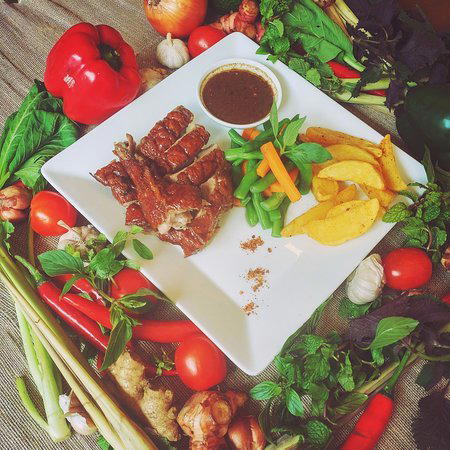
- Pigeon and mushroom hot pot
- Crispy rice with chef's dip
- Grilled pork vermicelli
- Clay pot fish
Where the Old Quarter Meets the Plate
Hàng Điếu is one of those Hoàn Kiếm streets that still functions the way the Old Quarter was always meant to: narrow, purposeful, occupied by people who live and work there rather than just passing through. Arriving at number 12, you are stepping into a block where the boundaries between shopfront, kitchen, and street have never been especially firm. This is not the sanitised tourist corridor of Hàng Bạc or the night-market spectacle of Tạ Hiện, it is a working stretch of the old city, and the dining that happens here tends to reflect that directness. Bếp Prime, holding Michelin Plate recognition in both 2024 and 2025, operates within that context: a Vietnamese kitchen that has attracted sustained critical attention without migrating to the kind of address that typically signals ambition for a foreign audience.
The French Shadow on the Vietnamese Table
To eat Vietnamese food in Hanoi is, in many dishes, to eat through a colonial culinary archive. The French presence from the late nineteenth century to the mid-twentieth left structural marks on the city's food culture that no political rupture fully erased. The baguette became bánh mì. Pâté de campagne found its way into street-side sandwiches sold at dawn. Condensed milk, introduced as a shelf-stable European import, became the base of cà phê sữa đá, the iced coffee format now so thoroughly Vietnamese that its origins feel irrelevant. These are not fusion gestures; they are the ordinary result of two food cultures sharing the same kitchens, markets, and supply chains across several generations.
Hanoi's relationship with that inheritance is more austere than Saigon's. Northern Vietnamese cooking leans toward clarity and restraint, cleaner broths, less sweetness, more emphasis on the quality of a single ingredient than on layered complexity. When the French brought their culinary techniques north, Hanoi absorbed them differently from the south: more selectively, less exuberantly. The result is a table tradition where the colonial trace appears as a quiet structural influence rather than an overt flavour profile. Restaurants operating in this tradition, Bếp Prime among them, work within a cuisine that has already metabolised its outside influences and made them thoroughly its own.
For context across the Vietnamese dining spectrum, La Maison 1888 in Da Nang addresses the French-Vietnamese culinary relationship from the opposite end, a formal fine-dining register where French technique is explicitly foregrounded. Bếp Prime operates at a different register entirely, at a mid-range price point (₫₫) where the French inheritance surfaces in kitchen practice rather than in menu rhetoric.
How Bếp Prime Sits in Hanoi's Recognised Vietnamese Tier
The 2025 Michelin Guide's Hanoi selection created a useful map of how the city's Vietnamese restaurants are stratified. At the leading, Gia holds a full Michelin Star in the Vietnamese Contemporary category at a ₫₫₫₫ price point. Tầm Vị holds a Star at ₫₫, demonstrating that recognition at that level is achievable below luxury pricing. Bếp Prime, with consecutive Michelin Plates at ₫₫, sits in the tier below those Starred venues but above the ₫ end of the spectrum occupied by places like 1946 Cua Bac, which holds no current Michelin note.
The Michelin Plate, awarded to restaurants the Guide considers worth visiting, serving food prepared to a good standard, functions less as a prestige marker than as a consistency signal. Two consecutive years of that recognition, at the same address, in a category as competitive as Vietnamese cuisine in Hanoi, indicates a kitchen that has held its standard across two separate inspection cycles. That is a more useful indicator for a reader planning a visit than a single year's award.
For a broader view of how Hanoi's dining scene is structured across price tiers and cuisine types, see our full Hanoi restaurants guide. The city's bars and hotels are mapped separately in our full Hanoi bars guide and our full Hanoi hotels guide.
Vietnamese Cooking in Comparative Context
Vietnamese cuisine has developed a significant international footprint over the past decade, with serious kitchens operating well outside Vietnam. Ăn Chơi in Hong Kong and An Nam in Singapore address Vietnamese cooking for Southeast Asian audiences already familiar with the source material. Berlu in Portland and Camille in Orlando work with Vietnamese culinary language for North American diners. Ăn Thôi in Da Nang and Agave in Ubon Ratchathani show how the cuisine moves across borders and contexts within Southeast Asia itself.
What all these comparisons clarify is that eating Vietnamese food at the source, in Hanoi's Hoàn Kiếm district, involves a set of conditions, ingredient provenance, market supply chains, the specific mineral quality of Hanoi water in a phở broth, that cannot be replicated. Bếp Prime benefits from all of those conditions as a matter of geography. Venues like Chào Bạn, Cau Go, and A Bản Mountain Dew operate within the same advantage, each addressing a different register of the Hanoi dining market. Akuna in Ho Chi Minh City provides a useful southern counterpoint, the same national cuisine through a markedly different regional sensibility.
Planning a Visit
Bếp Prime is at 12 Hàng Điếu, in the Cửa Đông ward of Hoàn Kiếm, walkable from most Old Quarter accommodation and from the Hoàn Kiếm Lake area. The ₫₫ price point places it at a level where a full meal for two with drinks lands comfortably below what a single course at a Starred venue would cost, making it a practical choice for more than one visit during a stay. For accommodation options near Hoàn Kiếm, see our full Hanoi hotels guide, and for broader exploration of the city's food and drink, the Hanoi experiences guide and Hanoi wineries guide cover adjacent territory.
Frequently asked questions
Where is Bếp Prime located?
Bếp Prime is located at 12 Hàng Điếu, Cửa Đông, Hoàn Kiếm, Hà Nội 10000, Vietnam, Hanoi.
How much does it cost to eat at Bếp Prime?
Pricing at Bếp Prime is listed as ₫₫.
Has Bếp Prime won any awards?
Bếp Prime has received recognition including: Michelin Plate (2025); Michelin Plate (2024).
What should I eat at Bếp Prime?
Bếp Prime's kitchen details and menu have not been publicly documented in a way that allows specific dish recommendations. What is confirmed is that it serves Vietnamese cuisine at a mid-range price point (₫₫) and has held a Michelin Plate in both 2024 and 2025, a signal of consistent, competent cooking rather than experimental ambition. For the most current menu, checking directly with the restaurant on arrival is the practical move.
Can I walk in to Bếp Prime?
At the ₫₫ price point on a working street like Hàng Điếu, walk-ins are a reasonable expectation rather than an exception. Bếp Prime is not a high-demand reservation-only counter, it sits in the Michelin Plate tier, below the starred addresses where queues form before service. Peak evening hours on weekends may warrant arriving early, but this is not a venue where a same-day visit is typically an obstacle.
Quick Comparison
A quick snapshot of similar venues for side-by-side context.
| Venue | Cuisine | Price | Awards | Notes |
|---|---|---|---|---|
| Bếp PrimeThis venue (the venue you are viewing) | Traditional Hanoian Vietnamese | $10–20 | Michelin Plate | Not listed |
| Hibana by Koki | Michelin-Starred Japanese Teppanyaki | $200–300 | 1 Michelin Star · La Liste Top Restaurants | Teppanyaki, ₫₫₫₫ |
| Tầm Vị | Northern Vietnamese Home-Style | $10–20 | 1 Michelin Star | Vietnamese, ₫₫ |
| Gia | Modern Vietnamese Fine Dining | $100–150 | 1 Michelin Star · La Liste Top Restaurants | Vietnamese Contemporary, ₫₫₫₫ |
| 1946 Cua Bac | Northern Vietnamese | $10–20 | Michelin Bib Gourmand | Vietnamese, ₫ |
| Bun Cha Ta (Nguyen Huu Huan Street) | Authentic Vietnamese Bun Cha | $1–10 | Michelin Bib Gourmand | Noodles, ₫ |
Recognition history
Dated appearances from independent guides and award organizations, with the underlying list record or original source where available.
Michelin Plate
Michelin
Full recognition history (3 entries)
Michelin Plate
Michelin
Michelin Plate
Michelin
Continue exploring
More in Hanoi
Restaurants in Hanoi
All restaurants in Hanoi →

Details
- Classic
- Historic
- Cozy
- Rustic
- Casual Hangout
- Group Dining
- Family
- Historic Building
- Local Sourcing
- A La Carte
- Family Style
Current opening hours
- Monday
- 10 AM–2:30 PM, 5:30–11 PM
- Tuesday
- 10 AM–2:30 PM, 5:30–11 PM
- Wednesday
- 10 AM–2:30 PM, 5:30–11 PM
- Thursday
- 10 AM–2:30 PM, 5:30–11 PM
- Friday
- 10 AM–2:30 PM, 5:30–11 PM
- Saturday
- 10 AM–2:30 PM, 5:30–11 PM
- Sunday
- 10 AM–2:30 PM, 5:30–11 PM
Hours can change for holidays and private events. Hours as of .
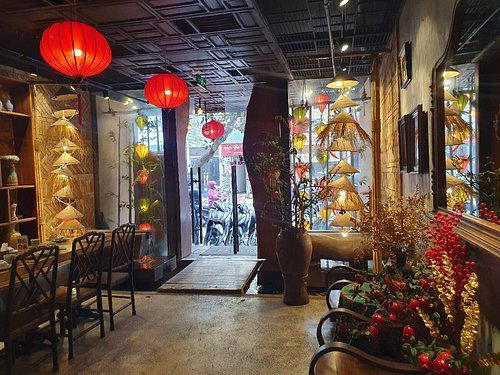
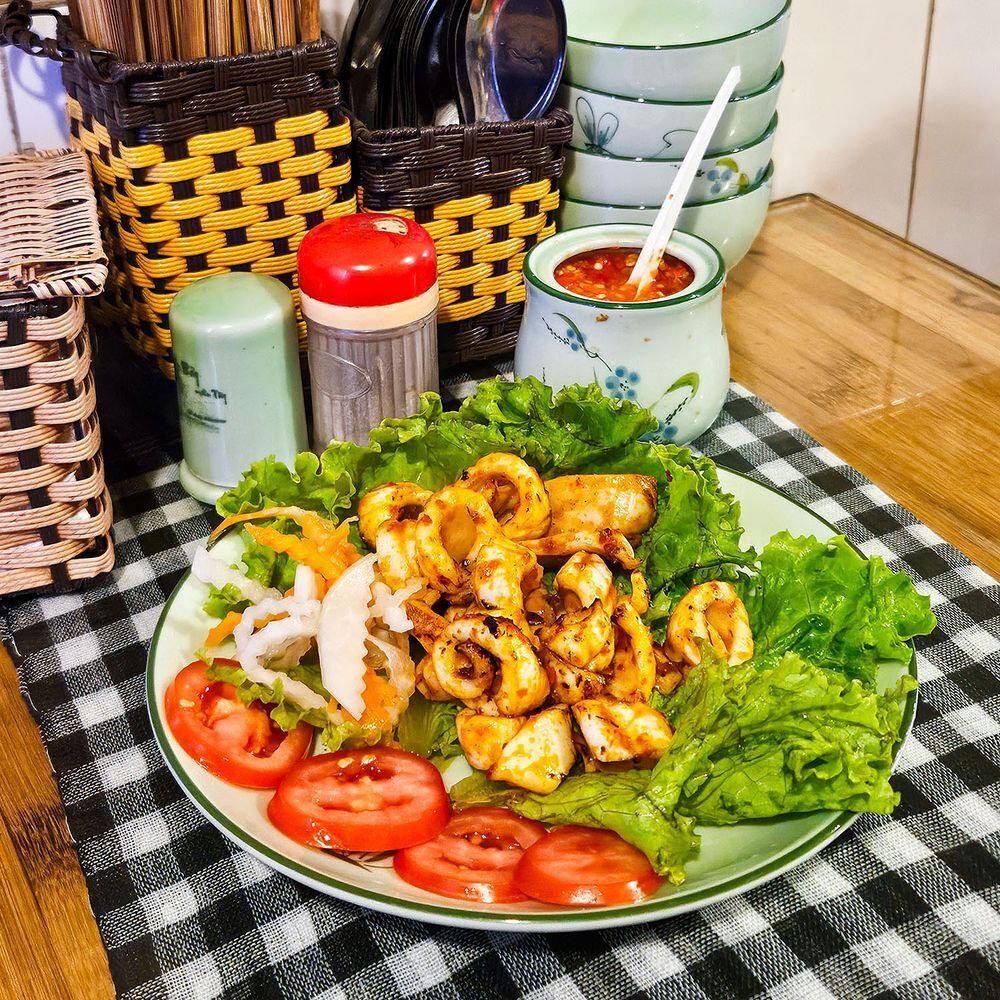
Quaint historic setting with warm, traditional Vietnamese atmosphere that evokes timeless culinary heritage.