Our verdict
On Rue de Belleville, where the 20th arrondissement's working-class identity meets a long tradition of immigrant kitchens, Bouyon Belleville occupies a strip that has quietly shaped how Paris eats beyond the grands boulevards. The address sits at the intersection of Antillean, Chinese, and North African food cultures, a confluence that makes the surrounding neighbourhood one of the city's most instructive eating corridors.

Pearl is the En Primeur Club membership app, where members save venues, book tables and use the concierge.
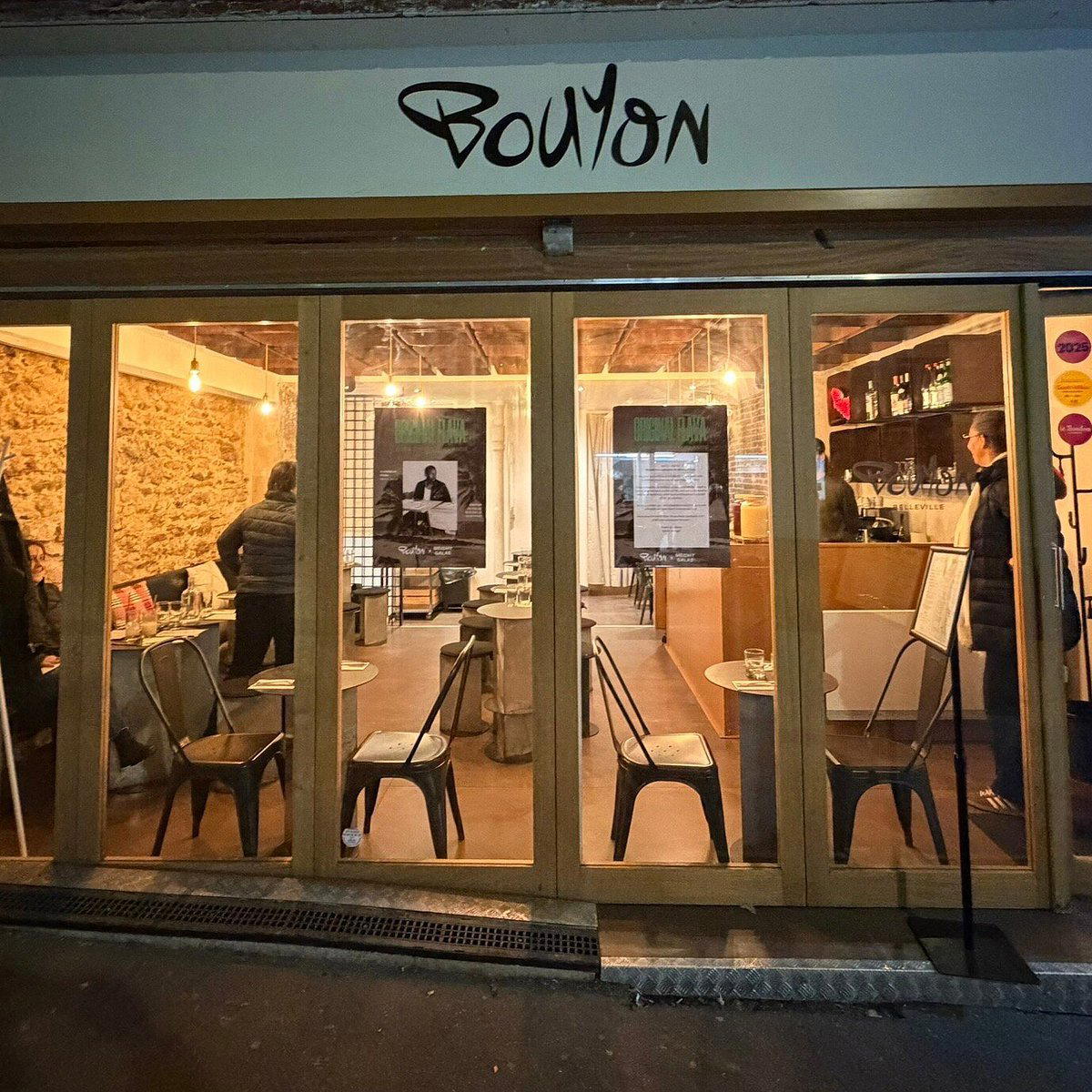
Where the 20th Arrondissement Eats Its Own Way
The approach to 80 Rue de Belleville tells you most of what you need to know before you arrive at the door. This section of the 20th is not the version of Paris that gets photographed for the travel supplements. The storefronts are functional, the street noise runs constant, and the cooking smells layer on top of each other in a way that no single cuisine can claim as its own. It is a neighbourhood that has always absorbed successive waves of migration and produced a food culture that sits almost entirely outside the circuits of starred dining and prestige addresses. For visitors oriented toward that other Paris, the one of Alléno Paris au Pavillon Ledoyen, Le Cinq at the Four Seasons George V, or L'Ambroisie on the Place des Vosges, Belleville operates as a corrective. It is where the city's appetite for food that is rooted rather than refined comes into focus.
The Cultural Roots of Bouyon in a Belleville Context
Bouyon is a foundational dish of the French Antilles, specifically Martinique and Guadeloupe, and understanding it is the starting point for understanding what this address is doing on Rue de Belleville. The word refers to a broth-based stew built from root vegetables, green bananas, christophine, and whatever protein is available, fish, pork, or chicken, simmered long enough that the liquid becomes inseparable from the solid. It is the kind of cooking that does not translate easily to fine dining formats because its entire logic is about time, accumulation, and economy of ingredient. Nothing is decorative. Nothing is composed. The dish exists because it works, and it has worked across generations in households where wasting food was not a choice.
Belleville's Antillean community, one of the largest and longest-established in Paris, brought this cooking tradition with it, and the neighbourhood has sustained it in a way that the more gentrified arrondissements have not. Rue de Belleville and its surrounding streets have Chinese restaurants that date back decades alongside Tunisian pastry shops, Vietnamese pho counters, and Caribbean canteens that operate on schedules and formats answering to their own clientele rather than the expectations of tourists. Bouyon Belleville sits in that last category.
To understand the broader appeal of this kind of cooking in a city increasingly defined by its high-end restaurant economy, places like Arpège or Kei, it helps to note what those addresses have in common: precision, restraint, and a high degree of editorial control over every element of the plate. Bouyon operates from entirely different principles. The cooking is cumulative rather than composed, and it rewards a different kind of attention from the person eating it.
Belleville as a Frame for French Caribbean Cooking
French Caribbean food occupies a complicated position in the French culinary imagination. Because Martinique and Guadeloupe are overseas departments rather than former colonies in the conventional sense, their cuisines have a different relationship to the metropole than, say, North African cooking. They are technically French, which means they are often either absorbed into a vague notion of French diversity or overlooked entirely by a restaurant culture that still treats Escoffier's inheritance as the default reference point. The restaurants of Belleville that specialize in Antillean food are some of the few contexts in which that cuisine gets to be itself rather than an adaptation of itself for a mainland palate.
Dishes like bouyon, colombo (the Martinican curry whose spice blend arrived via South Asian indentured workers in the 19th century), and accras de morue, salt cod fritters that show the Atlantic trade routes written directly into the recipe, carry more culinary history than most tasting menus that reference their terroir. France's multi-starred institutions in the regions, from Mirazur in Menton to Bras in Laguiole to Troisgros in Ouches, build their authority partly on deep rootedness in a specific landscape and agricultural tradition. Antillean cooking in Paris does the same thing, but without the institutional recognition, the Michelin stars, or the wine list.
What the Belleville Corridor Tells You About Paris Eating
The stretch of Rue de Belleville between the Belleville and Pyrénées metro stations functions as one of the city's most compressed eating corridors. Within a few hundred metres, you can move between cuisines representing at least half a dozen distinct food cultures. This is not the curated multiculturalism of a food hall. It is the organic result of successive communities settling in an affordable arrondissement and cooking what they knew. The result is a street where the cooking quality is often inverse to the décor budget, and where the most instructive meal is frequently the least photogenic one.
For context on how Paris's most celebrated tables compare to this register of eating, see our full Paris restaurants guide, which covers the full range from Michelin-starred institutions to neighbourhood addresses like this one. The contrast between a lunch on Rue de Belleville and dinner at Paul Bocuse's Auberge du Pont de Collonges or Auberge de l'Ill is not a matter of one being better than the other. It is a matter of two entirely different theories of what cooking is for.
Addresses like Les Prés d'Eugénie, Flocons de Sel, and Georges Blanc work within a tradition where the chef's authority over every element of the experience is the point. Bouyon Belleville operates in a tradition where the dish itself is the point, and the cook's job is not to improve it but to execute it correctly. Both positions are legitimate. Only one of them gets the awards coverage.
For international comparison, the dynamic is not unlike what Lazy Bear in San Francisco or Le Bernardin in New York represent in their respective cities: addresses where the frame of the meal is heavily constructed and the guest is receiving a deliberate experience. Rue de Belleville's Caribbean canteens offer the opposite of that construction, and for some visitors, that absence is exactly the point. Similarly, Auberge du Vieux Puits and La Table du Castellet occupy a French tradition of destination dining built around a strong sense of place, Belleville achieves something analogous but through entirely different means.
Planning Your Visit
Getting there: The Belleville metro station (lines 2 and 11) deposits you directly at the top of Rue de Belleville. Timing: Lunch service on weekdays tends to reflect the neighbourhood's working rhythms, arrive early or expect to wait. Reservations: Walk-in is the norm for this category of address. Budget: Antillean canteen pricing in Belleville typically runs well below the Paris average for sit-down meals, reflecting a clientele that eats here regularly rather than occasionally. Dress: No expectations beyond basic practicality.
Frequently asked questions
What should I order at Bouyon Belleville?
Bouyon, the eponymous broth-based stew of root vegetables, green banana, and protein drawn from Martinican and Guadeloupean cooking tradition, is the obvious anchor of the menu. Antillean restaurants in Belleville typically rotate what is available based on supply and season rather than offering a fixed printed menu, which means dishes like colombo, accras de morue, or grilled fish with rice and red beans may or may not be present on a given day. The clearest signal of what to order is what the tables around you are eating when you arrive.
How hard is it to get a table at Bouyon Belleville?
Neighbourhood canteens in Belleville operate on a first-come basis rather than a reservations system, and capacity at this price tier is typically modest. Lunch on weekdays tends to fill quickly with a local working crowd; a weekend visit may be slightly more relaxed. There are no awards or external recognition factors that would create the kind of booking pressure seen at starred Paris addresses, the draw is purely the cooking and the neighbourhood.
Is Bouyon Belleville suitable for visitors unfamiliar with French Antillean cooking?
French Caribbean cuisine is more structurally accessible than many unfamiliar food cultures because its core dishes are built around recognisable combinations of protein, starch, and broth. The flavour profile draws on African, South Asian, and European influences accumulated over centuries of Atlantic history, making it one of the more historically layered food traditions you will encounter in Paris. No prior knowledge is required, and the Belleville neighbourhood context, with its mix of Chinese, North African, and Vietnamese addresses along the same street, provides a broader frame for understanding how the city's immigrant food cultures have shaped its eating life outside the arrondissements that get the most editorial attention.
Cuisine Context
| Venue | Cuisine | Price | Awards | Notes |
|---|---|---|---|---|
| Bouyon BellevilleThis venue (the venue you are viewing) | Modern African-Caribbean Fusion | $20–30 | Not listed | Not listed |
| Alléno Paris au Pavillon Ledoyen | Modern French Fine Dining | $150–200 | 3 Michelin Stars · World's 50 Best #79 | Creative |
| Kei | Modern French with Japanese Influences | $300–500 | 3 Michelin Stars · World's 50 Best #93 | Contemporary French, Modern Cuisine |
| L'Ambroisie | Classic French Haute Cuisine | $300–500 | 2 Michelin Stars · World's 50 Best #23 | French, Classic Cuisine |
| Le Cinq - Four Seasons Hôtel George V | Modern French Fine Dining | $300–500 | 3 Michelin Stars · World's 50 Best #24 | French, Modern Cuisine |
| Pierre Gagnaire | Avant-Garde French Fine Dining | $200–300 | 3 Michelin Stars · World's 50 Best #17 | French, Creative |
Continue exploring
More in Paris
Restaurants in Paris
All restaurants in Paris →
Bars in Paris
All bars in Paris →




Details
- Lively
- Trendy
- Energetic
- Casual Hangout
- Brunch
- A La Carte
- Vegan Options
Current opening hours
- Monday
- 7–10:30 PM
- Tuesday
- 7–10:30 PM
- Wednesday
- 7–10:30 PM
- Thursday
- 7–10:30 PM
- Friday
- 7–11:30 PM
- Saturday
- 7–11:30 PM
- Sunday
- 12–4 PM
Hours can change for holidays and private events. Hours as of .
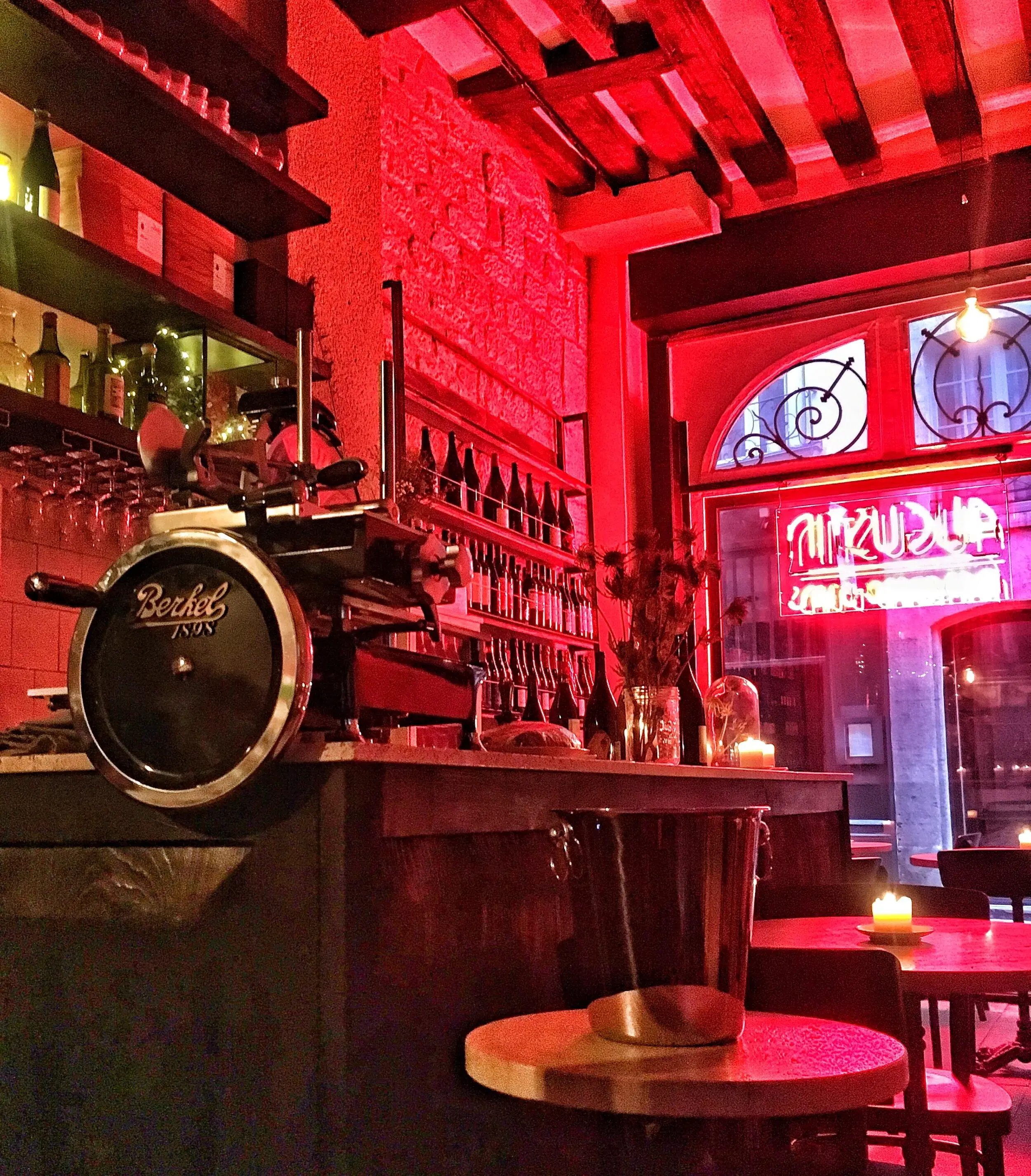
Festive and lively atmosphere with moderate noise, blending homage to roots with contemporary energy.