
In Meguro's residential backstreets, Bon Chemin applies Escoffier-rooted classical French technique to Japanese ingredients, earning consecutive Michelin Plate recognition in 2024 and 2025. Chef Ryo Hanazawa's long-standing signatures, sardine and vegetable soup, pigeon and duck roti with offal sauce, position the restaurant inside Tokyo's quieter tradition of French cooking that prioritises historical fidelity over contemporary spectacle.
Pearl is the En Primeur Club membership app — saves, bookings, and concierge access live there. Same editors, same standards.
- Address
- Japan, 〒153-0053 Tokyo, Meguro City, Gohongi, 2 Chome−40−5 Beat101
- Phone
- +81 50-5487-0953
- Website
- bonchemin.gorp.jp
- Directions
- Get directions
 Saves & bookings on Pearl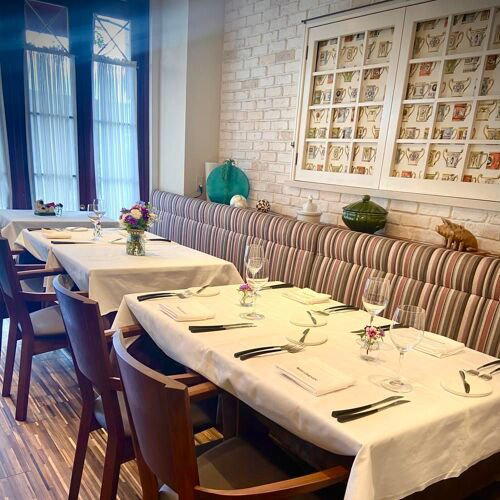
Classical French in a Residential Quarter
Tokyo's French dining scene has always contained a tension that its European counterpart largely resolved decades ago: the question of what classical technique means when the surrounding ingredient culture is Japanese. At the higher-visibility end, three-star houses like L'Effervescence and Sézanne have answered that question by leaning into the integration, building menus that treat classical French structure and Japanese seasonality as genuinely co-equal. Bon Chemin, in the Gohongi neighbourhood of Meguro, is a French restaurant serving modern French with Japanese influences at about $60 per person.
Meguro is not Ginza or Minami-Aoyama. The approach to Bon Chemin runs through a low-density residential district, the kind of Tokyo neighbourhood where small family restaurants and standing sake bars sit between dry-cleaners and convenience stores. That setting is itself a signal about the restaurant's orientation: this is French cooking with provincial sincerity rather than metropolitan ambition, tethered to a specific culinary lineage rather than positioned for awards-season attention.
The Escoffier Inheritance
The clearest way to understand Bon Chemin's place in Tokyo's French category is to look at where its method sits historically. The kitchen grounds its cooking in the recipes and principles of Auguste Escoffier, the nineteenth and early twentieth century codifier of classical French cuisine whose work established the vocabulary, stocks, mother sauces, and brigade structure that professional kitchens still reference. In contemporary fine dining, cooking directly from Escoffier's framework is unusual. Most restaurants that describe themselves as classically trained French have absorbed that tradition and then moved beyond it, either toward the produce-led minimalism of ESqUISSE or the structured experimentation of Florilège.
Bon Chemin's position is closer to the idea of French cuisine as archaeology: returning to foundational recipes not as an exercise in nostalgia but as a claim that the original formulations, when executed with precision and local ingredients, carry flavours that modern simplification tends to eliminate. The restaurant's stated theme is universal flavour, the idea that Escoffier's framework was designed to transcend geography rather than express it, which makes it an interesting host for Japanese produce rather than a competitor to it.
At the furthest end of the spectrum, Château Restaurant Joël Robuchon represents the other mode of classical French in Tokyo: grand European ceremony transplanted wholesale, complete with formal service codes and prestige-address positioning. The restaurant's approach is quieter and more direct.
The Kitchen's Long-Standing Signatures
Two dishes appear consistently in any account of the restaurant and function as one useful lens on the kitchen's philosophy. The sardine and vegetable soup places an everyday ingredient, sardines are among the more consumed fish in Japanese home cooking, inside a classical French bouillon structure. The pairing is not ironic or deliberately transgressive; it seems to reflect Hanazawa's conviction that Escoffier's framework scales down to humble ingredients as coherently as it scales up to luxury ones.
The pigeon and duck roti with offal sauce is the dish that defines the kitchen's relationship with classical French technique more completely. Roti in the French tradition is a specific method: roasting at high heat with constant basting, producing a bird with lacquered skin and a precisely controlled internal temperature. The offal sauce, built from the livers, hearts, and gizzards of the birds, connects to French cuisine's pre-modern tradition of using the whole animal, a tradition that contemporary fine dining largely set aside in favour of cleaner presentations. That restaurant lists this dish among its long-standing sources of pride says something about which version of French cooking the kitchen is aligned with.
Those travelling across Japan in search of French cooking with similar commitments might also consider HAJIME in Osaka, though its approach to the classical inheritance is significantly more experimental.
Michelin Recognition and What It Signals in This Tier
The restaurant holds no Michelin stars or Michelin Keys. The Plate is Michelin's acknowledgement of a restaurant serving food of good quality, below the one-star tier but above inclusion in the guide without comment. In Tokyo's French category, this places the restaurant in a broad middle band that includes dozens of restaurants at various price points. The ¥¥¥ pricing puts it at a mid-range level, which affects both accessibility and the nature of the dining experience.
5 across 96 reviews is a consistent signal at this price tier. It suggests a kitchen that delivers reliably rather than unevenly, important at a restaurant where the menu is built on long-standing dishes rather than seasonal reinvention. The consistency the review base implies aligns with the kitchen's stated commitment to recipes that have become long-time favourites rather than frequently rotated specials.
For comparison with what the one- and two-star tier looks like in the same price range, Den, which holds two Michelin stars and charges at a comparable ¥¥¥ level, demonstrates how Japanese-influenced innovation at that price point is coded differently from the restaurant's classical orientation. The two restaurants are not competing for the same diner, which clarifies rather than complicates the restaurant's position.
Japanese Ingredients as a Return, Not a Departure
The way the restaurant uses Japanese ingredients is worth considering carefully, because it differs from the integration model that has become the standard narrative around Tokyo's French restaurants. Hanazawa's framing is that Japanese produce brings back the aroma of French cuisine's earlier period, a restoration argument rather than a fusion one. The implication is that contemporary French fine dining has moved far enough from its own origins that local Japanese ingredients now carry something closer to the original spirit of those recipes than imported European produce would.
This is an unusual claim and not one that other Tokyo kitchens tend to make explicitly. It positions Japanese ingredients not as additions to a French base but as materials that activate what was already latent in the classical method. Whether the argument holds on the plate is the question every visit answers individually, but as a conceptual position it separates the restaurant from restaurants that treat Japanese-French integration as primarily an aesthetic gesture.
Context in Tokyo's Broader Dining Scene
Meguro's residential character means the restaurant sits outside the concentrated fine-dining corridors where most visitors default. That geography rewards the diner who plans specifically rather than discovers by proximity. Tokyo's restaurant density is such that no serious meal happens accidentally at this price tier, but the effort required to reach Gohongi filters the room toward guests who have sought the kitchen out for particular reasons.
Elsewhere in Japan, Gion Sasaki in Kyoto, akordu in Nara, Goh in Fukuoka, 1000 in Yokohama, and 6 in Okinawa extend the picture of where serious cooking is happening outside the capital.
Know Before You Go
- Address: 2 Chome-40-5 Beat101, Gohongi, Meguro City, Tokyo 〒153-0053
- Cuisine: French (classical, Escoffier-rooted)
- Price tier: ¥¥¥
- Recognition: Michelin Plate 2024, Michelin Plate 2025
- Guest rating: 4.5 / 5 (95 Google reviews)
- Neighbourhood: Gohongi, Meguro, residential, away from main tourist corridors
- Booking: Contact details not listed; direct approach or walk-in research advised
Peers You’d Cross-Shop
Comparable venues nearby, for context on price, style, and recognition.
| Venue | Cuisine | Price | Notes |
|---|---|---|---|
| BON CHEMINThis venue — the venue you are viewing | Modern French with Japanese Influences | $$$ | Not listed |
| DAN | Casual Modern French | $$$ | Setagaya |
| LUGDUNUM Bouchon Lyonnais | Lyonnais Bouchon | $$$ | Shinjuku |
| ABBESSES | Parisian Bistro | $$$ | Shibuya |
| Bouquet de France | Classic French Pork Cuisine | $$$ | Minato |
| L'AMITIE | French Bistro | $$$ | Shinjuku |
Recognition history
Dated appearances from independent guides and award organizations, with the underlying list record or original source where available.
Michelin Plate
Michelin
Michelin Plate
Michelin
Michelin Plate
Michelin













At a Glance
- Intimate
- Elegant
- Cozy
- Date Night
- Special Occasion
- Standalone
- Sake Program
- Local Sourcing
Current opening hours
- Monday
- 12–3 PM, 6–11 PM
- Tuesday
- Closed
- Wednesday
- Closed
- Thursday
- 12–3 PM, 6–11 PM
- Friday
- 12–3 PM, 6–11 PM
- Saturday
- 12–3 PM, 6:30–11 PM
- Sunday
- 12–3 PM, 6:30–11 PM
Hours can change for holidays and private events. Last verified .
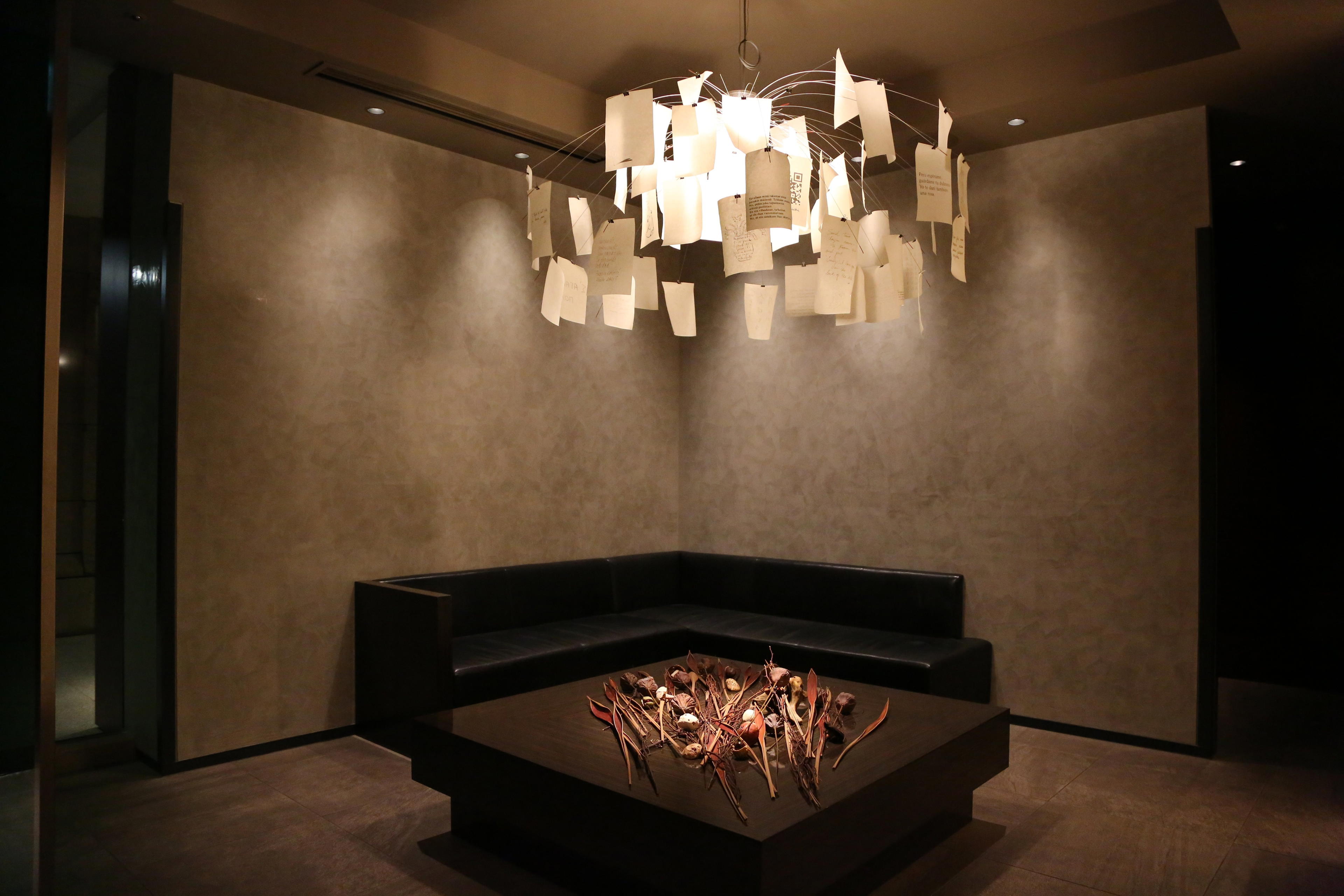
Charming, warm, and inviting cozy atmosphere in a quiet residential area, well-suited for romantic dinners.