Bon Aire

In the rice fields outside Valencia, Bon Aire draws both locals and visitors with a kitchen clearly anchored in the produce growing around it. The paella here is a serious proposition, supported by seasonal vegetables from the surrounding huerta and a pumpkin-and-honey dessert that speaks more to the agricultural calendar than to pastry convention. Service is professional without being stiff, and the setting does exactly what it should: it connects the food to the land it came from.
 Discover on Pearl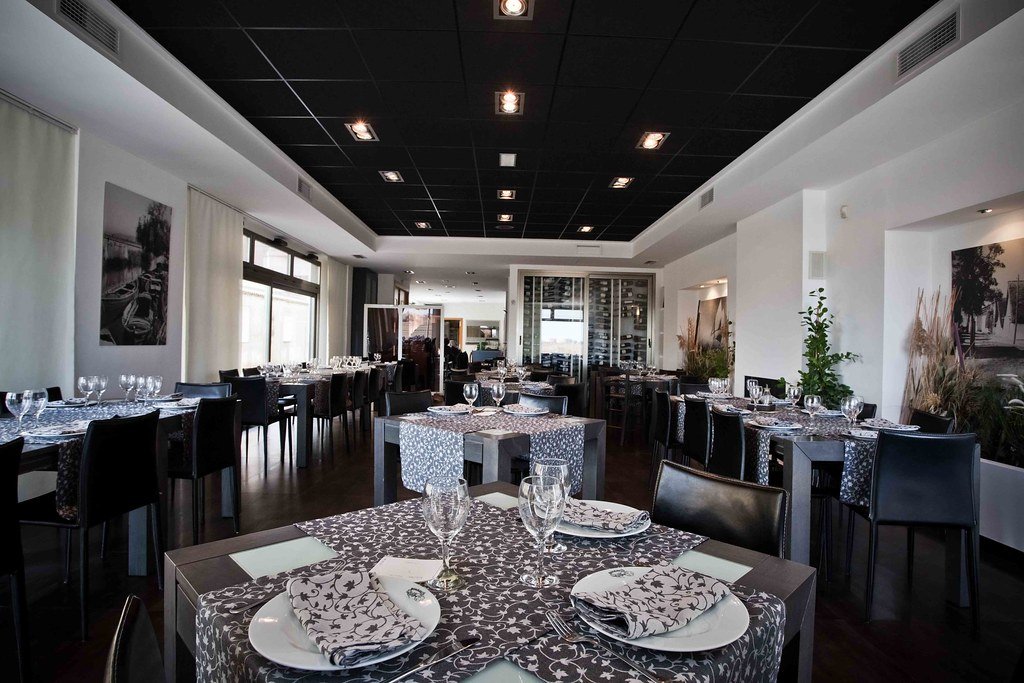
Where the Rice Fields Set the Menu
The road out of Valencia toward El Palmar passes through the Albufera natural park, a flat wetland of lagoons, reed beds, and flooded paddies that has shaped Valencian cooking for centuries. This is where paella was born, not as a restaurant concept but as a field worker's meal cooked over orange wood in the paddies themselves. The restaurants that line this corridor carry that inheritance differently. Some trade on nostalgia and volume. Others, like Bon Aire on Carrer de Cabdet, treat the surrounding land as a living larder rather than a backdrop.
Arriving at the restaurant, the flatness of the landscape is the first thing you register. There are no hills, no dramatic horizons, just open sky above the rice paddies and the quiet authority of a place that has fed people for generations. The Albufera corridor draws a mix of Valencian families making the Sunday ritual drive and visitors who have read enough to know that the definitive paella experience is not to be found in the city's tourist quarter. Both groups tend to end up at the same conclusion: the further into the rice fields, the more seriously the food is taken.
The shortlist, unlocked.
Hard-to-book tables, cellar releases, and concierge-planned trips.
Get Exclusive Access →The Sourcing Argument for El Palmar
Valencia's paella tradition is inseparable from its agricultural geography. The rice grown in the Albufera paddies, primarily Senia and Bomba varieties, absorbs liquid and flavour differently from other short-grain types, which is precisely why Valencians insist the dish cannot be authentically reproduced far from its source. But rice is only part of the sourcing equation. The huerta, the intensively farmed market garden land that surrounds Valencia, supplies the beans, peppers, tomatoes, and vegetables that give a proper Valencian paella its structure. These are not decorative additions. Broad beans and ferraura beans, specific to the region's growing season, carry a texture and flavour concentration that frozen or imported equivalents do not replicate.
Bon Aire leans into this agricultural context. The kitchen works with local vegetables, and their presence on the plate is described not as a garnish decision but as a quality signal. When a restaurant in this particular geography emphasises local produce, it is making a practical claim: that the distance between field and kitchen is measured in minutes, not logistics chains. For a cuisine as technique-sensitive as paella, where the socarrat at the bottom of the pan depends on precise heat, timing, and liquid ratios, the quality of the base ingredients is not a marginal factor.
The dessert course at Bon Aire extends this sourcing logic past the main event. A pumpkin-and-honey preparation arrives as something of a statement: the pumpkin connects to the huerta tradition of using every harvest honestly, and honey from the Valencia region carries aromatic complexity drawn from the same citrus and wildflower landscape that frames the wider area. It is the kind of ending that makes sense geographically before it makes sense culinarily, and that is the point.
Service and Setting in Context
The restaurants of El Palmar occupy a specific position in the Spanish dining hierarchy. They are neither the three-Michelin-star creative laboratories that have made Spanish gastronomy a reference point globally, think El Celler de Can Roca in Girona, Arzak in San Sebastián, or DiverXO in Madrid, nor the casual beach bar that serves rice as an afterthought. They sit in a middle register that Spaniards understand instinctively: the serious regional restaurant where craft is applied to a defined local tradition, where the room is comfortable rather than designed, and where the measure of quality is fidelity to the ingredient rather than transformation of it.
At Bon Aire, service has been noted as both professional and genuinely friendly, a combination that is less automatic in this category than it might sound. Rice restaurants in the Albufera corridor can become formulaic at volume, particularly on Sunday lunchtimes when extended Valencian families arrive in numbers and tables turn with a certain industrial efficiency. A kitchen that maintains quality under that pressure, and a front-of-house team that stays present through it, reflects operational discipline rather than accident.
Spain's progressive restaurant tier, represented by places like Azurmendi in Larrabetzu, Mugaritz in Errenteria, Quique Dacosta in Dénia, and Aponiente in El Puerto de Santa María, has spent two decades interrogating Spanish culinary identity at the highest technical level. Closer to Valencia, Ricard Camarena in València applies that investigative rigour to the city's own ingredient vocabulary. Bon Aire operates in a different register entirely, but it shares the foundational premise: that the Valencian larder, rice, vegetable, seasonal produce, is the argument, and that the kitchen's job is to honour it rather than obscure it.
Planning a Visit
El Palmar sits roughly 10 kilometres south of Valencia's city centre, accessible by car along the road that skirts the Albufera lagoon. The journey itself functions as context: by the time you arrive at the restaurant, you have passed the water that sustains the rice paddies, the paddies themselves, and the small community of restaurants and fishing families that have shaped this food culture. Sunday lunch is the primary ritual for Valencian families making this trip, which means the room fills early and the kitchen operates at pace. For a more measured experience, a midweek lunch allows the setting to assert itself more quietly. Bon Aire is on Carrer de Cabdet, 41, in the Pobles del Sud area of the municipality. Current contact and booking details are leading confirmed directly before visiting, as operational specifics can change by season.
For those building a wider picture of the area, the El Palmar (Valencia) restaurants guide covers the full range of the corridor's options. The hotels guide for El Palmar is useful for anyone considering staying in the nature park rather than returning to the city. Supplementary guides cover bars, wineries, and experiences in the area. Further afield, Cocina Hermanos Torres in Barcelona, Martin Berasategui in Lasarte-Oria, Casa Marcial in Arriondas, Le Bernardin in New York City, and Emeril's in New Orleans represent the broader context of serious regional cooking at different price points and scales.
Frequently Asked Questions
- Is Bon Aire a family-friendly restaurant?
- Yes. The Albufera rice corridor is a habitual Sunday lunch destination for Valencian families, and Bon Aire fits that pattern, with a room and service approach that accommodates groups across generations without making the experience feel regimented.
- How would you describe the vibe at Bon Aire?
- Grounded and purposeful. This is not a designed dining room chasing atmosphere; it is a rice restaurant in the Albufera that takes its sourcing seriously and whose service reflects that same attentiveness. The mood is set more by the surrounding paddies and the quality of what arrives on the table than by any interior decisions. Within the El Palmar corridor, it sits in the tier of restaurants where local reputation and ingredient quality do the heavy lifting.
- What do people recommend at Bon Aire?
- Paella is the primary draw, as it is along the entire Albufera corridor, and the kitchen's emphasis on local vegetables suggests a kitchen working with the Valencian canon rather than deviating from it. The pumpkin-and-honey dessert has drawn specific attention as an unexpected but apt finish, connecting the meal to the agricultural calendar of the surrounding huerta.
Quick Comparison
These are the closest comparables we have in our database for quick context.
| Venue | Cuisine | Price | Awards | Notes |
|---|---|---|---|---|
| Bon Aire | In the middle of the rice fields outside Valencia, you'll find many restaur… | This venue | ||
| Aponiente | Progressive - Seafood, Creative | €€€€ | Michelin 3 Star | Progressive - Seafood, Creative, €€€€ |
| Arzak | Modern Basque, Creative | €€€€ | Michelin 3 Star | Modern Basque, Creative, €€€€ |
| Azurmendi | Progressive, Creative | €€€€ | Michelin 3 Star | Progressive, Creative, €€€€ |
| Cocina Hermanos Torres | Creative | €€€€ | Michelin 3 Star | Creative, €€€€ |
| DiverXO | Progressive - Asian, Creative | €€€€ | Michelin 3 Star | Progressive - Asian, Creative, €€€€ |
Need a table?
Our members enjoy priority alerts and concierge-led booking support for the world's most difficult tables.
Get Exclusive AccessThe shortlist, unlocked.
Hard-to-book tables, cellar releases, and concierge-planned trips.
Get Exclusive Access →