Boath House
Our verdict
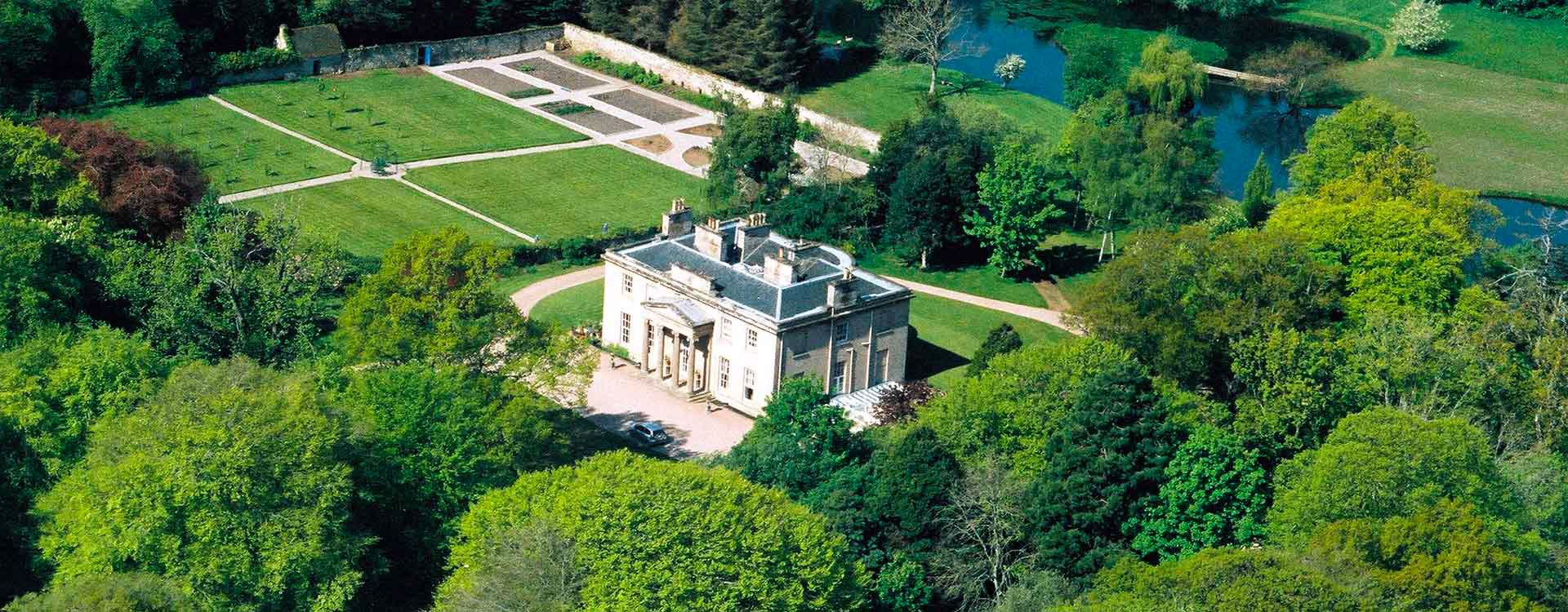
Boath House sits outside the village of Auldearn in the Scottish Highlands, occupying a Regency country house where the surrounding farmland and estate grounds shape the kitchen's ingredient logic. The setting positions it within a small tier of rural British dining destinations where geography is not backdrop but material, the kind of place where proximity to source defines what ends up on the plate.

Pearl is the En Primeur Club membership app, where members save venues, book tables and use the concierge.
The menu
What to order
- Scallops with bay leaf and koji sauce
- Potato, meadowsweet and buttermilk
- Beef tartare
- Halibut with sprouted rye and cabbage
Where the Highlands Begin at the Kitchen Door
The approach to Boath House through the Nairnshire countryside establishes a particular contract between place and plate that defines the better end of Scottish rural hospitality. The Regency house, set in grounds a short distance from the village of Auldearn near Nairn, belongs to a category of British dining destination where the estate boundary and the menu boundary are largely the same thing. The Moray Firth coastline lies nearby; the agricultural hinterland of the Black Isle and Speyside stretches south and west. In that geographic context, the question of where ingredients come from is not a marketing stance but a logistical fact.
This matters because ingredient provenance in Scottish Highland cooking is not merely a trend borrowed from urban fine dining. The region has always produced at a level that urban kitchens pay serious money to access: wild venison from managed Highland estates, Aberdeen Angus beef from Aberdeenshire farms, shellfish from Orkney and the west coast, salmon from rivers whose names carry commercial weight in international markets. A kitchen sitting inside this supply web has access that most Michelin-recognised restaurants in London cannot replicate regardless of purchasing budget. For context on how London's top tier handles British sourcing at a remove, see CORE by Clare Smyth in London, where the sourcing ambition is explicit and priced accordingly at ££££.
The Ingredient Geography of the Scottish Northeast
To understand what a kitchen in this position can do, it helps to map the supply lines. The Moray coast and the waters around the Moray Firth produce langoustines, crab, and seasonal fish in quantities and quality that feed export markets across Europe. Highland game estates to the south and west manage red deer, grouse, and woodcock under conservation-driven culling schedules. The fertile land of the Black Isle and the Moray plain produces soft fruit, root vegetables, and dairy at a latitude that concentrates flavour. This is not the same ingredient logic as the Lake District, where L'Enclume in Cartmel has built its own growing operation on the Cartmel peninsula, or Dartmoor, where Gidleigh Park in Chagford draws on West Country farming networks. Each of these represents a distinct regional ingredient economy, and the Scottish northeast sits at the northern edge of Britain's most consequential one.
The comparison to other rural British fine dining houses is instructive. Properties like Moor Hall in Aughton and Le Manoir aux Quat' Saisons in Great Milton operate kitchen gardens as a direct extension of the menu. The model varies by property, but the logic is consistent: proximity to source, when genuinely committed to, changes what a kitchen can offer seasonally and limits the distance between harvest and plate. At Boath House, the grounds and the surrounding estate position it within that same tradition, even if the specific format differs.
Scotland's Fine Dining Geography
Scottish fine dining has historically concentrated its Michelin recognition in the central belt and in a handful of destination properties. Restaurant Andrew Fairlie in Auchterarder represents the anchor of that recognition in Scotland, holding two Michelin stars and operating within the Gleneagles estate infrastructure.
That geography is a feature rather than a limitation. The northeast Highlands attract visitors with specific intentions: whisky tourism along Speyside, golf on the Moray coast, walking and wildlife in the Cairngorms National Park to the south. A dining destination in this region draws from a traveling audience with high dwell time and some appetite for destination dining as part of a longer stay, rather than the rapid-turnover urban model. It places Boath House in a comparable structural position to rural English houses like Hand and Flowers in Marlow or Midsummer House in Cambridge, where the dining draw is built on destination logic rather than walk-in trade. For a broader picture of what the Auldearn area offers beyond the house itself, see our full Auldearn restaurants guide.
The Country House Format
Country house hotels in Britain that take their food seriously operate in a format with its own set of pressures. The expectation of residential guests whose entire stay is spent on property means the kitchen must perform across more meal occasions and more service styles than a standalone restaurant. The trade-off is that the kitchen has a captive audience with long dining windows, which permits tasting-menu formats, extended service, and courses paced for a room in no hurry. This is the same dynamic that defines properties across the British fine dining countryside, and it shapes the tone of an evening at Boath House as much as any individual dish.
Guests staying at Boath House are effectively electing to spend time in the Nairnshire countryside, which carries implications for how the evening unfolds. The house is not a staging post. It is the destination. For those whose interest extends to the area's other offerings, our Auldearn hotels guide covers the local accommodation picture, and our Auldearn bars guide and experiences guide fill in the surrounding programme.
Planning a Visit
Boath House is located at Auldearn, Nairn IV12 5TE, in the Scottish Highlands. Nairn is accessible by rail from Inverness, which is the principal transport hub for the region; the A96 connects Nairn to Inverness in under thirty minutes by road. For visitors arriving from the south, Inverness Airport operates direct flights from several UK cities, making a short Highland stay viable without a lengthy land journey. Given the destination nature of the property, planning a multi-night stay is the more practical approach; it allows time for the area's other draws, including Cawdor Castle, Culbin Forest, and the Speyside distillery route. Booking windows for country house properties of this type vary by season, with summer and autumn typically filling earlier due to the convergence of Highland tourism and game season.
Those interested in the broader arc of British fine dining, from London's tightest Michelin tables to the rural houses that define regional excellence, will find useful comparators across our guides to The Fat Duck in Bray, hide and fox in Saltwood, Opheem in Birmingham, and for international calibration, Le Bernardin in New York City and Atomix in New York City. The Auldearn wineries guide covers the local drinks context for those planning a fuller itinerary.
Frequently asked questions
Is Boath House good for families?
The country house setting at Auldearn, Nairn IV12 5TE suits families who are comfortable in a residential hotel format where the dining room sets the pace for the evening. Boath House is not a venue built around high chairs and children's menus; the estate environment rewards guests who can engage with a slower, place-led experience. Families with older children who travel well in this kind of property will find it fits naturally.
Is Boath House better for a quiet night or a lively one?
Boath House is firmly in the quiet-night category. Country house hotels of this type in the Scottish Highlands draw guests looking for stillness: the Nairnshire countryside, the pace of a residential property, and a kitchen that asks you to pay attention to what's on the plate. If you are looking for a bar scene or a buzzy dining room, this is the wrong address.
Is Boath House worth the journey from Inverness for a dining visit?
Auldearn sits a short drive from Nairn, which is directly accessible by rail from Inverness, making Boath House a realistic day or overnight destination from the Highland capital. The case for the journey rests on the estate context: the kitchen is drawing on a northeast Scottish larder that you cannot replicate in a city dining room. Guests who make the trip specifically for the food tend to combine it with a residential stay to get the full measure of the property.
What should I eat at Boath House?
The kitchen at Boath House is positioned to draw on one of Scotland's most productive larders: the Moray Firth coastline and the agricultural hinterland of the Scottish Northeast. Dishes will be shaped by what that geography produces seasonally rather than by a fixed signature menu. Arriving with an openness to that supply-led approach is the right frame of mind for the dining room here.
What's Boath House's location?
Boath House is located at Auldearn, Nairn IV12 5TE, United Kingdom, Auldearn.
How far ahead should I plan for Boath House?
Boath House operates within the country house hotel format, where room availability and the dining room are linked, so lead times are shaped by both. Properties of this scale and position in the Highlands book out during the summer season and around key Scottish calendar periods. Contacting the property directly several weeks in advance is advisable for stays between May and September.
At-a-Glance Comparison
| Venue | Cuisine | Price | Awards | Notes |
|---|---|---|---|---|
| Boath HouseThis venue (the venue you are viewing) | Modern British / Scottish Fine Dining | $50–100 | Not listed | Not listed |
| The Ledbury | Modern British Fine Dining | $300–500 | 3 Michelin Stars · World's 50 Best #42 | Modern European, Modern Cuisine |
| Sketch, The Lecture Room and Library | Modern French Fine Dining | $200–300 | 3 Michelin Stars · World's 50 Best #18 | Modern French |
| CORE by Clare Smyth | Modern British Fine Dining | $150–200 | 3 Michelin Stars · World's 50 Best #97 | Modern British |
| Restaurant Gordon Ramsay | French Fine Dining | $200–300 | 3 Michelin Stars · World's 50 Best #13 | Contemporary European, French |
| Dinner by Heston Blumenthal | Modern British, Traditional British | Not listed | Michelin 2 Star | Not listed |
Continue exploring
More in Auldearn
Restaurants in Auldearn
All restaurants in Auldearn →
Hotels in Auldearn
Browse all →
Wineries in Auldearn
Browse all →
Details
- Elegant
- Quiet
- Romantic
- Sophisticated
- Classic
- Date Night
- Special Occasion
- Garden
- Historic Building
- Hotel Restaurant
- Standalone
- Sommelier Led
- Extensive Wine List
- Local Sourcing
- Farm To Table
- Sustainable Seafood
- Garden
- Set Menu
- Tasting Menu
- Prix Fixe
- Wine
- Vegetarian Friendly
- Vegan Options
- Gluten Free Options
Elegant, refined, and artful, with a quiet country-house atmosphere shaped by seasonal tasting menus, garden produce, and a restored Georgian mansion setting.