Blue in Green
Blue in Green brings a soulful bistro sensibility to Minneapolis, a city whose dining scene has grown increasingly fluent in questions of provenance and regional identity. The cooking draws on the kind of grounded, ingredient-forward tradition that treats sourcing as an editorial decision rather than a marketing footnote. For visitors and locals alike, it occupies a meaningful position in the city's mid-tier bistro conversation.
Pearl is the En Primeur Club membership app — saves, bookings, and concierge access live there. Same editors, same standards.
- Address
- 8 Greene St, New York, NY 10013
- Phone
- (212) 680-0555
- Website
- blueingreensoho.com
- Directions
- Get directions
 Saves & bookings on Pearl
Soulful Fare in a City Rethinking Its Plate
Minneapolis has spent the better part of a decade recalibrating its dining identity. The shift hasn't been dramatic or singular, no single chef or movement owns the story, but the cumulative effect is visible across the city's neighbourhoods: a deeper interest in provenance, a willingness to let regional ingredients anchor a menu rather than decorate it, and a growing tolerance for the kind of cooking that prioritises substance over spectacle. Blue in Green sits inside that shift. Its bistro-and-soulful-fare positioning places it in a tier of Minneapolis restaurants where the ambition is felt in what's on the plate rather than in the room's architecture or the cover count.
That tier has expanded in Minneapolis over the past several years, partly in response to nationally recognised moments like Owamni's emergence as a genuine standard-bearer for Indigenous ingredient traditions, and partly because diners here have become more exacting. The city's leading mid-range operators now compete on sourcing credibility and kitchen consistency rather than novelty alone. Blue in Green operates in that context: a neighbourhood-scaled room where the food is expected to do the argumentative work.
What Soulful Fare Actually Means in the Upper Midwest
The phrase "soulful fare" carries real weight in American dining, but its meaning shifts depending on geography. In the Upper Midwest, the tradition it invokes is part African-American culinary heritage, part immigrant working-class cookery, and part a broader ethic of cooking that wastes little and borrows freely from whatever the season and the landscape provide. It is emphatically not a cuisine of minimalism or studied restraint. The flavours tend to be direct, the portions honest, and the provenance of ingredients treated as part of the dish's meaning rather than an afterthought on the menu's fine print.
The bistro framing layers something else on top of that: a European-influenced informality, the idea of a room that functions at multiple times of day and accommodates both the quick lunch and the longer evening without losing its character. In Minneapolis, that combination, soul-influenced cooking inside a bistro format, is a relatively specific niche. It sits at some distance from the high-end New American approach practised by Spoon and Stable, and equally distant from the tightly focused Italian execution at 112 Eatery. It is closer in spirit to Brasa Rotisserie's Creole-rooted warmth, though the format and register differ.
Provenance as a Kitchen Principle
Across American dining, provenance has become both a genuine culinary value and, in less careful hands, a branding exercise. The distinction between the two is usually legible on the plate: in kitchens where sourcing is treated as a kitchen discipline, the seasonal and regional character of ingredients shapes what gets cooked and how; in kitchens where it's a marketing posture, the sourcing language outlasts the actual commitment.
The bistro-and-soulful-fare category, when it's working well, tends toward the former. The food traditions it draws on, Southern American, African-American, Creole, working-class European, were built around using what was available, which means the cooking naturally orients toward seasonality and locality rather than importing ingredients to fit a fixed menu. In the Upper Midwest, that means leaning into cold-weather root vegetables, preserved and fermented ingredients across the longer winter months, and the shorter, intense growing season that runs from late May through September. Restaurants in this tradition that take their sourcing seriously produce menus that look noticeably different in January and July, and that variation is itself evidence of the commitment.
At the national level, the provenance-led approach to American cooking has been most visibly developed at places like Single Thread Farm in Healdsburg, where the farm-to-table logic is literalised through an on-site growing operation, or at Lazy Bear in San Francisco, where the communal format and ingredient focus are both part of the same argument. At the more technically ambitious end, Le Bernardin in New York City makes the case for sourcing as fine-dining infrastructure. Blue in Green is working at a different register, more accessible, more neighbourhood-scaled, but the underlying question about where food comes from and what that means for how it tastes is the same one.
Where Blue in Green Fits in the Minneapolis Dining Map
Minneapolis's dining scene now includes a wide enough range of registers that a bistro with genuine cooking ambitions doesn't need to compete directly with the city's destination-tier restaurants. Hai Hai, which has drawn James Beard attention for its Southeast Asian-influenced cooking, operates in a different flavour register entirely. Owamni is making an argument about Indigenous foodways that goes beyond any single meal. These are important reference points in the city's dining story, but they're not the restaurant's comparable set.
The relevant comparison group is the city's mid-tier rooms where the cooking is personal and ingredient-driven without aspiring to tasting-menu formality. In that cohort, the questions that matter are consistency of sourcing, kitchen execution across a full service, and whether the room has its own character. The bistro format lives or dies on whether it can hold a neighbourhood's loyalty across multiple visits, not just generate a single strong impression.
For a broader map of where the restaurant sits within Minneapolis's full dining offer,
Planning a Visit
The restaurant occupies the bistro tier of Minneapolis dining, which generally means more accessibility than the city's destination-tier rooms without sacrificing kitchen seriousness.
In Context: Similar Options
Comparable venues nearby, for context on price, style, and recognition.
| Venue | Cuisine | Price | Notes |
|---|---|---|---|
| Blue in GreenThis venue — the venue you are viewing | French-Southern Fusion Bistro | $$$ | Not listed |
| Paris Dining Club | Modern French Bistro | $$$ | North Loop |
| Saffron | Modern Middle Eastern / Mediterranean | $$$ | Warehouse District |
| Zelo | Contemporary Italian | $$$ | WeDo |
| Khâluna | Modern Southeast Asian | $$$ | East Harriet |
| Barbette | French Brasserie | $$ | Uptown |
Continue exploring
More in Minneapolis
Restaurants in Minneapolis
Browse all →
Bars in Minneapolis
Browse all →
Hotels in Minneapolis
Browse all →






At a Glance
- Sophisticated
- Cozy
- Date Night
- Casual Hangout
- After Work
- Standalone
- Craft Cocktails
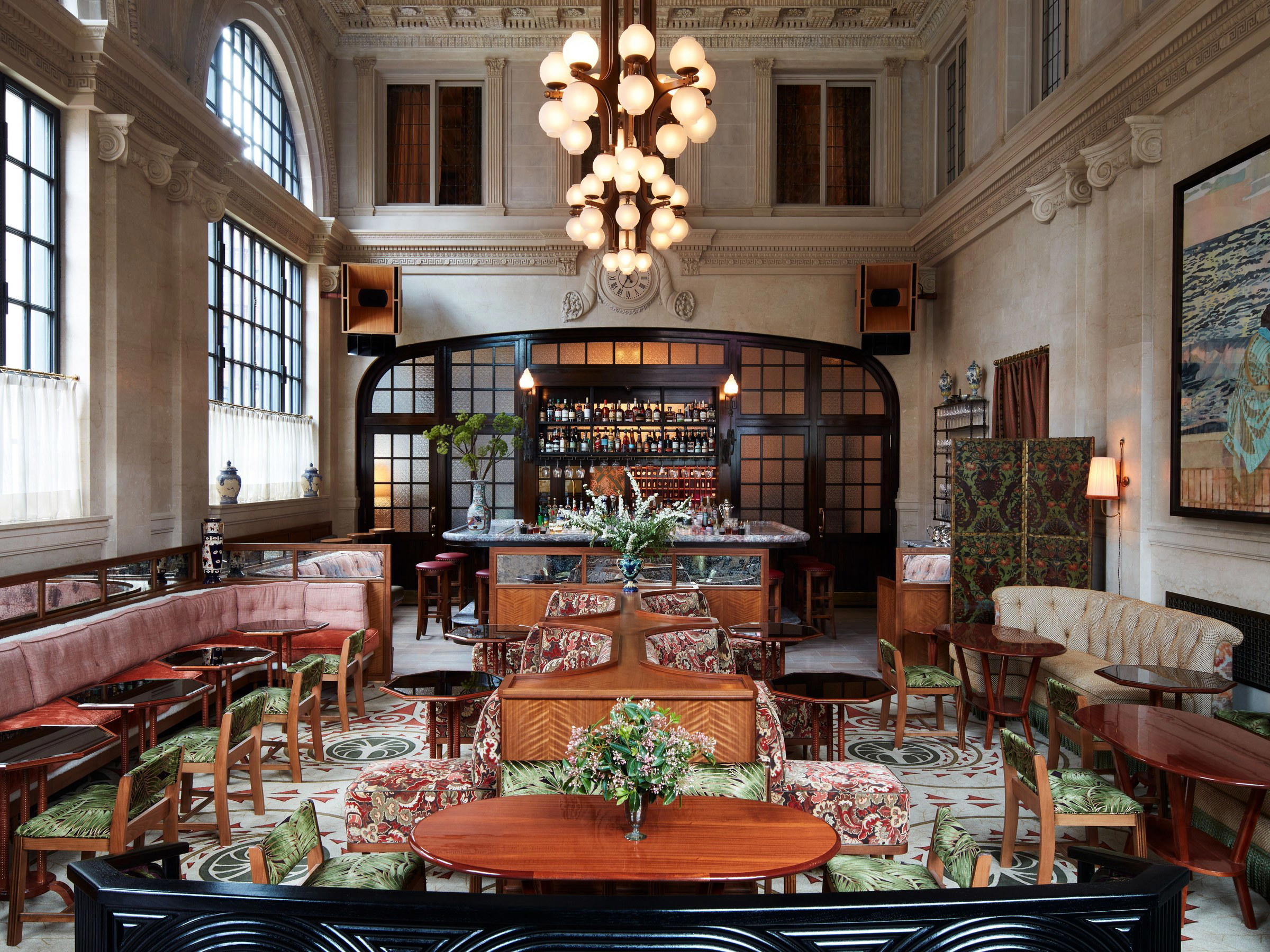
Upscale yet approachable bistro atmosphere with a wine bar focus, designed as a gateway into the Houston White brand experience.