Blackfin Bistro
Our verdict
On the stretch of Duval Street where Key West's tourist economy runs loudest, Blackfin Bistro occupies a position that regulars treat as a counter-programming choice. The kitchen tilts toward the seafood traditions of the Florida Keys, and the crowd that returns reliably tends to be less interested in spectacle than in consistency. A dependable address in a city where reliable quality can be harder to find than the postcards suggest.

Pearl is the En Primeur Club membership app, where members save venues, book tables and use the concierge.
The menu
What to order
- Blacken Bistro Burger
- Seafood Pasta
- Tuna Nicoise
What Duval Street Regulars Already Know
Duval Street does not typically inspire loyalty. The strip that runs the length of Key West's tourist corridor is engineered for one-time visits: frozen drinks, souvenir shops, bars with open facades and cover bands audible from half a block away. The restaurants that survive here on repeat business from locals and returning visitors tend to do so quietly, without the marketing apparatus of the larger hospitality operations. Blackfin Bistro, at 918 Duval St, sits inside that quieter category. It is not the address that draws attention from outside Key West, and that is precisely what keeps a certain kind of diner coming back.
The regulars' calculus in a city like Key West is particular. A tourist economy creates constant pressure toward the theatrical and the oversized. Plates get bigger, drinks get more elaborate, and kitchens chase the crowd rather than the ingredient. The places that develop a genuine local following tend to be the ones that resist that gravity, focusing instead on the kind of consistency that only matters to someone who has eaten there more than once. In Key West's dining scene, that distinction carries weight.
The Seafood Logic of the Florida Keys
Key West's geographic position at the end of a 127-mile chain of islands gives it a specific pantry. Stone crab, yellowtail snapper, grouper, and spiny lobster define the local catch calendar, and the restaurants that earn sustained respect from repeat visitors tend to be the ones that work within that seasonal rhythm rather than around it. The Floribbean tradition, which blends the tropical produce of South Florida with the seafood infrastructure of the Keys and the Caribbean flavor vocabulary that the region absorbed through decades of Cuban and Bahamian influence, provides the culinary framework for most serious kitchens in the city.
That framework places Key West restaurants in an interesting comparative position. The city's leading addresses are not competing with the tasting-menu ambition of places like The French Laundry in Napa, the precise modernism of Atomix in New York City, or the produce-driven formalism of Blue Hill at Stone Barns in Tarrytown. They are competing on different terms: freshness of catch, confidence with tropical preparations, and the ability to make a diner feel they have eaten something specific to this place rather than something that could have been assembled anywhere. Blackfin Bistro belongs to that local conversation, not the national one.
For context on how Key West kitchens stack up at the more ambitious end of the spectrum, the city also hosts addresses like 7 Fish and Antonia's, both of which operate with a tighter, more curated sensibility. At the other end, casual institutions like B.O.'s Fish Wagon built their reputation on the opposite premise: minimal intervention, maximum informality. Blackfin Bistro occupies a middle tier in that range, positioned for the diner who wants a proper sit-down meal without the formality of the city's more serious tables.
The Unwritten Preferences of Return Visitors
There is an informal hierarchy of knowledge that develops among loyal restaurant patrons in any city. The first visit involves consulting the menu as written. By the third or fourth visit, the regulars have their own map: a preferred seat, a preferred time of arrival, dishes that represent the kitchen at its most consistent, and an awareness of when to push the kitchen and when to stay within the safe range of their strengths. In Key West, where the seasonal rhythms of the tourist calendar shape staffing and supply chains in visible ways, that insider knowledge is especially useful.
The addresses that develop this kind of following tend to share certain characteristics. They handle the high-season volume without the kitchen losing its grip on quality. They maintain a wine and drink list that reflects some degree of curation rather than pure commercial logic. And they give the impression, however managed, that the staff recognizes a face. These are not criteria that show up in award citations, but they are the criteria that determine whether a restaurant becomes a reliable part of someone's annual Key West itinerary.
That is a different kind of recognition than the one tracked by major award programs. Places like Le Bernardin in New York City, Smyth in Chicago, or Providence in Los Angeles earn their position through critical consensus and verifiable credentials. The Key West market runs on a different axis, where reliability across the arc of a vacation week counts for more than any single exceptional meal.
Duval Street runs from the Gulf of Mexico to the Atlantic Ocean, and the restaurants along it represent almost every point on the value-to-quality spectrum. At the more atmospheric end, Louie's Backyard holds a position in the Floribbean canon that predates most of the current competition. Azur and Atlas Izakaya represent the more contemporary registers of Key West dining, with tighter menus and more deliberate concepts. Within this field, Blackfin Bistro positions itself as an accessible, dependable option rather than a destination in the aspirational sense.
That positioning is not a limitation. In a tourist-heavy city where the median restaurant experience is calibrated for volume rather than quality, a kitchen that holds its standard across the full span of season performs a different but legitimate function. The parallel holds in other cities: Emeril's in New Orleans built its durability on a similar premise, serving a broad audience without abandoning the kitchen's core competencies. The scale and ambition are different, but the logic of sustained, consistent service over theatrical peaks has its own value.
For the full range of options in the city, the EP Club Key West restaurants guide maps the scene across price points and cuisine styles, including the more format-driven options like Lazy Bear in San Francisco comparables at the local level. Readers planning a longer stay in the Keys will find that building an itinerary around a mix of institutional addresses, ambitious newer kitchens, and reliable mid-range options like Blackfin Bistro gives the most complete picture of what the island's dining scene actually offers.
Planning a Visit
Blackfin Bistro is located at 918 Duval St, Key West, FL 33040, positioned along the main corridor that runs through the center of the island. Visitors approaching on foot from the historic district will find it within walking distance of most of the city's accommodation clusters. Arriving earlier in the evening rather than at peak dinner service is the standard recommendation for restaurants in this category across Key West. The address is walkable from most of Old Town, and the parking realities of Duval Street make arriving on foot or by bicycle the practical choice.
Frequently asked questions
Where is Blackfin Bistro located?
Blackfin Bistro is located at 918 Duval St, Key West, FL 33040, Key West.
Where exactly is Blackfin Bistro located on Duval Street, and what does that position mean for a visit?
Blackfin Bistro sits at 918 Duval St, Key West, FL 33040, placing it well along the main corridor that connects the Gulf of Mexico side of the island to the Atlantic. That address puts it within walking distance of the bulk of Key West's accommodation stock, making it a practical dinner option without requiring transport. Duval Street is navigable on foot from most of the historic district.
What dish is Blackfin Bistro famous for?
No single confirmed signature dish appears in the public record for Blackfin Bistro. That said, its position in Key West, at the southern end of a 127-mile island chain with direct access to stone crab, yellowtail snapper, and grouper, means Florida Keys seafood is the logical anchor of any menu worth ordering from here.
What do critics highlight about Blackfin Bistro?
Its durability on Duval Street, a corridor where turnover runs high and tourist-trap economics dominate, is itself a signal that the restaurant has built a returning local and visitor base on something beyond novelty.
Can Blackfin Bistro accommodate dietary restrictions?
Seafood-forward kitchens in the Florida Keys typically work across grilled, broiled, and raw preparations, which gives the menu natural flexibility for gluten-conscious diners, though calling ahead to 918 Duval St is the reliable approach for specific needs.
Is a meal at Blackfin Bistro worth the investment?
What the record does indicate is that the restaurant has maintained a presence on one of Florida's most competitive and high-turnover dining strips, which speaks to a consistent draw beyond first-time tourist traffic.
Cuisine Lens
Comparable venues nearby, for context on price, style, and recognition.
| Venue | Cuisine | Price | Notes |
|---|---|---|---|
| Blackfin BistroThis venue (the venue you are viewing) | American Bistro with Seafood | $30–50 | Not listed |
| VIV Wine Bistro | French Bistro & Natural Wine Bar | $30–50 | Bahama Village |
| Martin's | German-Caribbean Fusion Fine Dining | $50–100 | Duval Street |
| Red Shoe Island Bistro | Seafood Bistro with European Influences | $50–100 | Old Town |
| La Te Da | Classic American with Seafood | $30–50 | Duval Street |
| One Duval | Caribbean Seafood | $50–100 | Old Town |
Continue exploring
More in Key West
Restaurants in Key West
All restaurants in Key West →
Bars in Key West
All bars in Key West →
Details
- Elegant
- Cozy
- Sophisticated
- Date Night
- Special Occasion
- Brunch
- Terrace
- Extensive Wine List
- Local Sourcing
- Street Scene
- A La Carte
- Wine
- Vegetarian Friendly
- Vegan Options
- Gluten Free Options
Current opening hours
- Monday
- 5–10 PM
- Tuesday
- 5–10 PM
- Wednesday
- 5–10 PM
- Thursday
- 5–10 PM
- Friday
- 5–10 PM
- Saturday
- 5–10 PM
- Sunday
- 9 AM–3 PM, 5–10 PM
Hours can change for holidays and private events. Hours as of .
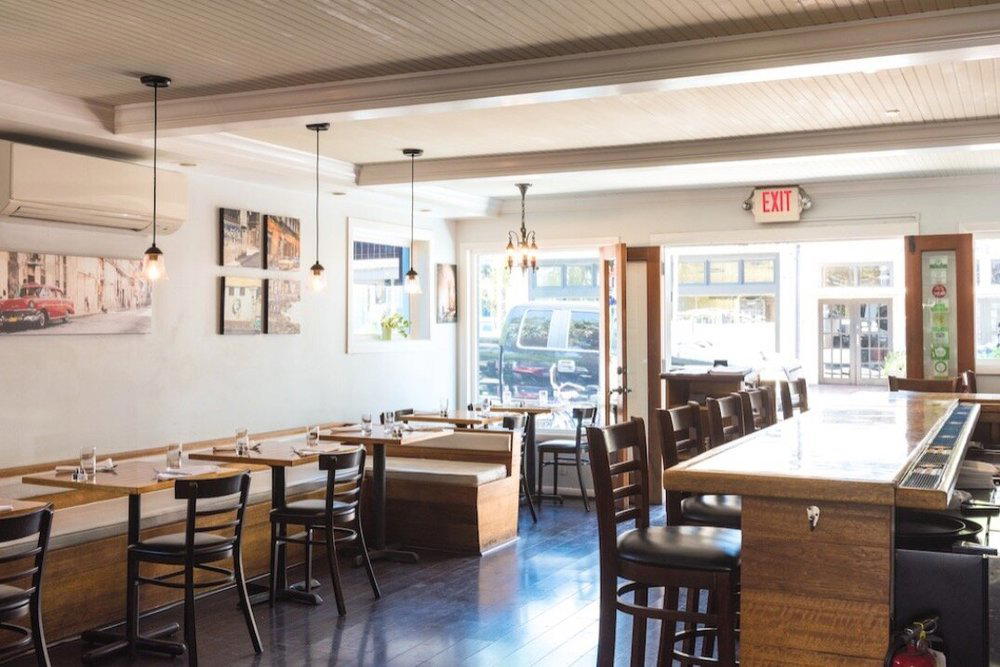
Elegant yet relaxed atmosphere with stylish indoor dining and charming tree-lined patio.