Atlas Izakaya
Our verdict
Atlas Izakaya brings a Japanese izakaya format to Key West's Truman Avenue corridor, positioning it as a counter-cultural presence on an island whose dining scene runs heavily toward seafood shacks and Floribbean fusion. The address places it within walking distance of the historic district's residential edge, where the pace drops and the crowds thin.

Pearl is the En Primeur Club membership app, where members save venues, book tables and use the concierge.
The menu
What to order
- Crispy rice with tuna
- Bao buns
- Yakitori
- Maitake mushroom
- King crab tacos
Where Truman Avenue Changes Register
Key West's dining geography has a distinct logic: the further you move from Duval Street's neon corridor, the more the restaurants begin to resemble places where people actually eat rather than places designed around a tourist's first evening in town. Truman Avenue sits in that transitional zone, a stretch where guesthouses outnumber souvenir shops and the kitchen windows stay lit past the bar crowds. Atlas Izakaya at 500 Truman Ave occupies a suite-format address in this quieter register, which shapes the experience before you've ordered anything.
The izakaya format itself carries specific expectations that are worth understanding before arrival. In Japan, the izakaya occupies a middle space between a bar and a restaurant: shareable plates, a drinking-forward structure, and a pace dictated by conversation rather than a kitchen's need to turn tables. American interpretations vary widely, from sprawling ramen-adjacent operations to tight counter formats built around serious whisky and small-batch sake lists. Where Atlas Izakaya sits within that spectrum, given the limited data publicly available, is something a direct inquiry to the venue would clarify before booking.
Key West's Relationship with Japanese Cuisine
The island's culinary identity is anchored in what gets called Floribbean: a hybrid of Caribbean spicing, Florida seafood, and American comfort-food architecture. Venues like Bagatelle and Antonia's work within that tradition, as does Azur with its European-Florida crossover. The fish-centric end of the spectrum runs through places like B.O.'s Fish Wagon and 7 Fish, both of which treat local catch as the primary frame. Against this backdrop, a Japanese-format venue represents a deliberate departure from the dominant mode.
That departure matters for how you plan an evening. The izakaya's small-plate structure sits closer to a tapas session than to the single-plate mains most Key West kitchens send out. If you're arriving from a day on the water expecting a direct fish dinner, Atlas Izakaya is likely to require a small recalibration of expectations, which is exactly the kind of recalibration that makes a dining scene worth returning to.
Reading the Address
Suite 7 at 500 Truman Ave places Atlas Izakaya inside a multi-unit building rather than a standalone storefront. This is relevant logistically: first-time visitors should allow a few extra minutes to locate the entrance, particularly after dark. The Truman Avenue block sits within a short walk of the Truman Annex neighbourhood and the historic architecture running toward Whitehead Street, meaning the surrounding area rewards the kind of slow pre-dinner walk that sharpens appetite and mood in roughly equal measure.
For visitors cross-referencing against the broader Key West dining picture, our full Key West restaurants guide maps the island's categories with neighbourhood-level detail. The izakaya format is comparatively rare in the Florida Keys relative to the density of sushi and Japanese-influenced venues further up the coast toward Miami, which gives Atlas Izakaya an obvious point of differentiation within the local scene even without a fuller data picture.
Izakaya in a Wider American Context
To understand what Atlas Izakaya is attempting, it helps to look at the broader American izakaya movement. In major urban centres, the format has split into two distinct tiers. One tier emphasises high-precision Japanese technique applied to sourced American ingredients, the approach you see at venues like Atomix in New York City, which has pushed Korean fine dining in a comparable direction. The other tier stays closer to the original izakaya proposition: approachable, drink-pairing-led, with food that prioritises texture and flavour contrast over composed-plate elegance.
Key West's scale and visitor composition make the latter approach the more natural fit. The island runs on a tourism economy that skews toward groups, couples on extended stays, and a significant contingent of long-term residents who eat out frequently enough to want variety beyond the Floribbean default. An izakaya that executes cleanly on shareable small plates and a considered drinks list serves all three cohorts reasonably well.
For context on what the format can achieve at a higher level of investment and ambition, venues like Le Bernardin in New York City, Lazy Bear in San Francisco, and Providence in Los Angeles represent the American fine-dining tier where Japanese technique has been most thoroughly absorbed into a non-Japanese frame. At the other end of the ambition scale, farm-to-table precision operations like Single Thread Farm in Healdsburg and Blue Hill at Stone Barns in Tarrytown show what happens when sourcing rigour is treated as the primary editorial statement. Atlas Izakaya operates on a different register from any of those, but understanding where the category runs at full stretch gives useful calibration for what to look for at the local level.
Planning Your Visit
For a format-driven venue in a suite-address building, confirming reservation availability before arrival is standard practice rather than optional.
Timing-wise, Key West's shoulder seasons (late spring and early autumn) bring smaller crowds and more manageable reservation windows across the island. Peak winter season, roughly December through March, compresses availability at most venues in the historic district. If Atlas Izakaya operates on a walk-in basis, arriving at the early end of the dinner service window is the practical move during high season.
For visitors building a multi-night itinerary, placing Atlas Izakaya alongside contrast options gives the clearest picture of what Key West's dining range actually covers. A fish shack lunch at B.O.'s Fish Wagon, an evening at Atlas Izakaya for small plates, and a later reservation at a Floribbean-format room like Bagatelle maps the island's tonal range efficiently. The izakaya format works particularly well as a secondary dinner: late enough that the kitchen's pace suits a drinking-alongside structure rather than a single, committed meal.
Frequently asked questions
Can I bring kids to Atlas Izakaya?
Atlas Izakaya is located in a suite-format building at 500 Truman Ave, which tends to attract a quieter, more deliberate dining crowd than the Duval Street strip. The izakaya format, small shared plates, often paired with drinks, is better suited to adults or older children comfortable with a slower, course-by-course pace.
What's the vibe at Atlas Izakaya?
The Truman Avenue address puts Atlas Izakaya well outside Key West's loudest tourist corridor, which shapes the atmosphere considerably. Suite 7 inside a multi-unit building signals an understated setting rather than a high-visibility destination. The izakaya format typically means counter seating or communal tables, an emphasis on drinking and grazing, and a pace that's unhurried compared to the island's beach-adjacent spots.
Is Atlas Izakaya one of the few izakaya-style restaurants in Key West?
Key West's restaurant scene is anchored in Floribbean cooking, Caribbean-influenced seafood and Florida comfort food, making a dedicated izakaya format relatively uncommon on the island. Atlas Izakaya at 500 Truman Ave sits outside the main tourist drag, positioning it as a distinct option for diners specifically seeking Japanese small-plate dining in Key West rather than the area's more prevalent fish houses and Caribbean kitchens.
What should I eat at Atlas Izakaya?
Atlas Izakaya operates within the izakaya tradition, where the menu is built around shareable small plates rather than individual entrees. In Key West specifically, expect that format to intersect with the island's access to Gulf and Atlantic seafood, though confirmed dish details should be verified with the venue directly. The most reliable approach is to ask staff for the current menu when you arrive or contact Atlas Izakaya before visiting.
Where do I go for Atlas Izakaya?
Atlas Izakaya is located at 500 Truman Ave #7, Key West, FL 33040, Key West.
Just the Basics
Comparable venues nearby, for context on price, style, and recognition.
| Venue | Cuisine | Price | Awards | Notes |
|---|---|---|---|---|
| Atlas IzakayaThis venue (the venue you are viewing) | Modern Japanese Izakaya | $50–100 | Not listed | Not listed |
| One Duval | Caribbean Seafood | $50–100 | Not listed | Old Town, Caribbean Seafood |
| VIV Wine Bistro | French Bistro & Natural Wine Bar | $30–50 | Not listed | Bahama Village, French Bistro & Natural Wine Bar |
| La Te Da | Classic American with Seafood | $30–50 | Not listed | Duval Street, Classic American with Seafood |
| B.O.'s Fish Wagon | Key West Seafood Shack | $10–20 | Not listed | Historic Seaport, Key West Seafood Shack |
| Moondog Cafe | American Cafe | $20–30 | Michelin Bib Gourmand | Old Town, American Cafe |
Continue exploring
More in Key West
Restaurants in Key West
All restaurants in Key West →
Bars in Key West
All bars in Key West →

Details
- Cozy
- Trendy
- Intimate
- Elegant
- Date Night
- Casual Hangout
- Special Occasion
- Open Kitchen
- Sake Program
- Craft Cocktails
- Local Sourcing
- Small Plates
- A La Carte
- Omakase
- Sake Program
- Vegetarian Friendly
- Vegan Options
Current opening hours
- Monday
- 4–10 PM
- Tuesday
- 4–10 PM
- Wednesday
- 4–10 PM
- Thursday
- 4–10 PM
- Friday
- 4–10 PM
- Saturday
- 4–10 PM
- Sunday
- 4–10 PM
Hours can change for holidays and private events. Hours as of .
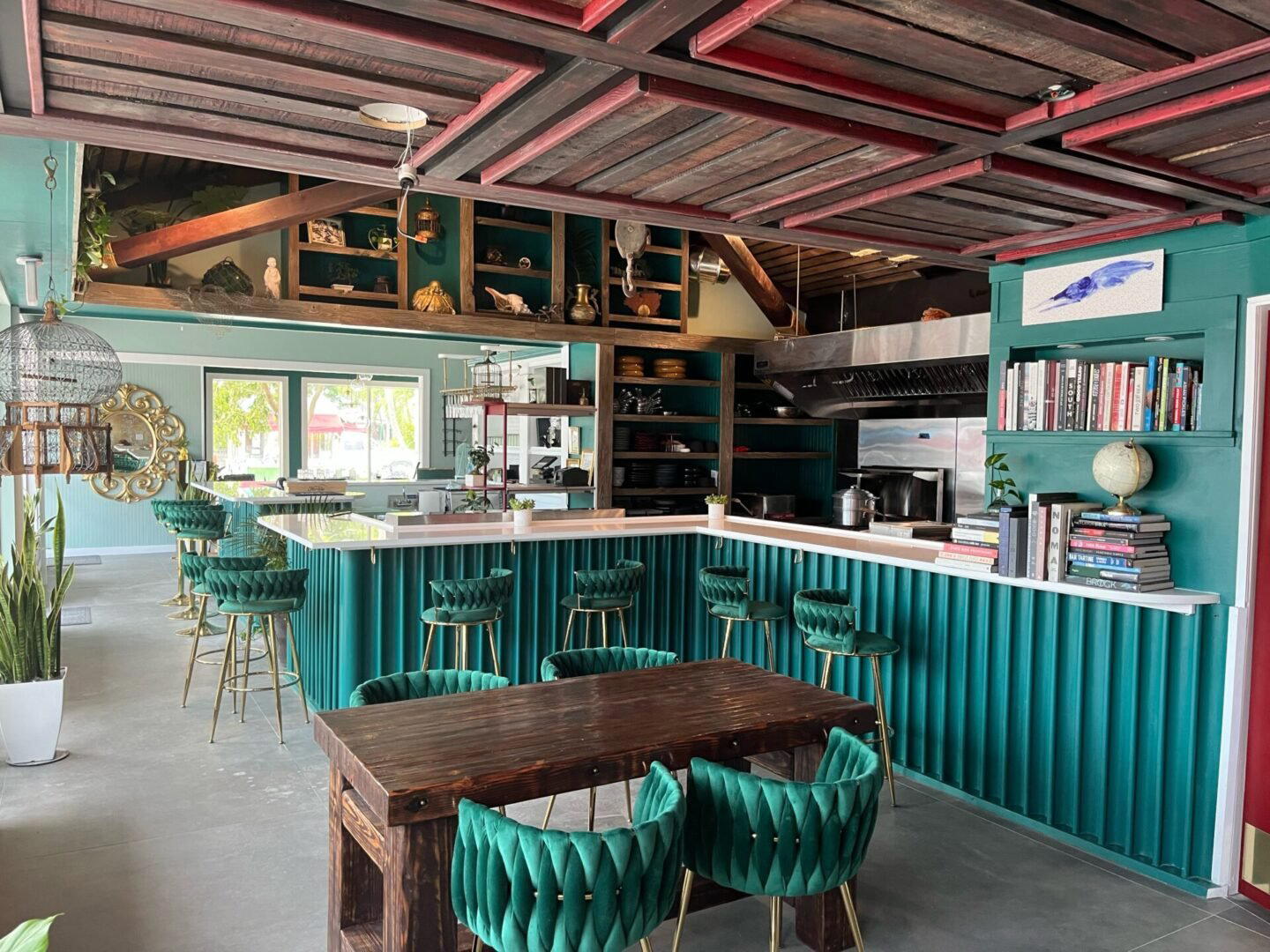
Relaxed yet refined atmosphere with impressive open kitchen, unusual and attractive decor creating an immersive otherworldly feel.