Our verdict
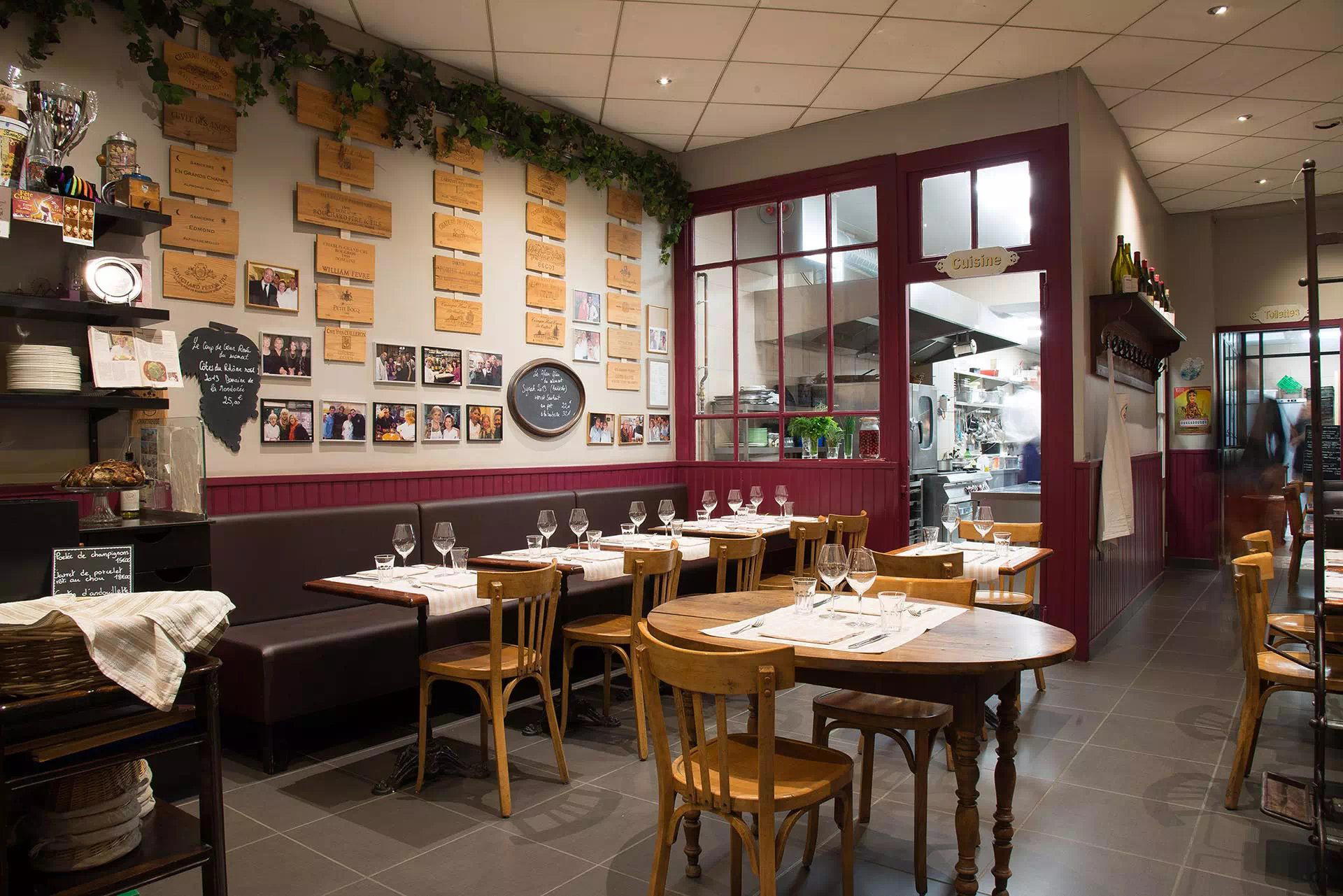
On Rue Duguesclin in Lyon's 3rd arrondissement, Bistrot du Palais occupies the middle ground between grand-tradition bouchon and destination fine dining, a register Lyon does quietly well. The address places it within the city's most densely serious dining corridor, where the question is less whether the cooking is competent and more whether the room, the service, and the cellar work as a coherent whole.

Pearl is the En Primeur Club membership app, where members save venues, book tables and use the concierge.

The menu
What to order
- Andouillette
- Tête de veau sauce gribiche
- Pike dumpling Nantua sauce
A Street That Takes Dining Seriously
Rue Duguesclin, in Lyon's 3rd arrondissement, is not the address that appears in most visitors' first itineraries. That distinction tends to fall on the Presqu'île or the bouchon strips of the 1st. But the 3rd has accumulated, over the past two decades, a density of working restaurants that serve the city's professional and residential population rather than its tourists, and the character of those rooms reflects it: less theatre, more discipline. Bistrot du Palais sits at number 220 within that corridor, an address that signals a particular kind of ambition. Not the white-tablecloth performance of the grands établissements, and not the deliberately rough-edged bistrot invoking nostalgia. It occupies a middle ground, and in Lyon, that register has its own demanding standards.
Lyon holds a specific position in French culinary geography. It is the city most associated with the idea that good cooking is a civic responsibility rather than a luxury, a position built on the tradition of the mères lyonnaises and sustained through generations of restaurateurs who understood that the dining room is an institution, not a stage. La Mère Brazier, which carries that lineage most directly, and the more contemporary registers of Le Neuvième Art and Takao Takano define the upper tier of what the city now offers. Bistrot du Palais occupies a different register from those destination tables, but in Lyon, operating a credible bistrot is not a lesser ambition. It is a different, and in some ways more demanding, one.
The Architecture of Service
In bistrot-format restaurants across France, the quality of the experience is rarely determined by any single element. It emerges from the relationship between what arrives on the plate, who brings it, and what is poured alongside it. The leading examples of the format, from Paris's natural-wine caves to the market-lunch institutions of Lyonnais markets, share a particular operational fluency: the kitchen, the floor, and the cellar are not three separate departments but one coordinated rhythm. When that coordination works, the room feels effortless. When it doesn't, no amount of good cooking recovers it.
This dynamic is worth holding in mind when considering what Bistrot du Palais offers within the 3rd arrondissement's dining scene. The bistrot format in Lyon has historically asked its service teams to carry a significant informational load: the city's wine culture, particularly around Beaujolais, Côte du Rhône, and the northern Rhône appellations, is specific enough that a front-of-house team needs genuine literacy rather than scripted recommendations. Similarly, the Lyonnais cooking tradition rewards a kitchen and floor that communicate precisely about sourcing and preparation, since the cuisine is not one that hides its ingredients behind elaborate technique.
Comparable venues in the city that have resolved this coordination successfully, such as Burgundy by Matthieu in the modern cuisine register, demonstrate that the price point and the format matter less than the internal coherence of the operation. Au 14 Février offers another model within Lyon's creative spectrum, where tightly integrated teams produce experiences that exceed what a purely technical kitchen assessment would predict.
Lyon's Bistrot in National Context
France's broader restaurant culture has, over the past decade, bifurcated sharply between tasting-menu destination restaurants chasing international recognition and a resurgent bistrot wave that prizes accessibility, informality, and provenance transparency. Lyon sits at an interesting intersection of those currents. The city has always had more in common with the second tendency, but its reputation as a gastronomic capital means it also sustains a tier of serious destination dining that draws from across France and beyond.
At the national level, the conversation about French restaurant tradition involves addresses such as Troisgros in Ouches, Paul Bocuse's Auberge du Pont de Collonges in Collonges-au-Mont-d'Or, and Bras in Laguiole, institutions that have shaped what French cooking means internationally. Closer to Lyon in format and register, Georges Blanc in Vonnas maintains the grands établissements tradition of the Bresse corridor. Further afield, Auberge de l'Ill in Illhaeusern and Les Prés d'Eugénie in Eugénie-les-Bains represent the regional grande maison model at its most sustained. These are the coordinates within which Lyon's dining scene operates, and they matter because they establish the standard against which even a neighbourhood bistrot on Rue Duguesclin is implicitly measured by its local clientele.
The international tier, represented by addresses including Mirazur in Menton, Alléno Paris au Pavillon Ledoyen, and Flocons de Sel in Megève, sits above this register entirely. At the other end of the geographic spectrum, celebrated restaurants like Le Bernardin in New York and Lazy Bear in San Francisco demonstrate that the French fine-dining template continues to set the reference point for serious cooking globally, even as individual cities develop their own idioms. Lyon's contribution to that global conversation is not primarily through its destination tables but through the accumulated quality of its everyday dining culture, of which a well-run bistrot on Rue Duguesclin is a working example. See our full Lyon restaurants guide for a broader picture of the city's dining range. Similarly, La Table du Castellet in Le Castellet offers an instructive comparison point for understanding how regional French restaurants outside Lyon have evolved their own serious identities.
Planning a Visit
Bistrot du Palais is located at 220 Rue Duguesclin in Lyon's 3rd arrondissement, reachable from the Presqu'île in roughly fifteen minutes on foot across the Rhône, or directly via the Part-Dieu transport hub, which serves TGV connections from Paris in under two hours. The 3rd arrondissement's character is residential and professional rather than tourist-facing, which means lunch service in particular tends to draw a local clientele with clear expectations about pace and value. Confirm current hours, booking availability, and reservation requirements directly with the venue.
Frequently asked questions
Where is Bistrot du Palais located?
Bistrot du Palais is located at 220 Rue Duguesclin, 69003 Lyon, France.
What's the signature dish at Bistrot du Palais?
Contact the restaurant directly for its current menu and recommendations.
Do they take walk-ins at Bistrot du Palais?
How Bistrot du Palais Lyon compares with similar nearby venues.
| Venue | Cuisine | Price | Awards |
|---|---|---|---|
| Bistrot du PalaisThis venue (the venue you are viewing) | Traditional Lyonnaise Bistro | $30–50 | Not listed |
| l'Âme Sœur | Modern French Seasonal Bistro | $30–50 | Star Wine List |
| Yuzuya | Japanese Izakaya | $30–50 | Not listed |
| L'Alexandrin | Modern French with Lyonnais Heritage | $50–100 | Michelin Plate |
| La Table 101 | Modern French Bistronomie | $30–50 | Michelin Plate |
| Daniel et Denise Créqui | Lyonnaise Bouchon Gastronomique | $50–100 | Michelin Plate |