Our verdict
On a quiet street in Le Cannet's hilltop village quarter, Bistro Saint Sauveur occupies the kind of address that rewards those who look beyond the Croisette. The cooking sits in the French bistro tradition, drawing on the Provençal ingredient base that defines the Côte d'Azur's inland dining scene. For a neighbourhood alternative to Le Cannet's more formal tables, it earns its place on the shortlist.

Pearl is the En Primeur Club membership app, where members save venues, book tables and use the concierge.
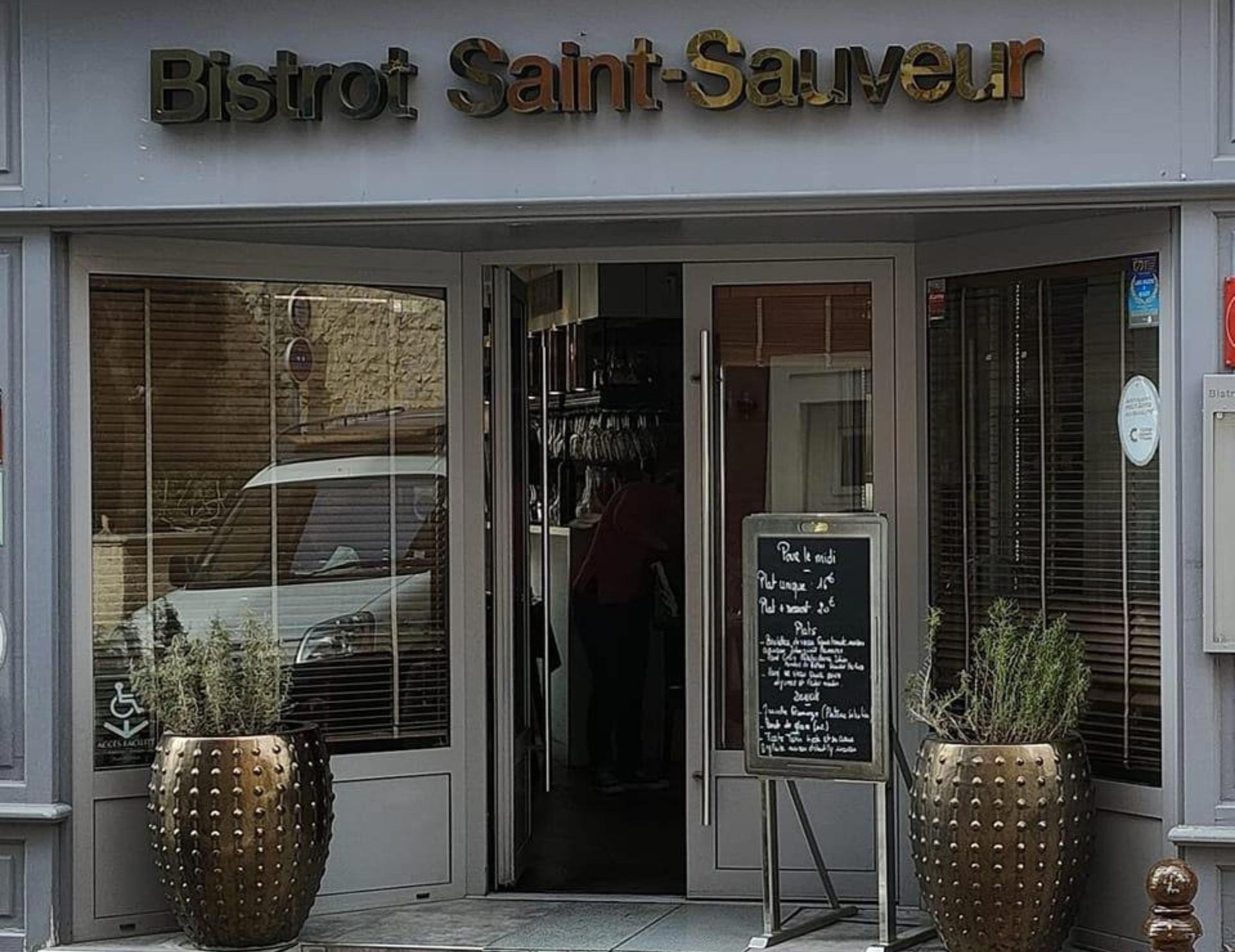
Le Cannet's Hilltop Quarter and the Bistro Format
The hill towns above Cannes operate on a different rhythm from the seafront. Le Cannet's old village, a compact grid of ochre facades, steep lanes, and shuttered workshops, sits above the coastal noise and has, over the past decade, developed a dining identity of its own. The bistro format fits this context well. Where La Villa Archange represents Le Cannet's ambitions at the formal, multi-course end of modern cuisine, and Kashiwa addresses a different register entirely, Bistro Saint Sauveur on Rue St Sauveur occupies the middle ground: the kind of room where the cooking aims to be honest and the pricing is calibrated for regulars, not tourists making a once-a-trip decision.
That positioning matters in a town where the spectrum runs from neighbourhood staples to destination-level formal dining. The bistro tier in French cooking carries its own discipline, shorter menus, market-driven rotation, a reliance on supplier relationships rather than spectacle. Across Provence and the Côte d'Azur, the best-regarded bistros in this price bracket tend to source from a tight radius: producers in the Var, fishermen working out of Golfe-Juan or Antibes, market gardeners from the Alpes-Maritimes hinterland. That sourcing logic is what separates a credible bistro from a tourist-facing facsimile.
Ingredient Geography on the Côte d'Azur
The Alpes-Maritimes sits at a produce intersection that few French departments can match. To the west, the Var's market gardens supply courgette flowers, tomatoes, and early-season asparagus from April onwards. Inland, the pre-Alpine valleys around Grasse and Saint-Vallier-de-Thiey produce lamb, goat's cheese, and mountain herbs at altitudes that give them a different flavour profile from their coastal equivalents. To the east, the proximity to the Italian border means that Ligurian influences, chickpea preparations, stuffed vegetables in the Niçois manner, fresh pasta traditions, are considered local rather than foreign.
This is the ingredient territory a bistro at the address of 87 Rue St Sauveur is working with, and it is a generous one. The French Riviera's dining scene at the leading end has produced addresses that reference these ingredients at considerable price points: Mirazur in Menton has built an international reputation in part on hyper-local and garden-grown sourcing, while the regional tradition of cuisine du terroir, cooking anchored to what the immediate territory produces, runs through establishments like Bras in Laguiole and Auberge du Vieux Puits in Fontjoncouse, both of which have made a creative argument for their respective landscapes through the plate. A neighbourhood bistro operates at a different scale, but the underlying logic is the same: the shorter the distance between field and kitchen, the more the cooking can speak for itself.
Where Bistro Saint Sauveur Sits in Le Cannet's Dining Picture
Le Cannet's dining options have a clear internal hierarchy. At the neighbourhood and everyday tier, Bistrot des Anges anchors the traditional end of the spectrum at an accessible price point. Bistro Saint Sauveur occupies a similar register, French, relatively informal, aimed at the residential catchment of the upper village rather than visitors arriving from the Promenade de la Croisette with a reservation printed out. This is the kind of address that serves the neighbourhood on a Tuesday as readily as it does on a Saturday, and that operating model tends to keep kitchens honest: menus rotate with what is available, and there is limited tolerance from regulars for cooking that does not deliver on its promise.
For visitors approaching Le Cannet from Cannes, the old village is roughly fifteen minutes on foot from the lower town, or a short drive with parking available in the streets around the church. The pace of the neighbourhood is noticeably slower than the seafront, which is part of the point. Planning a visit around lunch tends to give better access to markets in the morning and leaves the afternoon free for the Cannes waterfront. For context on what else the town offers, the full Le Cannet restaurants guide maps the options across price tiers and styles.
The French Bistro Tradition as a Reference Frame
The bistro format in France has been under commercial pressure for decades. The version that survived in good health tends to be the one with a clear point of view on sourcing, a menu short enough to execute with consistency, and a room that does not try to perform luxury while charging neighbourhood prices. Across France, the addresses that have maintained this format with integrity span a wide geography: from the Alsatian auberge tradition at Auberge de l'Ill in Illhaeusern to the Alpine precision of Flocons de Sel in Megève, France's regional restaurant culture is defined by places that take local ingredients seriously rather than using provenance as a marketing layer over undifferentiated supply chains.
The Côte d'Azur presents a specific challenge for this format: the seasonal tourism economy puts pressure on kitchens to optimise for high-spend visitor traffic between June and August, which can erode the habits that make a neighbourhood restaurant work well. The bistros that resist that drift and maintain year-round supplier relationships and consistent menus tend to be the ones that local residents continue to support through the quiet months of October to March. That year-round engagement with a local clientele is the clearest signal that a bistro is operating as a genuine neighbourhood institution rather than a seasonal convenience.
For comparison at the opposite end of the formality spectrum, the ambitions of French fine dining in the region are visible in references like Alléno Paris au Pavillon Ledoyen, Troisgros in Ouches, or Paul Bocuse's Auberge du Pont de Collonges. What those addresses share with a well-run bistro is a seriousness about the ingredient base, a lesson that Les Prés d'Eugénie, Georges Blanc in Vonnas, and La Table du Castellet each apply in their own regional context. The bistro format drops the theatre but keeps the underlying argument: the quality of what arrives on the plate depends on the quality of what the kitchen starts with.
For those interested in how the bistro approach translates to international contexts, Le Bernardin in New York City and Lazy Bear in San Francisco each represent different ways in which French-influenced sourcing discipline has been applied outside France, at higher price tiers and with more documented critical recognition.
Planning a Visit
Bistro Saint Sauveur is at 87 Rue St Sauveur in Le Cannet's old village quarter, above the main commercial streets of the lower town. Visitors arriving from Cannes should factor in the uphill approach and allow time to explore the surrounding streets, which include the Musée Bonnard and several small galleries. Given the absence of confirmed booking information in the public record, arriving earlier in service rather than at peak time is a reasonable precaution for a room of this format and size. For a fuller picture of what Le Cannet offers across different price points and styles, the EP Club Le Cannet guide provides a mapped overview.
Frequently asked questions
Is Bistro Saint Sauveur child-friendly?
The address at 87 Rue St Sauveur sits in Le Cannet's residential old village quarter, which operates at a pace removed from the tourist-heavy seafront below. Neighbourhood bistros in this part of the Alpes-Maritimes typically run in a relaxed, family-compatible register rather than a formal dining mode.
How would you describe the vibe at Bistro Saint Sauveur?
The setting in Le Cannet's compact hilltop quarter, ochre facades, steep lanes, a neighbourhood grid above the commercial lower town, shapes the atmosphere before you sit down. Bistro Saint Sauveur operates in the informal, locally-facing register that defines the format at this altitude and distance from the Cannes seafront. Think weekday lunch regulars and unhurried evening service rather than tourist-circuit bustle.
How does Bistro Saint Sauveur compare to other dining options in Le Cannet?
Le Cannet's dining options divide broadly between the lower town's commercial strip and the tighter, more residential old village above it, where Bistro Saint Sauveur sits on Rue St Sauveur. The old village tier tends to attract a neighbourhood clientele rather than passing Cannes visitors, which generally produces a different kitchen focus from the tourist-oriented places closer to the seafront. Within Le Cannet specifically, the bistro format at this address occupies the informal, locally-rooted end of the spectrum.
What's the best thing to order at Bistro Saint Sauveur?
Verified menu data is not. In bistros across the Alpes-Maritimes, the dishes that tend to define the kitchen are those drawing on the department's produce geography: market vegetables from the Var to the west, olive oil and aromatics from the immediate hinterland, and fish from the nearby Cannes market. A regional plat du jour is usually the most direct expression of what a kitchen at this level is doing well on a given day.
Fast Comparison
Comparable venues nearby, for context on price, style, and recognition.
| Venue | Cuisine | Price | Awards | Notes |
|---|---|---|---|---|
| Bistro Saint SauveurThis venue (the venue you are viewing) | Authentic French Bistro | $50–100 | Not listed | Not listed |
| Kashiwa | Authentic Japanese Sushi & Sashimi | $50–100 | Michelin Plate | Le Cannet |
| Bistrot des Anges | Provençal Bistro | $30–50 | Michelin Bib Gourmand | Le Cannet |
| La Villa Archange | Modern French Haute Cuisine with Mediterranean Influences | $150–200 | 2 Michelin Stars · La Liste Top Restaurants | Le Cannet |
| La Petite Maison | Authentic Niçoise Mediterranean | $50–100 | Not listed | Nice Historique |
| Cave Croisette | French Bistro with Mediterranean Tapas | $30–50 | Not listed | ['La Californie'] |
Continue exploring
More in Le Cannet
Restaurants in Le Cannet
All restaurants in Le Cannet →
Bars in Le Cannet
Browse all →

Details
- Cozy
- Elegant
- Classic
- Date Night
- Historic Building
- Extensive Wine List
- A La Carte
- Wine
- Vegetarian Friendly
Current opening hours
- Monday
- Closed
- Tuesday
- 12–2 PM
- Wednesday
- 12–2 PM, 7–10 PM
- Thursday
- 12–2 PM, 7–10 PM
- Friday
- 12–2 PM, 7–10 PM
- Saturday
- 12–2 PM, 7–10 PM
- Sunday
- 12–2 PM
Hours can change for holidays and private events. Hours as of .
Chaleureux et confortable with chic et décontractée atmosphere in a picturesque old town setting.