Bedford Village Inn Restaurant

Wine Spectator Best of Award of Excellence
Our verdict
Bedford Village Inn Restaurant occupies a quietly prominent position in southern New Hampshire's dining scene, where inn-based fine dining carries a tradition of sourcing close to home. The surrounding region's farms and seasonal rhythms shape what arrives at the table, placing this Bedford address inside a longer American story about ingredient-led cooking done at a remove from urban restaurant culture.

Pearl is the En Primeur Club membership app — saves, bookings, and concierge access live there. Same editors, same standards.
- Address
- 2 Olde Bedford Way, Bedford, NH 03110
- Phone
- (603) 472-2001
- Website
- bedfordvillageinn.com
- Directions
- Get directions
- Booking
- Book on OpenTable
The menu
What to order
- Steel Cut Oatmeal
- Crunchy Oat Crusted French Toast
- Crispy Crab Cake
- Slow Roasted Lamb Rack
- Pan Roasted Duck Breast
Inn Dining in New England: Where the Supply Chain Is the Story
Southern New Hampshire has never been a destination that announces itself loudly on the American fine-dining circuit. The region sits in a quieter register, where inn-based restaurants — properties that cook for guests and locals alike, often across multiple service formats under one roof — carry a tradition rooted in New England's agricultural calendar rather than in chefs chasing awards. Bedford Village Inn Restaurant operates within that tradition. Its address in Bedford, New Hampshire, places it at a point where the suburban commuter belt of Manchester meets the older, more deliberate rhythms of rural Merrimack County, a geography that has historically shaped what ends up on a plate more than any kitchen philosophy might.
Inn restaurants of this type occupy a distinct tier in American dining. They are not destination restaurants in the way that Single Thread Farm in Healdsburg is, where the farm-to-table proposition is itself the ticketed experience, nor are they urban fine dining in the vein of Le Bernardin in New York City, where the supply chain is invisible behind the polish of a Michelin-starred room. Instead, they sit in a middle category: properties where the kitchen's sourcing relationship with the surrounding region is visible and functional, where the dining room serves both overnight guests and a local clientele, and where the seasonal calendar of New England, short growing windows, reliable root vegetable winters, maple and apple traditions, provides the structural logic for what gets cooked.
The Ingredient Logic of New England's Table
What defines ingredient-led cooking in this part of the country is constraint as much as abundance. New Hampshire's growing season is compressed relative to agricultural regions further south. The window for local tomatoes, corn, and stone fruit runs roughly from July through September; the rest of the year depends on cold-weather staples, preserved and fermented goods, and proteins that carry less seasonal variability. This is not a limitation so much as a framework. Restaurants in the region that take sourcing seriously tend to cook differently in January than they do in August, and that calendar discipline is precisely what separates farm-adjacent cooking from mere marketing language about local ingredients.
The broader American restaurant conversation about provenance has split into two very different camps. At one end, properties like Blue Hill at Stone Barns in Tarrytown have made the farm itself into the dining proposition, with the table positioned almost as an extension of agricultural research. At the other end, the sourcing claim has become background noise, a line in a menu footer that means little about what actually arrives on the plate. Inn restaurants in New England have historically occupied a more honest middle ground: the sourcing is real because the proximity is real, but it does not dominate the experience at the expense of hospitality. Guests arrive expecting to eat well and sleep well, not to complete a curriculum.
For the EP Club reader accustomed to tracking how American restaurants handle the farm-to-table proposition, whether at Smyth in Chicago, Lazy Bear in San Francisco, or The French Laundry in Napa, the inn format offers something those urban or destination rooms cannot: a relationship between table and region that is embedded in the property's function rather than performed for a paying audience.
Bedford's Position in the Regional Dining Map
Bedford itself is not a dining town in the way that Portsmouth, New Hampshire's most food-forward city, has become. It is a prosperous suburb with a local restaurant culture that skews toward reliability over discovery. Within that context, inn-based dining carries a specific local significance. The Bedford Post Inn represents one version of this format in nearby Westchester County; Bedford Village Inn takes a parallel position in southern New Hampshire, where the hospitality is calibrated for a guest who wants something considered without the formality of a destination tasting menu.
The wider Bedford dining scene, covered in detail in our full Bedford restaurants guide, includes more casual options like Copper Door, which operates in a different register entirely. The inn restaurant occupies the upper tier of that local market, drawing a clientele that includes hotel guests, special-occasion diners from Manchester and beyond, and travellers positioned between Boston and the White Mountains who want a proper meal rather than a highway stop.
How This Compares in the American Inn Dining Tradition
The American inn restaurant as a format has a long and serious lineage. The Inn at Little Washington in Washington, Virginia, is the format's most celebrated American example, having held Michelin recognition for years while remaining physically embedded in a rural community. That comparison sets the ceiling of what inn dining can achieve. Most properties operate considerably below that level, but they share the same structural logic: hospitality first, cooking that reflects the surrounding region, and a room designed to serve guests who are staying as well as those who have driven out to eat.
Other restaurants in the EP Club index that engage seriously with ingredient sourcing in non-urban formats include Frasca Food and Wine in Boulder, Addison in San Diego, and The Wolf's Tailor in Denver, each working within a regional agricultural context to shape what the kitchen produces. In New England, that context means knowing your cheese makers by name, sourcing maple from operations within the county, and timing your menu changes to the first hard frost rather than to the editorial calendar.
Internationally, the conversation around terroir-driven inn dining has produced properties like Atelier Moessmer Norbert Niederkofler in Brunico, where the Alpine sourcing philosophy operates at Michelin three-star intensity. Bedford Village Inn works in a quieter key, but the underlying logic, that where food comes from should shape what it tastes like, is the same.
Planning Your Visit
Bedford, New Hampshire sits approximately 55 miles north of Boston, making it accessible as a day or overnight trip from the city. The inn format means reservations should be made in advance, particularly for weekend evenings when the dining room serves both hotel guests and outside diners. New England's seasonal calendar is worth factoring into timing: late summer and early autumn bring the region's most expressive local produce, while winter menus lean toward the preserved, braised, and rooted. Both are worth experiencing for different reasons. Guests travelling from further afield, whether from Miami restaurants like ITAMAE, from Atomix in New York City, or from further-flung American cities, will find the register here considerably quieter and more domestic, which, for certain meals, is exactly the point. For those arriving from New Orleans or the South, the contrast with something like Emeril's in New Orleans underscores how regional American cooking diverges: New England's table is restrained where Louisiana's is layered, root-vegetable where the Gulf is seafood-forward, and tied to a cooler, shorter season that demands a different kind of attention from its kitchens. Equally, those familiar with Providence in Los Angeles will recognise the same seriousness about sourcing applied through a completely different regional lens.
Frequently asked questions
Does Bedford Village Inn Restaurant work for a family meal?
The inn format suits celebrations and milestone occasions more naturally than casual family dinners, particularly for younger children. Bedford Village Inn sits at 2 Olde Bedford Way in a prosperous suburb where the dining tone skews toward considered adults-out evenings. Families with older teenagers marking a graduation or birthday will find the setting appropriate; those with young children may find the atmosphere misaligned with the venue's format.
How would you describe the vibe at Bedford Village Inn Restaurant?
Inn restaurants in New England tend toward warm, structured formality rather than the high-tension precision of urban fine dining. Bedford Village Inn sits in Bedford, a prosperous southern New Hampshire suburb, which shapes its clientele toward locals marking occasions and overnight guests rather than destination-seekers making a single-purpose trip. The result is a room that feels unhurried and grounded in regional routine.
Is Bedford Village Inn Restaurant a good base for exploring southern New Hampshire dining?
Bedford sits roughly 55 miles north of Boston and within easy reach of Portsmouth, New Hampshire's most food-forward city, making it a reasonable overnight anchor for anyone moving through the region. The inn format at 2 Olde Bedford Way means accommodation and dinner share the same address, which simplifies logistics for multi-stop trips across southern New Hampshire. Portsmouth's more concentrated restaurant scene is under an hour's drive east for those wanting broader comparison.
What do people recommend at Bedford Village Inn Restaurant?
What the inn format and New England context consistently favour is ingredient-led cooking tied to regional supply chains, where seasonal constraint shapes the menu more than any single signature dish. For current offerings, checking directly with the inn before visiting is the practical approach.
Where is Bedford Village Inn Restaurant located?
Bedford Village Inn Restaurant is located at 2 Olde Bedford Way, Bedford, NH 03110, Bedford.
Comparable Spots, Quickly
| Venue | Cuisine | Price | Awards | Notes |
|---|---|---|---|---|
| Bedford Village Inn RestaurantThis venue — the venue you are viewing | Contemporary New England Farm-to-Table | $50–100 | Wine Spectator Best of Award of Excellence | Not listed |
| Le Bernardin | French Seafood Fine Dining | $300–500 | 3 Michelin Stars · World's 50 Best #13 | French, Seafood |
| Lazy Bear | Modern American Tasting Menu | Not listed | 2 Michelin Stars · World's 50 Best #25 | Progressive American, Contemporary |
| Atomix | Modern Korean Tasting Menu | $300–500 | 2 Michelin Stars · World's 50 Best #7 | Modern Korean, Korean |
| Per Se | French Fine Dining Tasting Menu | $300–500 | 3 Michelin Stars · World's 50 Best #40 | French, Contemporary |
| Masa | Traditional Japanese Omakase | $500+ | 2 Michelin Stars · World's 50 Best #27 | Sushi, Japanese |
Recognition history
Dated appearances from independent guides and award organizations, with the underlying list record or original source where available.
Wine Spectator Best of Award of Excellence
Wine Spectator
Continue exploring
More in Bedford
Restaurants in Bedford
Browse all →

Bars in Bedford
Browse all →
Hotels in Bedford
Browse all →
Details
- Elegant
- Classic
- Sophisticated
- Cozy
- Date Night
- Business Dinner
- Special Occasion
- Celebration
- Hotel Restaurant
- Historic Building
- Extensive Wine List
- Sommelier Led
- Farm To Table
- Local Sourcing
- Organic
- A La Carte
- Prix Fixe
- Wine
- Craft Cocktails
- Vegetarian Friendly
- Gluten Free Options
- Allergy Accommodating
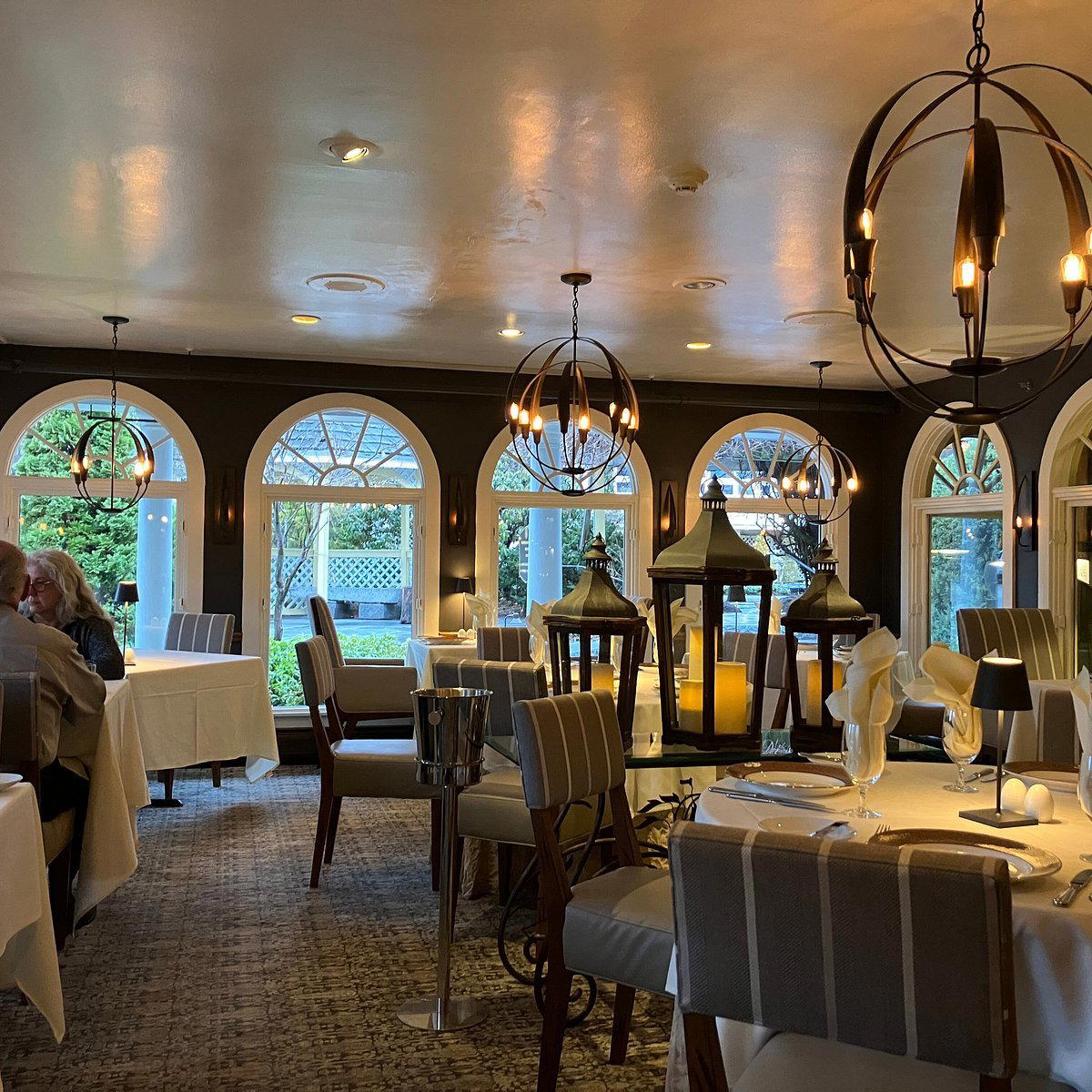
Warm and refined environment with elegant dining rooms offering a contemporary yet classic atmosphere that balances sophistication with comfort.