Bavona
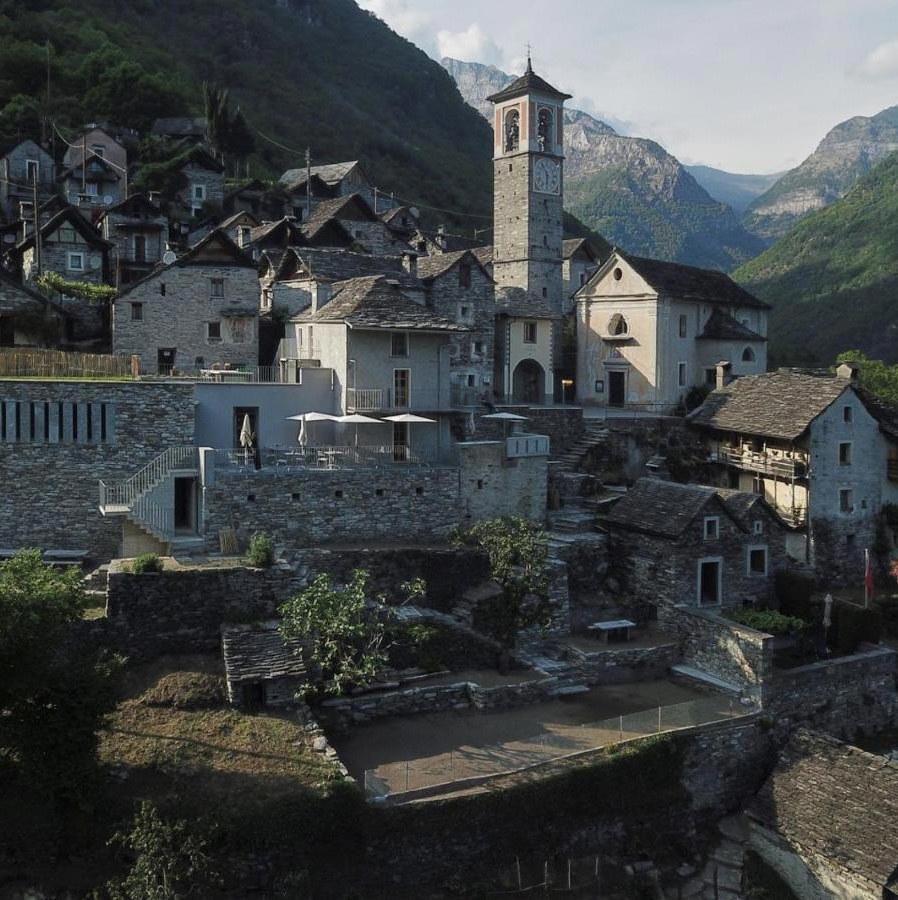
Bavona sits in Cavergno, deep inside the Val Bavona, one of Ticino's most austere and least-developed alpine valleys. The setting alone shapes what eating and drinking here means: sourcing is dictated by geography, and the valley's near-total absence of modern infrastructure has preserved ingredient traditions that elsewhere in Switzerland disappeared decades ago. For those reaching this far into the Ticino highlands, the experience is inseparable from the landscape that produces it.
Pearl is the En Primeur Club membership app — saves, bookings, and concierge access live there. Same editors, same standards.
- Address
- Cevio, Switzerland
- Phone
- +41 79 363 66 73
- Website
- grottobavona.ch
- Directions
- Get directions
 Saves & bookings on Pearl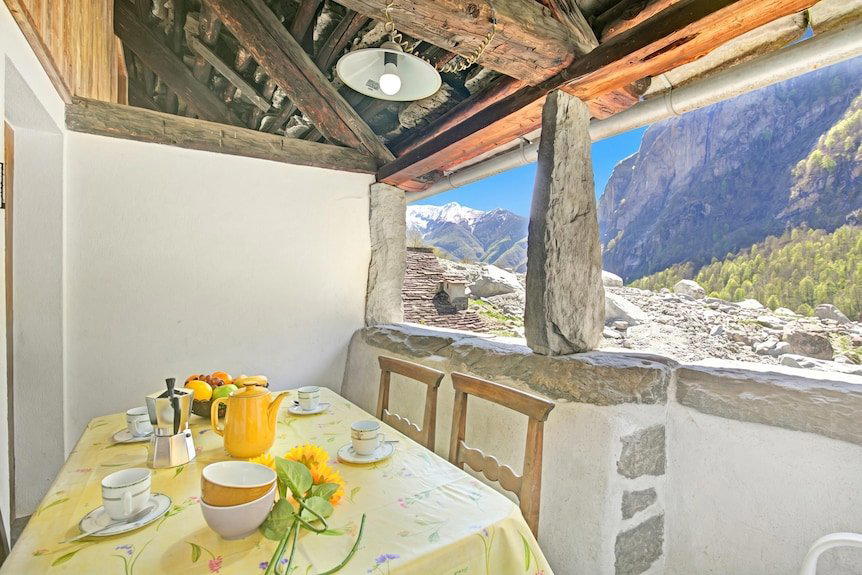
Where the Valley Dictates the Plate
The Val Bavona runs northwest from Cavergno toward the Basòdino glacier, and it is among the strictest geographical environments in the Swiss Alps. No permanent electricity grid reaches the upper valley. The stone hamlets that punctuate the route, Foroglio, Sabbione, San Carlo, have been inhabited seasonally for centuries, their residents returning each summer with livestock and returning to the lowlands before snow closes the passes. That rhythm of seasonal occupation is not folklore. It is the operational context in which any kitchen operating in this valley must think about what it serves.
Ingredient sourcing at this altitude and this remove from supply chains is a constraint, not a philosophy. Alpine pasture cheese, foraged mushrooms from the valley floor, river fish from the Bavona torrent, preserved meats carried over from winter-slaughter traditions, these appear on tables here because the logistics of anything else are genuinely difficult. That constraint produces a clarity of sourcing that more accessible Ticino destinations increasingly have to construct artificially. In the Val Bavona, it simply exists.
Bavona in the Context of Ticino Dining
Ticino occupies an ambiguous position in Swiss fine dining. The canton carries Italian culinary instincts, a preference for olive oil over butter in many preparations, risotto over rösti, and a wine culture built on Merlot rather than Pinot Noir, while sitting inside the Swiss institutional framework of Michelin coverage and GaultMillau scoring that rewards precision and technical discipline. The tension between those two tendencies is where interesting Ticino cooking happens.
The high end of Swiss restaurant dining is well documented elsewhere. Hotel de Ville Crissier in Crissier and Schloss Schauenstein in Fürstenau represent the kind of destination-restaurant model, remote or semi-remote locations, tasting menus priced at the summit of the Swiss market, high international recognition, that has become a template for ambitious Swiss kitchens over the past two decades. Memories in Bad Ragaz and Cheval Blanc by Peter Knogl in Basel occupy a similar tier, anchored by hotel infrastructure that gives them year-round operational stability. Bavona, in Cavergno, operates in a different register entirely: not a destination restaurant built to pull international guests off a flight, but a place defined by where it physically is and what that location makes available.
That is a meaningful distinction. Maison Wenger in Le Noirmont and Einstein Gourmet in Sankt Gallen both sit in Swiss towns that are themselves the reason for the visit, places where the restaurant and its setting are in dialogue. In the Val Bavona, the valley is so dominant that the setting is less backdrop and more co-author of anything served within it.
The Sourcing Logic of High-Alpine Kitchens
Across the Swiss Alps, a particular sourcing model has re-emerged in recent years: kitchens that treat geographic limitation as a starting point rather than an obstacle. Magdalena in Schwyz has built a vegetable-forward, alpine-inflected menu that makes the argument for local constraint as creative discipline. Mammertsberg in Freidorf and La Table du Valrose in Rougemont work within comparable frameworks, where the sourcing radius is determined by what the surrounding region actually produces rather than what a distributor can deliver overnight.
The Val Bavona pushes that logic further than most Swiss valleys simply because the geography is more extreme. The torrent that gives the valley its name descends over 1,400 metres in roughly 12 kilometres, cutting through granite gorges that made road construction difficult until the twentieth century and that still make the upper sections of the valley inaccessible by car. The result is an agricultural and foraging zone that has not been standardised in the way that lowland Ticino has. Chestnut groves that once formed the staple carbohydrate base of valley households are still present. Summer grazing on high pastures above the valley floor produces milk with a compositional character different from year-round lowland dairy. For any kitchen working here, those are not marketing claims. They are the actual inputs.
Swiss Alpine Dining Across the Country
The appetite for ingredient-led, geographically specific cooking has driven interest in destinations that would previously have been considered too remote for a serious dining visit. Skin's - the restaurant in Lenzburg and Taverne zum Schäfli in Wigoltingen demonstrate that the Swiss market now sustains serious cooking at the €€€€ tier in small towns and villages well outside the major urban centres. The Japanese Restaurant in Andermatt shows the opposite movement: international kitchen formats that have migrated into alpine settings, using the Swiss mountain context as a frame for non-Swiss culinary traditions. For readers whose reference points extend beyond Switzerland, Le Bernardin in New York City and Lazy Bear in San Francisco both offer useful comparisons, one for how sourcing rigour applies to seafood-led fine dining, the other for how a communal, place-specific format can produce a dining identity that resists easy categorisation.
Fast Comparison
Comparable venues nearby, for context on price, style, and recognition.
| Venue | Cuisine | Price | Notes |
|---|---|---|---|
| BavonaThis venue — the venue you are viewing | Ticinese Italian | $$ | Not listed |
| Radici | Italian Bistronomic | $$ | Penthaz |
| Da Carlo | Traditional Italian restaurant with pasta, pizza, and live music | $$ | Bern |
| Disco Pizza | Neapolitan & Detroit-Style Pizza | $$ | Lucerne |
| Arcade Pizzeria | Neapolitan Pizza | $$ | Aussersihl |
| Enoteca Riviera | Contemporary Italian Enoteca & Cucina povera | $$$ | Seefeld / Kreis 8 |
Continue exploring
More in Cavergno
Restaurants in Cavergno
Browse all →
Bars in Cavergno
Browse all →
Hotels in Cavergno
Browse all →

At a Glance
- Rustic
- Scenic
- Cozy
- Casual Hangout
- Family
- Waterfront
- Historic Building
- Local Sourcing
- Mountain
- Waterfront
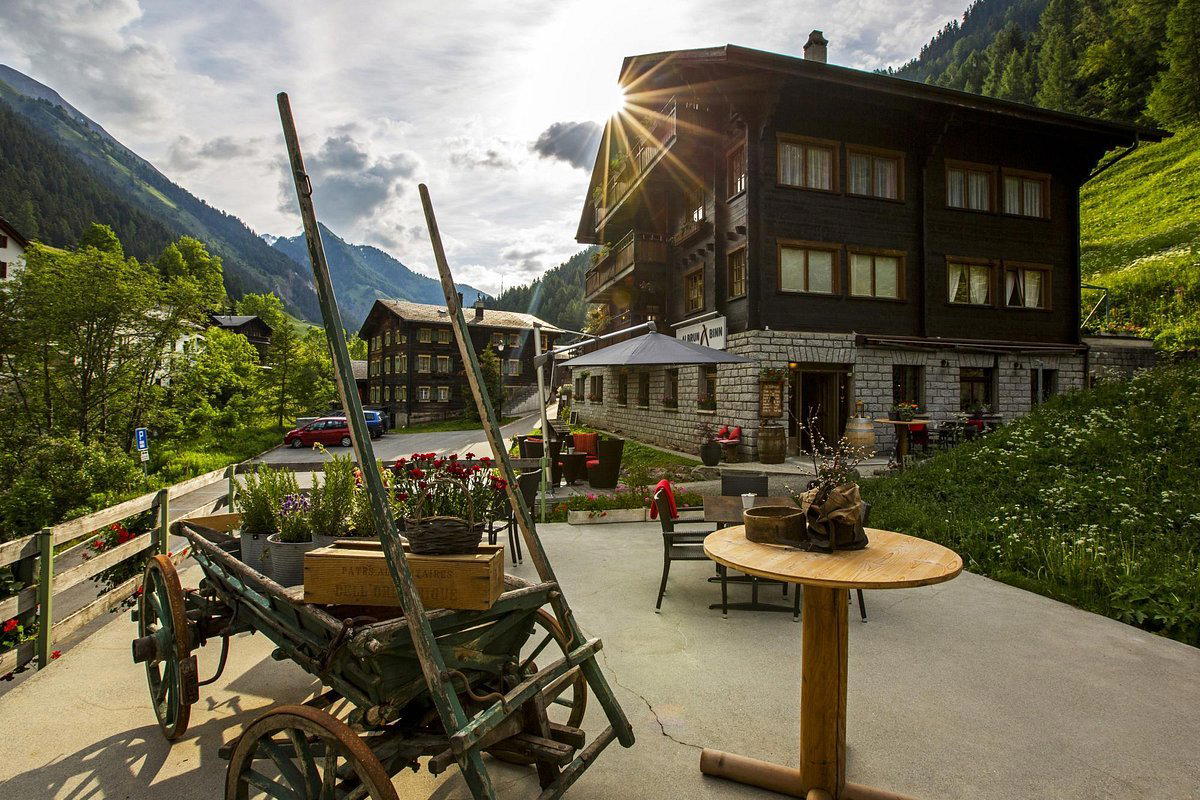
rustic alpine atmosphere in a world of stone, water, and wood with vertical valley surroundings.