Barge East

A carefully preserved Dutch barge moored on the River Lee at Hackney Wick, Barge East pairs zero-waste cooking technique with approachable, seasonal British produce. Ham hock terrine, venison loin, and a European wine list starting at £34 a bottle make it one of east London's more considered mid-range dining options. The bill arrives as a message in a bottle.
Pearl is the En Primeur Club membership app — saves, bookings, and concierge access live there. Same editors, same standards.
- Address
- River Lee, Sweetwater Mooring, White Post Ln, London E9 5EN, United Kingdom
- Phone
- +44 20 3026 2807
- Website
- bargeeast.com
- Directions
- Get directions
 Saves & bookings on Pearl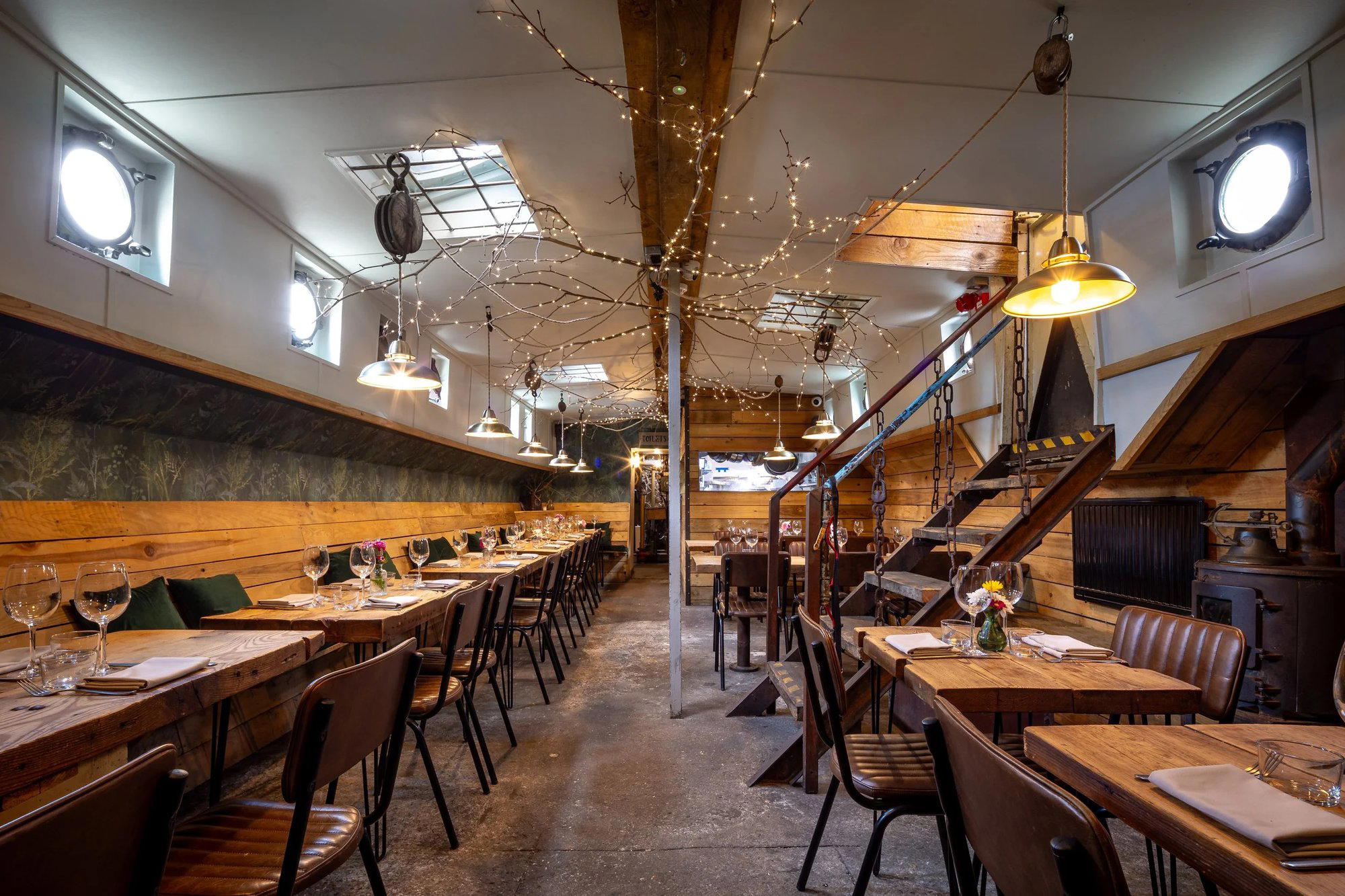
On the River Lee, East London's Floating Dining Room
Approaching Barge East along the towpath at Hackney Wick, the setting does most of the work before you've sat down. The River Lee at Sweetwater Mooring runs quieter than the Thames, and the Dutch barge, broad-hulled, weathered, permanently moored, sits in contrast to the corrugated-metal creative units and rail infrastructure that define this stretch of east London. Barge East is a restaurant in Hackney Wick, London, serving Modern British Seasonal cooking at about £65 per person. Inside, the aesthetic tilts toward upcycled wooden tables, cushions softening the industrial bones, small vases of flowers on each surface. The effect is deliberate calm in a neighbourhood that has spent a decade accelerating.
Hackney Wick has followed a familiar east London trajectory, shifting from light-industrial to arts-adjacent to increasingly mixed-use. What Barge East adds to that context is a format that resists the typical: canal-side garden, street kitchen extension, and the barge interior itself, which keeps the room intimate without feeling precious. It is a rare thing in London's mid-range dining tier, a room where the physical environment generates atmosphere through specificity rather than through spend.
Zero-Waste Technique Meets British Produce
The cooking at Barge East sits at an intersection that has become one of the more productive tensions in contemporary British restaurants: the application of globally informed technique to local, seasonal ingredients. Zero-waste thinking feeds into the menu structurally, not decoratively. Cauliflower-leaf bhaji appears alongside spiced cauliflower, using the whole vegetable rather than treating the leaf as a disposal problem. Whey from cheese production gets re-employed as a brine for chicken, which then arrives with braised spelt and wild garlic pesto. These are decisions that require kitchen discipline, and they're legible on the plate without needing a server to narrate them.
This approach puts the restaurant in conversation with a strand of British cooking that has matured significantly since the early 2010s. Operations like The Clove Club established that zero-waste and technical precision weren't mutually exclusive with accessibility. The underlying logic is similar: ingredient-led menus where technique is in service of the produce rather than a performance above it.
The sourcing signals are clear in dishes like venison loin with pomegranate, parsnip and bread sauce, a composition that uses classical British sauce technique while introducing acidic fruit contrast in a way that reflects current kitchen thinking. Ham hock and pistachio terrine with ajo blanco is similarly structured: a charcuterie format native to British pub cooking, reframed with a cold Spanish almond sauce that has become a reliable fixture on London menus over the past five years. Not everything lands at the same level, loquat purée and mushroom XO added to English asparagus creates noise around a vegetable that rarely needs help, but the produce quality holds throughout.
Desserts lean into British comfort registers. Sticky toffee pudding stays on the menu because it works; sweet cicely panna cotta introduces a more considered herbal note. The cheese course deserves specific mention: 'lost bread' (essentially a refined pain perdu) with Wigmore, a semi-soft ewe's milk cheese from Berkshire, walnuts, and celery is the kind of composition that rewards attention. Wigmore is a cheese with a strong domestic identity, and serving it this way treats British dairy with the same seriousness that CORE by Clare Smyth or The Ledbury bring to their own ingredient sourcing, just at a different price point.
Where Barge East Sits in the London Picture
London's upper-end restaurants, Ikoyi, Alain Ducasse at The Dorchester, and the broader set of tasting-menu destinations, occupy a tier where the entry price and booking complexity are both significant. The restaurant operates in a different register entirely, and that is its editorial point. A European wine list opening at £34 a bottle, with around six options available by the glass, positions the drinks programme as considered but inclusive. The bill arrives in a message in a bottle, which lands as a piece of considered theatre rather than forced whimsy in context.
For comparison, the waterside dining format elsewhere in Britain, from Waterside Inn in Bray to the river-adjacent rooms of Moor Hall in Aughton, tends to arrive with price tags that reflect the setting as a premium. The restaurant inverts that logic: the canal location is the draw, but it doesn't inflate the bill. That combination is less common than it sounds in a city where dining room atmosphere is frequently priced accordingly.
Internationally, the format has parallels. Restaurants built around fixed, unconventional physical structures, a barge, a farmhouse, a converted mill, have found audiences in cities that reward specificity of place. L'Enclume in Cartmel and Gidleigh Park in Chagford operate at the formal end of that idea; the restaurant applies it more casually, and at a price point that opens it to a wider audience.
Timing, Context, and Practical Logistics
The restaurant sits at White Post Lane on the River Lee, within walking distance of Hackney Wick Overground station. The neighbourhood context has shifted in recent years: Hackney Wick now draws audiences for the ABBA Voyage Arena and matchday crowds for West Ham at the nearby London Stadium. Both of these change the texture of the area significantly on event days, and the barge's own booking patterns respond accordingly. Checking for home fixtures and arena dates before reserving is not optional advice; it determines what the approach to the venue will actually look and feel like. Midweek and non-event weekends return Hackney Wick to something closer to its quieter creative-quarter character, which is when the canalside garden is at its most relaxed.
The canalside garden and street kitchen give it flexibility across seasons that the barge interior alone wouldn't permit. In warmer months, the garden shifts the dining experience outward; in colder weather, the barge interior does the work, and the hygge register of the room earns its keep.
For context on how the restaurant's ingredient-led approach compares within the British dining canon, Hand and Flowers in Marlow and hide and fox in Saltwood represent two points on the same spectrum: British produce, global technique, varying degrees of formality.
- Sunday Roast
- Onglet Steak
- Focaccia with Mushroom Butter
- Monkfish with Mussels
- Angus Ox Cheeks
- Pumpkin Soup
In Context: Similar Options
Comparable venues nearby, for context on price, style, and recognition.
| Venue | Cuisine | Price | Notes |
|---|---|---|---|
| Barge EastThis venue — the venue you are viewing | Modern British Seasonal | $$$ | Not listed |
| Dean Street Townhouse | British Classics | $$$ | Soho |
| Rotunda Bar & Restaurant | Modern British Gastropub | $$$ | King's Cross |
| Brunswick House | Modern British Gastropub | $$$ | Vauxhall |
| Gun, The | British Gastropub | $$$ | Blackwall |
| Blue Boar | British Gastropub | $$$ | Westminster |
Recognition history
Dated appearances from independent guides and award organizations, with the underlying list record or original source where available.
The Good Food Guide GFG Good
The Good Food Guide
Continue exploring
More in London
Restaurants in London
Browse all →
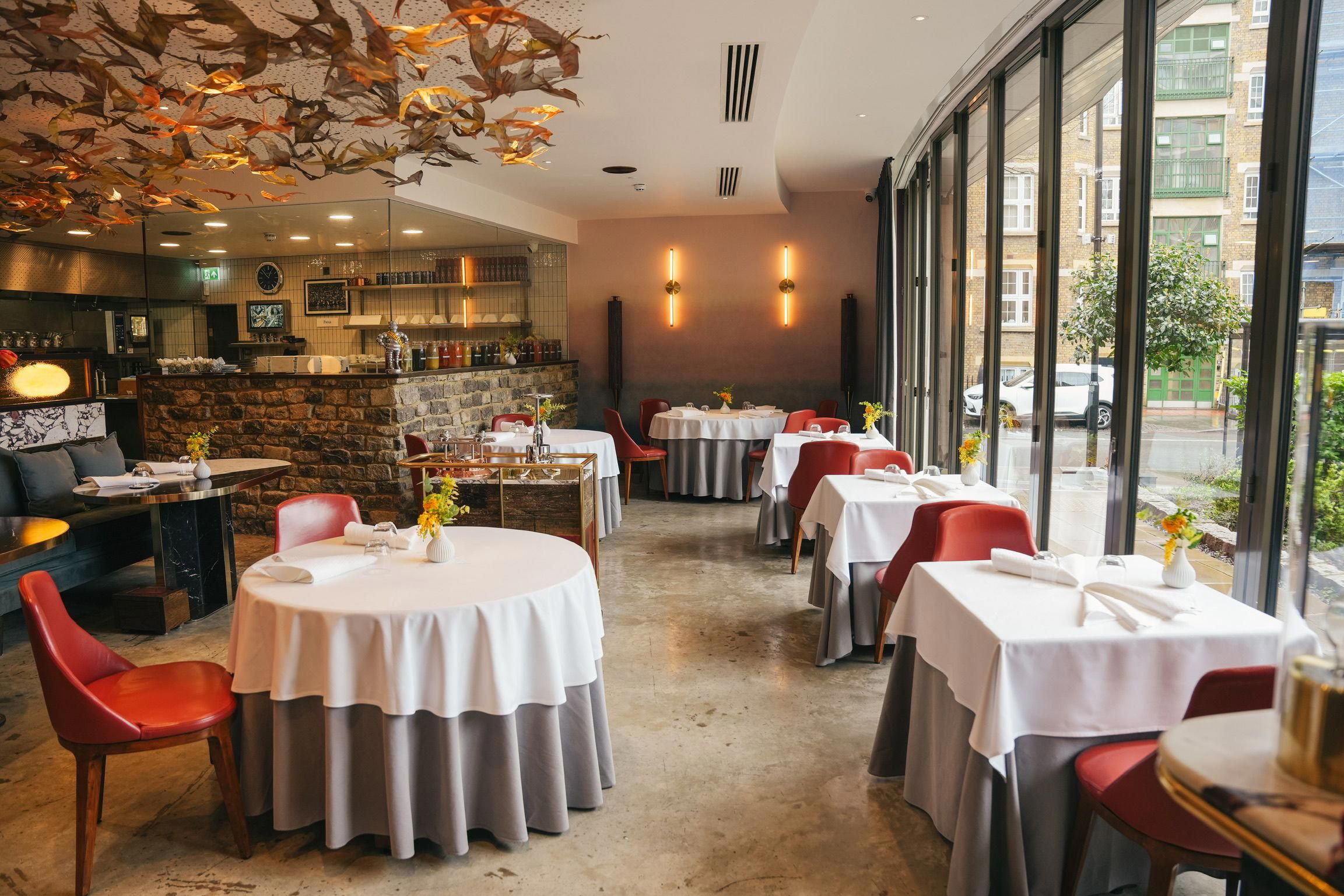
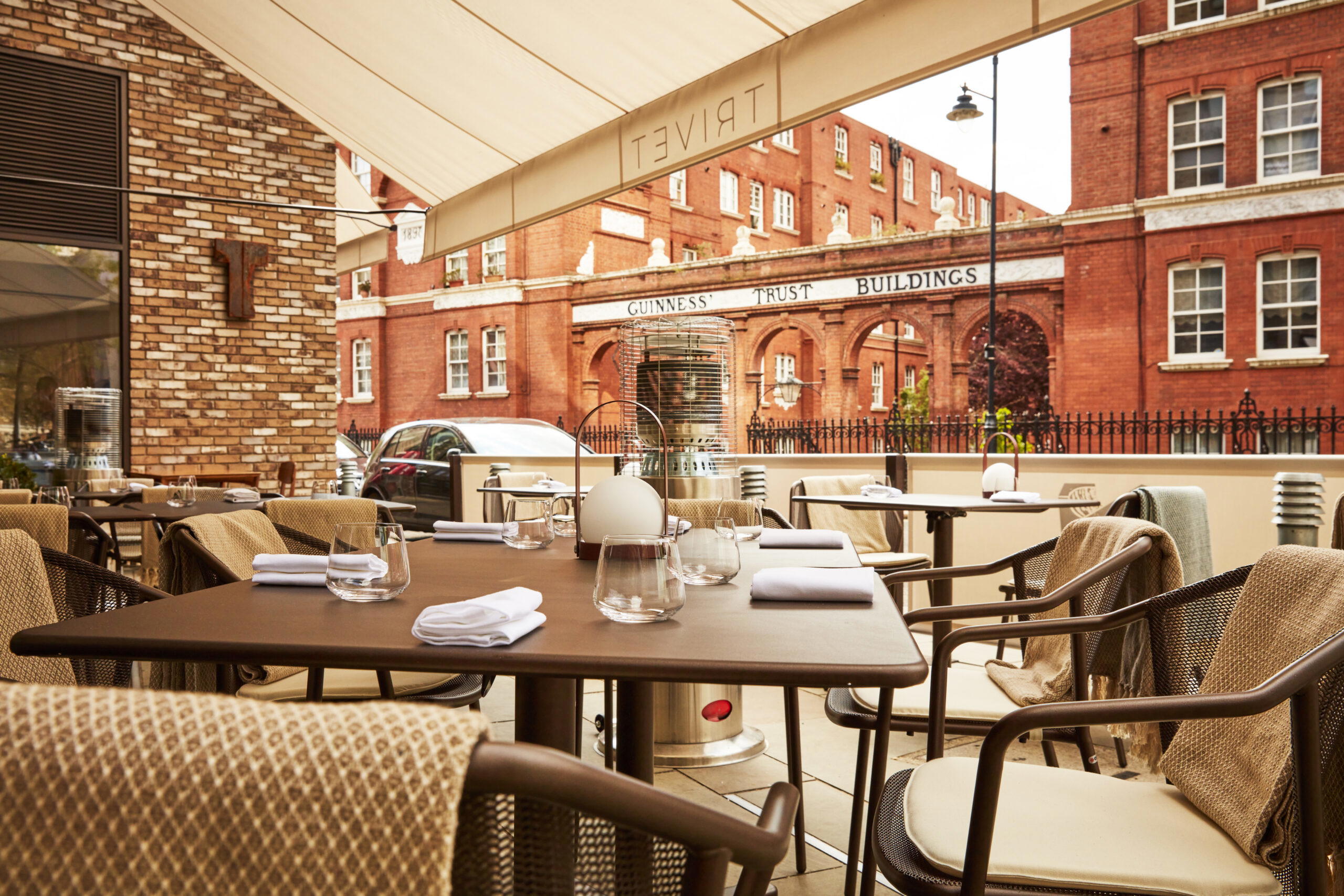
Bars in London
Browse all →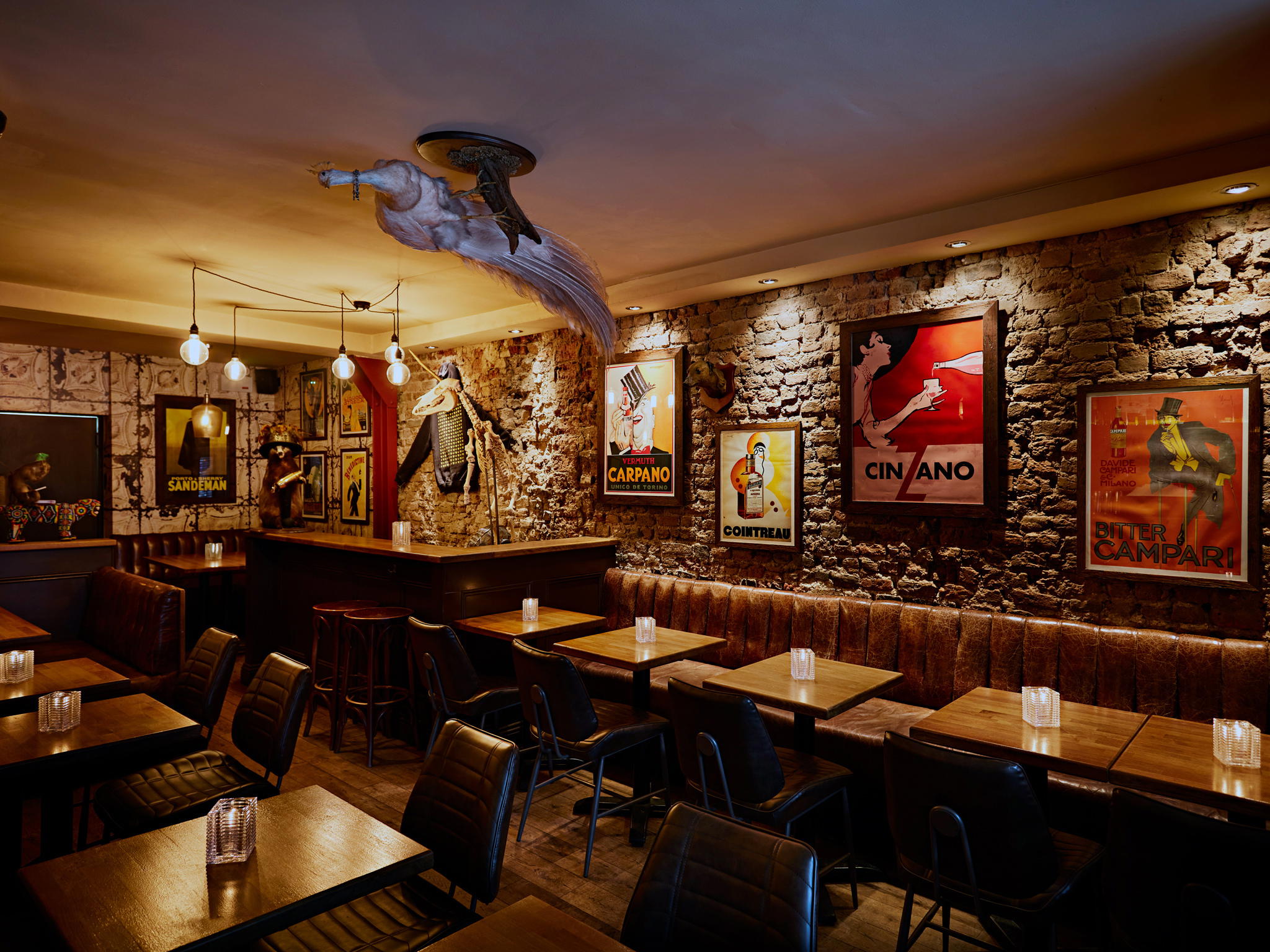
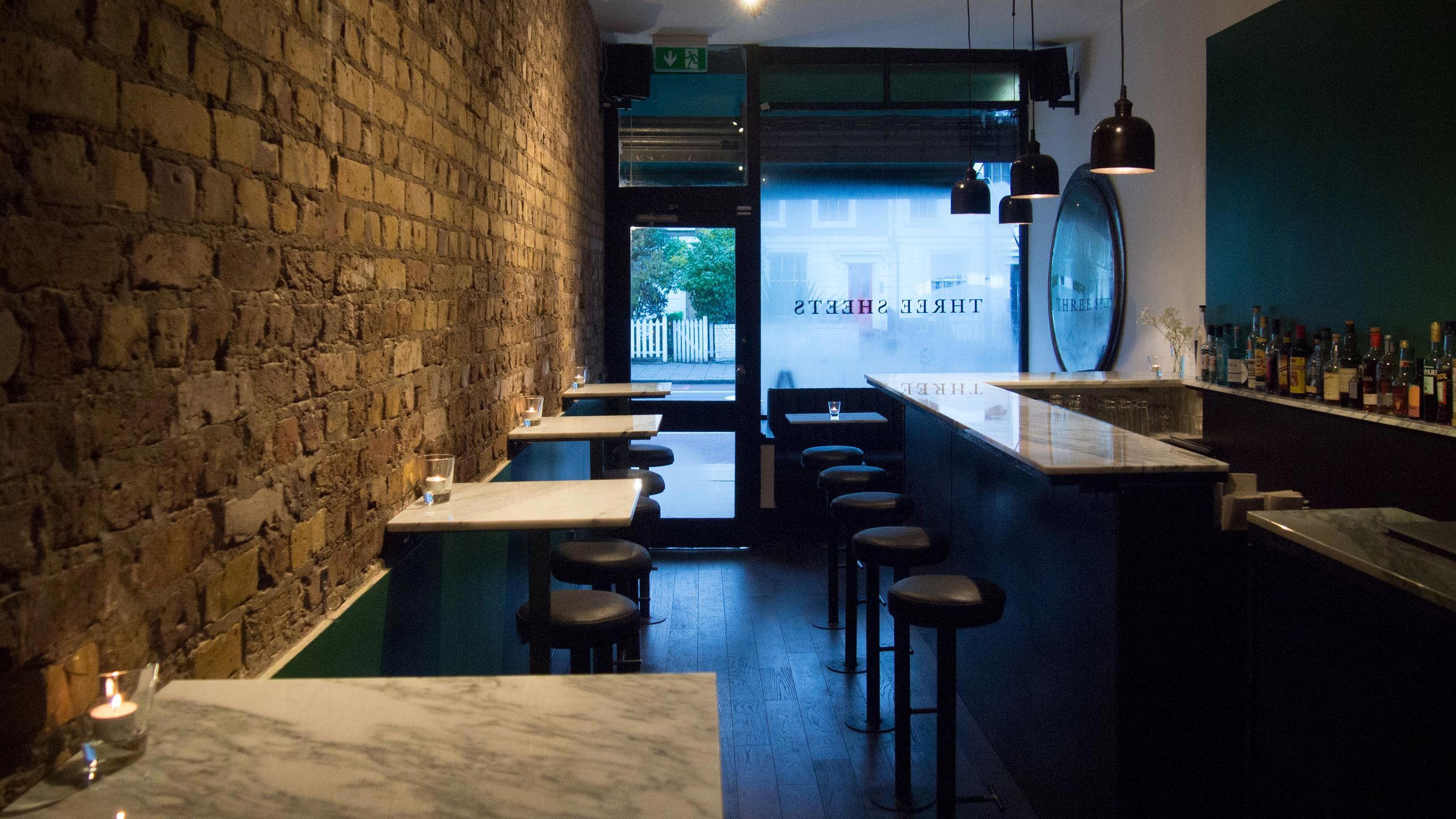
Hotels in London
Browse all →

At a Glance
- Romantic
- Whimsical
- Cozy
- Scenic
- Intimate
- Date Night
- Celebration
- Special Occasion
- Group Dining
- Family
- Waterfront
- Garden
- Private Dining
- Historic Building
- Design Destination
- Standalone
- Extensive Wine List
- Beer Program
- Craft Cocktails
- Farm To Table
- Sustainable Seafood
- Zero Waste
- Local Sourcing
- Waterfront
Current opening hours
- Monday
- Closed
- Tuesday
- Closed
- Wednesday
- Closed
- Thursday
- 4–11:30 PM
- Friday
- 4–11:30 PM
- Saturday
- 12–11:30 PM
- Sunday
- 12–11:30 PM
Hours can change for holidays and private events. Last verified .
Magical, warm, and cozy atmosphere enhanced by candlelight and soft lighting; quirky and charming with a rustic-luxurious character. The intimate below-deck setting contrasts with lively outdoor deck seating overlooking the canal.