Our verdict
On Georg-Schumann-Straße in Leipzig's northern residential belt, Bamboo sits at the quieter edge of the city's dining scene, where neighbourhood restaurants earn loyalty through consistency rather than spectacle. The address places it outside the central cluster around Augustusplatz and the Bayerisches Viertel, making it a destination for those already embedded in the district rather than a first-night tourist choice.

Pearl is the En Primeur Club membership app — saves, bookings, and concierge access live there. Same editors, same standards.
- Address
- Georg-Schumann-Straße 191, 04159 Leipzig, Germany
- Phone
- +4934126381001
- Hours
- Mon–Fri 11 AM–8:30 PMSat ClosedSun 11:30 AM–8:30 PM
- Website
- bamboo-asia.de
- Directions
- Get directions
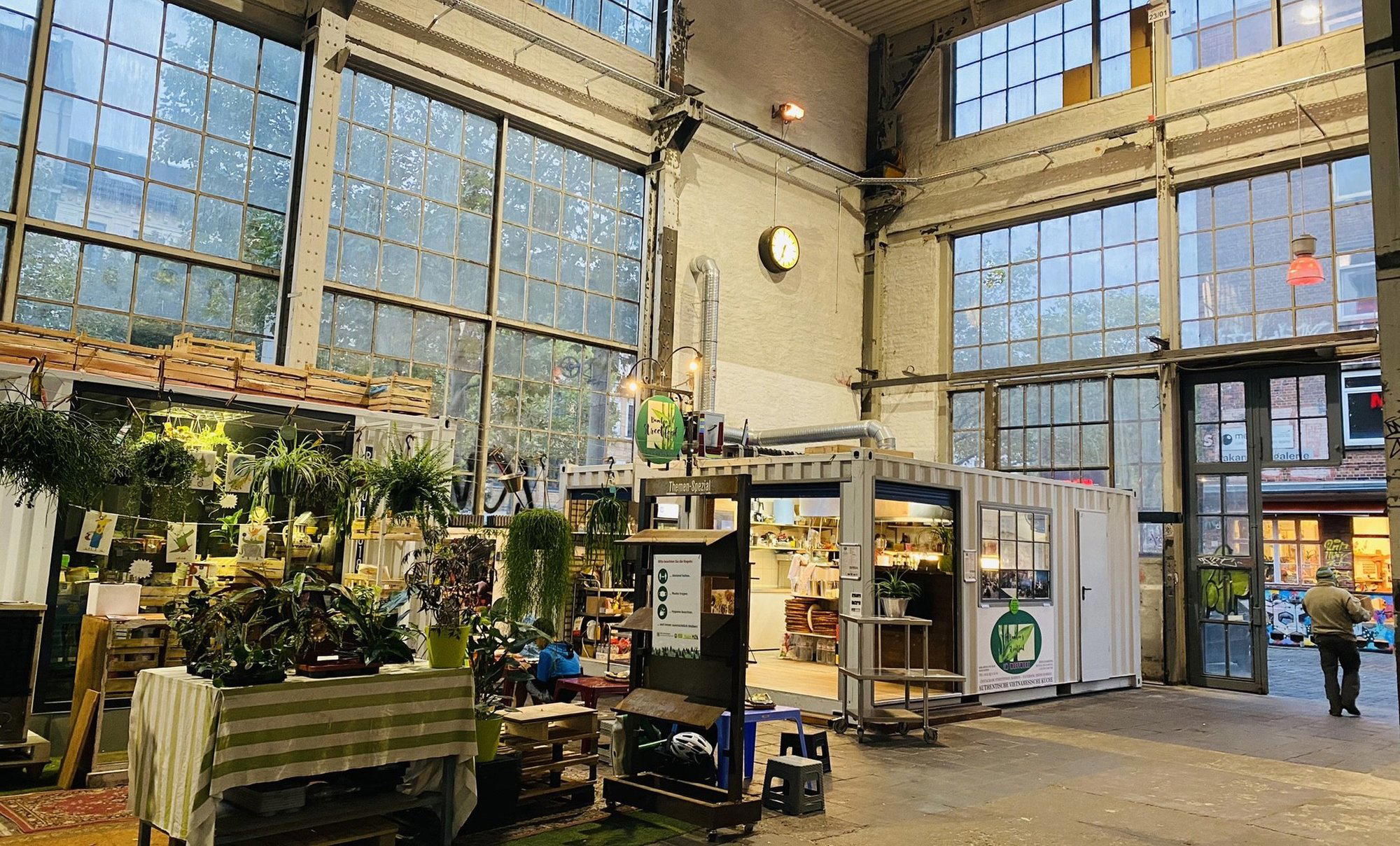
Georg-Schumann-Straße and the North Leipzig Dining Pattern
Approach Georg-Schumann-Straße 191 and the character of the street makes the dining context clear before you reach the door. This is northern Leipzig, a stretch of pre-war apartment blocks, neighbourhood grocers, and the kind of infrastructure that serves residents rather than visitors. The restaurant density here operates on a different logic from the Südvorstadt's café-bar continuum or the Plagwitz creative cluster: places succeed by becoming part of the weekly rhythm of the people who live within walking distance. Bamboo occupies that position, on a long arterial road that connects the industrial north to the denser inner city.
For anyone reading Leipzig's restaurant scene from the outside, this address signals something specific. The higher-profile addresses, Stadtpfeiffer at the Gewandhaus end of the market (creative, €€€€) or Kuultivo in the more central zone (modern cuisine, €€€), draw on foot traffic, cultural tourism, and the kind of advance reservation culture that comes with Michelin recognition. A Georg-Schumann-Straße address bypasses all of that. The audience self-selects: local, returning, and not particularly interested in being seen at the right table.
Local Ingredients, Imported Methods: What the Name Signals
The name Bamboo, in a central European city without an obvious connection to bamboo-growing regions, points toward a restaurant that draws on Asian culinary reference points while operating in a German neighbourhood context. This is a common pattern across Leipzig's mid-market dining. Alongside 997 Sushi Restaurant and Addis Café, Bamboo sits within a wider set of Leipzig addresses that import culinary traditions into a city whose restaurant infrastructure expanded rapidly after reunification and absorbed global formats alongside its recovering local economy.
The editorial angle worth dwelling on is how Asian-inflected restaurants in mid-sized German cities tend to negotiate the gap between imported technique and locally sourced product. In the premium tier, that negotiation is explicit and often celebrated: kitchens at restaurants like JAN in Munich or CODA Dessert Dining in Berlin build their identity around exactly that tension, making the intersection of method and provenance a legible part of their proposition. At neighbourhood level, the negotiation is quieter, driven by supplier relationships, seasonal availability, and what the local customer base will recognise and return for.
Saxony's agricultural output, including root vegetables, freshwater fish from the rivers threading through the region, and the grain-fed meat traditions of the broader east German countryside, provides a different raw material base from the dairy-rich south or the coastal north. A kitchen working with Asian technique in this context is working with that specific larder, which shapes what lands on the plate regardless of the menu's stated culinary direction.
Leipzig's Mid-Market Moment
Leipzig's restaurant scene has been through a recognisable cycle. The city's post-reunification dining culture was initially dominated by beer halls, traditional Saxon cooking, and a clutch of international restaurants serving the student population. Over the past fifteen years, a more differentiated mid-market emerged, partly driven by rising rental prices pushing creative operators out of Berlin and into cheaper eastern cities, and partly by a local population whose disposable income and appetite for dining out have grown in step with the city's broader economic recovery.
That mid-market now runs from precise, wine-led destinations like Alfa Restaurant through to neighbourhood addresses operating in the €€-€€€ bracket without any particular claim to fine dining recognition. Bamboo sits in that latter zone, competing on value, consistency, and proximity rather than on the credentials that drive bookings at places like Schwarzwaldstube in Baiersbronn or Vendôme in Bergisch Gladbach, both of which operate in Germany's highest-recognition tier.
The comparison is not unfair to Bamboo. Germany's fine dining circuit, which runs through addresses like Aqua in Wolfsburg, Waldhotel Sonnora in Dreis, Schanz in Piesport, Victor's Fine Dining by Christian Bau in Perl, and ES:SENZ in Grassau, operates in a different economy from the neighbourhood restaurant on a northern Leipzig arterial road. Most of the city's dining happens in the middle, and the middle is where most people eat most of the time. Understanding how a city feeds itself requires attention to both ends of that spectrum.
What to Know Before You Go
Georg-Schumann-Straße is well-served by Leipzig's tram network, which connects it to the city centre in under fifteen minutes, making the address more accessible than its position on the map initially suggests. For visitors staying centrally, the tram removes any barrier to reaching the restaurant without a car. Those planning around the area's broader dining options will find the north Leipzig neighbourhood circuit genuinely different in character from the more polished blocks around Karl-Liebknecht-Straße or the Waldstraßenviertel.
This is standard practice for neighbourhood restaurants of this type, where online booking infrastructure is often absent or inconsistently maintained. For broader context on where Bamboo sits within Leipzig's dining offer, our full Leipzig restaurants guide maps the city's options across price tiers and neighbourhoods. Those seeking international comparison points for Asian technique in a European city context might also look at Le Bernardin in New York City or Lazy Bear in San Francisco, both of which represent what happens when that global-local negotiation is pushed to its highest resolution.
The Restaurant Haerlin in Hamburg offers a data point for how German grand hotel dining handles the same tension between classical European tradition and contemporary global influence, though at a considerably higher price point than anything in Leipzig's north.
Frequently asked questions
Where is Bamboo located?
Bamboo is located at Georg-Schumann-Straße 191, 04159 Leipzig, Germany, Leipzig.
Is Bamboo on Georg-Schumann-Straße easy to reach without a car in Leipzig?
Georg-Schumann-Straße is served directly by Leipzig's tram network, connecting the address to Leipzig city centre in under fifteen minutes. That makes Bamboo at number 191 one of the more accessible northern Leipzig dining options for visitors staying centrally. No parking or transport details beyond tram access are currently documented for the venue.
What do regulars order at Bamboo?
Bamboo's menu details are not published in a format we can verify, but the restaurant's name and positioning on Georg-Schumann-Straße in northern Leipzig points toward dishes drawing on Asian cooking traditions. Regulars in this part of the city tend to gravitate toward whatever the kitchen does consistently well across seasons.
Do they take walk-ins at Bamboo?
No booking policy is publicly documented for Bamboo at Georg-Schumann-Straße 191, Leipzig. Georg-Schumann-Straße sits in a residential stretch of northern Leipzig where neighbourhood restaurants typically accommodate walk-ins on quieter weeknights. Arriving earlier in the evening reduces the risk of a wait, particularly on weekends.
What's the signature at Bamboo?
Without a published menu on record, pinning down a single signature dish would be speculation. What the name and location context suggest is a kitchen oriented around Asian culinary methods applied to a central European mid-market setting in Leipzig. Confirming specifics directly with the restaurant at Georg-Schumann-Straße 191 will give you a clearer picture before you go.
Can Bamboo accommodate dietary restrictions?
No dietary accommodation policy is documented for Bamboo in Leipzig. Asian-influenced kitchens in Germany at this market level routinely field requests around vegetarian, gluten, and allergen requirements, though the specifics vary by kitchen. Contacting the restaurant at Georg-Schumann-Straße 191 ahead of your visit is the most reliable way to confirm.
Comparable Spots
| Venue | Cuisine | Price | Awards | Notes |
|---|---|---|---|---|
| BambooThis venue — the venue you are viewing | Vietnamese Street Food | $10–20 | Not listed | Not listed |
| Kuultivo | Modern Creative Cuisine | $100–150 | 1 Michelin Star | Modern Cuisine |
| Stadtpfeiffer | Modern European Fine Dining | $150–200 | 1 Michelin Star · La Liste Top Restaurants | Creative |
| Falco | Modern European Fine Dining | $100–150 | Falstaff Bar - 92 Falstaff Points | Not listed |
| C'est la vie | Modern French Fine Dining | $100–150 | Michelin Plate | French |
| Michaelis | Seasonal German Fine Dining | $50–100 | Michelin Plate | International |
Continue exploring
More in Leipzig
Restaurants in Leipzig
Browse all →
Bars in Leipzig
Browse all →
Hotels in Leipzig
Browse all →
Wineries in Leipzig
Browse all →
Details
- Lively
- Casual
- Trendy
- Casual Hangout
- After Work
- Standalone
- A La Carte
- Vegetarian Friendly
Current opening hours
- Monday
- 11 AM–8:30 PM
- Tuesday
- 11 AM–8:30 PM
- Wednesday
- 11 AM–8:30 PM
- Thursday
- 11 AM–8:30 PM
- Friday
- 11 AM–8:30 PM
- Saturday
- Closed
- Sunday
- 11:30 AM–8:30 PM
Hours can change for holidays and private events. Last verified .
Lively and lively atmosphere with a casual street food vibe; popular spot with queues during peak hours.