Baby Sister

Star Wine List
Our verdict
On Washington Street in Boston's South End, Baby Sister operates as a bakery-café with a Portuguese-influenced identity, producing house-made baked goods that reflect the neighborhood's layered culinary heritage. It sits in a part of the city where independent food businesses have steadily displaced the area's older fast-casual strip, drawing a regular clientele that arrives early and often leaves with a bag in hand.

Pearl is the En Primeur Club membership app, where members save venues, book tables and use the concierge.
The menu
What to order
- Pastéis de nata
- Sourdough loaves
- Breakfast sandwiches
Washington Street in the Morning
There is a particular quality of light on Washington Street in Boston's South End around the time the neighborhood's bakeries open, slanted, unhurried, falling across brick facades that have housed everything from corner groceries to gallery spaces over the decades. Baby Sister occupies this stretch at 1679 Washington St, and the address places it squarely inside one of the city's most consequential food corridors, where the population density, the income mix, and the proximity to both Roxbury and Back Bay have made the South End a testing ground for independent food businesses in ways that more homogeneous neighborhoods rarely sustain.
The format is bakery-café, the identity is Portuguese-influenced, and the production is house-made. In a city where the dominant breakfast-and-pastry conversation has long been split between national chains and a handful of celebrated independents, a café anchored by a specific culinary tradition occupies a legible position: it is not trying to be everything, which is usually the first sign that it is trying to do something right.
The Portuguese Thread in Boston's Bread Culture
Portuguese culinary influence on New England is not decorative, it is structural. The fishing communities of New Bedford and Fall River, the Portuguese-American neighborhoods of Cambridge and Somerville, and the long presence of Cape Verdean families across Greater Boston have all deposited food traditions into the region's diet that run deeper than most visitors realize. Sweet breads, custard pastries, and enriched doughs belong to this tradition as naturally as chowder belongs to the coast.
A bakery-café that positions itself within Portuguese influence is therefore drawing on a lineage with genuine regional roots, not importing a trend from elsewhere. That distinction matters when you are reading a menu: items that emerge from a living culinary tradition tend to be calibrated differently than items assembled to look interesting. The textures are less performative, the sweetness is measured against memory rather than novelty, and the pastry work reflects the kind of discipline that comes from a cuisine that has had centuries to settle into its own standards. For context on how Portuguese-inspired cooking sits within Boston's current dining moment, Agosto, which operates as a Portuguese-inspired fine dining tasting-menu counter, represents the higher end of that same culinary thread in the city.
The South End as a Setting
The South End's food culture has been reshaping itself for roughly two decades, and the current version of Washington Street bears little resemblance to what the corridor looked like in the early 2000s. Independent operators now anchor blocks that were once dominated by convenience stores and discount retail, and the neighborhood's density, it is one of the most walkable sections of Boston, means that foot traffic sustains formats that would struggle elsewhere. A bakery-café in this context does not need to be a destination in the way a tasting-menu restaurant needs to be a destination; it needs to be good enough that people reroute their morning for it.
The South End also sits in instructive proximity to Boston's broader dining geography. The city's higher-end restaurant programming, counters like 311 Omakase, steakhouses like Abe and Louie's, and globally inflected kitchens like Ama at the Atlas, tends to cluster in Back Bay and the Financial District. The South End's independent café scene operates outside that gravitational pull, which gives it a different kind of credibility: the credibility of a neighborhood that eats there because it wants to, not because it is on a pre-theater itinerary. For anyone planning a fuller picture of eating and drinking in the city, the EP Club Boston restaurants guide maps the full range.
Atmosphere and the Sensory Register of a Neighborhood Bakery
Sensory case for a bakery-café is made before you read the menu. The smell of enriched dough in a warm space, butter, yeast, a faint sweetness from whatever has just come out of the oven, is one of the more reliable atmospheric cues in hospitality, and it functions differently than the designed atmospherics of a formal dining room. It is involuntary and immediate. It does not require explanation.
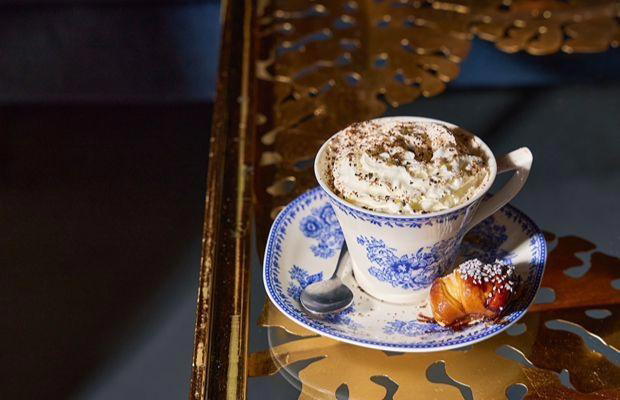
A Portuguese-influenced bakery in particular tends to work in textures and aromas that are subtler than their French counterparts: less lamination, more egg-wash gloss, custard fillings that are set rather than runny, and a relationship with sugar that skews toward the restrained end of sweet. The visual presentation is usually practical rather than architectural, pastries arranged to be chosen, not photographed, though the two are not mutually exclusive. The café register, layered over this, brings in the sounds of a neighborhood at a certain hour: coffee equipment, conversation at close range, the particular ambient quality of a room that is neither silent nor loud.
Baby Sister fits this register at a point in Boston's café development when the category has become more seriously considered. The city's independent café operators have, over the past several years, moved toward tighter sourcing, more deliberate production, and stronger identities, a shift visible across the South End and into neighborhoods like Jamaica Plain and Allston. A café with a defined culinary tradition, rather than an eclectic menu assembled for broadest appeal, reflects that maturation.
Planning a Visit
Baby Sister is located at 1679 Washington St in the South End, reachable from the Back Bay or Massachusetts Avenue MBTA stations depending on your starting point. The Washington Street corridor is walkable from both, and the South End's grid makes it easy to combine a morning stop here with exploration of the neighborhood's other food and drink offerings. For those spending more time in the area, the EP Club Boston bars guide, hotels guide, and experiences guide cover the full picture. The Boston wineries guide is also worth consulting for those extending their itinerary beyond the city itself.
Early morning visits typically offer the widest selection at bakeries of this type, and the Washington Street block is easier to access on foot than by car given South End parking constraints.
For those cross-referencing Boston's café and bakery scene against the city's broader restaurant programming, or against comparable independent operations in other cities, the Alcove in Boston and globally recognized kitchens like Le Bernardin in New York City, Lazy Bear in San Francisco, or Alinea in Chicago provide useful reference points for how independent operators at different price points and scales establish culinary identity. The French Laundry in Napa, bookable through EP Club, and international references like Alain Ducasse's Louis XV in Monte Carlo or 8½ Otto e Mezzo Bombana in Hong Kong sit at a different end of the spectrum, but the underlying question, what does a kitchen with a defined culinary tradition do with it? is the same at every level.
Frequently asked questions
Is Baby Sister a family-friendly restaurant?
The bakery-café format at 1679 Washington St suits families reasonably well, particularly during off-peak morning hours when counter service moves quickly and seating pressure is lower. A Portuguese-influenced baked goods menu keeps ordering simple. Timing matters more than the venue itself: arrive early on weekends to avoid the South End brunch crowd.
What's the vibe at Baby Sister?
Baby Sister sits in the neighborhood-café register rather than the destination-dining one. The South End location on Washington Street draws a mix of longtime residents and newer arrivals to the area, with a pace set by counter service and the rhythms of a working bakery. Expect a casual, local atmosphere rather than a scene-driven room.
Does Baby Sister connect to Boston's broader Portuguese-American food heritage?
Portuguese culinary influence in Greater Boston runs deeper than recent café trends. The fishing and immigrant communities of New Bedford and Fall River established Portuguese food traditions in New England generations ago, and Baby Sister's Portuguese-influenced baked goods sit within that documented lineage rather than outside it. For a Boston bakery-café, that connection to a regional food culture is a meaningful distinction.
What dish is Baby Sister famous for?
Portuguese baking traditions in New England have long centered on enriched breads and custard-based pastries, which form the foundation of this culinary identity. For current menu specifics, visiting in person or checking directly with the café is the reliable approach.
What part of town is Baby Sister in?
Baby Sister is located at 1679 Washington St, Boston, MA 02118, Boston.
Peers Worth Knowing
Comparable venues nearby, for context on price, style, and recognition.
| Venue | Cuisine | Price | Awards | Notes |
|---|---|---|---|---|
| Baby SisterThis venue (the venue you are viewing) | Portuguese Bakery-Café | $10–20 | Star Wine List | Not listed |
| Nova Restaurant | Central Asian | $20–30 | Star Wine List | Downtown Crossing |
| Clery's | American bar & grill with brunch and late-night vibes | $30–50 | Not listed | Back Bay |
| Legal Crossing | Classic New England Seafood | $30–50 | Not listed | Downtown Crossing |
| Si Cara South Boston | Canotto-Style Italian Pizzeria | $20–30 | Not listed | South Boston |
| Hurricane's at the Garden | American Sports Bar | $20–30 | Not listed | West End |
Recognition history
Dated appearances from independent guides and award organizations, with the underlying list record or original source where available.
Star Wine List
Star Wine List
Continue exploring
More in Boston
Restaurants in Boston
All restaurants in Boston →
Bars in Boston
All bars in Boston →
Details
- Whimsical
- Cozy
- Trendy
- Casual Hangout
- Brunch
- Open Kitchen
- Local Sourcing
- Farm To Table
- A La Carte
- Vegetarian Friendly
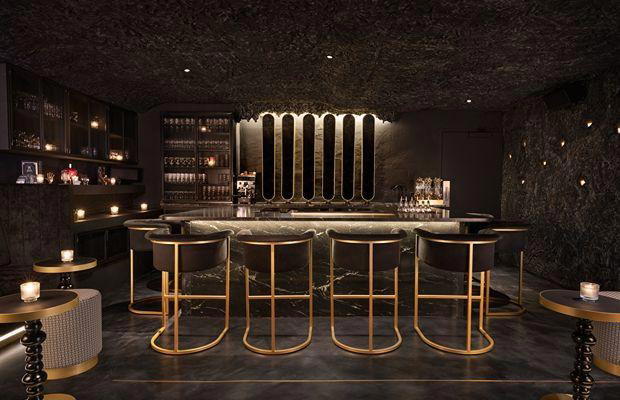
Spirited and irreverent, designed not to take itself too seriously while maintaining serious quality in execution; casual neighborhood café atmosphere.