Awesome Char Koay Teow

Michelin Bib Gourmand
Our verdict
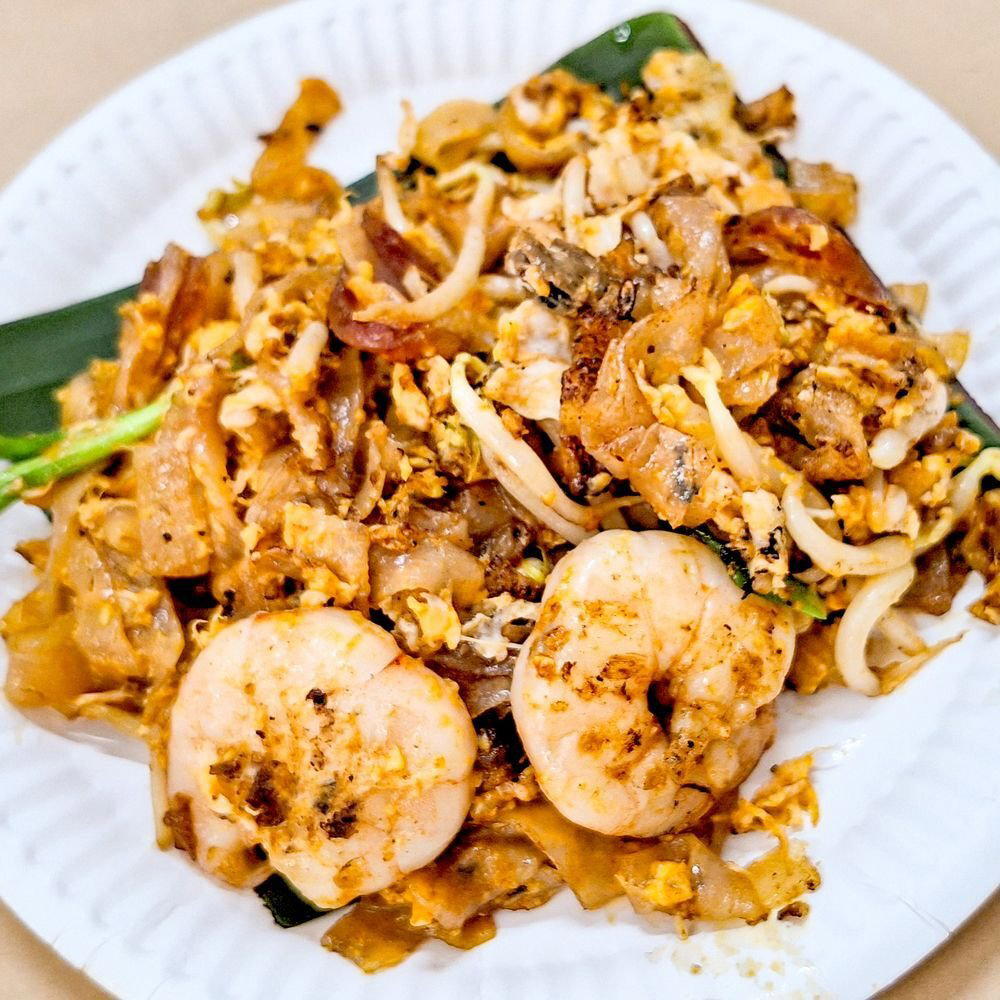
A third-generation family stall in Tanjung Bungah, Awesome Char Koay Teow fries each plate of flat rice noodles individually to order, producing the wok hei that defines Penang's most recognised street dish. Optional additions, over-easy egg or cheese, signal the kind of accumulated local knowledge that separates a stall with decades of practice from its imitators.

Pearl is the En Primeur Club membership app, where members save venues, book tables and use the concierge.
The menu
What to order
- Char Koay Teow with duck egg
Wok Hei and Inherited Knowledge on the North Shore
George Town's char koay teow culture is one of the most closely watched street-food traditions in Southeast Asia, subject to the kind of scrutiny usually reserved for Michelin-chased restaurants. Penang's version of the dish, flat rice noodles fried at high heat with dark soy, bean sprouts, Chinese sausage, and cockles, differs from its KL counterpart in ways that matter to the people who eat it regularly: the wok is cast iron, the lard is present, and the heat is fierce enough to produce that specific smoky char known in Cantonese as wok hei. That quality is the benchmark by which every plate in this city gets measured.
Awesome Char Koay Teow operates out of Tanjung Bungah, north along the coast from the heritage core of George Town, at 99 Jalan Lembah Permai. The location puts it slightly outside the tourist circuits that cluster around Armenian Street and Chowrasta Market, which means the crowd skewing around it is local and returning rather than transient. That geographic remove from the centre has not diminished its reputation; if anything, it reinforces it. Stalls worth seeking out on Penang's north shore tend to draw on neighbourhood loyalty built over years, not footfall from guided tours.
Three Generations, One Wok
The continuity of technique is what makes a third-generation family operation worth noting in the context of George Town's street-food tradition. Char koay teow has a well-documented lineage in Penang, historically a dish cooked by fishermen and labourers for its caloric density and speed, and the families who have maintained continuous practice across generations occupy a different category than newer operators working from a recipe. The transfer of knowledge here is embodied: how hot the wok runs before the noodles go in, when to add the soy, how long the egg takes to set before the plate leaves the fire. These are not things that can be taught from a written recipe alone.
This generational depth places Awesome Char Koay Teow alongside the broader pattern of family-run hawker businesses that give George Town's food scene its structural character. Compare the model to something like Auntie Gaik Lean's Old School Eatery, where Peranakan recipes carry forward through direct family inheritance, or Ah Boy Koay Teow Th'ng, another noodle-focused operation where the dish and its method are the entire point. In each case, the draw is accumulated practice, not innovation for its own sake.
The Plate Itself: Fried to Order
Each plate is fried individually to order. This is a deliberate constraint with meaningful consequences: the wok recovers full heat between batches, the noodles do not sit, and the char on each plate reflects the conditions of that exact moment rather than a pre-fried batch reheated under a lamp. In high-volume char koay teow operations, the temptation to cook in bulk is real and the quality cost is visible. The per-plate method is slower and harder to scale, but it is the reason the wok hei registers on the finished dish rather than dissipating before it reaches the table.
The aromatics described in accounts of this stall are characteristic of Penang-style execution: dark soy caramelising against the hot iron, the brief steam as wet ingredients hit the pan, the crispness of bean sprouts that have not been overcooked. A dab of chilli sauce alongside the plate is the standard accompaniment, cutting the richness without overwhelming the noodle base. Optional additions, an over-easy egg or cheese on leading, represent the kind of incremental local adaptation that accumulates at stalls with long operating histories. These are not gimmicks introduced for novelty; they are options that have been offered long enough to become part of the regular order vocabulary.
Where It Sits in George Town's Dining Picture
George Town's food scene now runs across a wide price and format range. At one end, restaurants like Au Jardin represent European Contemporary cooking at the $$$ tier, while Richard Rivalee works within a Peranakan frame at a similar price point. At the other end, hawker stalls like this one and 888 Hokkien Mee on Lebuh Presgrave represent the $ tier where George Town has always drawn its deepest reputation. These are not categories in competition with each other; they address different decisions a visitor makes at different moments of the day.
For a city whose hawker culture was inscribed on UNESCO's Representative List of Intangible Cultural Heritage of Humanity in 2022 alongside broader Penang heritage recognition, the street-food tier carries weight that extends beyond price. Eating at a stall like this one is participation in the living tradition that the designation was designed to protect. The contrast with the tasting-menu format at, say, Dewakan in Kuala Lumpur, which operates in the fine-dining register that interprets Malaysian ingredients through a contemporary lens, illustrates how differently the same national food culture can be expressed across formats and cities.
For those building a broader picture of hawker and street-food eating across Malaysia's northwest, Bee See Heong in Seberang Perai offers another reference point across the strait, while the EP Club's full George Town restaurants guide maps the city's full range from hawker to fine dining. Those planning a longer stay can also consult the George Town hotels guide, the bars guide, and the experiences guide for a fuller picture of what the city offers.
Getting There and Practical Notes
The stall is located at 99 Jalan Lembah Permai in Tanjung Bungah, which sits north of the George Town UNESCO zone along the coast road. The address is not walkable from the heritage core; a rideshare or taxi is the practical approach, and the journey from Komtar or the Armenian Street area runs roughly 15 to 20 minutes depending on traffic. For those exploring the wider region, The Planters at The Danna in Langkawi offers a reference point for the opposite end of the Malaysian hospitality register, a short flight away.
Frequently asked questions
Is Awesome Char Koay Teow Michelin-listed?
Awesome Char Koay Teow has received recognition including: This family business is now run by the third generation. Each aromatic plate of koay teow is fried to order and exudes wok hei. It tastes even better with a dab of chilli sauce. Optionally, add an over-easy egg or cheese on top.
Where exactly is Awesome Char Koay Teow?
Awesome Char Koay Teow is located at 99 Jalan Lembah Permai Tanjung Bungah, 11200 George Town, Pulau Pinang, Malaysia, George Town.
What do regulars order at Awesome Char Koay Teow?
The standard order is a plate of char koay teow fried to order, often finished with a dab of chilli sauce. Many regulars add an over-easy egg on top, which softens into the noodles as you eat. Cheese is also available as an optional addition, though the egg remains the more traditional choice.
What's the best way to book Awesome Char Koay Teow?
As a street-food stall at 99 Jalan Lembah Permai in Tanjung Bungah, Awesome Char Koay Teow does not take reservations. No phone number or website is listed, so arriving in person is the only option. Hawker stalls of this type typically draw queues during peak meal hours, so arriving early or off-peak is advisable.
What is Awesome Char Koay Teow known for?
The stall is known for its wok hei, the breath-of-the-wok char that defines good char koay teow, and for frying each plate individually to order rather than in bulk. It is now run by the third generation of the founding family, giving the recipe a continuity of technique that spans decades. In the context of George Town's closely scrutinised street-food culture, that lineage carries real weight.
Is Awesome Char Koay Teow good for vegetarians?
Traditional char koay teow typically contains cockles, prawns, and Chinese sausage (lap cheong), and the venue data does not indicate any vegetarian modifications are offered here. Visitors with dietary restrictions should check directly at the stall on arrival, as hawker kitchens often accommodate simple requests at their discretion.
How does frying each plate to order affect the char koay teow at this Tanjung Bungah stall?
Because each plate is fried individually rather than in batches, the wok returns to full heat between servings, which is the direct cause of consistent wok hei across orders. At many hawker stalls handling high volume, this discipline is the first thing to slip. The third-generation family operation at 99 Jalan Lembah Permai has maintained this approach as a deliberate constraint, and it shows in the aromatic quality each plate delivers.
Style and Standing
Comparable venues nearby, for context on price, style, and recognition.
| Venue | Cuisine | Price | Awards | Notes |
|---|---|---|---|---|
| Awesome Char Koay TeowThis venue (the venue you are viewing) | Penang Char Koay Teow | $1–10 | Michelin Bib Gourmand | Not listed |
| The Pinn | Malaysian-Chinese Small Eats | $10–20 | Michelin Plate | George Town |
| Tok Tok Mee Bamboo Noodle | Cantonese Bamboo Noodles & Pastries | $1–10 | Michelin Plate | George Town |
| 888 Hokkien Mee (Lebuh Presgrave) | Penang Hokkien Mee | $1–10 | Michelin Plate | George Town |
| Duck Blood Curry Mee | Duck Blood Curry Mee | $1–10 | Michelin Bib Gourmand | George Town |
| Goh Thew Chik Hainan Chicken Rice | Hainanese Chicken Rice | $1–10 | Michelin Plate | George Town |
Recognition history
Dated appearances from independent guides and award organizations, with the underlying list record or original source where available.
Michelin Bib Gourmand
Michelin
Continue exploring
More in George Town
Restaurants in George Town
All restaurants in George Town →
Bars in George Town
All bars in George Town →

Details
- Lively
- Rustic
- Casual Hangout
- Brunch
- Open Kitchen
- A La Carte
Current opening hours
- Monday
- 9 AM–3:30 PM
- Tuesday
- 9 AM–3:30 PM
- Wednesday
- 9 AM–3:30 PM
- Thursday
- Closed
- Friday
- 9 AM–3:30 PM
- Saturday
- 9 AM–3:30 PM
- Sunday
- Closed
Hours can change for holidays and private events. Hours as of .
Bustling kopitiam atmosphere in a clean, organized coffee shop with queues and hawker energy.