Our verdict
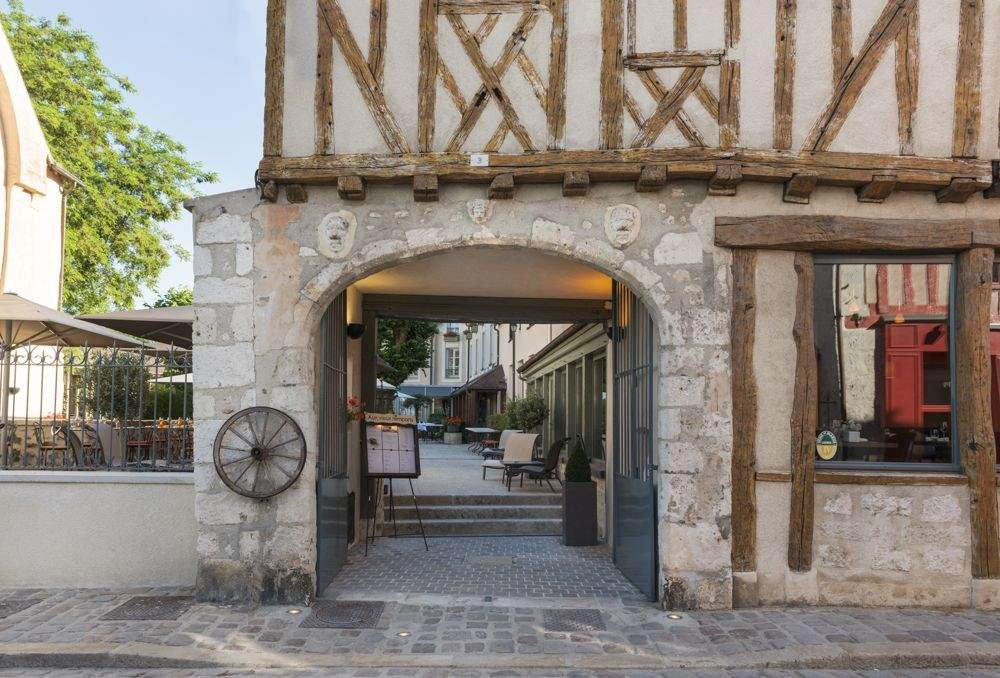
Set within Provins' UNESCO-listed medieval upper town, Aux Vieux Remparts occupies a stone-walled building on Rue Couverte that positions it squarely within France's tradition of provincial cooking anchored by local produce and place. The restaurant draws visitors exploring the fortified town's ramparts and cellars, offering a table that reflects the agricultural rhythms of the Seine-et-Marne rather than the spectacle of a Paris address.

Pearl is the En Primeur Club membership app, where members save venues, book tables and use the concierge.
The menu
What to order
- Foie Gras Maison
- Filet de Taureau
- Œuf Mollet aux Champignons
Stone Walls and Regional Roots: Dining Inside Provins' Medieval Quarter
The upper town of Provins arrives slowly, through a sequence of gateways, cobbled lanes, and walls that have stood since the twelfth century. Rue Couverte, a covered street running through the medieval core, belongs to this spatial logic: enclosed, deliberate, built for a different pace. Aux Vieux Remparts sits at number three on this street, inside the kind of thick-walled building that the Champagne fair merchants of the Middle Ages would have recognised. Before a plate arrives, the room itself makes an argument about place, that food served here should account for where it comes from.
Provins earned UNESCO World Heritage status in 2001 for its medieval town plan, its ramparts, and its towers. That designation draws roughly 500,000 visitors annually, many of them arriving from Paris in under ninety minutes by train from Gare de l'Est. The town sits in Seine-et-Marne, in the eastern reaches of the Île-de-France, a département whose agricultural identity, Brie cheese, cereal crops, market gardens, rarely features in French fine-dining conversations dominated by coastal producers and Alpine foragers. A restaurant operating inside this geography has a choice: ignore the terroir in favour of imported prestige ingredients, or treat the surrounding farmland as a genuine source. The editorial question worth asking of any table in Provins is which direction it faces.
The Seine-et-Marne Larder and Why It Matters
France's provincial cooking tradition has always drawn its credibility from proximity to source. The great auberge model, a house that knows its farmers, its cheesemakers, its river, runs through the country's restaurant history in a line that connects Alsatian tables like Auberge de l'Ill in Illhaeusern to the mountain discipline of Flocons de Sel in Megève and the Auvergne's plateau cooking at Bras in Laguiole. What connects these places is not a price point or a Michelin count but an accountability to land. A kitchen that draws from Seine-et-Marne has access to soft-ripened Brie de Meaux (an AOC product since 1980), locally grown wheat, and market-garden vegetables from a region that fed Paris for centuries before refrigerated transport made provenance irrelevant.
At Aux Vieux Remparts, the physical environment reinforces this framing. Stone construction retains cool, stable temperatures; these buildings were originally designed for storage, for ageing, for keeping things close to the conditions of the earth. A dining room inside such a structure tends to favour a certain register of cooking: rustic in texture, careful in sourcing, more interested in depth of flavour than in technical acrobatics. Whether the kitchen fully delivers on the promise implied by its address is the kind of question that merits a visit rather than a verdict from a distance.
Provins in the Context of French Provincial Dining
France's provincial restaurant tradition operates on a different axis from its Paris flagship circuit. At addresses like Alléno Paris au Pavillon Ledoyen or the creative register of Mirazur in Menton, the kitchen is effectively an autonomous institution: the chef's vision drives everything, and ingredients arrive from wherever serves that vision leading. The provincial auberge model inverts this hierarchy. The territory comes first; the kitchen responds. Georges Blanc in Vonnas, Maison Lameloise in Chagny, and Auberge du Vieux Puits in Fontjoncouse each represent that model in their respective regions, even when Michelin stars have arrived to complicate the picture.
Provins does not produce the same density of serious restaurants as the Rhône corridor or the Atlantic coast. The town's appeal to serious eaters is partly about the scarcity of the proposition: a walled medieval town, a relatively small pool of places to eat, and the occasional table that takes the surrounding landscape seriously. For visitors comparing notes on French provincial cooking, that relative sparseness can itself be the attraction. Our full Provins restaurants guide maps this field more completely, including Soleil de Marrakech, which occupies a different cultural register within the same small town.
For context on the broader arc of French culinary tradition, the institutional houses that established the template for provincial fine dining, Paul Bocuse - L'Auberge du Pont de Collonges, Troisgros - Le Bois sans Feuilles, and Les Prés d'Eugénie - Michel Guérard remain the reference points against which provincial ambition is measured. Aux Vieux Remparts operates well below that tier by any measurable standard, but the comparison is useful precisely because it clarifies what the provincial auberge tradition asks of a kitchen operating in a specific, historically defined place.
Planning a Visit
Provins is reachable from Paris Gare de l'Est in approximately one hour and twenty minutes by direct train, making it a viable long-day excursion or a short-stay destination when combined with exploration of the ramparts and the underground galleries. Aux Vieux Remparts sits on Rue Couverte in the upper town, within walking distance of the main medieval monuments. Given the town's seasonal visitor peaks, spring and summer weekends draw significant crowds for the medieval festival circuit, booking ahead for weekend lunch or dinner is advisable. The restaurant's position inside the old town means parking requires using the designated areas at the upper town perimeter. For travellers building a longer regional itinerary, La Table du Castellet and L'Oustau de Baumanière in Les Baux represent the Provence end of the provincial French dining spectrum, while those travelling further afield might compare the format against Le Bernardin in New York City or Lazy Bear in San Francisco for a sense of how the French provincial model translates across different culinary cultures. Closer to the Alps, Le 1947 à Cheval Blanc in Courchevel represents the luxury-resort inflection of French gastronomy, a sharply different proposition from a stone-walled auberge on a covered medieval street.
Frequently asked questions
Can I bring kids to Aux Vieux Remparts?
Provins itself draws families as a UNESCO World Heritage site, and the auberge format at Rue Couverte sits squarely within that context. The setting, stone walls, a covered medieval lane, tends to appeal to older children with an appetite for history alongside lunch. Families visiting the upper town regularly factor the restaurant into a half-day itinerary.
What's the overall feel of Aux Vieux Remparts?
The address at 3 Rue Couverte places the restaurant inside Provins' twelfth-century upper town, and the dining room reflects that architecture, think low ceilings, stone construction, and the particular quiet of a medieval quarter that closes off the outside world. The pace follows the auberge tradition: unhurried, course-led, and grounded in regional produce rather than modernist flourish. It reads less as a destination restaurant and more as the kind of house a well-travelled local would defend fiercely.
Is Aux Vieux Remparts worth combining with a day trip from Paris to Provins?
Provins is roughly one hour and twenty minutes from Paris Gare de l'Est by direct train, putting it within reach as a self-contained excursion. Aux Vieux Remparts at 3 Rue Couverte sits in the upper town, which means you arrive directly into the UNESCO-listed medieval circuit, the restaurant, the ramparts, and the Tour César are all walkable from the same gate. The combination of a two-to-three hour table and the afternoon ramparts makes a structured day rather than a rushed one.
What do regulars order at Aux Vieux Remparts?
The kitchen draws from the Seine-et-Marne larder, which means seasonal produce, dairy, and meat sourced from the agricultural plain surrounding Provins. Regulars at addresses like this tend to anchor their order around whatever the kitchen is treating as the market centrepiece that week. Without a current menu on record, the safest approach is to ask the room what's arrived that day rather than defaulting to a fixed preference.
Where do I go for Aux Vieux Remparts?
Aux Vieux Remparts is located at 3 Rue Couverte, 77160 Provins, France, Provins.
Fast Comparison
Comparable venues nearby, for context on price, style, and recognition.
| Venue | Cuisine | Price | Notes |
|---|---|---|---|
| Aux Vieux RempartsThis venue (the venue you are viewing) | French Bistronomique | $30–50 | Not listed |
| Soleil de Marrakech | Authentic Moroccan | $30–50 | Provins |
| L’aventure | French Mountain Grill | $30–50 | Oz en Oisans |
| Le Signal 2108 | Bistronomic French with Regional Alpine Specialties | $30–50 | Signal Mountain |
| Au Bon Laboureur | Traditional French Bistro | $30–50 | Bray-sur-Seine |
| LE SINGE A PARIS | Modern French Bistronomy | $50–100 | Bastille |
Continue exploring
More in Provins
Restaurants in Provins
All restaurants in Provins →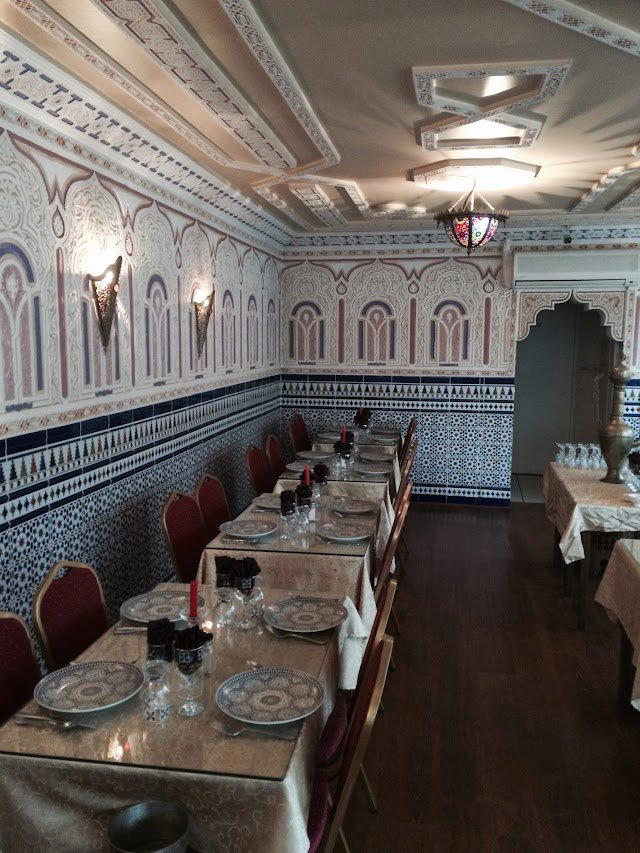
Hotels in Provins
Browse all →

Details
- Rustic
- Cozy
- Classic
- Date Night
- Special Occasion
- Family
- Historic Building
- Hotel Restaurant
- Local Sourcing
- A La Carte
- Gluten Free Options
Current opening hours
- Monday
- 12–2:30 PM, 7–9:30 PM
- Tuesday
- 12–2:30 PM, 7–9:30 PM
- Wednesday
- 12–2:30 PM, 7–9:30 PM
- Thursday
- 12–2:30 PM, 7–9:30 PM
- Friday
- 12–2:30 PM, 7–10 PM
- Saturday
- 12–2:30 PM, 7–10 PM
- Sunday
- 12–2:30 PM, 7–9:30 PM
Hours can change for holidays and private events. Hours as of .
Charming historic ambiance in the heart of Provins' medieval citadel with a warm, inviting atmosphere.