Our verdict
Soleil de Marrakech brings North African cooking to the medieval streets of Provins, a UNESCO-listed walled town roughly 90 kilometres southeast of Paris. In a dining scene anchored by traditional French bistros, the restaurant represents a distinct counterpoint, one where spice routes and slow-cooked Moroccan technique meet the measured appetite of Seine-et-Marne day-trippers and weekend visitors.

Pearl is the En Primeur Club membership app, where members save venues, book tables and use the concierge.
The menu
What to order
- Couscous Agneau
- Tajine Fassi
- Couscous Merguez
- Brick à l'oeuf
Moroccan Cooking Inside a Medieval French Town
Provins is not a place people typically associate with North African cuisine. The town's draw is its 11th-century ramparts, its UNESCO World Heritage designation, and the kind of regional French cooking you find at places like Aux Vieux Remparts, stone walls, cassoulet logic, wine from nearby appellations. Soleil de Marrakech occupies a different lane entirely. On the Route de Chalautre-la-Petite, away from the most tourist-trafficked sections of the historic centre, it positions itself as the town's primary address for Moroccan and North African food, a category that elsewhere in the Île-de-France region has built a serious following but remains genuinely sparse this far from the capital.
That sparseness is itself an editorial point. France's North African diaspora has produced some of the country's most compelling everyday cooking, particularly in Paris, Lyon, and Marseille, but smaller medieval towns in Seine-et-Marne have seen far less of it. Soleil de Marrakech arrives, then, not simply as a restaurant but as a category representative: the establishment that makes a particular culinary tradition accessible to visitors who may encounter it only in passing.
Where the Ingredients Come From, and Why That Framing Matters
Moroccan cooking is inseparable from its sourcing logic. The cuisine's identity rests on specific spice compositions, ras el hanout, preserved lemon, saffron from Taliouine, cumin from Meknès, that do not have meaningful French equivalents and cannot be approximated with local substitutes. This creates a supply chain question that every serious North African kitchen in provincial France must resolve: either source the real inputs, often through wholesale networks connecting French cities to Moroccan producers and importers, or accept a diluted version of the tradition.
The distinction matters because the gap between an authentically sourced Moroccan tagine and a French interpretation of one is substantial. Preserved lemons, for instance, require weeks of curing in salt and lemon juice; their flavour contribution to a chicken tagine or a lamb preparation cannot be replicated by fresh citrus. Similarly, the slow-braise logic of a properly constructed Moroccan dish, the kind that Fez households and Marrakech riad kitchens have refined over generations, depends on time and specific aromatics, not technique alone. For a restaurant in a town of roughly 12,000 people, maintaining that supply discipline is the difference between running a genuinely Moroccan table and running a themed approximation.
France's broader restaurant culture offers useful comparisons here. The country's most rigorous kitchens, from the hyper-local sourcing at Bras in Laguiole to the Mediterranean produce networks underpinning Mirazur in Menton, treat ingredient origin as a non-negotiable editorial commitment. The principle translates across cuisine types: sourcing is not a marketing claim, it is a structural decision that shapes everything downstream on the plate. North African restaurants operating in provincial France are making the same call, even if the conversation around it tends to happen outside the Michelin framework.
The Dining Scene Context in Provins
Provins attracts roughly 300,000 visitors per year to its medieval sites, a significant footfall for a town of its size. The dining consequence of that volume is a restaurant mix skewed toward accessible French regional cooking and tourist-facing menus, with relatively limited cuisine diversity. Within that context, Soleil de Marrakech occupies a space that few other addresses in the town can directly contest.
The broader Île-de-France dining conversation tends to concentrate in Paris, where three-Michelin-star addresses like Alléno Paris au Pavillon Ledoyen set a different kind of benchmark, and where cuisine diversity runs deep across every arrondissement. Provincial towns in the region operate under different constraints, smaller populations, tighter margins, less dining frequency per resident, which makes any specialised cuisine address a more consequential presence in the local ecosystem. Visitors making the 90-minute journey from Paris on the Transilien P line, which connects Paris-Est to Provins directly, will find that the town's lunch and dinner options cluster around a handful of addresses; the decision of where to eat becomes correspondingly high-stakes.
For those spending a weekend in Provins rather than a day trip, the calculus shifts further. A town explored over two days needs more range than a single French brasserie can supply, and a North African option with a genuinely sourced kitchen represents a meaningful addition to the rotation. You can find our broader assessment of where to eat across the town in our full Provins restaurants guide.
Planning a Visit
Soleil de Marrakech sits on the Route de Chalautre-la-Petite at address 7, a short drive or a walkable distance from the lower town depending on your starting point. The restaurant is accessible by car from the A5 motorway for visitors arriving from Paris or from the Champagne direction; the Provins train station is roughly 2 kilometres from the town centre. As with most smaller French restaurant addresses, it is advisable to call ahead or check current hours before visiting, as service patterns in provincial Seine-et-Marne often differ from Parisian norms, lunchtime service frequently dominates, with dinner availability varying by season and day of week.
For visitors building a broader French dining itinerary, regional comparisons across the country illuminate how different culinary traditions have taken root in varied geographies. The Alsatian precision of Au Crocodile in Strasbourg, the Loire-anchored classicism of Auberge du Vieux Puits in Fontjoncouse, and the Mediterranean-driven sourcing at Christopher Coutanceau in La Rochelle each reflect their geography in ways that Moroccan cooking in provincial Île-de-France does too, just through a different set of supply chains and culinary references. Starred destinations like Assiette Champenoise in Reims, Georges Blanc in Vonnas, L'Oustau de Baumanière in Les Baux, Flocons de Sel in Megève, Troisgros in Ouches, Paul Bocuse in Collonges-au-Mont-d'Or, and Auberge de l'Ill in Illhaeusern define one end of France's dining range. Soleil de Marrakech operates at a very different register, but it is addressing a real gap in a town that otherwise has limited cuisine breadth.
Frequently asked questions
Is Soleil de Marrakech okay with children?
Moroccan restaurants of this type generally work well for families, the cuisine is largely mild, shareable, and served in generous portions. Provins itself draws significant family tourism to its medieval sites, so restaurants in the area are accustomed to mixed-age groups. For specific seating arrangements or high-chair availability, check the venue's official channels at 7 Route de Chalautre-la-Petite, Provins.
What's the vibe at Soleil de Marrakech?
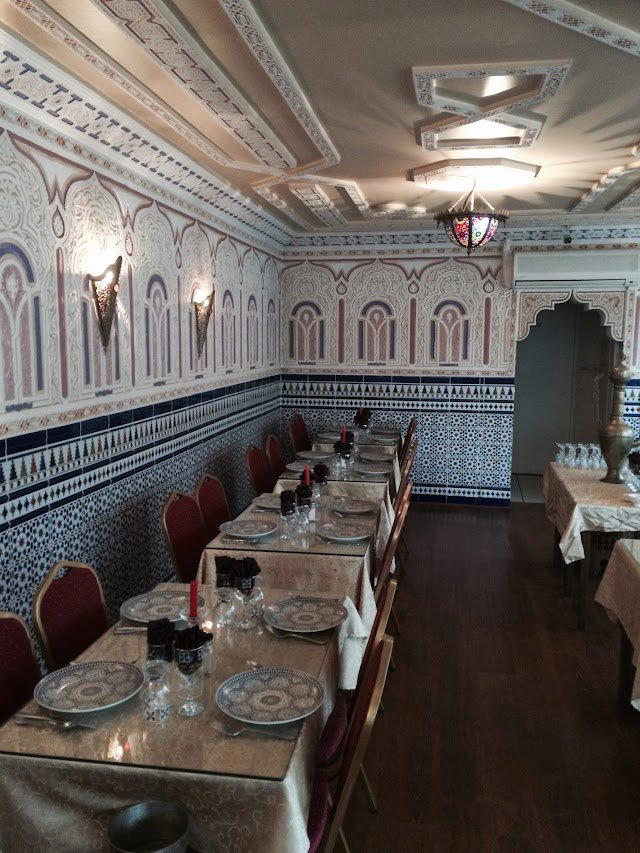
The setting is in Provins, a town whose identity runs firmly medieval French, which makes a Moroccan dining room feel like a deliberate counterpoint rather than an ambient backdrop. Expect warm tones, North African textiles, and the kind of unhurried pace that comes with a cuisine built around slow-cooked tagines. It sits on the Route de Chalautre-la-Petite, slightly removed from the main tourist flow around the ramparts.
Is Soleil de Marrakech a good option after visiting the Provins medieval sites?
Provins pulls around 300,000 visitors annually to its UNESCO-listed ramparts and towers, and dining options in the immediate historic core lean heavily toward traditional French. Soleil de Marrakech on the Route de Chalautre-la-Petite offers a clear alternative, North African cooking in a town where that cuisine is genuinely rare, making it a practical and distinct choice for an afternoon or evening meal after the heritage circuit.
What's the signature dish at Soleil de Marrakech?
These are the structural anchors of any serious Moroccan kitchen, and the likely centre of the menu here in Provins.
At-a-Glance Comparison
Comparable venues nearby, for context on price, style, and recognition.
| Venue | Cuisine | Price | Notes |
|---|---|---|---|
| Soleil de MarrakechThis venue (the venue you are viewing) | Authentic Moroccan | $30–50 | Not listed |
| Aux Vieux Remparts | French Bistronomique | $30–50 | Cité Médiévale |
| Chez Riz | Authentic Sichuan Chinese | Not listed | Guillotiere |
| Le 404 | Authentic Moroccan | $30–50 | Marais |
| Metà e Metà | Neapolitan Pizzeria & Italian Grocery | $20–30 | Montreuil |
| ADMA | Mediterranean-Influenced French Bistronomie | $20–30 | Fontainebleau |
Continue exploring
More in Provins
Restaurants in Provins
All restaurants in Provins →
Hotels in Provins
Browse all →

Details
- Cozy
- Classic
- Rustic
- Family
- Group Dining
- Casual Hangout
- Date Night
- Standalone
- A La Carte
- Family Style
- Wine
Current opening hours
- Monday
- Closed
- Tuesday
- 12–2 PM, 7–10 PM
- Wednesday
- 12–2 PM, 7–10 PM
- Thursday
- 12–2 PM, 7–10 PM
- Friday
- 12–2 PM, 7–10 PM
- Saturday
- 12–2 PM, 7–10 PM
- Sunday
- 12–2 PM, 7–10 PM
Hours can change for holidays and private events. Hours as of .
Warmly lit dining room with refined Moroccan décor, spacious layout with well-spaced tables, and a welcoming atmosphere enhanced by traditional North African music.