Auberge de l'Ill






On the banks of the Ill river in Alsace, Auberge de l'Ill has held two Michelin stars for decades and earned a 96-point La Liste score in both 2025 and 2026. Chef Marc Haeberlin leads a kitchen rooted in the region's Franco-German larder, where Alsatian terroir shapes every course. Few addresses in provincial France carry this depth of continuous critical recognition.
 Discover on Pearl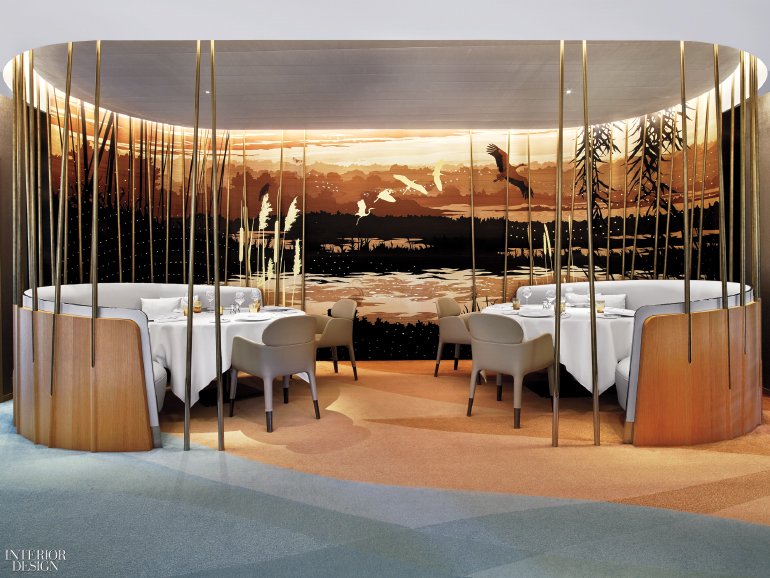
Where the Ill River Meets the Alsatian Table
Approach Auberge de l'Ill from the village road in Illhaeusern and the restaurant announces itself quietly: a low, flower-fronted building beside the slow water of the Ill, weeping willows trailing over the bank, the Vosges just visible to the west on clear days. The dining room draws light from the river, and the sense that you are somewhere outside the ordinary pace of French fine dining is immediate. This is not Paris or Lyon — it is Alsace in its most settled, confident form, a region that has spent centuries absorbing French and German culinary traditions and producing something distinct from either.
That physical rootedness matters for understanding what the kitchen does here. Alsace's larder — foie gras from the Bas-Rhin, freshwater fish from the Rhine's tributaries, game from the Vosges forests, white asparagus from the Rhine plain in spring , is not decorative local colour. It is the structural material of the cooking. The region sits on one of France's most productive agricultural corridors, and a kitchen that has operated here since the mid-twentieth century has had time to build supplier relationships that most city restaurants cannot replicate.
The shortlist, unlocked.
Hard-to-book tables, cellar releases, and concierge-planned trips.
Get Exclusive Access →A Lineage Written in Regional Ingredients
Classic French cuisine in the provinces operates differently from its Parisian equivalent. In Paris, at addresses like L'Ambroisie, the larder is assembled from across France and beyond; the cooking is an exercise in distillation and refinement. In a place like Illhaeusern, the discipline is different: proximity to specific ingredients over a long period produces a style that is simultaneously regional and technically classical. The Haeberlin family has been refining this balance for generations, and Marc Haeberlin's current stewardship of the kitchen represents the continuation of a line, not a departure from it.
That continuity is legible in the awards record. Michelin two stars in both 2024 and 2025, a 96-point La Liste score in both 2025 and 2026, membership in Les Grandes Tables du Monde, and a Google rating of 4.8 across more than 2,100 reviews: the consistency across different evaluation systems over an extended period is what distinguishes Auberge de l'Ill from addresses that perform well in a single cycle. In the 2000s the restaurant ranked as high as sixth in the World's 50 Best list, placing it alongside the generation of French kitchens , Troisgros, Paul Bocuse, Georges Blanc , that defined what provincial French fine dining could be at its most serious.
The OAD ranking of 181st among Classical restaurants in Europe in 2024, and its Highly Recommended status in 2023, also places Auberge de l'Ill in a specific critical conversation: not the experimental vanguard, but the upper tier of kitchens that have sustained technical rigour and regional identity over decades. Compared to regional peers like Au Crocodile in nearby Strasbourg, or further afield at Flocons de Sel in Megève or Assiette Champenoise in Reims, the Illhaeusern address occupies a distinct position: a destination in itself, removed from any city, relying entirely on the quality of the experience to justify the journey.
Terroir as the Organizing Principle
Alsace produces some of France's most distinctive wines, and the regional table has evolved in dialogue with those bottles for centuries. The Pinot Gris, Riesling, and Gewurztraminer grown on the slopes between Colmar and Strasbourg have shaped how Alsatian cooks balance richness, acidity, and aromatic weight on the plate. A kitchen operating in this region for decades has absorbed those relationships into its cooking logic in ways that are structural rather than incidental.
The province also sits at a culinary crossover point that few French regions share. German-influenced charcuterie, the use of sauerkraut and smoked meats, the prevalence of onion tarts and fresh cream , these run alongside classically French sauce work and presentation. Marc Haeberlin's kitchen does not treat this as a conflict to be resolved; it is the condition under which Alsatian haute cuisine exists. That synthesis, refined at altitude over years, is what the La Liste evaluators and Michelin inspectors are tracking when they award consistent high scores.
One signal worth noting: La Liste's 2026 commentary specifically mentions the addition of a fully vegetable menu, a development that reflects broader shifts in high-end French kitchens. Addresses from Mirazur in Menton to Bras in Laguiole have built vegetable-centred programs rooted in their specific landscapes. That Auberge de l'Ill now offers the same format suggests the kitchen is engaging with contemporary appetite while working within the terroir logic that has always governed it. In Alsace, the vegetable garden and the kitchen have never been far apart.
The Context of the Wider Alsatian Scene
Illhaeusern itself is a small village in the Haut-Rhin department, roughly equidistant between Colmar and Sélestat on the Alsatian wine route. Visitors travelling to Auberge de l'Ill typically combine the meal with the wider region: the medieval centre of Colmar, the wine villages of Ribeauvillé and Riquewihr, and the Rhine plain's cycling routes all sit within easy reach. For those looking to stay nearby, our full Illhaeusern hotels guide covers accommodation options that reduce the journey to and from the restaurant.
The surrounding area also rewards exploration beyond the table. For those interested in other expressions of the regional scene, our full Illhaeusern bars guide, our full Illhaeusern wineries guide, and our full Illhaeusern experiences guide provide further context. The Alsatian wine route that runs through this corridor produces some of France's most food-compatible whites, and the winstubs of Colmar offer a ground-level counterpoint to the formal dining of the Haeberlin table.
Among France's broader constellation of two-star classical addresses, Auberge de l'Ill belongs to a cohort that also includes Auberge du Vieux Puits in Fontjoncouse and Christopher Coutanceau in La Rochelle: provincial addresses where the setting and ingredient story are as much the point as the cooking itself. At the more experimental end of the French spectrum, addresses like AM par Alexandre Mazzia in Marseille or Alléno Paris au Pavillon Ledoyen represent a different register entirely. Auberge de l'Ill is not in conversation with that world; it is making a different argument about what French cooking can be when it stays committed to place over time.
Planning a Visit
The restaurant opens Wednesday through Sunday for lunch (12 to 2pm) and dinner (7 to 9pm), and is closed Monday and Tuesday. At the €€€€ price tier, a full meal with wine will represent a significant spend, and the level of formal service and room quality reflects that positioning. Given the sustained demand documented in the awards record and the 2,100-plus Google reviews, advance booking is advisable; weekend tables in the asparagus season (April to June) and during the summer tourism peak are particularly pressured. For those building a longer itinerary around the region, our full Illhaeusern restaurants guide maps the broader dining context of the area.
The shortlist, unlocked.
Hard-to-book tables, cellar releases, and concierge-planned trips.
Get Exclusive Access →Frequently Asked Questions
Fast Comparison
These are the closest comparables we have in our database for quick context.
| Venue | Cuisine | Price | Awards | Notes |
|---|---|---|---|---|
| Auberge de l'Ill | French, Classic Cuisine | €€€€ | Michelin 2 Stars, Les Grandes Tables Du Monde Award (2025) | This venue |
| Alléno Paris au Pavillon Ledoyen | Creative | €€€€ | Michelin 3 Star | Creative, €€€€ |
| Kei | Contemporary French, Modern Cuisine | €€€€ | Michelin 3 Star | Contemporary French, Modern Cuisine, €€€€ |
| L'Ambroisie | French, Classic Cuisine | €€€€ | Michelin 3 Star | French, Classic Cuisine, €€€€ |
| Le Cinq - Four Seasons Hôtel George V | French, Modern Cuisine | €€€€ | Michelin 3 Star | French, Modern Cuisine, €€€€ |
| Plénitude | Contemporary French | €€€€ | Michelin 3 Star | Contemporary French, €€€€ |
Need a table?
Our members enjoy priority alerts and concierge-led booking support for the world's most difficult tables.
Get Exclusive AccessThe shortlist, unlocked.
Hard-to-book tables, cellar releases, and concierge-planned trips.
Get Exclusive Access →