
1 Michelin Star
Our verdict
Housed within a handsome red-brick auberge, Auberge de la Forge marries the soulful warmth of a crackling hearth with the poise of contemporary design. Led by a chef-and-pastry-chef duo with pedigrees from France’s grandest dining rooms, the cuisine is intimate and expressive—fresh, spontaneous, and finely tuned. Expect inspired contrasts of bitterness and acidity, a reverence for pristine produce, and masterful sauces that elevate each bite. Signature plates such as verbena-roasted squab with tender artichoke heart, confit frog’s legs and giblets, pan-fried cherries, and a whisper of cherry blossom vinegar jelly reveal culinary imagination anchored by classical technique. Even the bread—crafted with ancient flours by the pastry chef—speaks to a devotion to craft, terroir, and the pleasures of the table.

Pearl is the En Primeur Club membership app — saves, bookings, and concierge access live there. Same editors, same standards.
- Address
- 8 Rue Jean Parisot, 31590 Lavalette, France
- Phone
- +33 5 61 84 76 00
- Hours
- Mon–Wed ClosedThu–Fri 8–8:45 PMSat 12:30–1 PM, 8–8:45 PMSun 12:30–1 PM
- Website
- laubergedelaforge.com
- Directions
- Get directions
- Booking
- Book on Zenchef
The menu
What to order
- Squab roasted with verbena and cherries
- Foie gras with strawberries
- Hare à la royale
Red Brick, Open Fire, and a Kitchen With Something to Say
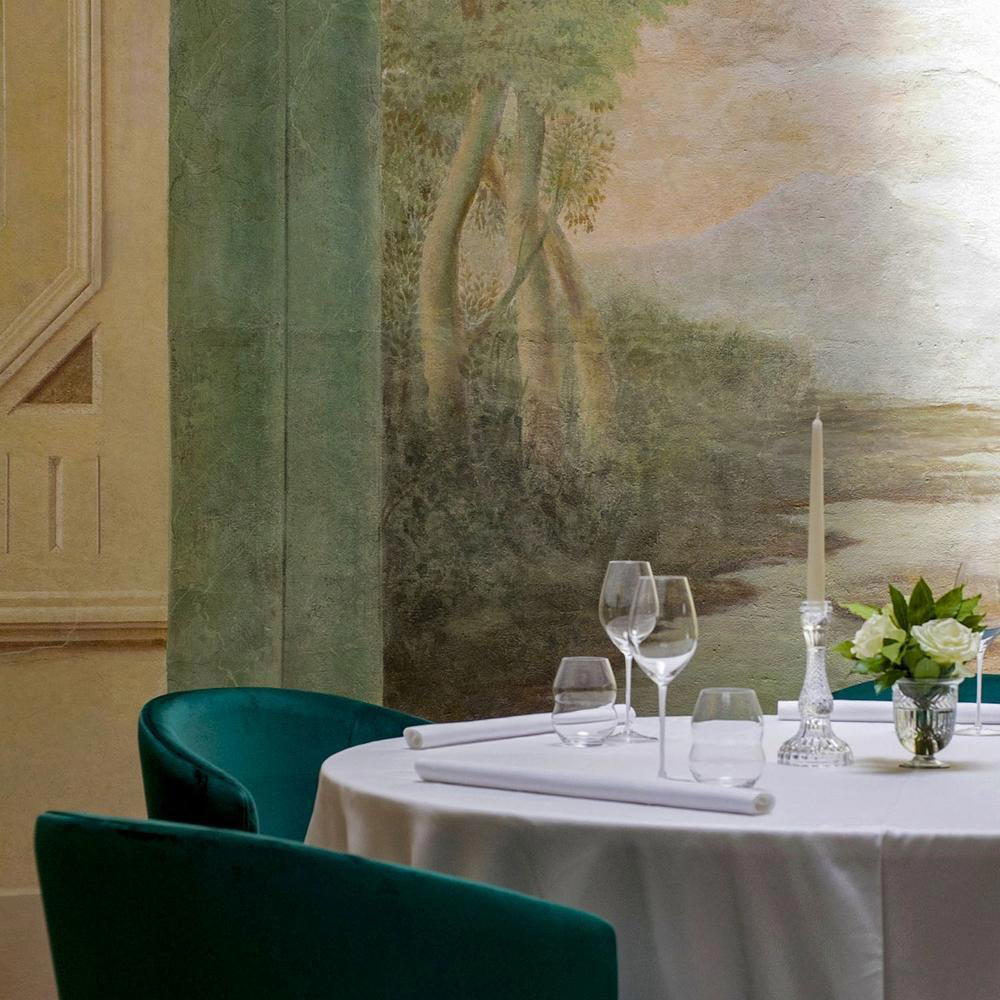
The village of Lavalette sits in the Haute-Garonne, roughly fifteen kilometres northeast of Toulouse, in the kind of terrain that France does quietly and without ceremony: red-brick farmhouses, flat agricultural land, a landscape that prioritises production over spectacle. It is in this context that Auberge de la Forge occupies an old forge building on Rue Jean Parisot, its terracotta floor tiles and fireplace reading less as decoration and more as evidence of what the building was before it became a dining room. The contemporary furnishings sit inside that structure without apology, creating an interior that is neither preserved-in-amber rustic nor aggressively modernised. The physical environment sets a specific expectation: this is a place where the setting does some of the work, and the kitchen does the rest.
That kitchen now holds a Michelin star (2024), which places Auberge de la Forge in a particular tier of French regional cooking. To understand the context, consider that the Occitanie region already claims serious gastronomic addresses, from Auberge du Vieux Puits in Fontjoncouse to the broader southern French tradition that runs up through Provence to AM par Alexandre Mazzia in Marseille. A first star awarded to a restaurant in a village of this size signals that the Michelin inspectors found something worth the detour, and in this region, the detour is real.
What the Kitchen Is Actually Doing
The editorial framing here is ingredient sourcing, and it is the right frame. The Midi-Pyrenees corridor is one of France's most ingredient-rich zones: duck and foie gras from the Gers, stone fruits from the Tarn-et-Garonne, wild herbs from the Pyrenean foothills, river fish, artichokes, and a seasonal calendar that moves with genuine agricultural rhythm. Restaurants in this part of France that cook seriously tend to cook from this larder, and Auberge de la Forge belongs to that current.
The Michelin citation describes cooking that is "fresh and spontaneous, full of flavour, brimming with ideas," language that in Michelin's typically compressed vocabulary points toward a kitchen working with seasonal material at speed rather than applying long-established formulaic structure. The citation references a squab dish roasted with verbena until pink, accompanied by artichoke heart, confit frog's legs, giblets with a full-bodied jus, pan-fried cherries, and cherry blossom vinegar jelly. Read that combination as a map of sourcing logic: the squab speaks to regional poultry; the artichoke places the dish in a specific seasonal window; the frog's legs reference French freshwater tradition; the verbena and cherry blossom vinegar indicate a kitchen paying attention to aromatics and fermentation as flavour tools rather than as trend signifiers. The pairing of bitterness and acidity that Michelin notes is not a stylistic flourish, it is a structural approach to how the kitchen uses secondary ingredients to articulate what the primary product is doing.
Bread, made by the pastry chef using ancient flours, is not a parenthetical detail. In serious French kitchens, the bread programme is a credibility signal. Ancient grain flours, which include varieties like einkorn, emmer, and heritage wheats that fell out of industrial production, require different handling and produce bread with markedly different flavour depth than commodity flour. A pastry chef choosing to work with those materials is making a sourcing statement, one that aligns with the broader kitchen philosophy indicated by the menu composition.
The Peer Comparison Question
A single Michelin star in a village outside Toulouse does not sit in the same competitive reference frame as a three-star address. Restaurants like Alléno Paris au Pavillon Ledoyen in Paris or Mirazur in Menton operate at a different scale of expectation, international visibility, and pricing. The more instructive comparison for Auberge de la Forge is the tier of serious, independently run, single-star restaurants in French provincial towns and villages, a category that includes addresses like Auberge de l'Ill in Illhaeusern or the tradition of destination cooking represented by Bras in Laguiole and Troisgros - Le Bois sans Feuilles in Ouches. The shared characteristic of these addresses is that geography becomes part of the value proposition rather than a limitation. You travel to them because of where they are, and the food makes the case for why that matters.
The team background noted in the Michelin citation runs through kitchens including the Ritz, Le Meurice, Gabriel, and Christophe Bacquié, a trajectory that covers both classical Parisian hotel cooking and the Mediterranean-focused precision of Bacquié. Those are training grounds that produce technique, but the decision to open in Lavalette rather than in Toulouse or Paris is a deliberate orientation toward a specific kind of cooking life, one closer to agricultural sources and further from the machinery of urban restaurant culture. For comparison, Flocons de Sel in Megève represents a similar logic applied to the Alpine context: serious kitchen backgrounds deployed in a location defined by its regional specificity.
Planning a Visit
Auberge de la Forge operates on a compressed weekly schedule. The restaurant is closed Monday and Tuesday. Wednesday through Friday, service runs in the evening only, from 7:45 PM to 8:45 PM, with a narrow booking window that reflects limited capacity. Saturday and Sunday offer both lunch (12:15 PM to 1:00 PM) and dinner (7:45 PM to 8:45 PM). The Saturday and Sunday lunch slots are the most practical entry point for visitors driving from Toulouse, a journey of approximately thirty minutes. The price range sits at the €€€ tier, positioning Auberge de la Forge below the €€€€ addresses that dominate multi-star Parisian and Côte d'Azur dining, and in line with the French provincial one-star standard where the kitchen's ambition is not indexed to the economics of urban real estate.
Lavalette itself offers limited accommodation infrastructure, which makes it worth treating the meal as a day trip from Toulouse or as part of a longer stay in the Haute-Garonne. For those building a broader Toulouse-area itinerary, [our full Lavalette restaurants guide](), [our full Lavalette hotels guide](), [our full Lavalette bars guide](), [our full Lavalette wineries guide](), and our full Lavalette experiences guide provide the fuller picture of what the area offers around the restaurant.
For those building a wider itinerary around serious French regional cooking, the Alsace and Champagne corridors offer their own one-star addresses worth considering alongside the Occitanie visit, including Au Crocodile in Strasbourg and Assiette Champenoise in Reims. For a broader international reference on how similar kitchen pedigrees translate across geographies, Frantzén in Stockholm and FZN by Björn Frantzén in Dubai offer instructive comparisons in how fine dining adapts to different sourcing environments. And for a historical anchor on the French auberge tradition that gives Lavalette's restaurant its lineage, Paul Bocuse - L'Auberge du Pont de Collonges in Collonges-au-Mont-d'Or remains the defining reference point for what the auberge format can mean at its most sustained.
Frequently asked questions
Is Auberge de la Forge child-friendly?
The restaurant's compressed service windows and Michelin-starred format suggest an adult-focused dining environment. Saturday and Sunday lunch sittings (12:15 PM–1 PM) are the more practical option for families, offering a shorter day commitment than the evening service. check the venue's official channels to confirm any child-specific arrangements before booking.
What is the atmosphere like at Auberge de la Forge?
The room occupies a traditional red-brick Haute-Garonne building, with a fireplace and terracotta floor tiles paired alongside contemporary furnishings. It reads as intimate and personal rather than formal — the kind of space where the cooking and the room are in deliberate agreement. The Michelin inspectors note cooking that 'brings a smile to your face,' which aligns with the setting.
What awards or recognition does Auberge de la Forge have?
Auberge de la Forge has received recognition including: In this typical red-brick building, a fireplace and terracotta floor tiles blend with elegant contemporary furnishings. A talented couple (a chef and a pastry chef with a passion for wine) forged successful careers for themselves (Ritz, Meu….
What should I order at Auberge de la Forge?
The kitchen works in a modern French register, with the Michelin citation singling out a squab roasted with verbena until pink, served alongside artichoke heart, confit frog's legs, giblets in a full-bodied jus, pan-fried cherries, and a cherry blossom vinegar jelly — a dish that maps the kitchen's tendency toward layered acidity and bitterness. The bread, made with ancient flours by the pastry chef, is noted separately as worth your attention.
A Quick Peer Check
| Venue | Cuisine | Price | Awards |
|---|---|---|---|
| Auberge de la ForgeThis venue — the venue you are viewing | Modern French Fine Dining | $50–100 | 1 Michelin Star |
| Alléno Paris au Pavillon Ledoyen | Creative | Not listed | Michelin 3 Star |
| Kei | Contemporary French, Modern Cuisine | Not listed | Michelin 3 Star |
| L'Ambroisie | French, Classic Cuisine | Not listed | Michelin 3 Star |
| Le Cinq - Four Seasons Hôtel George V | French, Modern Cuisine | Not listed | Michelin 3 Star |
| Plénitude | Contemporary French | Not listed | Michelin 3 Star |
Recognition history
Dated appearances from independent guides and award organizations, with the underlying list record or original source where available.
Michelin 1 Star
Michelin
Full recognition history (3 entries)
Michelin 1 Star
Michelin
Michelin 1 Star
Michelin
Continue exploring
More in Lavalette
Restaurants in Lavalette
Browse all →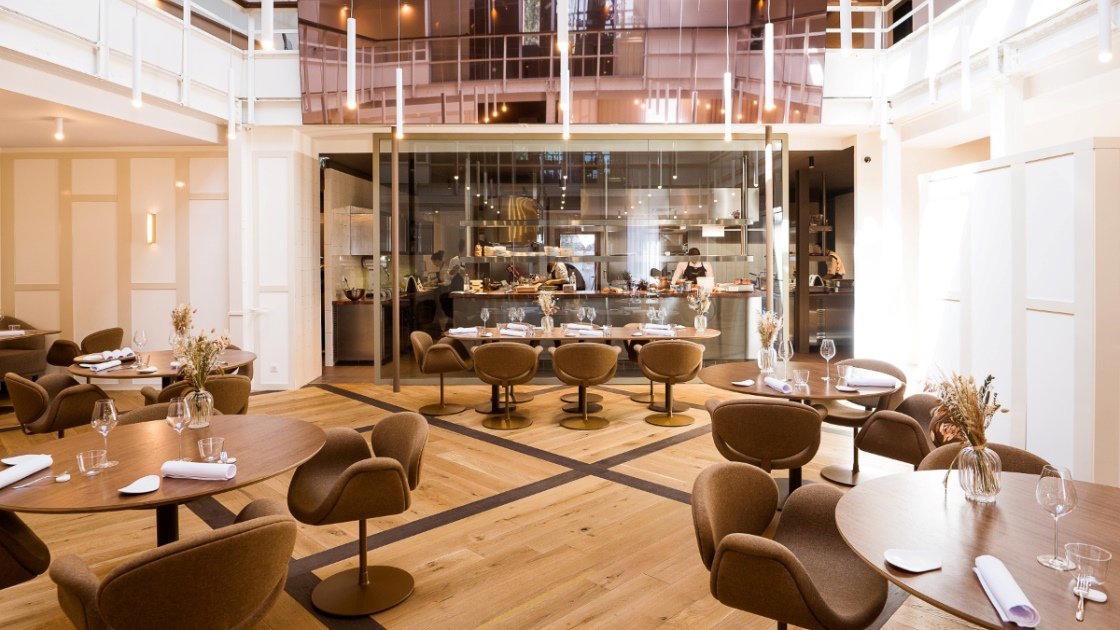
Bars in Lavalette
Browse all →
Hotels in Lavalette
Browse all →
Wineries in Lavalette
Browse all →

Details
- Elegant
- Cozy
- Rustic
- Intimate
- Romantic
- Date Night
- Special Occasion
- Historic Building
- Extensive Wine List
- Local Sourcing
- Prix Fixe
- Gluten Free Options
Current opening hours
- Monday
- Closed
- Tuesday
- Closed
- Wednesday
- Closed
- Thursday
- 8–8:45 PM
- Friday
- 8–8:45 PM
- Saturday
- 12:30–1 PM, 8–8:45 PM
- Sunday
- 12:30–1 PM
Hours can change for holidays and private events. Last verified .
Elegant contemporary furnishings blending with traditional red-brick, terracotta floors, and central fireplace create a cozy, peaceful, and intimate atmosphere.