Au Raisin d'Or

In the wine-growing village of Zimmerbach, Au Raisin d'Or is the kind of Alsatian inn that treats regional tradition as a working framework rather than a decorative theme. A young couple runs the kitchen with a focus on gutsy, no-nonsense fare: presskopf, snails, Heimbach arctic char, braised ham hock, and house-made ice cream. The produce is local, the cooking is wholehearted, and the setting is straight out of a picture-postcard Alsace village.
Pearl is the En Primeur Club membership app — saves, bookings, and concierge access live there. Same editors, same standards.
- Address
- 1 rue de l'Église
- Phone
- +33 3 89 71 05 69
- Website
- raisindor.fr
- Directions
- Get directions
 Saves & bookings on Pearl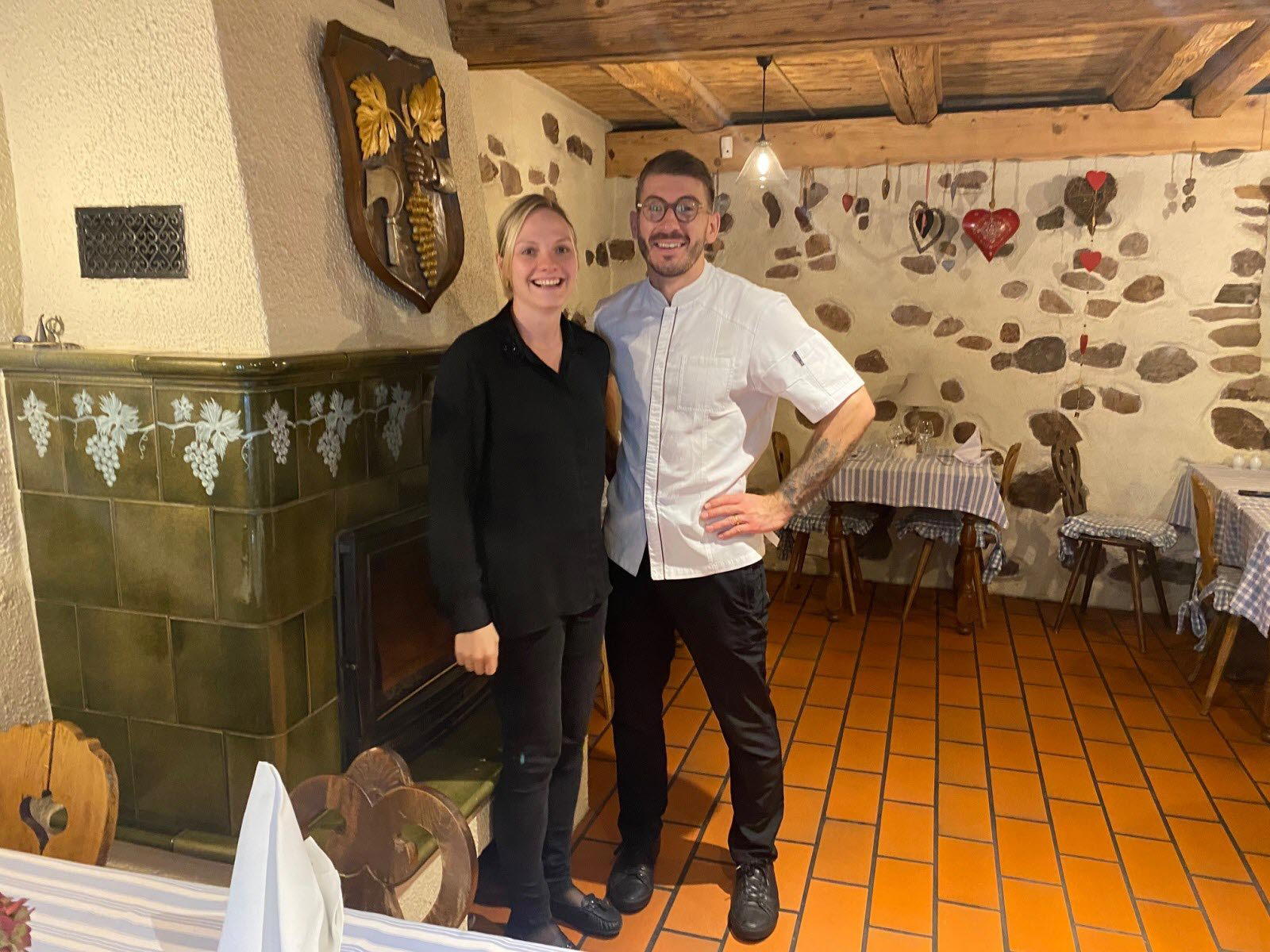
Where the Village Ends and the Meal Begins
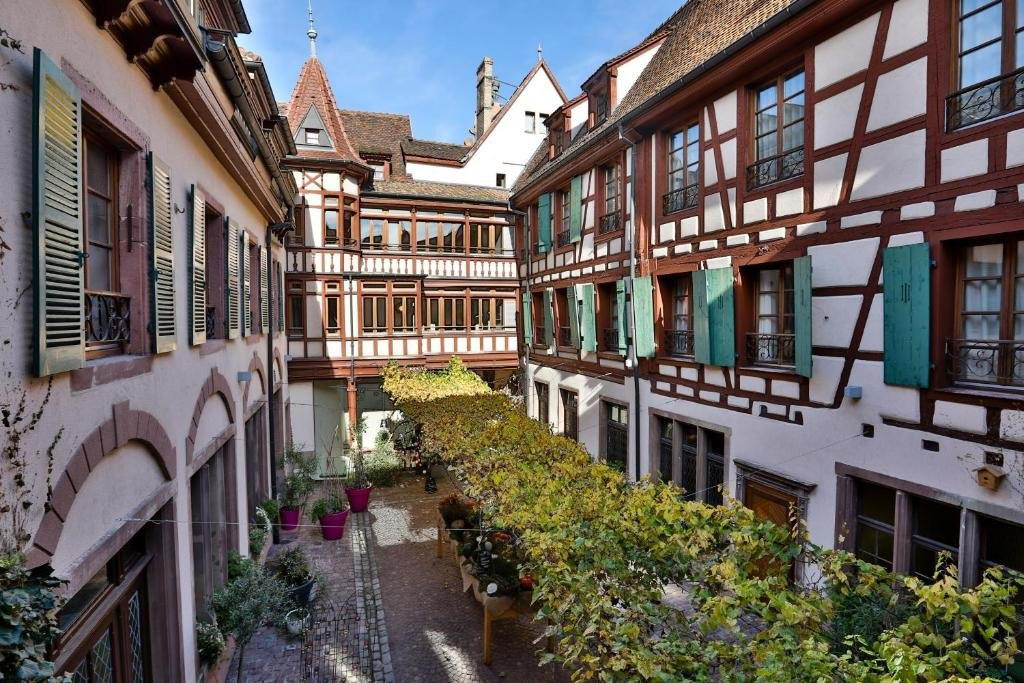
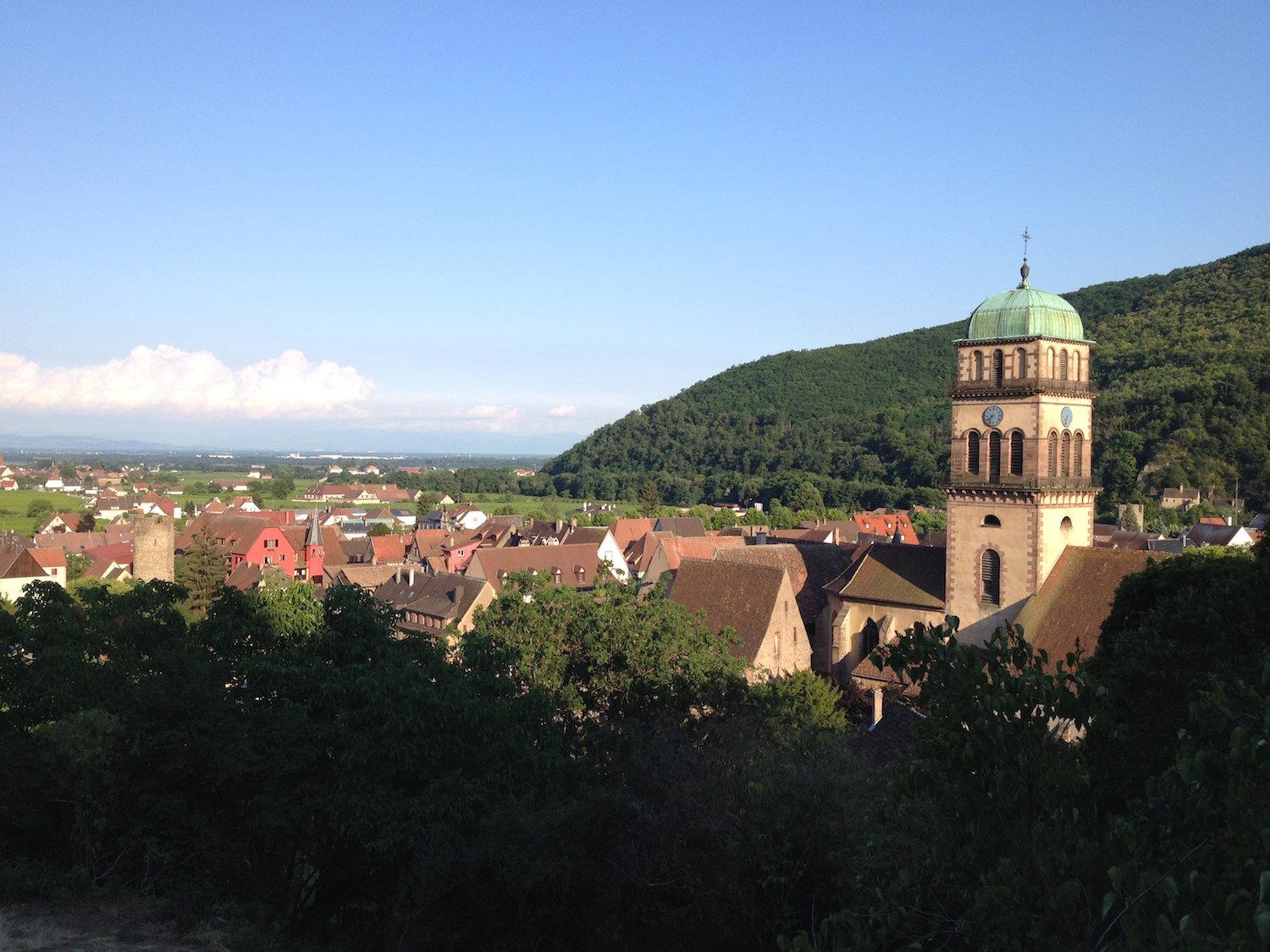
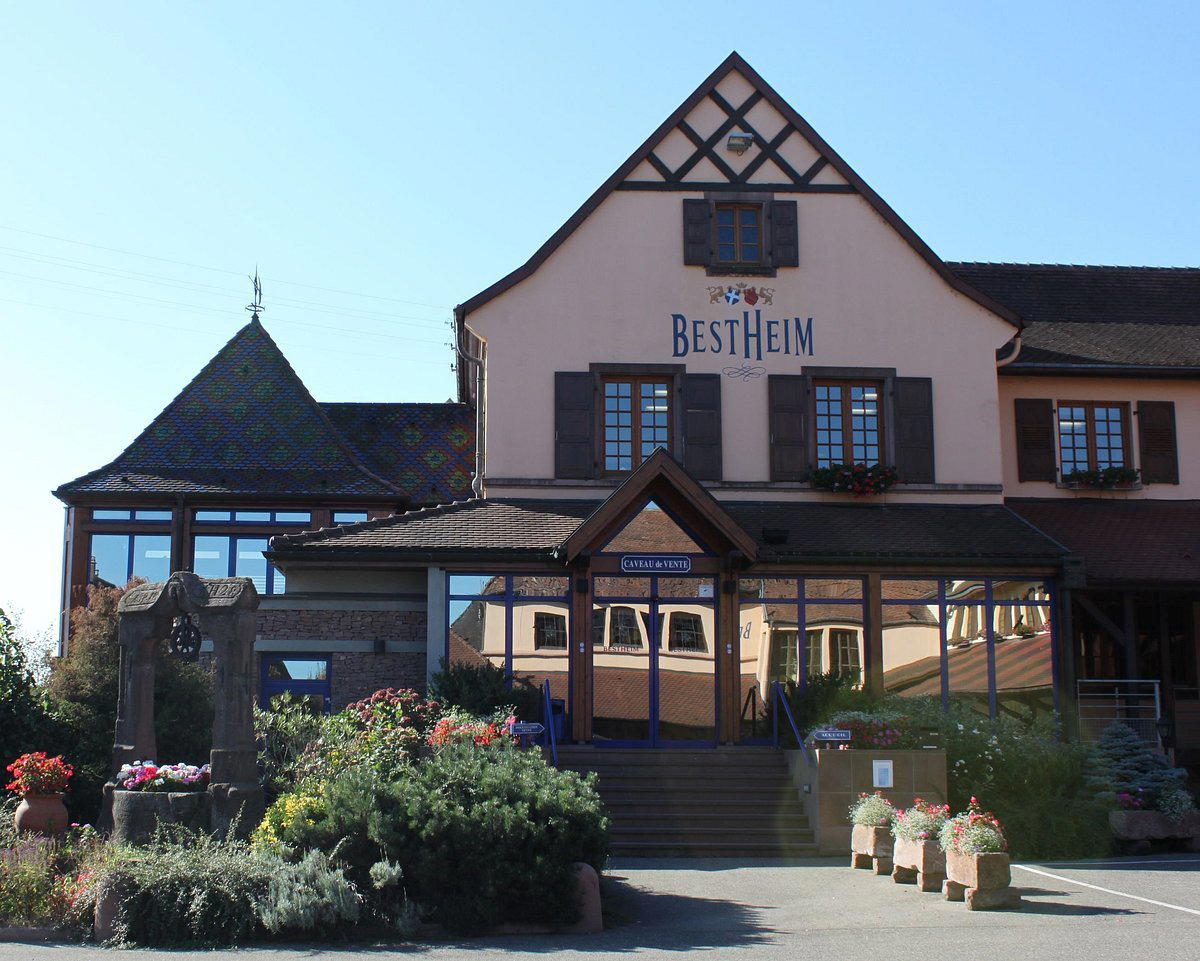
The Route des Vins cuts through the Alsace foothills with the kind of agricultural precision that has defined this region for centuries: vines in tight rows on the slopes, stone churches anchoring each village below, and an inn at almost every turn that has spent decades working out what to do with the surrounding produce. Zimmerbach sits on that route in the Haut-Rhin, quiet enough that the church bell carries across the whole village, and Au Raisin d'Or sits beside it at 1 rue de l'Église. The building announces itself as an Alsatian inn before you read the sign. The village announces itself as the kind of place where the food inside is likely connected to what grows and is raised nearby.
This matters because Alsatian cuisine is, at its core, a cuisine of specificity. It does not travel particularly well as an abstraction. The choucroute you find at a Paris brasserie and the choucroute made from Alsace-grown cabbage, fermented locally, finished with regional pork products, are technically the same dish and functionally quite different. The same principle applies to presskopf, the pressed headcheese terrine that appears on menus across the region but achieves its character through the quality of the base animal and the restraint or generosity of the maker's hand. At Au Raisin d'Or, the commitment to sourcing from the immediate area is the editorial position around which the entire menu organises itself.
The Produce, and Where It Comes From
The Heimbach stream runs through the Vosges foothills nearby, and the arctic char it produces appears on the menu here as a marker of geographical honesty. Arctic char is not an Alsatian native in the strictest sense, but mountain stream char has been farmed in the cold-water channels of the Vosges for long enough that it functions as a regional product in the way that matters to a kitchen paying attention to provenance. It is a leaner, cleaner fish than most freshwater alternatives, and its appearance on a village inn menu at this level of specificity says something about what the kitchen is prepared to spend time sourcing.
The same logic applies to the snails in garlic and parsley butter, a dish that appears across France but concentrates in Burgundy and Alsace, where helix pomatia snails are a genuine local product rather than an imported one. The garlic and parsley preparation is direct, almost confrontational in its simplicity: there is nowhere to hide a poor snail in that much butter. And the beef cooked in coarse salt, a preparation that relies on the quality of the cut more than any particular technique, follows the same logic. These are dishes that function as ingredient declarations as much as they function as courses.
Braised ham hock and choucroute closes the loop. Choucroute garnie is Alsace's most travelled dish and its most misrepresented. The version made in the region, with fermented cabbage from the Kochersberg plain or similar local production, served alongside multiple pork preparations including the ham hock, sits in a different register to the simplified versions exported elsewhere. A kitchen making it properly in a village inn is making a statement about what it thinks the dish should be, and Au Raisin d'Or's inclusion of it alongside presskopf and the char positions the menu as a document of Alsatian specificity rather than a greatest-hits selection. For broader context on how Alsace's leading restaurants approach regional tradition at higher price tiers, Auberge de l'Ill in Illhaeusern and Au Crocodile in Strasbourg represent the upper end of that same regional lineage.
A Young Couple Running an Old Tradition
Alsace's auberge culture is a specific thing. It differs from the Parisian bistro tradition, from the Lyonnais bouchon circuit, and from the farm-to-table framing that has absorbed so much of French regional cooking into a contemporary idiom. The auberge is older and more rooted: it is an inn that feeds its guests and the surrounding community without much separation between the two, and it draws its identity from place rather than personality. The fact that Au Raisin d'Or is run by a young couple is contextually significant not as a biographical detail but as a structural one. Village inns of this type in Alsace have faced sustained pressure over the past two decades from demographic change, shifting eating habits, and the economics of running a kitchen that sources properly from local suppliers. A young couple choosing to operate one, and to do so in the register of gutsy, wholehearted Alsatian cooking rather than updating the menu to capture a broader audience, represents a deliberate position within a regional tradition under some pressure.
That the house-made ice cream closes a menu of this composition is a quiet signal of the same seriousness. It is easy to overlook as a detail, but in a village inn where every other course is making an argument about local produce and traditional preparation, finishing with a dessert made in-house rather than sourced from a supplier maintains the integrity of the position. It is also, practically, a better product.
Planning Your Visit
Zimmerbach is a small village in the Haut-Rhin department of Alsace, best reached by car from Colmar, which sits roughly ten kilometres to the southwest. The surrounding wine route is dense with small producers and village restaurants, making the restaurant a natural stop within a longer Route des Vins itinerary rather than a standalone destination requiring significant detour. The village setting and the inn format suggest the kind of meal that benefits from time rather than efficiency: arrive without a train to catch. For broader planning, see our full Zimmerbach restaurants guide, our full Zimmerbach hotels guide, our full Zimmerbach bars guide, our full Zimmerbach wineries guide, and our full Zimmerbach experiences guide.
Alsace is at its most atmospherically concentrated in autumn, when harvest activity runs alongside the vine colour change across the hillside above the village, and in the lead-up to the Christmas market season. Either period places a meal of this type in its fullest regional context. Travellers using the region as a base for exploring France's broader restaurant geography can reference destinations such as Flocons de Sel in Megève, Mirazur in Menton, Troisgros - Le Bois sans Feuilles in Ouches, Bras in Laguiole, Alléno Paris au Pavillon Ledoyen in Paris, AM par Alexandre Mazzia in Marseille, Assiette Champenoise in Reims, Paul Bocuse - L'Auberge du Pont de Collonges in Collonges-au-Mont-d'Or, Auberge du Vieux Puits in Fontjoncouse, Le Bernardin in New York City, and Emeril's in New Orleans for context on how regional French cooking traditions compare to international peers.
Side-by-Side Snapshot
Comparable venues nearby, for context on price, style, and recognition.
| Venue | Cuisine | Price | Awards | Notes |
|---|---|---|---|---|
| Au Raisin d'OrThis venue — the venue you are viewing | Traditional Alsatian French | $$$ | Michelin Plate | Not listed |
| Le Collet | Regional Vosges Cuisine with Modern Inspiration | $$$ | Michelin Plate | Col de la Schlucht, Xonrupt-Longemer |
| Le Chambard | Traditional Alsatian Winstub | $$$ | Not listed | Kaysersberg |
| Le Valtrivin | Contemporary Alsatian Bistro | $$$$ | Michelin Plate | Ammerschwihr |
| Maison Kieny | Modern French Alsatian with Mexican Influences | $$$ | Michelin Plate | Riedisheim |
| Momento | Modern French-Mexican Fusion | $$$ | Not listed | Bué |
Recognition history
Dated appearances from independent guides and award organizations, with the underlying list record or original source where available.
Michelin Plate
Michelin
Continue exploring
More in Zimmerbach
Restaurants in Zimmerbach
Browse all →
Bars in Zimmerbach
Browse all →
Hotels in Zimmerbach
Browse all →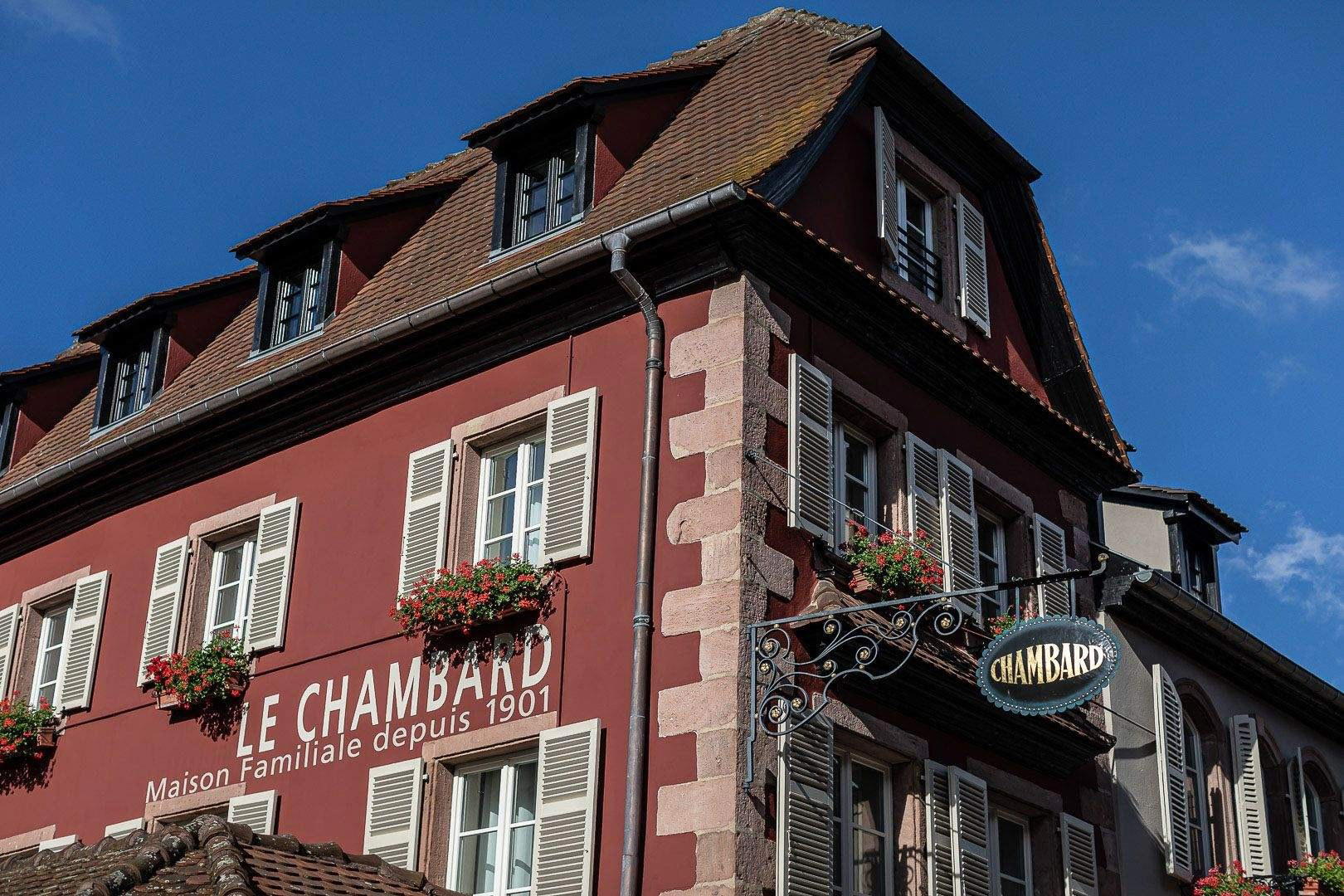
At a Glance
- Rustic
- Cozy
- Classic
- Family
- Date Night
- Terrace
- Local Sourcing
Current opening hours
- Monday
- 10 AM–4 PM, 6–9 PM
- Tuesday
- Closed
- Wednesday
- Closed
- Thursday
- 10 AM–4 PM, 6–9 PM
- Friday
- 10 AM–4 PM, 6–9 PM
- Saturday
- 10 AM–4 PM, 6–9 PM
- Sunday
- 10 AM–4 PM, 6–9 PM
Hours can change for holidays and private events. Last verified .
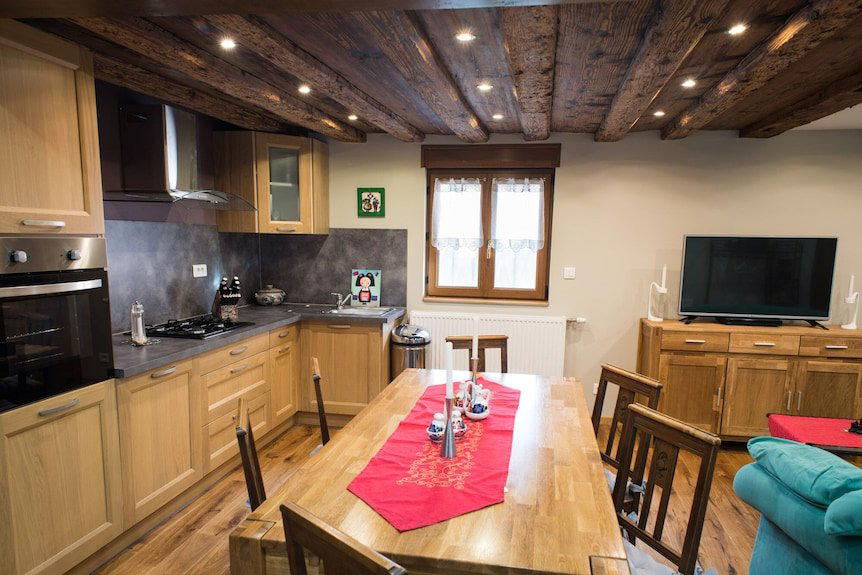
Cadre chaleureux et beau avec ambiance conviviale et familiale, service souriant.