Arwa Yemeni Coffee

<h2>On Beacon Street, a Different Kind of Coffee Culture</h2><p>Beacon Street runs through Brookline like a spine, connecting the T stops and the brick storefronts that define the town's particular blend of urban density and residential calm. Among the cafes and restaurants that line it, Arwa Yemeni Coffee at 1333 Beacon St occupies a specific and increasingly relevant niche: a shop built around a coffee tradition that predates espresso culture by centuries, and that most American drinkers have encountered only recently, if at all.</p><p>Yemeni coffee is not a variant of the drinks you order at a specialty roaster. It is a separate tradition, rooted in the cultivation and preparation methods of the Arabian Peninsula, where coffee plants grew long before they reached Europe or the Americas. The most discussed expression of this tradition is qishr, a spiced brew made from coffee husks rather than beans, steeped with ginger and sometimes other aromatics. The flavor sits closer to a chai-adjacent spice drink than to any espresso-adjacent preparation, and that distinction matters for setting expectations. This is sourcing-forward coffee in the most literal sense: the identity of the drink depends entirely on what part of the plant is used, where it was grown, and how it was dried.</p><h2>Why the Ingredient Sourcing Question Matters Here</h2><p>The broader American specialty coffee movement spent the last two decades building consumer fluency around origin, processing method, and varietal. Yemeni coffee occupies an interesting position within that conversation. Yemen's coffee-growing regions, particularly around the areas historically connected to the port of Mokha (from which the word "mocha" derives), produce beans with documented flavor complexity tied to ancient cultivation practices and heirloom varietals. The country also has a tradition of using the dried coffee cherry husk, known as qishr, that most Western coffee culture discarded in favor of the bean alone.</p><p>Shops specializing in this tradition are now appearing in American cities with significant Yemeni-American communities, including Detroit, New York, and parts of the Boston metropolitan area. The emergence of Arwa in Brookline places it within this broader national pattern: a community bringing a deeply specific food tradition to a neighborhood context and offering it to a mixed customer base that may or may not arrive with prior knowledge.</p><p>The sourcing question that runs through this kind of establishment is not just about where the beans come from. It is about whether the preparation traditions travel intact. Qishr, for instance, requires dried coffee husks that are not a standard commodity in Western supply chains. Shops that do it seriously are working with specific importers or direct relationships. That supply-chain detail, invisible to the customer, is what separates a genuine expression of the tradition from an approximation.</p><h2>Brookline as a Context</h2><p>Brookline's dining scene is more compressed and specific than its proximity to Boston might suggest. The town has a strong identity around neighborhood-scale restaurants with a wide range of cuisine types, driven partly by its demographically mixed residential population. On and near Beacon Street, you find a range of formats: <a href="https://www.enprimeurclub.com/restaurants/barcelona-wine-bar-brookline-brookline-restaurant">Barcelona Wine Bar Brookline</a> holds the wine-forward casual dining position, <a href="https://www.enprimeurclub.com/restaurants/cuttys-brookline-restaurant">Cutty's</a> operates the focused sandwich format with a devoted following, and <a href="https://www.enprimeurclub.com/restaurants/mahaniyom-brookline-restaurant">Mahaniyom</a> represents the kind of specific regional Southeast Asian cooking that has found a home in the area. In that context, a Yemeni coffee specialist is not an anomaly. It fits a pattern of Brookline supporting cuisine-specific formats that would struggle to sustain themselves in less densely populated suburban contexts.</p><p>What Arwa offers is a specific category experience that does not compete with the espresso bar or the specialty roaster. It is closer to a cultural destination within a daily-commute neighborhood, which is a viable format when the surrounding community includes people for whom this tradition is familiar and others for whom it is genuinely new.</p><h2>Visiting and What to Expect</h2><p>The address at 1333 Beacon St is accessible via the T, which makes it a realistic stop rather than a destination requiring a car. For visitors coming from Boston proper, the Green Line C branch runs along Beacon Street, and the walk from the nearest stop is short. The practical recommendation is to arrive with some patience for exploration: the menu vocabulary may require a brief orientation if you are new to the tradition, and the payoff is more satisfying when you understand what you are ordering and why.</p><p>Price point information is not currently confirmed for this listing, but Yemeni coffee shops in comparable American markets typically operate at accessible cafe price levels, positioning them well below the tasting menus and elaborate cocktail programs at the high end of the Brookline and Boston dining spectrum. Think of it as the kind of stop you might make on the way to or from a longer evening, or as a destination in its own right on a slower afternoon.</p><p>For a broader sense of what Brookline offers across food, drink, and lodging categories, the <a href="https://www.enprimeurclub.com/restaurants/brookline">full Brookline restaurants guide</a> covers the range. If you are building a longer visit, the <a href="https://www.enprimeurclub.com/hotels/brookline">Brookline hotels guide</a> and <a href="https://www.enprimeurclub.com/bars/brookline">Brookline bars guide</a> provide the surrounding context. The <a href="https://www.enprimeurclub.com/experiences/brookline">Brookline experiences guide</a> and <a href="https://www.enprimeurclub.com/wineries/brookline">wineries guide</a> round out the picture for visitors planning a full day or weekend.</p><p>For those calibrating Arwa against a broader spectrum of American dining, the reference points at the other end of the formality scale include <a href="https://www.enprimeurclub.com/restaurants/le-bernardin">Le Bernardin in New York City</a>, <a href="https://www.enprimeurclub.com/restaurants/the-french-laundry">The French Laundry in Napa</a>, and <a href="https://www.enprimeurclub.com/restaurants/blue-hill-at-stone-barns-tarrytown-restaurant">Blue Hill at Stone Barns in Tarrytown</a>, each of which anchors sourcing-driven dining at a different price point and format. The sourcing philosophy that animates those kitchens and Arwa's approach to coffee traditions are not as far apart conceptually as their price points suggest. Both ask the same foundational question: where does the ingredient come from, and does the preparation honor that origin? Other notable sourcing-forward programs at the high end of the national scene include <a href="https://www.enprimeurclub.com/restaurants/single-thread">Single Thread Farm in Healdsburg</a>, <a href="https://www.enprimeurclub.com/restaurants/lazy-bear">Lazy Bear in San Francisco</a>, and <a href="https://www.enprimeurclub.com/restaurants/alinea">Alinea in Chicago</a>. Internationally, similar ingredient-first rigor appears at <a href="https://www.enprimeurclub.com/restaurants/alain-ducasse-louis-xv-monte-carlo-restaurant">Alain Ducasse at Louis XV in Monte Carlo</a> and <a href="https://www.enprimeurclub.com/restaurants/8-12-otto-e-mezzo-bombana-hong-kong-restaurant">8½ Otto e Mezzo Bombana in Hong Kong</a>. Closer to home, <a href="https://www.enprimeurclub.com/restaurants/emerils-new-orleans-restaurant">Emeril's in New Orleans</a> and <a href="https://www.enprimeurclub.com/restaurants/providence">Providence in Los Angeles</a> represent the formal end of American regional sourcing programs.</p><h2>Frequently Asked Questions</h2><dl><dt>Does Arwa Yemeni Coffee work for a family meal?</dt><dd>Yes, at the accessible price point typical of specialty coffee formats in the Boston area, it is a low-barrier stop for families, though it is primarily a coffee and drinks destination rather than a full dining format.</dd><dt>Is Arwa Yemeni Coffee better for a quiet night or a lively one?</dt><dd>If you are coming in without reservations or a specific agenda, this is a daytime or early-evening format. Brookline's livelier evening energy tends to concentrate at wine bars and restaurants; a Yemeni coffee specialist is more suited to a focused, lower-key visit than a night out.</dd><dt>What should I eat at Arwa Yemeni Coffee?</dt><dd>Orient your order around the coffee itself, specifically any qishr or spiced husk preparations on the menu. The tradition centers on these drinks, and the food items at comparable shops typically play a supporting role. Arrive curious rather than with a fixed expectation of a standard cafe menu.</dd><dt>Is Yemeni coffee the same as regular coffee, just from Yemen?</dt><dd>Not exactly. While Yemen does produce coffee beans with historical significance, the signature preparation at Yemeni coffee shops is often qishr, brewed from dried coffee cherry husks with ginger and spices rather than the roasted bean. This gives the drink a flavor profile distinct from both Western espresso and specialty pour-over culture, making Arwa a genuinely different category of coffee experience within the Brookline area.</dd></dl>

On Beacon Street, a Different Kind of Coffee Culture
Beacon Street runs through Brookline like a spine, connecting the T stops and the brick storefronts that define the town's particular blend of urban density and residential calm. Among the cafes and restaurants that line it, Arwa Yemeni Coffee at 1333 Beacon St occupies a specific and increasingly relevant niche: a shop built around a coffee tradition that predates espresso culture by centuries, and that most American drinkers have encountered only recently, if at all.
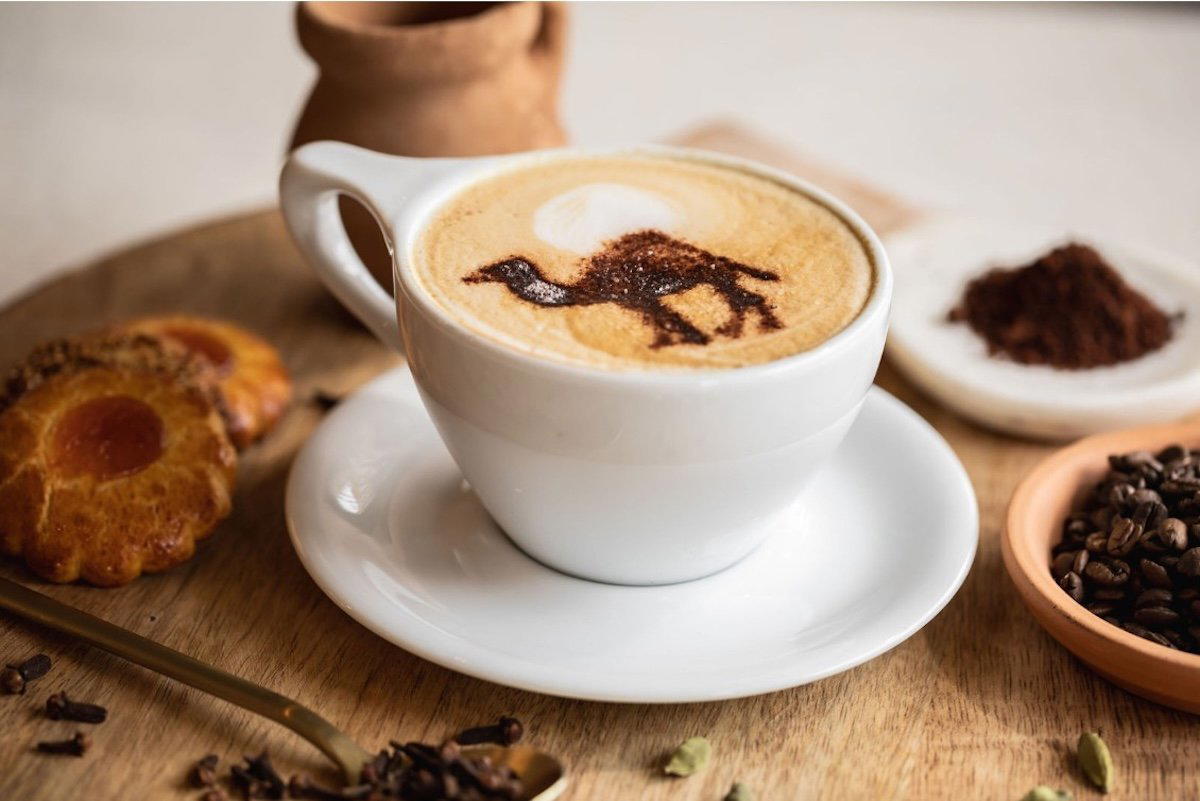
Yemeni coffee is not a variant of the drinks you order at a specialty roaster. It is a separate tradition, rooted in the cultivation and preparation methods of the Arabian Peninsula, where coffee plants grew long before they reached Europe or the Americas. The most discussed expression of this tradition is qishr, a spiced brew made from coffee husks rather than beans, steeped with ginger and sometimes other aromatics. The flavor sits closer to a chai-adjacent spice drink than to any espresso-adjacent preparation, and that distinction matters for setting expectations. This is sourcing-forward coffee in the most literal sense: the identity of the drink depends entirely on what part of the plant is used, where it was grown, and how it was dried.
The shortlist, unlocked.
Hard-to-book tables, cellar releases, and concierge-planned trips.
Get Exclusive Access →Why the Ingredient Sourcing Question Matters Here
The broader American specialty coffee movement spent the last two decades building consumer fluency around origin, processing method, and varietal. Yemeni coffee occupies an interesting position within that conversation. Yemen's coffee-growing regions, particularly around the areas historically connected to the port of Mokha (from which the word "mocha" derives), produce beans with documented flavor complexity tied to ancient cultivation practices and heirloom varietals. The country also has a tradition of using the dried coffee cherry husk, known as qishr, that most Western coffee culture discarded in favor of the bean alone.
Shops specializing in this tradition are now appearing in American cities with significant Yemeni-American communities, including Detroit, New York, and parts of the Boston metropolitan area. The emergence of Arwa in Brookline places it within this broader national pattern: a community bringing a deeply specific food tradition to a neighborhood context and offering it to a mixed customer base that may or may not arrive with prior knowledge.
The sourcing question that runs through this kind of establishment is not just about where the beans come from. It is about whether the preparation traditions travel intact. Qishr, for instance, requires dried coffee husks that are not a standard commodity in Western supply chains. Shops that do it seriously are working with specific importers or direct relationships. That supply-chain detail, invisible to the customer, is what separates a genuine expression of the tradition from an approximation.
Brookline as a Context
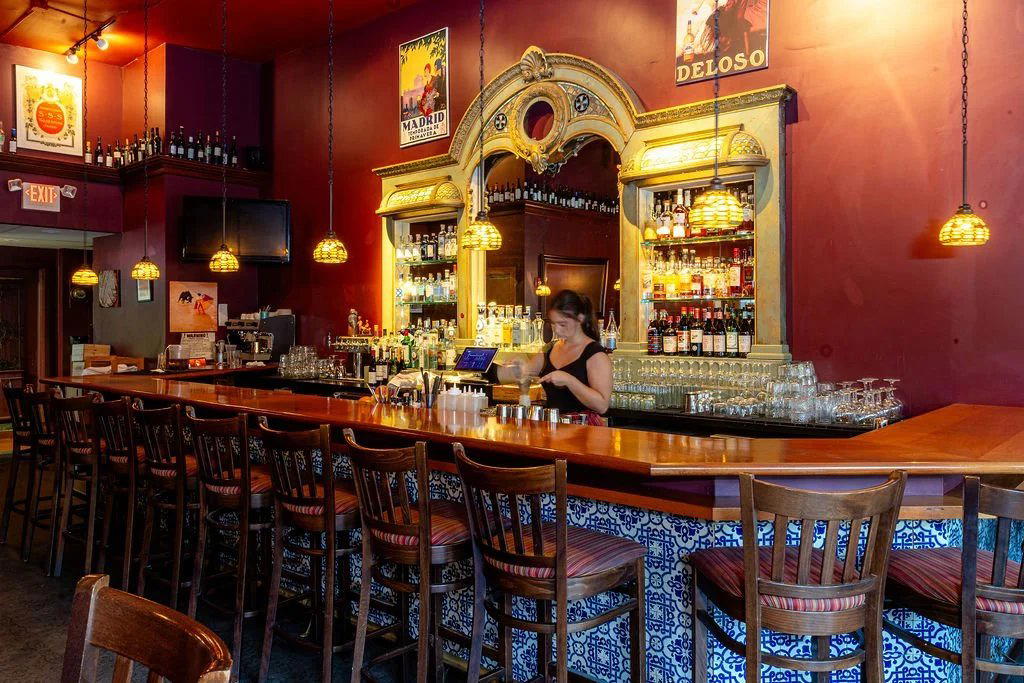
Brookline's dining scene is more compressed and specific than its proximity to Boston might suggest. The town has a strong identity around neighborhood-scale restaurants with a wide range of cuisine types, driven partly by its demographically mixed residential population. On and near Beacon Street, you find a range of formats: Barcelona Wine Bar Brookline holds the wine-forward casual dining position, Cutty's operates the focused sandwich format with a devoted following, and Mahaniyom represents the kind of specific regional Southeast Asian cooking that has found a home in the area. In that context, a Yemeni coffee specialist is not an anomaly. It fits a pattern of Brookline supporting cuisine-specific formats that would struggle to sustain themselves in less densely populated suburban contexts.
What Arwa offers is a specific category experience that does not compete with the espresso bar or the specialty roaster. It is closer to a cultural destination within a daily-commute neighborhood, which is a viable format when the surrounding community includes people for whom this tradition is familiar and others for whom it is genuinely new.
Visiting and What to Expect
The address at 1333 Beacon St is accessible via the T, which makes it a realistic stop rather than a destination requiring a car. For visitors coming from Boston proper, the Green Line C branch runs along Beacon Street, and the walk from the nearest stop is short. The practical recommendation is to arrive with some patience for exploration: the menu vocabulary may require a brief orientation if you are new to the tradition, and the payoff is more satisfying when you understand what you are ordering and why.
Price point information is not currently confirmed for this listing, but Yemeni coffee shops in comparable American markets typically operate at accessible cafe price levels, positioning them well below the tasting menus and elaborate cocktail programs at the high end of the Brookline and Boston dining spectrum. Think of it as the kind of stop you might make on the way to or from a longer evening, or as a destination in its own right on a slower afternoon.
For a broader sense of what Brookline offers across food, drink, and lodging categories, the full Brookline restaurants guide covers the range. If you are building a longer visit, the Brookline hotels guide and Brookline bars guide provide the surrounding context. The Brookline experiences guide and wineries guide round out the picture for visitors planning a full day or weekend.
For those calibrating Arwa against a broader spectrum of American dining, the reference points at the other end of the formality scale include Le Bernardin in New York City, The French Laundry in Napa, and Blue Hill at Stone Barns in Tarrytown, each of which anchors sourcing-driven dining at a different price point and format. The sourcing philosophy that animates those kitchens and Arwa's approach to coffee traditions are not as far apart conceptually as their price points suggest. Both ask the same foundational question: where does the ingredient come from, and does the preparation honor that origin? Other notable sourcing-forward programs at the high end of the national scene include Single Thread Farm in Healdsburg, Lazy Bear in San Francisco, and Alinea in Chicago. Internationally, similar ingredient-first rigor appears at Alain Ducasse at Louis XV in Monte Carlo and 8½ Otto e Mezzo Bombana in Hong Kong. Closer to home, Emeril's in New Orleans and Providence in Los Angeles represent the formal end of American regional sourcing programs.
Frequently Asked Questions
- Does Arwa Yemeni Coffee work for a family meal?
- Yes, at the accessible price point typical of specialty coffee formats in the Boston area, it is a low-barrier stop for families, though it is primarily a coffee and drinks destination rather than a full dining format.
- Is Arwa Yemeni Coffee better for a quiet night or a lively one?
- If you are coming in without reservations or a specific agenda, this is a daytime or early-evening format. Brookline's livelier evening energy tends to concentrate at wine bars and restaurants; a Yemeni coffee specialist is more suited to a focused, lower-key visit than a night out.
- What should I eat at Arwa Yemeni Coffee?
- Orient your order around the coffee itself, specifically any qishr or spiced husk preparations on the menu. The tradition centers on these drinks, and the food items at comparable shops typically play a supporting role. Arrive curious rather than with a fixed expectation of a standard cafe menu.
- Is Yemeni coffee the same as regular coffee, just from Yemen?
- Not exactly. While Yemen does produce coffee beans with historical significance, the signature preparation at Yemeni coffee shops is often qishr, brewed from dried coffee cherry husks with ginger and spices rather than the roasted bean. This gives the drink a flavor profile distinct from both Western espresso and specialty pour-over culture, making Arwa a genuinely different category of coffee experience within the Brookline area.
A Quick Peer Check
A fast peer set for context, pulled from similar venues in our database.
| Venue | Cuisine | Price | Awards | Notes |
|---|---|---|---|---|
| Arwa Yemeni Coffee | Yemeni coffee | This venue | ||
| Cutty’s | Sandwiches | Sandwiches | ||
| Mahaniyom | ||||
| Barcelona Wine Bar Brookline |
Need a table?
Our members enjoy priority alerts and concierge-led booking support for the world's most difficult tables.
Get Exclusive AccessThe shortlist, unlocked.
Hard-to-book tables, cellar releases, and concierge-planned trips.
Get Exclusive Access →