Artean Barra Abierta


In the Gros district of San Sebastián, Artean Barra Abierta seats twelve at a long counter where Basque cooking meets Peruvian technique. The name itself signals the concept: Artean means 'between' in Basque, and the kitchen operates in that space between two culinary traditions. The à la carte runs alongside a full tasting menu, with dishes such as the scallop gilda and causa with tuna tartare anchoring the format.
Pearl is the En Primeur Club membership app — saves, bookings, and concierge access live there. Same editors, same standards.
- Address
- Kolon Pasealekua, 11, 20002 Donostia / San Sebastián, Gipuzkoa, Spain
- Phone
- +34 943 27 53 96
- Website
- arteansansebastian.com
- Directions
- Get directions
 Saves & bookings on Pearl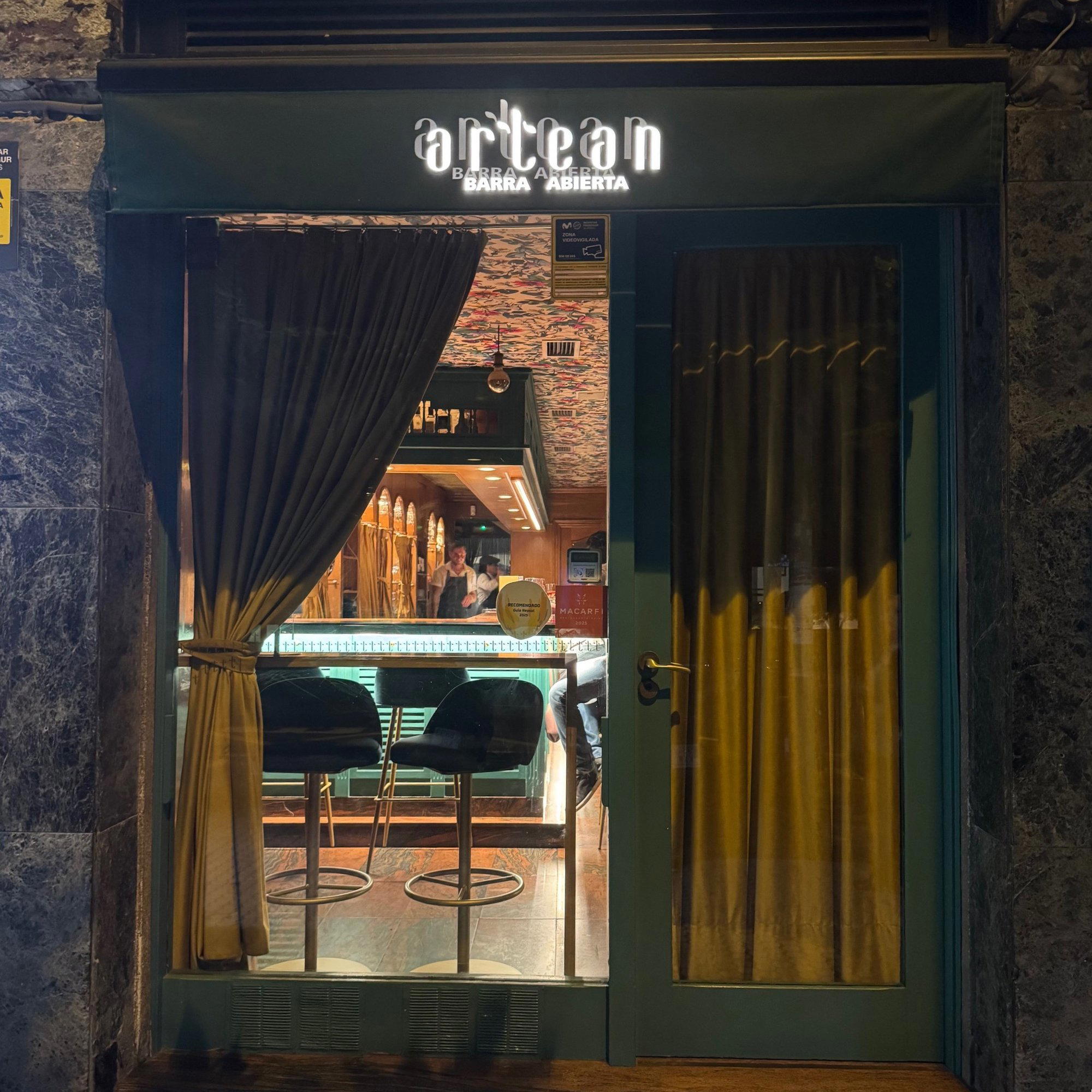
Where Gros Meets the Counter
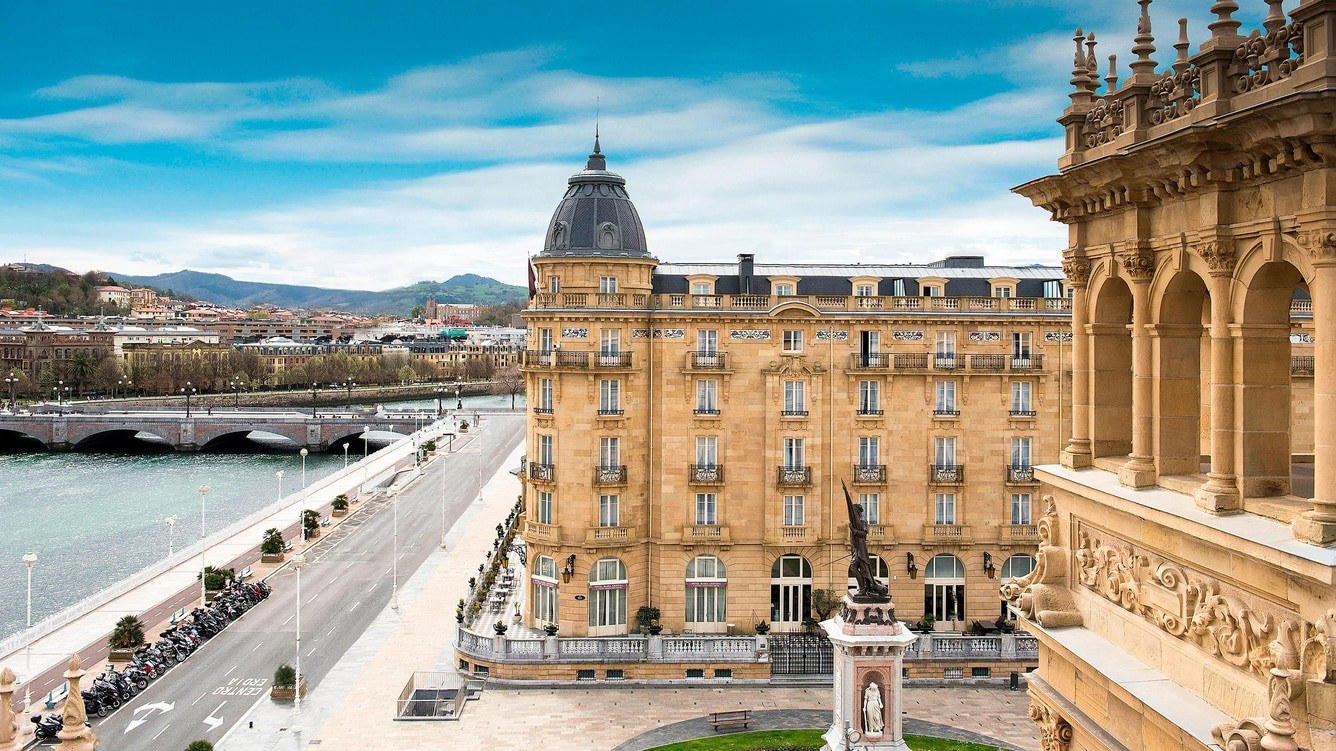
The Gros district occupies San Sebastián's eastern bank, separated from the old town by the Urumea river and defined by a different rhythm. Where the Parte Vieja operates on volume and spectacle, Gros tends toward the smaller, more considered room. Kolon Pasealekua runs parallel to the river, and just steps from the angular Kursaal congress centre, Artean Barra Abierta occupies precisely that neighbourhood register: a twelve-seat counter, two cooks, and a menu that asks a specific culinary question about where ingredients come from and what happens when two source traditions meet in one kitchen.
San Sebastián's counter-dining culture has deep roots. The city's pintxos bars established the logic decades ago: a long surface, food within arm's reach, a conversation between cook and diner that a table in the middle of a room cannot replicate. Artean extends that logic into a full sit-down format, but the intimacy of twelve seats means the dynamic remains close. You are watching the cooking, and the cooking is aware of you.
Two Pantries, One Counter
The editorial angle worth understanding at Artean is less about fusion as a concept and more about what each tradition actually contributes at the ingredient level. Basque cooking draws from one of Spain's most codified larders: the bay of Biscay for bonito, anchovies, and kokotxas; the interior valleys of Gipuzkoa for peppers, txistorra, and idiazabal; the Cantabrian coastline for percebes and nécoras. These are not interchangeable ingredients. They carry specific seasons, specific fishing grounds, and specific preparation orthodoxies that Basque chefs defend with unusual rigour.
Peruvian cooking brings a different structural logic. The country's three distinct geographical zones, the coast, the highlands, and the Amazon, produce ingredients that span ceviche-grade sea bass, highland potato varieties numbering in the hundreds, and Amazonian citrus that has no direct European equivalent. Peruvian chefs, particularly those trained in the generation that followed Gastón Acurio's mid-2000s moment of international visibility, learned to treat this diversity as a compositional tool rather than a catalogue of dishes. The causa, for instance, is fundamentally a cold potato preparation, built for contrast of temperature and texture, that travels well into other culinary contexts precisely because its logic is structural rather than nostalgic.
At Artean, Germán and Anali bring both pantries to bear simultaneously. The scallop gilda and the causa with tuna tartare represent this meeting most directly. The gilda is a Basque pintxo in its most recognisable form, an anchovy-olive-guindilla combination whose balance of salt, fat, and acidity is so precisely calibrated that it has remained essentially unchanged for decades across the bars of the old town. Rebuilding it around scallop signals a willingness to question that orthodoxy without abandoning the underlying flavour architecture. The causa follows a parallel logic in the other direction: a Peruvian form filled with tuna tartare that has clear Basque coastal affinities.
This cross-referencing of source traditions is not unique to San Sebastián, but the city's culinary density makes it a particularly sharp place to attempt it. Restaurants such as Arzak in San Sebastián and Mugaritz in Errenteria have spent decades interrogating what Basque cuisine can absorb from outside without losing its coherence. Artean is working on a smaller scale and at a different price point, but the intellectual question is related.
The Format and What It Demands of You
Twelve seats means Artean operates with the booking pressure typical of small-format counters in cities where dining attention is concentrated. San Sebastián fields an extraordinary number of serious restaurants relative to its population of roughly 190,000, and the Gros district in particular has attracted a disproportionate share of the city's more experimental openings. Getting a seat at Artean requires advance planning rather than impulse booking. The format also means the tasting menu, which complements rather than replaces the à la carte, unfolds at a pace set by the kitchen rather than by your table's appetite for speed. That is part of the proposition.
For context on the wider Basque and Spanish fine-dining spectrum, the three-Michelin-star tier is well represented across the region: Martin Berasategui in Lasarte-Oria, Azurmendi in Larrabetzu, and further afield, Aponiente in El Puerto de Santa María and El Celler de Can Roca in Girona define one end of the Spanish restaurant spectrum. Artean operates at a different register entirely, closer in spirit to the intimate counter format than to the grand tasting-menu institution. Locally, Itzuli and Bruno Oteiza represent other points on the Donostia dining map worth considering alongside Artean when planning a multi-day itinerary in the city.
The name carries this duality deliberately. Artean, in Basque, means between: between two cooks, between two cuisines, between the diner and the counter. That spatial and relational ambiguity is not incidental. Counter restaurants in any city are making an argument about proximity, that the ideal way to understand what you are eating is to be close enough to watch it being made. In a city where the bar counter has been a culinary institution for the better part of a century, that argument lands with some weight.
Planning Your Visit
Artean Barra Abierta is located at Kolon Pasealekua, 11, in the Gros district of San Sebastián, a short walk from the Kursaal and within reach of the Zurriola beach. Given the twelve-seat capacity, reservations are advisable well ahead of your intended visit, particularly on weekends and during the summer months when the city's tourist density peaks. The à la carte and tasting menu run in parallel, giving diners a choice of format within the same kitchen. For broader planning across the city, EP Club's guides cover the full range: our full Donostia / San Sebastián restaurants guide, our full Donostia / San Sebastián hotels guide, our full Donostia / San Sebastián bars guide, our full Donostia / San Sebastián wineries guide, and our full Donostia / San Sebastián experiences guide.
How Artean Barra Abierta San Sebastián compares with similar nearby venues.
| Venue | Cuisine | Price | Awards |
|---|---|---|---|
| Artean Barra Abierta | Not listed | Not listed | Michelin Plate (2026) |
| Ikaitz | Traditional Cuisine | €€ | Not listed |
| Topa Sukalderia | Eclectic | Not listed | Not listed |
Recognition history
Dated appearances from independent guides and award organizations, with the underlying list record or original source where available.
Macarfi 7.9 Food Rating
Macarfi
Michelin Plate
Michelin
Continue exploring
More in San Sebastián
Restaurants in San Sebastián
Browse all →
Bars in San Sebastián
Browse all →
At a Glance
- Intimate
- Cozy
- Trendy
- Modern
- Date Night
- Special Occasion
- Chefs Counter
- Open Kitchen
- Extensive Wine List
- Local Sourcing
Current opening hours
- Monday
- Closed
- Tuesday
- 8–10 PM
- Wednesday
- 8–10 PM
- Thursday
- 8–10 PM
- Friday
- 7:30–10 PM
- Saturday
- 1:30–3:30 PM, 8–10 PM
- Sunday
- Closed
Hours can change for holidays and private events. Last verified .
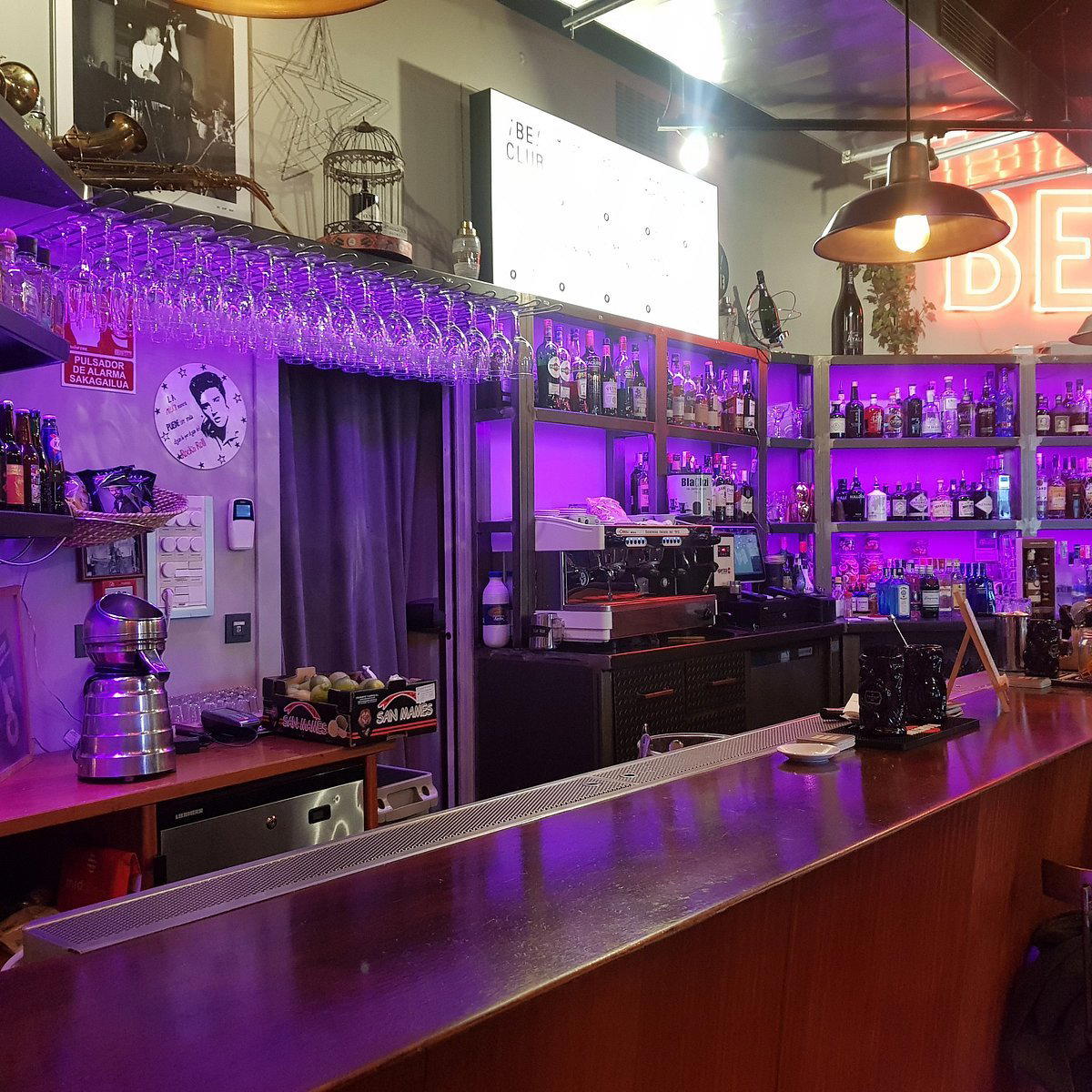
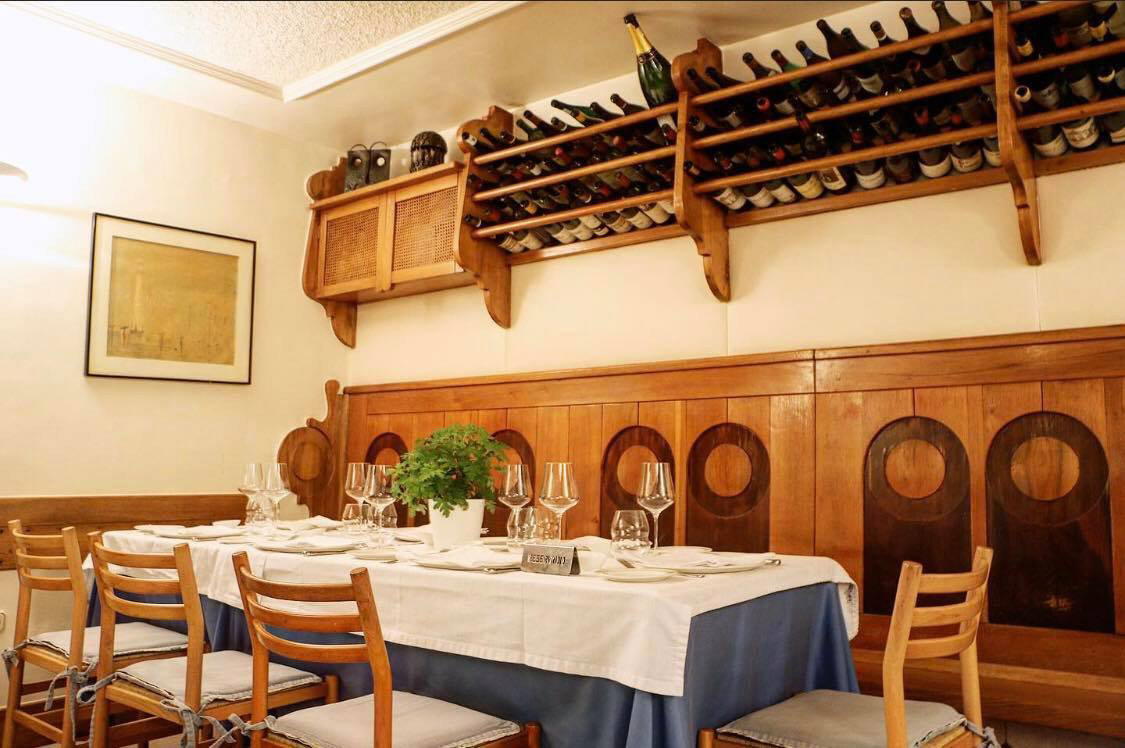
Vibrantly colored ceiling, wooden paneling, and decorative elements create a comfortable, inviting atmosphere with an intimate, energetic vibe at the open bar.
Know Before You Go
- Getting there
- Kolon Pasealekua, 11, 20002 Donostia / San Sebastián, Gipuzkoa, Spain