Anjajavy le Lodge

Relais Chateaux Award
Our verdict
Anjajavy le Lodge sits on a remote peninsula in northwest Madagascar, accessible only by charter flight, where Malagasy coastal cooking under Chef Fidele draws on the surrounding ocean and dry forest.

Pearl is the En Primeur Club membership app — saves, bookings, and concierge access live there. Same editors, same standards.
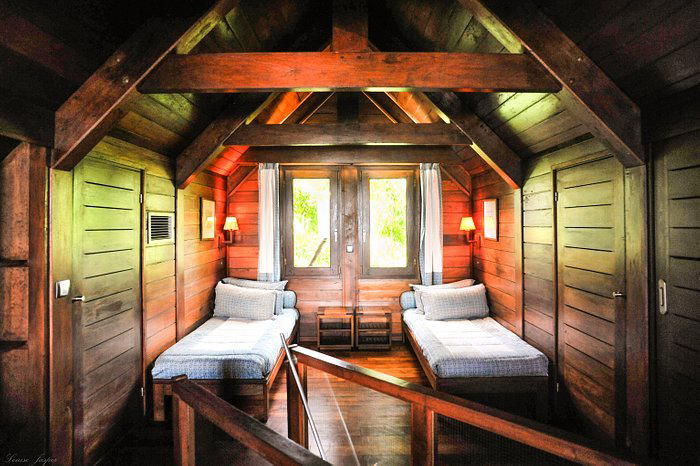
Where the Mozambique Channel Sets the Menu
The approach to Anjajavy tells you most of what you need to know about the dining that follows. Charter flights operated by MTA depart Antananarivo on Tuesdays, Thursdays, and Saturdays, landing on a private airstrip cut from dry deciduous forest on a peninsula that juts into the Mozambique Channel. There are no roads in. The nearest town is hours away. By the time guests reach the private villas with their open-air patios, the geographical remoteness has already framed the culinary proposition: what you eat here is almost entirely what this coastline and its surrounding land can provide.
That is not a marketing position. It is a logistical reality that shapes every plate Chef Fidele sends out of the kitchen. In the broader world of lodge dining, where menus often arrive pre-planned from urban suppliers and local ingredients function as decoration rather than foundation, Anjajavy operates closer to the opposite model. The Indian Ocean supplies the protein. The surrounding dry forest and its associated smallholder agriculture supply much of the rest. The cuisine that results reads as Malagasy coastal in the most direct sense: not a genre classification, but a description of provenance.
Malagasy Coastal Cooking and What It Actually Means
Madagascar occupies a specific position in the culinary geography of the western Indian Ocean. Its cooking draws from Bantu, Arab, and Southeast Asian migration patterns across centuries, producing a flavour logic that sits apart from both mainland African traditions and the better-documented Creole kitchens of Mauritius and Réunion. Rice is structural rather than supplementary. Coconut milk, ginger, and the mild chilli-based condiment sakay appear in various registers. Seafood, when the setting allows it, is treated with a restraint that lets the quality of the catch speak rather than obscuring it in sauce.
For context on how different this approach is from the format-driven tasting menus that define premium dining in Europe and North America, consider the controlled, highly choreographed experiences at places like Alinea in Chicago or Atomix in New York City, or the seafood-focused precision of Le Bernardin in New York City. Those kitchens operate within urban supply chains and the expectations of a metropolitan dining public. Anjajavy's kitchen has no comparable infrastructure to lean on. What it has instead is direct access to one of the least-fished stretches of coastline in the region and a chef who has built a cuisine around that specific geography.
Chef Fidele and the Discipline of Place
The editorial angle on Anjajavy's food is not really about Chef Fidele's biography, which is not a matter of public record in the way that the training histories of, say, the kitchens behind Arpège in Paris or Arzak in San Sebastián are. It is about what cooking in radical isolation produces in a chef over time. When the supply chain is limited to what arrives by charter flight or grows within reach of the kitchen, culinary decisions compress around a single question: what is here, and what can be done with it today?
That constraint, which would feel punishing in a city kitchen, becomes a form of discipline at a property like Anjajavy. The result is cooking that is seasonal in a way that urban restaurant menus rarely achieve, because seasonality at this latitude and in this ecological zone is not a trend to be marketed but a hard fact to be cooked around. The dry forest that surrounds the property, with its endemic species and fragile ecosystem, reinforces a sensibility that ecolodge dining at its most considered tends to share: that the kitchen has responsibilities to the land it sits on, not just to the guests at the table.
The Lodge as a Dining Context
The physical setting of Anjajavy shapes how food is received as much as how it is cooked. Private villas open onto patios that face sandy beaches and quiet coves. The dining spaces, as is typical of Indian Ocean ecolodges at this tier, dissolve the boundary between interior and exterior, so that meals happen in the ambient noise of the channel and the dry forest rather than in the curated silence of a city dining room. This is not the atmosphere of Alain Ducasse at Louis XV in Monte Carlo or Alléno Paris au Pavillon Ledoyen, where the room is itself a performance. At Anjajavy, the room is a peninsula, and the performance is a sunset over the Mozambique Channel.
The marine and terrestrial biodiversity of the area is documented as among the more concentrated in the western Indian Ocean. Lemurs, baobabs, and a coastline of some ecological significance are the backdrop. For guests whose reference points for premium dining include the format discipline of Lazy Bear in San Francisco or the technical rigour of Aponiente in El Puerto de Santa María, Anjajavy asks for a recalibration. The metrics that apply here are different: proximity to source, ecological integrity, and the quality of what the sea delivered that morning.
Access, Ratings, and What the Numbers Say
Charter flights depart Antananarivo airport on Tuesdays, Thursdays, and Saturdays via MTA. Private flights to other Madagascar airports, including Nosy Be and Majunga, can be arranged. The GPS coordinates for the lodge are -14.9904, 47.2285. For guests planning around the lodge's dining program specifically, the access schedule effectively sets the rhythm of arrival and departure, and therefore the rhythm of meals: there is no dropping in for dinner.
For a broader picture of what the Anjajavy area offers beyond the lodge's own kitchen, see our full Anjajavy restaurants guide, our full Anjajavy hotels guide, our full Anjajavy bars guide, our full Anjajavy wineries guide, and our full Anjajavy experiences guide. For reference points in comparable high-commitment dining formats elsewhere, the tasting menus at Emeril's in New Orleans, 8½ Otto e Mezzo Bombana in Hong Kong, and Alinea in Chicago offer a useful frame for what structured commitment to a dining experience looks like, even if the contexts could hardly be more different.
Frequently asked questions
Is Anjajavy le Lodge child-friendly?
The lodge does not publish a formal children's policy. Access requires a charter flight with MTA out of Antananarivo on Tuesdays, Thursdays, or Saturdays, and the format — private villas, remote coastline, ecolodge conservation priorities — is oriented toward adults. Families with older, independent children may find it workable, but it is not a resort structured around younger guests.
What's the overall feel of Anjajavy le Lodge?
Seclusion is the primary offering here. Private villas open onto patios facing sandy beaches and quiet coves along the Mozambique Channel, with marine and terrestrial biodiversity that distinguishes the northwest Madagascar coast from busier Indian Ocean destinations.
What's Anjajavy le Lodge known for in terms of accolades?
Anjajavy le Lodge has received recognition including: HIGHLIGHTS: • SECLUDED ECOLODGE • SANDY BEACHES & QUIET COVES • UNIQUE MARINE & TERRESTRIAL BIODIVERSITY • PRIVATE VILLAS WITH PATIO DIRECTIONS & ACCESS: Directions By car Regular flights by charter company MTA from Antananarivo airport on ….
What dish is Anjajavy le Lodge famous for?
Chef Fidele's kitchen is anchored in Malagasy coastal cooking, which positions Mozambique Channel seafood at the centre of the menu. Madagascar's culinary tradition draws from Bantu, Arab, and Southeast Asian influences, giving the cooking a profile distinct from both East African and broader Indian Ocean cuisines. No single signature dish is on public record, but the framework of hyper-local seafood within that layered culinary heritage defines what the kitchen does.
What's the address for Anjajavy le Lodge?
Anjajavy le Lodge is located at Anja community Reserve, Ambalavao, km 12, RN7, Ambalalova 303, Madagascar, Anjajavy.
Who is the chef or culinary lead at Anjajavy le Lodge?
The chef associated with Anjajavy le Lodge is Fidele.
Recognition history
Dated appearances from independent guides and award organizations, with the underlying list record or original source where available.
Relais Chateaux Award
Relais Chateaux
Full recognition history (2 entries)
Relais Chateaux Award
Relais Chateaux
Continue exploring
More in Anjajavy
Hotels in Anjajavy
All hotels in Anjajavy →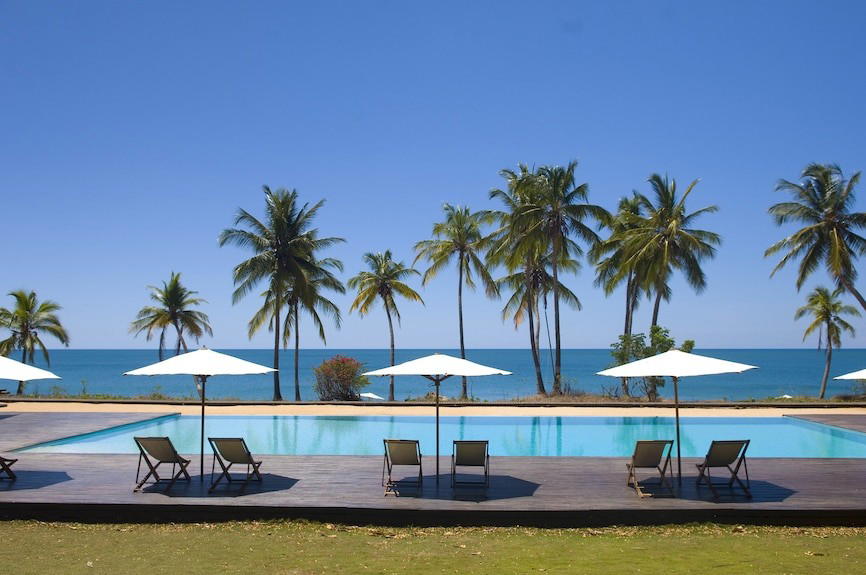
Details
- Romantic
- Scenic
- Elegant
- Intimate
- Quiet
- Sophisticated
- Date Night
- Special Occasion
- Celebration
- Waterfront
- Garden
- Hotel Restaurant
- Terrace
- Local Sourcing
- Waterfront
- Garden
- Set Menu
- Vegetarian Friendly
- Allergy Accommodating
Relaxed and elegant with natural lighting from beachfront and garden settings, peaceful atmosphere enhanced by lemur visits during afternoon tea and dinners in scenic locations like the lawn, pool, or ocean overlook.