Amura Japanese Restaurant
On the Restaurant Row corridor of Sand Lake Road, Amura Japanese Restaurant occupies a position that Orlando's suburban dining scene has quietly relied on for years. The kitchen works within a Japanese framework at a location — 7786 W Sand Lake Rd — that places it among the area's more established mid-to-upper dining options. For those making sense of Doctor Phillips's dining options, Amura represents a consistent reference point in a market better known for chain concepts.
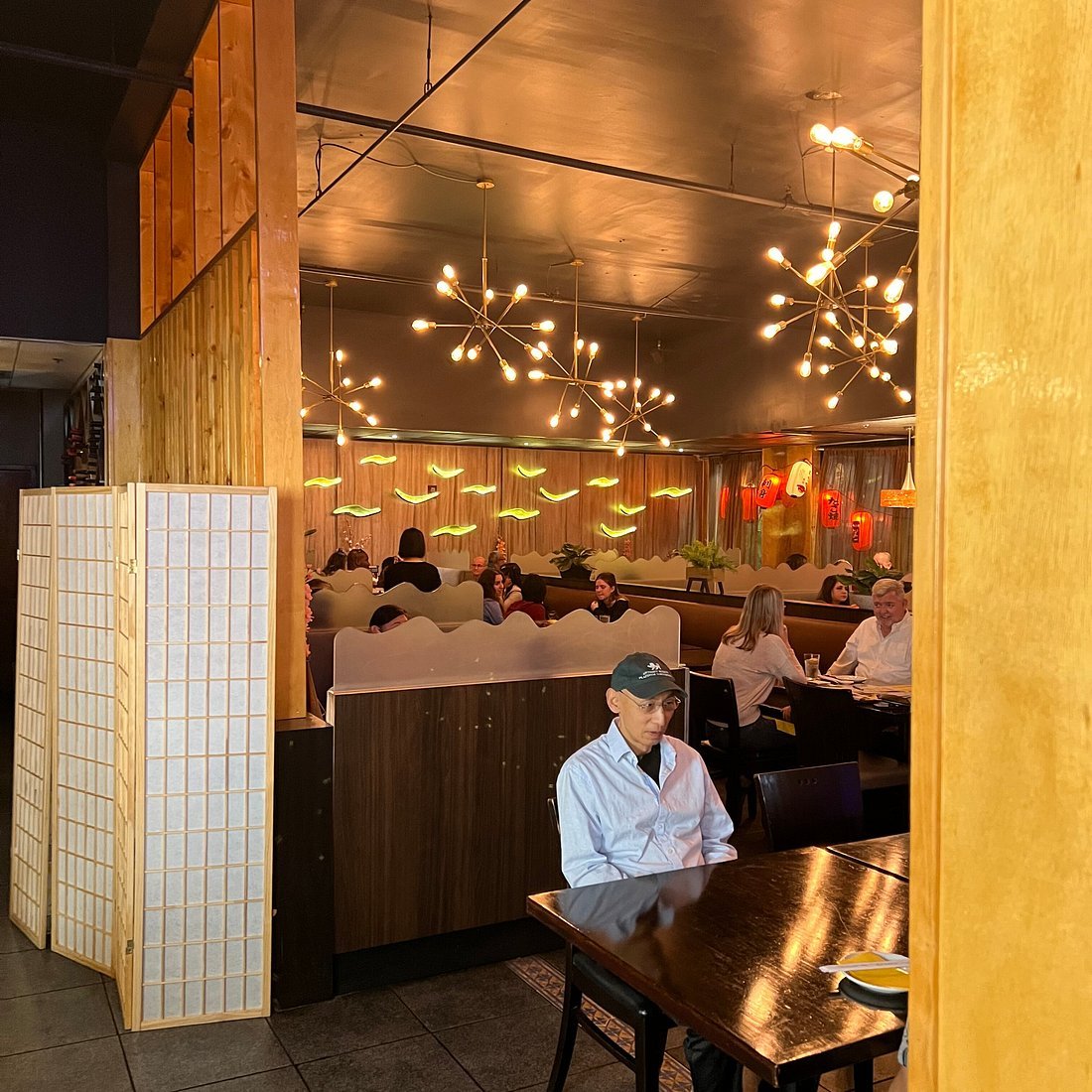
Sand Lake Road and the Case for Japanese in Suburban Orlando
Restaurant Row, the stretch of Sand Lake Road that runs through Doctor Phillips, is one of those corridors where national chains and locally operated independents negotiate the same real estate. The independents that survive there over time tend to do so because they serve a function the chains cannot: specificity. Amura Japanese Restaurant, at 7786 W Sand Lake Rd, has occupied that function for the Orlando market in a way that says something about where suburban Florida dining has arrived and where it still has room to go. For a broader picture of what else the area offers, our full Doctor Phillips restaurants guide maps the corridor's dining character in detail.
Japanese cuisine in American suburban markets tends to cluster around accessible sushi formats, teriyaki lunch specials, and hibachi theater. The tier above that — where sourcing decisions, fish quality, and kitchen discipline start to matter — is thinner, and it is in that thinner tier that Amura positions itself. Understanding what that means requires some context about how Japanese food actually travels from origin to plate.
Where the Food Comes From, and Why That Gap Matters
The ingredient sourcing question sits at the center of any serious assessment of Japanese cuisine outside Japan. The gap between a competent suburban Japanese restaurant and the sort of counter-service omakase found at places like ITAMAE in Miami , which works Nikkei sourcing principles into its entire identity , is largely a sourcing gap. High-quality Japanese fish, aged properly and handled at low temperature from the moment it leaves the water, costs more and requires more logistical precision than most suburban markets will support. Orlando sits far enough from both coasts that the calculus of overnight seafood delivery, dry-aged fish programs, and live shellfish changes relative to port cities.
That context matters when placing Amura on the map. The restaurant is not operating in the same sourcing universe as Le Bernardin in New York City, where Eric Ripert's kitchen sources daily from Fulton Market and international fliers, or Providence in Los Angeles, where proximity to Pacific suppliers changes the conversation entirely. Amura is a land-locked suburban Japanese restaurant, and the honest editorial framing is that the expectations should be calibrated accordingly. This is not a limitation unique to Amura , it is the structural condition of any Japanese kitchen operating at this geography and price tier.
What separates the better operators in this category from the weaker ones is what they do within those constraints: how consistently they source, whether they apply temperature discipline to fish handling, and whether their rice program , the most reliable indicator of kitchen seriousness in sushi , is treated as a craft or a commodity. These are the questions worth asking of any Japanese restaurant in a similar market position.
The Doctor Phillips Dining Frame
Doctor Phillips attracts a dining population that includes theme park visitors, convention industry travelers, and a substantial permanent residential base that tends toward family and mid-scale spending. The corridor has more dining options per linear mile than most of Central Florida, but the concentration is skewed toward accessible price points and familiar formats. A Japanese restaurant that can hold a mid-to-upper position in that market without the support of a hotel group or a celebrity chef attachment is demonstrating at least a basic competency in what it does.
Comparable independent Japanese operators in secondary American cities , not the flagships covered at this tier like Atomix in New York City or the farm-driven sourcing narratives at Blue Hill at Stone Barns in Tarrytown , tend to survive on repeat local patronage rather than destination traffic. That pattern suggests the kitchen is delivering something consistent enough that people return. Consistency in Japanese cooking is not a secondary virtue: it is the primary one, given how directly fish quality and rice temperature telegraph kitchen discipline on any given service.
For a neighborhood reference within Doctor Phillips specifically, The Pharmacy represents the area's more casual end of the dining register, which gives some sense of the range available on the same corridor.
Japanese Sourcing in Context: What the Category Looks Like at Other Levels
It is worth being direct about how ingredient sourcing shapes Japanese restaurant tiers across the American market. At the upper end, you have operations like Single Thread Farm in Healdsburg, where the farm-to-table sourcing philosophy is applied with the same rigor to Japanese-influenced technique as to California produce. You have Smyth in Chicago demonstrating that ingredient provenance can anchor an entire tasting menu identity. Lazy Bear in San Francisco and Addison in San Diego each show how sourcing discipline becomes part of the restaurant's editorial argument.
Further afield, Atelier Moessmer Norbert Niederkofler in Brunico and Oyster Oyster in Washington, D.C. show that sourcing-led cooking has become a global editorial framework, not just a trend in coastal American fine dining. Even The Inn at Little Washington, Frasca Food & Wine in Boulder, The Wolf's Tailor in Denver, and Emeril's in New Orleans each make sourcing part of their guest-facing identity in ways that mid-tier suburban operators rarely can. The French Laundry in Napa remains the reference point against which American fine dining sourcing programs are measured.
None of this is to diminish what suburban Japanese restaurants offer. The comparison matters because it clarifies what the guest is actually choosing: a reliable, geographically accessible Japanese kitchen serving a market that would otherwise have no serious Japanese option at all. That is a meaningful role in a dining ecosystem.
Planning Your Visit
Amura sits at 7786 W Sand Lake Rd in Orlando's Doctor Phillips area, within the Restaurant Row concentration that makes the corridor easy to navigate by car. Sand Lake Road restaurants in this cluster are generally accessible from International Drive and the I-4 interchange, which also means they draw from the tourist and convention traffic that moves through that part of Central Florida. For a Japanese restaurant in this position, weekends and peak theme park seasons bring heavier traffic, which typically affects service pace at any independent operation. Visiting on a weekday evening or earlier in the dinner window generally gives more attentive service at this category of restaurant.
FAQ
- Is Amura Japanese Restaurant suitable for children?
- At a mid-range Japanese restaurant on Doctor Phillips's Restaurant Row, children are generally accommodated , the format and price point are not exclusionary, and the Sand Lake Road corridor as a whole skews toward accessible family dining.
- What's the vibe at Amura Japanese Restaurant?
- If you are coming from a high-recognition dining background , the award circuit covered by venues like Atomix or ITAMAE , the atmosphere here reads as a suburban Japanese dining room rather than an omakase counter or a concept restaurant. The Doctor Phillips corridor runs on local repeat business and accessible pricing, which shapes the room accordingly. Without formal awards recognition or a named chef program on record, the vibe falls within the mid-market Japanese restaurant register that the area's residential and visitor population supports.
- What do regulars order at Amura Japanese Restaurant?
- Without verified dish-level data on record, it is not possible to name specific orders with confidence. What regulars at mid-tier Japanese restaurants in suburban American markets consistently return for, across the category, is reliable nigiri and maki execution, consistent rice temperature, and sashimi quality that holds up across visits , the same criteria that separate a reliable neighborhood Japanese restaurant from a forgettable one, regardless of the specific menu.
- How does Amura Japanese Restaurant compare to other Japanese options in the Orlando area?
- The Orlando metro has a range of Japanese restaurants, but most cluster at the casual sushi and hibachi format. Amura's Sand Lake Road location places it within a dining corridor that attracts a slightly more deliberate dining customer than the theme park-adjacent tourist strips. Without verified awards data, the restaurant's position in the market is leading assessed through the sourcing and execution criteria above rather than formal recognition , making it a mid-market reference point rather than a destination address on the level of Miami's ITAMAE or the coastal omakase counters that set the category benchmark.
Comparison Snapshot
These are the closest comparables we have in our database for quick context.
| Venue | Cuisine | Price | Awards | Notes |
|---|---|---|---|---|
| Amura Japanese Restaurant | This venue | |||
| Le Bernardin | French, Seafood | $$$$ | Michelin 3 Star | French, Seafood, $$$$ |
| Lazy Bear | Progressive American, Contemporary | $$$$ | Michelin 2 Star | Progressive American, Contemporary, $$$$ |
| Atomix | Modern Korean, Korean | $$$$ | Michelin 2 Star | Modern Korean, Korean, $$$$ |
| Per Se | French, Contemporary | $$$$ | Michelin 3 Star | French, Contemporary, $$$$ |
| Masa | Sushi, Japanese | $$$$ | Michelin 3 Star | Sushi, Japanese, $$$$ |
Need a table?
Our members enjoy priority alerts and concierge-led booking support for the world's most difficult tables.
Get Exclusive Access