Allium Eatery

James Beard Award Semi Finalist
Our verdict
Allium Eatery occupies a quiet address at 54 Railroad Place in Westport, Connecticut, where the restaurant's name alone signals an orientation toward the botanical and the sourced. In a town where dining options range from classic coastal fare to contemporary New England cooking, Allium positions itself at the ingredient-forward end of that spectrum, drawing guests who come specifically for what's on the plate rather than the scene surrounding it.

Pearl is the En Primeur Club membership app — saves, bookings, and concierge access live there. Same editors, same standards.
- Address
- 54 Railroad Pl, Westport, CT 06880
- Phone
- (203) 557-3060
- Hours
- Mon–Tue ClosedWed–Fri 11:30 AM–10:30 PMSat 10:30 AM–10:30 PMSun Closed
- Website
- alliumeatery.com
- Directions
- Get directions
The menu
What to order
- Rotisserie chicken
- Wagyu brisket bao buns
- Heirloom tomato salad with burrata
Railroad Place, and What the Name Signals
Westport, Connecticut sits in that particular zone of the northeastern seaboard where serious dining ambitions have historically been overshadowed by proximity to New York City. Restaurants here occupy an interesting competitive position: they must be compelling enough to hold a local crowd that could just as easily drive down to Le Bernardin in New York City or catch a train to something with a Michelin star, yet they also benefit from a clientele with genuine sophistication and above-average spending power. The better Westport restaurants have found their footing not by mimicking Manhattan but by leaning into what the region actually offers: seasonal proximity to farms, coastal access, and a local food culture that rewards sourcing specificity.
Allium Eatery sits at 54 Railroad Place, an address that already tells you something. Railroad Place is not the town's showcase stretch. It is the kind of spot that suggests a deliberate, low-profile approach, the opposite of destination-address positioning. The name compounds that signal. Allium is the genus that contains garlic, onions, leeks, shallots, and chives: the foundational aromatics of virtually every serious kitchen on earth. Naming a restaurant after that genus is a statement of culinary philosophy before a single dish arrives. It says: we start here, at the ingredient, and we build outward.
Ingredient-Forward Cooking in a New England Context
The broader movement toward ingredient-sourcing transparency has reshaped how serious restaurants in the northeastern United States communicate their identity. Where a previous generation of ambitious restaurants led with technique and presentation, a more recent cohort leads with provenance. This shift is visible at the national level at places like Blue Hill at Stone Barns in Tarrytown, where the farm-to-table relationship is the entire editorial premise of the menu, or at Single Thread Farm in Healdsburg, where the agricultural operation and the restaurant exist as a single integrated system. Those are destination-scale operations with national profiles and corresponding price points.
In smaller markets like Westport, the same philosophy appears at a more accessible register. The question for a restaurant like Allium is how that ingredient commitment translates at the neighborhood level, where the sourcing story must be credible but the format remains approachable. The allium genus, as a naming device, sidesteps the farm-name-dropping that can make sourcing-forward restaurants feel performative. It points instead to the foundational: the aromatic, the elemental, the thing that every cook in every serious kitchen reaches for first.
Westport's dining scene offers a range of reference points for understanding where Allium sits. An Port Mór represents the classic cuisine end of the local spectrum, operating at a €€ price point with a traditional format. Back Eddy, Savoir Fare, and The Bay House each occupy different corners of the local dining map. Allium's Railroad Place location and its botanical identity place it in a distinct register from all of them: more specific in its culinary orientation, quieter in its address, more focused in what it asks you to pay attention to.
How Sourcing Philosophy Shapes a Menu
Restaurants that organize themselves around ingredient sourcing tend to operate differently at a structural level than those organized around a flagship technique or a chef's signature style. The menu follows the season and the supply, which means it shifts in ways that a more fixed format does not. This creates a different kind of dining proposition: guests are implicitly agreeing to eat what is available and at its peak, rather than what they may have seen on a previous visit or read about in advance.
That model has proven durable at the high end of the American dining market. Smyth in Chicago builds its tasting format around hyper-local sourcing and seasonal constraint. Lazy Bear in San Francisco uses a communal format tied to seasonal California produce. Providence in Los Angeles applies similar logic specifically to sustainable seafood. Further afield, Atelier Moessmer Norbert Niederkofler in Brunico has built an internationally recognized program around strict regional sourcing in the South Tyrol. Each of these operates at a different price tier and with a different level of critical recognition, but they share the underlying premise: the ingredient is the argument, and the kitchen's job is not to override it but to clarify it.
At Allium's scale and address, that argument takes a more everyday form. The Railroad Place location, the botanical name, the absence of the kind of marketing apparatus that surrounds the more prominent names on this list: all of it suggests a restaurant that is making its case through the plate rather than through positioning. In Connecticut's Fairfield County, where disposable income is high and dining literacy is genuine, that kind of restraint can be its own signal.
Placing Allium in a Broader National Frame
The farm-to-table generation that peaked in the 2010s has been followed by something more rigorous: a cohort of restaurants that treat sourcing not as a marketing point but as a structural constraint. Addison in San Diego, Frasca Food & Wine in Boulder, and Atomix in New York City each demonstrate how rigorous sourcing commitments can coexist with high levels of critical recognition. The Inn at Little Washington has built a decades-long reputation in part on its garden-to-table relationship. Emeril's in New Orleans helped establish the vocabulary of regional sourcing in American fine dining at an earlier moment. The French Laundry in Napa has maintained its garden program as a central element of its identity across decades.
Allium does not compete in that tier. But the underlying logic it borrows from that tradition, that sourcing is a form of argument and that the allium genus is where serious cooking begins, places it in a lineage that matters. For the full picture of what Westport's dining scene offers across formats and price points, see our full Westport restaurants guide.
Planning Your Visit
Allium Eatery is located at 54 Railroad Place, Westport, CT 06880. Given the limited publicly available data on hours, booking methods, and current menu format, the most reliable approach before visiting is to check directly with the restaurant for reservation availability and any seasonal changes to the menu. Westport is accessible by Metro-North from Grand Central Terminal (New Haven line), making it a practical option for visitors traveling from New York City without a car. Railroad Place is a short walk from the Westport station, which removes the parking considerations that affect some of the town's other dining addresses.
Frequently asked questions
What's the address for Allium Eatery?
Allium Eatery is located at î54 Railroad Pl, Westport, CT 06880, Westport.
How does Allium Eatery fit into the broader Westport and Fairfield County dining scene?
Fairfield County has long sat in the shadow of New York City's restaurant culture, with many local openings defaulting to safe, crowd-pleasing formats. Allium Eatery's placement at 54 Railroad Place in Westport, and its apparent commitment to ingredient-led cooking, positions it closer to the cohort of northeastern restaurants that treat sourcing as a structural principle rather than a marketing note. For diners driving out from the city or based locally in Connecticut, that distinction matters when choosing where to spend a serious meal.
What's the signature dish at Allium Eatery?
Contacting Allium directly at 54 Railroad Place, Westport, CT 06880 will give you the most accurate picture of what the kitchen is focused on at any given time.
What's the best way to book Allium Eatery?
The most direct approach is to visit or contact the restaurant at 54 Railroad Place, Westport, CT 06880. For restaurants of this size and format in Connecticut, walk-in availability during off-peak hours is sometimes an option, though that varies by season and day of week.
What is Allium Eatery known for?
Allium Eatery, situated at 54 Railroad Place in Westport, has built its identity around ingredient-sourcing transparency at a time when that approach has moved well beyond trend into genuine culinary practice. The name itself — allium referring to the genus that includes onions, garlic, and leeks — signals a kitchen that grounds itself in foundational produce rather than showmanship. In Fairfield County, where dining ambitions have historically been uneven, that positioning puts Allium in a distinct category.
Is Allium Eatery allergy-friendly?
Restaurants built around ingredient-sourcing transparency — as Allium's positioning in Westport suggests — tend to have granular knowledge of what goes into each dish, which generally supports meaningful conversations about dietary needs. Reaching out to the team directly at 54 Railroad Place before your visit is the practical step.
A Quick Peer Check
Comparable venues nearby, for context on price, style, and recognition.
| Venue | Cuisine | Price | Awards | Notes |
|---|---|---|---|---|
| Allium EateryThis venue — the venue you are viewing | Modern American with French Undertones | $30–50 | James Beard Award Semi Finalist | Not listed |
| Heirloom | Seasonal Farm + Coastal American | $50–100 | Not listed | Downtown |
| Match | Seasonal New American with Global Influences | $50–100 | Not listed | South Norwalk (SoNo) |
| PRIME BGR | Gourmet Burgers & Craft Beer Gastropub | $20–30 | Not listed | Downtown New Haven |
| Schoolhouse At Cannondale | Seasonal Farm-to-Table American with Italian Influences | Not listed | Not listed | Cannondale |
Recognition history
Dated appearances from independent guides and award organizations, with the underlying list record or original source where available.
James Beard Award Semi Finalist
James Beard Award
Continue exploring
More in Westport
Restaurants in Westport
Browse all →
Bars in Westport
Browse all →
Hotels in Westport
Browse all →
Wineries in Westport
Browse all →
Details
- Cozy
- Intimate
- Modern
- Sophisticated
- Date Night
- After Work
- Brunch
- Casual Hangout
- Open Kitchen
- Standalone
- Craft Cocktails
- Farm To Table
- Local Sourcing
- A La Carte
- Small Plates
- Coffee
- Wine
- Cocktails
- Vegetarian Friendly
Current opening hours
- Monday
- Closed
- Tuesday
- Closed
- Wednesday
- 11:30 AM–10:30 PM
- Thursday
- 11:30 AM–10:30 PM
- Friday
- 11:30 AM–10:30 PM
- Saturday
- 10:30 AM–10:30 PM
- Sunday
- Closed
Hours can change for holidays and private events. Last verified .
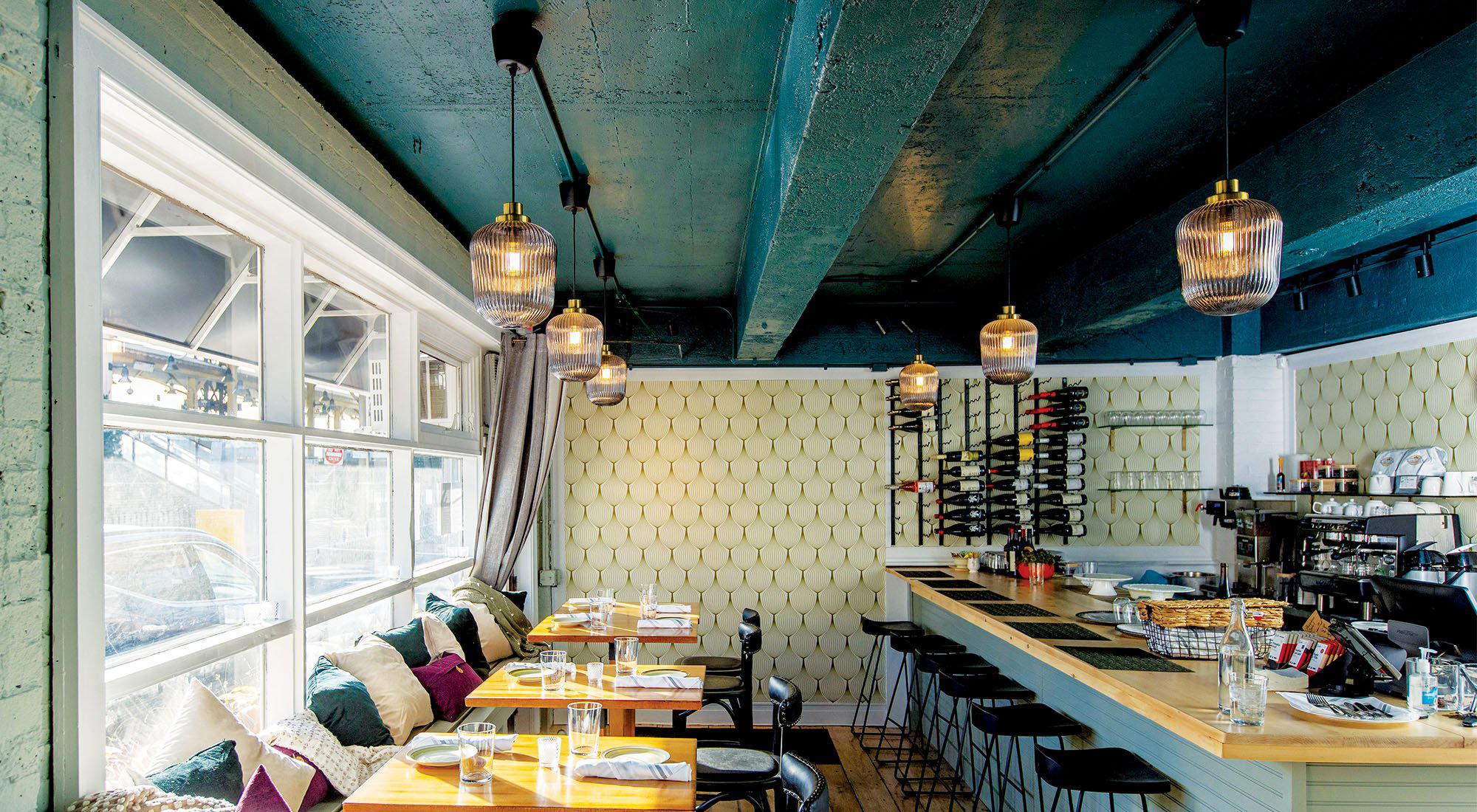
Warm and cozy interior with white and purple accents, intimate high-seat tables, and bright white awning; transitions from casual daytime market to refined dinner service.