Alexander's
Our verdict
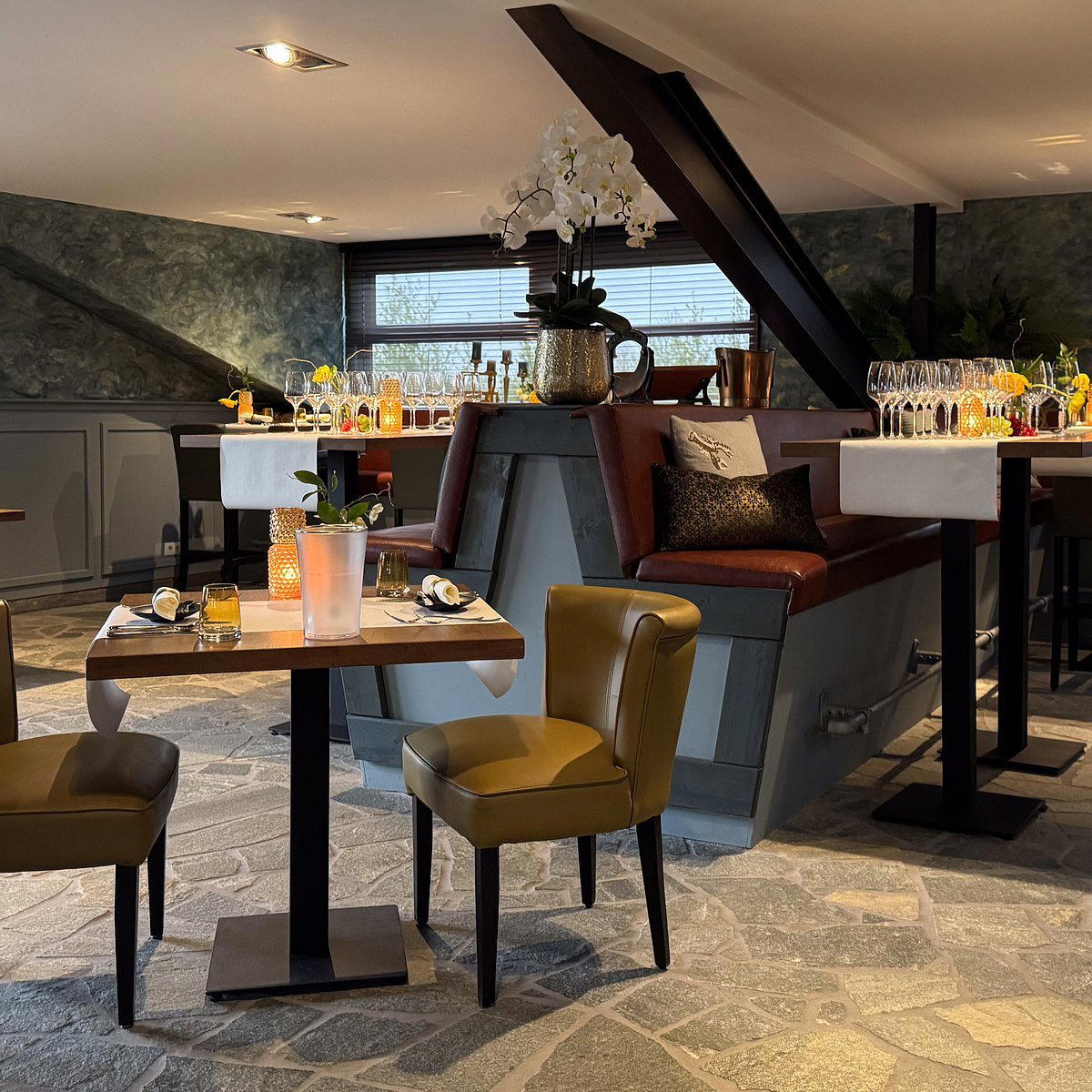
Alexander's occupies a quiet address on Slikweg in Kerkwerve, a village on the Zeeland island of Schouwen-Duiveland where the surrounding polders and estuaries define what ends up on the plate.

Pearl is the En Primeur Club membership app — saves, bookings, and concierge access live there. Same editors, same standards.
Kerkwerve and the Logic of Cooking Where Things Grow
There is a particular argument that Dutch fine dining has been making for the past decade, and it is most persuasive not in Amsterdam or Rotterdam but in places like Kerkwerve. The village sits on Schouwen-Duiveland, the northwestern island of Zeeland, a province that produces some of the Netherlands' most respected shellfish, lamb, and sea vegetables. The logic of cooking here is geographical before it is philosophical: when the estuaries are within sight of the kitchen, the supply chain collapses to near nothing, and what arrives on the plate carries a different charge than the same ingredient driven three hours from the coast. Alexander's, at Slikweg 7, operates inside that argument.
Zeeland has long occupied a specific position in Dutch gastronomy. The province's oysters, mussels, and zeeuwse vlegel lamb are reference-point ingredients for kitchens across the country, and the flat, salt-inflected landscape produces brassicas and root vegetables that hold a salinity other Dutch growing regions cannot replicate. Chefs at addresses like Inter Scaldes in Kruiningen have built sustained reputations on exactly this sourcing proximity, and the province's small-population, high-production character makes it one of the more compelling dining destinations in the Benelux for anyone tracking ingredient provenance.
The Setting on Slikweg
Approaching Kerkwerve from the main island road, the built environment reduces progressively: fewer buildings, wider skies, the kind of horizontal light that defines the Zeeland polder. The address on Slikweg sits in that quieter register, away from the minor bustle of Zierikzee, the island's main town roughly seven kilometres to the east. Dutch restaurants in this rural tier tend to occupy converted farmhouses, historic village properties, or purpose-built spaces that defer to the surrounding flat topography rather than compete with it. The physical arrival at a place like Alexander's is part of the experience in a way that an urban address cannot replicate: the stillness of the approach primes a different kind of attention before you have even sat down.
This is a pattern visible across the Netherlands' more compelling rural dining addresses. De Groene Lantaarn in Staphorst and De Lindenhof in Giethoorn both draw on the drama of agricultural quietness as part of their hospitality proposition. The setting is not incidental; it is the first signal of what the kitchen prioritises.
Ingredient Sourcing as Editorial Position
Zeeland's coastal and estuarine geography generates an ingredient calendar that Dutch kitchens in other regions have to import. Flat oysters from the Oosterschelde estuary carry a mineral salinity that distinguishes them from Atlantic or Norman equivalents. The province's lamb, grazed on salt marshes, develops a flavour profile that reflects the same tidal inflection that marks the oysters. Sea purslane, samphire, and other halophyte plants grow along the dikes and tidal edges and appear on menus across the region as a direct expression of place rather than a decorative garnish.
The Dutch fine dining scene has increasingly split between kitchens that use this kind of hyper-local sourcing as a genuine structural principle and those for whom it functions as marketing language. The more credible addresses, from De Nieuwe Winkel in Nijmegen with its organic sourcing framework to the modernist programmes at De Librije in Zwolle, treat sourcing as a constraint that shapes the menu rather than a story layered on top of it. A restaurant operating in Kerkwerve is, by geography, held to a higher standard of that argument: the ingredients are here, the producers are close, and a kitchen that does not reflect that proximity would be making an active choice to look away from its own context.
Internationally, this approach to geographic ingredient logic has parallels at addresses like Lazy Bear in San Francisco, where sourcing proximity is built into the format, and at European coastal fine dining operations where the tidal calendar governs what appears on the menu week to week. The discipline is harder than it looks: seasonal gaps require genuine creativity rather than a trip to a specialist distributor, and the kitchen's range is tested precisely when the landscape offers least.
The Netherlands has developed a distinct tier of rural destination restaurants that operate at fine dining price points and attract guests willing to travel significant distances. Brut172 in Reijmerstok, Tribeca in Heeze, and De Treeswijkhoeve in Waalre all demonstrate that a provincial address is not a commercial liability at the top end of the market; if anything, the destination quality of the visit becomes part of the value proposition. Guests are not stopping in on their way somewhere else. They have planned the trip, often overnight, and the restaurant becomes the anchor of a short break rather than a single meal.
Zeeland as a province reinforces that model. The island geography, the relative distance from the Randstad, and the quality of the landscape make it a plausible short-break destination rather than a day trip from Amsterdam. The drive from Rotterdam, the nearest major city, runs around ninety minutes depending on route, placing Kerkwerve in the outer range of what Dutch diners will cover for lunch and comfortably within what they will plan an overnight for. Zierikzee offers accommodation options for those building a longer stay, and the island's cycling infrastructure makes it a practical base for a weekend that combines the table with the landscape.
For a broader map of where Alexander's sits within Dutch fine dining, our full Kerkwerve restaurants guide places it alongside the other addresses worth tracking in and around Schouwen-Duiveland. Elsewhere in the Netherlands, the urban counterparts, including Ciel Bleu in Amsterdam, FG - François Geurds in Rotterdam, and Aan de Poel in Amstelveen, operate with different sourcing constraints and a different hospitality logic, making the comparison between urban and rural fine dining in the Netherlands a genuinely instructive exercise in what geography does to a kitchen's ambition.
Planning Your Visit
Kerkwerve is reachable by car from Rotterdam in approximately ninety minutes via the A29 and N57, crossing the Zeeland bridges through Goeree-Overflakkee and Schouwen-Duiveland. Public transport to the village itself is limited, making a car the practical default for most visitors. Given the destination character of the address, an overnight stay in Zierikzee or elsewhere on the island is worth building into the plan.
Frequently asked questions
Is Alexander's suitable for children?
Alexander's sits at Slikweg 7 in Kerkwerve, a village setting that shapes the format: destination fine dining in a quiet, agricultural context. That register tends toward longer, considered meals rather than flexible, family-paced service. Parents travelling with young children should weigh that tempo against what the experience asks of a table.
What's the overall feel of Alexander's?
The address on Slikweg places Alexander's at the edge of Zeeland's open polder landscape, where the surroundings do much of the atmospheric work before a guest walks through the door. Expect something closer to a rural chamber than a city dining room: low ambient noise, a strong sense of place, and a pace governed by the kitchen rather than the clock. It is the kind of meal you travel specifically to have, not one you fall into on a city evening.
How far is Alexander's from Rotterdam, and is it worth the journey as a standalone destination?
Kerkwerve is roughly ninety minutes from Rotterdam by car via the A29 and N57, crossing the Zeeland bridges through Goeree-Overflakkee. The case for the journey rests on the Zeeland ingredient access that Slikweg 7 is positioned to use.
What should I eat at Alexander's?
The strongest argument for the table at Slikweg 7 is the access to Zeeland's coastal produce: flat oysters from the province's estuaries, salt-marsh lamb, and halophyte sea vegetables that kitchens in Amsterdam or Rotterdam have to import. Order according to what the kitchen is drawing from that geography on the day. The province's ingredient calendar shifts through the year, so dishes tied to the immediate estuary and coastline represent the clearest reason to make the drive.
Comparable Venues
Comparable venues nearby, for context on price, style, and recognition.
| Venue | Cuisine | Price | Awards | Notes |
|---|---|---|---|---|
| Alexander'sThis venue — the venue you are viewing | French with Dutch influences | Not listed | Not listed | Not listed |
| Brasserie Bruis | Modern French Brasserie | $50–100 | Michelin Plate · Star Wine List | Haarlem city centre |
| Restaurant Unique | Creative French Fine Dining | Not listed | Not listed | Gouda Vest |
| Louise Petit Restaurant | Classic French Bistro | $30–50 | Not listed | Nieuwe Werk |
| Le Hollandais | Classic French Bistro | $50–100 | Not listed | Hemonybuurt |
| Hendrickje Stoffels | French-Oriental Fusion Bistro | $50–100 | Not listed | Hoorn Harbor |
Continue exploring
More in Kerkwerve
Restaurants in Kerkwerve
All restaurants in Kerkwerve →
Bars in Kerkwerve
Browse all →
Hotels in Kerkwerve
Browse all →
Wineries in Kerkwerve
Browse all →
Details
- Elegant
- Cozy
- Sophisticated
- Special Occasion
- Date Night
- Hotel Restaurant
- Natural Wine
- Local Sourcing
- Waterfront
- Tasting Menu
- Gluten Free Options
Current opening hours
- Monday
- Closed
- Tuesday
- Closed
- Wednesday
- 6–10 PM
- Thursday
- 6–10 PM
- Friday
- 6–10 PM
- Saturday
- 6–10 PM
- Sunday
- 6–10 PM
Hours can change for holidays and private events. Last verified .
Stijlvol, warm and unpretentious atmosphere in a natural setting with Mediterranean touches.