
Tabelog 100 #28
Our verdict
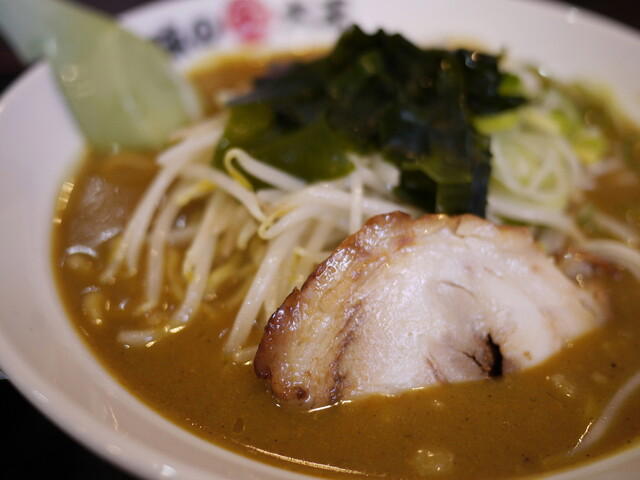
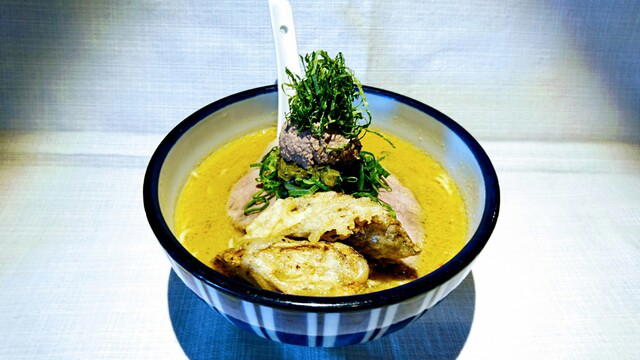
Tomakomai’s curry-ramen culture gives Sapporo-bound diners a reason to look beyond the city core. Aji no Daiou Souhonten sits in that out-of-centre Hokkaido ramen tier: casual, family-friendly, low-priced, and recognised in Tabelog’s Ramen HOKKAIDO 100 selection for 2024 and 2025.

Pearl is the En Primeur Club membership app, where members save venues, book tables and use the concierge.
The menu
What to order
- Muroran curry ramen
- Miso curry ramen
- Gyoza (dumplings)
The approach here feels less like central Sapporo dining and more like Hokkaido road-food territory: a house-style restaurant in Uenae, built for drivers, families, solo ramen regulars, and anyone treating Tomakomai as more than a transit point between the city and New Chitose Airport. That setting matters. Hokkaido ramen is often discussed through Sapporo miso, Asahikawa shoyu, or Hakodate shio, but Tomakomai has its own claim through curry ramen, a hybrid that belongs to the colder, workaday side of the island rather than the polished urban counter scene.
Aji no Daiou Souhonten sits inside that tradition with enough recognition to separate it from a casual roadside stop. Tabelog selected it for Ramen HOKKAIDO 100 in both 2024 and 2025, and its listed categories are ramen, curry, and dumpling. That combination is the point: this is not the hushed, chef-led format that defines much of Japan’s premium ramen conversation. It belongs to the broader Hokkaido appetite for heat, starch, spice, and accessibility.
Tomakomai curry ramen, not Sapporo miso ramen
For travellers using Sapporo as the base, the distinction is useful. Sapporo’s ramen identity is tied to miso, butter, corn, and a dense urban network of counters. Tomakomai’s curry ramen reads differently: less metropolitan, more localised, and closer to a regional comfort format than a tourist shorthand. The venue’s menu categories, ramen alongside curry and dumpling, put it in that border zone where Japanese curry-house logic and ramen-shop speed overlap.
That makes the comparison with airport and city-centre eating instructive. New Chitose Airport has its own concentration of Hokkaido brands, from Milk & Parfait Yotsuba White Koji Shin chitose kuukou ten and ROYCE' Shin chitose kuukou ten to Hokkaido Gyunyu Castella, Biei Senka Shin chitose kuukou ten, and Hokkaido Meibutsu Ramen Ebisoba Ichigen Shin chitose kuukou ten. Those are convenient, tightly packaged expressions of the region. Aji no Daiou Souhonten asks for a different decision: leave the terminal-food circuit and treat the surrounding area as part of the trip.
In Sapporo proper, the field also splits by mood. 175°DENO Tantanmen Sapporo kitaguchi ten points toward spice and sesame-driven tantanmen, while [Curry Senmon Ten] Maruyama Kyoju., Ajanta Indo Curry Ten, and Ajanta Sohonke show how seriously the city takes curry beyond ramen. The Tomakomai version is not a replacement for those meals; it is a regional detour with a narrower, more specific brief.
A roomy ramen stop with family logic
The format is unusually practical for a ramen venue. The room lists 56 seats, with counter seating, tables, and tatami seating, which changes the rhythm from the usual quick-turn urban counter. Children are welcome, high chairs are available, and the venue is marked as suitable for solo dining, friends, and families. That mix explains the appeal: it gives ramen enough structure for a group without turning it into a formal meal.
The price band also places it in everyday Hokkaido territory rather than destination dining theatre. At JPY 1,000 to JPY 1,999, the value proposition is direct: recognition from Tabelog’s Hokkaido ramen list without the cost profile of tasting-menu Japan. Payment details are similarly grounded in local reality: credit cards are not accepted, while electronic money and QR payments are listed. For visitors used to cashless travel in Tokyo or overseas hotel districts, that distinction is worth absorbing before leaving Sapporo.
Physical position reinforces the road-stop character. The nearest station is Uenae, and the listing notes access by Dounan Bus via Shirotori Lake, plus parking in front of the restaurant. In practice, this is a stronger fit for a car-based Hokkaido itinerary than for a casual wander from central Sapporo. That is not a drawback; it is the editorial reason to care. The meal belongs to the geography around Tomakomai, where lakes, airport roads, and suburban dining patterns shape what people actually eat.
Where it fits in a Sapporo itinerary
For a short city stay, this is not the first ramen stop to prioritise. Central Sapporo offers denser choice, easier transit, and a wider spread of styles. For a longer Hokkaido route, especially one involving New Chitose Airport, Tomakomai, or a rental car, the equation changes. Aji no Daiou Souhonten gives context to a regional dish that rarely receives the same international shorthand as Sapporo miso ramen, and the repeat Tabelog Ramen HOKKAIDO 100 selection gives the stop a clear quality signal.
Use it as a place-based meal rather than a prestige reservation. The appeal is not ceremony; it is the meeting point of curry ramen, low-friction service, and a room built for multiple dining modes. That makes it especially useful for travellers who want Hokkaido food culture beyond seafood markets and central ramen alleys.
For wider planning, compare the city’s dining field through Our full Sapporo restaurants guide, then layer in lodging, drinks, wine, and activities through Our full Sapporo hotels guide, Our full Sapporo bars guide, Our full Sapporo wineries guide, and Our full Sapporo experiences guide. For broader Japan context outside Hokkaido, EP Club also tracks formats as varied as Aigues Vives, -Grilled beef Sukiyaki- KAMAKURA TANUKIAN 鎌倉 たぬき庵 in Kamakura. 鮪と炭火焼き うお炭 秋葉原店 in Tokyo.cafe in Osaka.know in Kumamoto, (Shoku) Vietnam in Kawasaki, [ki:] in Kyoto, Jōdo Saké Bar in Los Angeles, and Onigiri Time in Pasadena.
Frequently asked questions
Would Aji no Daiou Souhonten be comfortable with kids?
Yes. The venue lists children welcome, high chairs available, and 56 seats in total, including tables and tatami seating. The JPY 1,000-1,999 price range also keeps it practical for family lunches.
What should I expect atmosphere-wise at Aji no Daiou Souhonten?
Expect a house-style ramen stop with 56 seats, counter seating, tables, tatami area, and free Wi-Fi. It is non-smoking, has parking for about 40 cars, and was selected for Tabelog Ramen HOKKAIDO "Tabelog 100" in 2025.
Is Aji no Daiou Souhonten expensive?
Pricing at Aji no Daiou Souhonten is listed as JPY 1,000 - JPY 1,999.
What are the operating hours at Aji no Daiou Souhonten?
Hours at Aji no Daiou Souhonten: Mon: 11 AM–8 PM; Tue: 11 AM–8 PM; Wed: 11 AM–3 PM; Thu: 11 AM–8 PM; Fri: 11 AM–8 PM; Sat: 11 AM–8 PM; Sun: 11 AM–8 PM.
The Essentials
Comparable venues at the same tier for side-by-side context.
| Venue | Cuisine | Price | Awards | Notes |
|---|---|---|---|---|
| Aji no Daiou SouhontenThis venue (the venue you are viewing) | Hokkaido curry ramen shop | $1–10 | Tabelog 100 #28 | Not listed |
| Eniwa Oton Shokudo | Hokkaido ramen shop | $1–10 | Tabelog 100 #12 | Eniwa, Hokkaido ramen shop |
| Menya Takahashi | Tsukemen & ramen shop | $10–20 | Tabelog 100 #35 | Toyohira, Tsukemen & ramen shop |
| Mendokoro Maruha BEYOND | Japanese Ramen | $10–20 | Tabelog 100 #20 | Toyohira, Japanese Ramen |
| Menya Rei | Hokkaido Ramen & Tsukemen Shop | $10–20 | Tabelog 100 #54 | Chitose, Hokkaido Ramen & Tsukemen Shop |
| Wadashi Ramen Umekichi | Japanese dashi-based ramen | $10–20 | Tabelog 100 #70 | Chūō, Japanese dashi-based ramen |
Recognition history
Dated appearances from independent guides and award organizations, with the underlying list record or original source where available.
Tabelog 100 #28 · No. 28
Tabelog · Tabelog 100 - Ramen - HOKKAIDO - 2025
Continue exploring
More in Sapporo
Restaurants in Sapporo
All restaurants in Sapporo →
Bars in Sapporo
All bars in Sapporo →

Details
- Classic
- Cozy
- Well Known
- Solo
- Casual Hangout
- Family
- Group Dining
- Late Night
- Standalone
- A La Carte
- Counter Dining
Current opening hours
- Monday
- 11 AM–8 PM
- Tuesday
- 11 AM–8 PM
- Wednesday
- 11 AM–3 PM
- Thursday
- 11 AM–8 PM
- Friday
- 11 AM–8 PM
- Saturday
- 11 AM–8 PM
- Sunday
- 11 AM–8 PM
Hours can change for holidays and private events. Hours as of .
Simple, no-frills ramen shop with a cozy, local feel, focused on quick, satisfying bowls rather than decor, and a lively atmosphere at peak mealtimes.