
Kujo gives Osaka curry a different frame from the city’s station-district dining circuits: smaller rooms, sharper lunch rhythms, and fewer distractions. Aabel Curry fits that setting with Indian curry, a 14-seat format, repeat Tabelog Curry WEST 100 selections, and a price bracket that keeps the experience closer to everyday Osaka than special-occasion tasting-menu culture.
Pearl is the En Primeur Club membership app — saves, bookings, and concierge access live there. Same editors, same standards.
- Address
- 大阪府大阪市西区九条1-25-9 フジイエステートビル3F
- Website
- tabelog.com
 Saves & bookings on Pearl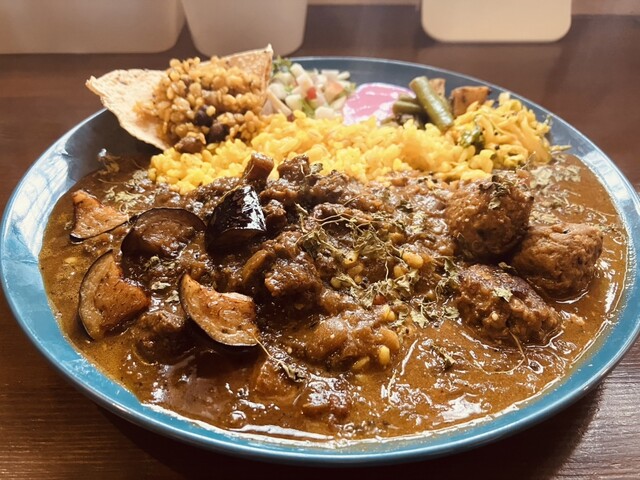
Kujo is not the Osaka most visitors plan around first. The station sits west of the city’s heavier retail and nightlife gravity, with a quieter, working-neighbourhood tempo that changes how a meal feels before it begins. In this part of Nishi-ku, curry does not need theatrical plating or a hotel-lobby address to make its case. The appeal is scale: a compact room, a short lunch window, and a crowd that treats curry as part of the city’s daily dining grammar rather than a novelty.
That context matters because Osaka’s curry culture has split into several lanes. There are quick counter shops built for speed, spice-focused independents with limited service windows, and South Asian-influenced kitchens that sit somewhere between Japanese curry rice and regional Indian cooking. Aabel Curry belongs to the small-format, destination-lunch lane: specific enough for curry followers, informal enough to avoid the stiffness that often follows awards attention.
Kujo's lunch rhythm suits a focused curry room
The neighbourhood setting gives the meal its first point of distinction. Kujo is connected but not overexposed, which means the decision to come here usually has intent behind it. The room’s 14 seats, split between counter and tables, place it in Osaka’s intimate independent-restaurant category rather than the city’s higher-volume curry shops. Counter seating also changes the pace: solo dining reads naturally here, and the format rewards diners who are comfortable with a narrow, midday-oriented experience.
The cuisine category is listed as curry and Indian curry, a pairing that says a great deal about contemporary Osaka. Japanese cities have long treated curry as a domestic comfort food, but the current specialist tier is more fluid: spice blends, rice, condiments, and regional Indian reference points are often interpreted through Japanese portioning and service habits. In that competitive field, recognition carries more weight when the room is small and the price remains modest.
Aabel Curry’s placement on Tabelog Curry WEST 100 in 2024, with previous selections in 2023, 2020, and 2019, is the hard signal here. Tabelog’s Hyakumeiten lists are not luxury awards; they map depth in categories where local repetition and specialist attention matter. For curry in western Japan, that means a restaurant can gain status without moving into a high-price bracket. The listed score of 3.64 also places the shop in a credible specialist band on a platform where small increments can reflect meaningful separation.
Compared with Osaka peers in casual price territory, the value proposition is unusually clear. Izumi Burger sits in the same JPY 1,000 to JPY 1,999 range, while Asian Kitchen Cafe Momofuku and RODDA group move between JPY 1,000 to JPY 2,999 depending on meal and spend. Mendokoro Amakawa runs even lower in price, but across a different category. Aabel Curry’s draw is not price alone; it is the combination of curry specialization, awards repetition, and a neighbourhood location that filters out casual footfall.
Recognition without the ceremony of fine dining
Osaka is often read through takoyaki, okonomiyaki, and late-night drinking food, but its serious casual restaurants are where the city’s dining intelligence often appears. Curry is especially good at exposing that intelligence because it rewards precision without demanding ceremony. The experience can be brief, affordable, and technically serious at once. That is why a curry room in Kujo can belong in the same editorial conversation as more formal addresses across the city: the standard is not linen or glassware, but consistency within a narrow format.
The absence of private rooms and the non-smoking policy reinforce the practical nature of the format. This is not a venue built for lingering business meals or group celebration. It is better understood as a compact lunch stop for diners who already know that Osaka’s strongest meals are not always clustered around Umeda, Namba, or Kitahama. The opening date, 2016, adds another useful signal: this is not a recent award-cycle arrival, but a shop with enough operating history to have passed through multiple waves of local attention.
The editorial decision is therefore simple. Seek it out when curry is the point of the day, not when a meal needs to solve every social requirement. Families are noted as welcome, and the price bracket keeps the barrier low, but the small seating count still favours small parties and solo diners. Kujo’s location makes the experience feel more local than performative, which is exactly why it belongs on a serious Osaka dining map.
Where it fits in an Osaka itinerary
For travellers building a food-led Osaka schedule, the restaurant works better as a targeted lunch than as a flexible fallback. Pair it with a broader Nishi-ku or bay-side day rather than forcing it between distant reservations. The nearest station is Kujo, which keeps the logistics clean, and the address places the restaurant in a building setting rather than a street-level showpiece. That suits the genre: Osaka’s curry specialists often reward attention to address and timing more than spontaneous wandering.
Readers comparing categories across the city should use it as a counterweight to Osaka’s better-known comfort-food circuit. For broader planning, start with Our full Osaka restaurants guide, then widen the trip with Our full Osaka hotels guide, Our full Osaka bars guide, Our full Osaka wineries guide, and Our full Osaka experiences guide. Within the restaurant map, nearby or comparable casual entries such as.cafe, 52CHO-ME BAKERY, 551 Horai (551蓬莱), 99 Pizza Napoletana Gourmet, and a canto (Italian) show how varied Osaka’s informal and mid-range dining field becomes when the search moves beyond a single neighbourhood.
For national context, Japan’s casual specialist culture extends well beyond Osaka. Compare the curry focus here with [Curry Senmon Ten] Maruyama Kyoju. in Sapporo, or look at other compact-format dining addresses such as [ki:] in Kyoto. 鮪と炭火焼き うお炭 秋葉原店 in Tokyo.know in Kumamoto, (Shoku) Vietnam in Kawasaki, and -Grilled beef Sukiyaki- KAMAKURA TANUKIAN 鎌倉 たぬき庵 in Kamakura. Outside Japan, Jōdo Saké Bar in Los Angeles and Onigiri Time in Pasadena offer another view of how Japanese formats translate when the setting changes.
Just the Basics
Comparable venues to place this listing in its category.
| Venue | Cuisine | Price | Notes |
|---|---|---|---|
| Aabel CurryThis venue — the venue you are viewing | Nishi, European-style Spice Curry | $$ | Not listed |
| curry bar nidomi | Not listed | $$ | Chūō, Sri Lankan‑influenced Curry Bar |
| Ceylon Curry | Chūō, Authentic Sri Lankan Curry House | $$ | Not listed |
| REBEL CURRY | Chūō, Indian Curry | $$ | Not listed |
| Patisserie Chocolaterie Ordinaire | Nishi, French patisserie and chocolatier | $$ | Not listed |
| CHEDI LUANG Kitahorie honten | Nishi, Northern Thai Buffet | $$ | Not listed |
Recognition history
Dated appearances from independent guides and award organizations, with the underlying list record or original source where available.
Tabelog 100 #53 · No. 53
Tabelog · Tabelog 100 - Curry - WEST - 2024
Continue exploring
More in Osaka
Restaurants in Osaka
Browse all →




Bars in Osaka
Browse all →

Hotels in Osaka
Browse all →



Wineries in Osaka
Browse all →
At a Glance
- Minimalist
- Cozy
- Solo
- Casual Hangout
- Standalone
Minimalist chic with simple presentation focusing on flavorful comfort food.