
We're Smart World 1 Radish
Our verdict
A Mi-Chemin on Rue Boulard brings Tunisian-inflected cooking to the 14th arrondissement in a format that reads as neighbourhood restaurant first, destination second. Chef Nordine Labiath's vegetable-forward approach has earned a following among local connoisseurs, with dishes like the vegetable jelly drawing consistent attention. Find it at 31 Rue Boulard, 75014.

Pearl is the En Primeur Club membership app — saves, bookings, and concierge access live there. Same editors, same standards.
- Address
- 31 Rue Boulard, 75014 Paris, France
- Phone
- +33 1 45 39 56 45
- Hours
- Mon–Tue ClosedWed–Thu 12–2 PM, 7–10 PMFri 12–2 PM, 7–10:30 PMSat 11:30 AM–3 PM, 7–10:30 PMSun 11:30 AM–3 PM
- Website
- restaurant-amichemin.fr
- Directions
- Get directions
- Booking
- Book on Zenchef
The menu
What to order
- Couscous
- Boudin and foie gras terrine
- Beef tartare
- Escargot
Where the 14th Arrondissement Eats Without Performing
The 14th arrondissement has never been Paris's dining showroom. Unlike the grand rooms clustered around the 8th, where places like Le Cinq at the Four Seasons George V or Alléno Paris au Pavillon Ledoyen operate as much as institutions as restaurants, the streets around Denfert-Rochereau and Montparnasse have historically fed Parisians rather than impressed visitors. Rue Boulard, a short market street running off the Place Ferdinand Brunot, belongs to that quieter tradition. The stalls, the boulangeries, the small zinc-countered cafés: this is a quarter that still functions as a neighbourhood in the original sense. A Mi-Chemin sits within that fabric rather than apart from it.
The name translates loosely as "halfway" or "midway" — a spatial metaphor that fits the restaurant's position between two culinary registers. This is not the kind of address that features in the conversation alongside Arpège or L'Ambroisie. Nor is it anonymous canteen cooking. A Mi-Chemin occupies the middle ground that French cities do well when they are at their least self-conscious: the neighbourhood table where the cooking has a genuine cultural point of view.
Tunisian Roots in a French Kitchen
North African cuisine has shaped Paris more deeply than its restaurant listings often suggest. Tunisian, Moroccan, and Algerian culinary traditions arrived with successive waves of migration across the 20th century and embedded themselves in Parisian domestic cooking, street food, and a handful of genuinely committed restaurant kitchens. The cuisine of Tunisia specifically occupies a distinct position within that group: more vegetable-forward than its neighbours in some traditions, more dependent on harissa and preserved lemon as structural elements rather than garnishes, and shaped by centuries of Mediterranean crosscurrent that pull from Andalusian, Sicilian, and Levantine sources simultaneously.
At A Mi-Chemin, chef Nordine Labiath works within that tradition without either diluting it for a presumed French palate or presenting it as exoticism. The approach that has earned the restaurant a following among local connoisseurs is one where Tunisian flavour logic sits as the frame for the cooking rather than as an accent applied to a French base. That distinction matters. Paris has no shortage of restaurants where North African ingredients appear as a kind of seasonal supplement to otherwise European menus. Fewer are places where the cultural grammar of the cuisine actually determines how a plate is composed. Among comparable addresses in the city, this positions A Mi-Chemin differently from the €€€€ tier of contemporary French cooking represented by venues like Kei, where cultural fusion operates at a higher level of technical abstraction.
Vegetables as the Main Event
The vegetable jelly that reviewers consistently single out at A Mi-Chemin points to something worth understanding about the cooking's reference points. In Tunisian culinary tradition, vegetables are not a supporting cast. The country's Mediterranean agriculture, particularly around the Cap Bon peninsula and the fertile north, has historically produced some of the finest produce in the Maghreb — artichokes, peppers, tomatoes, broad beans, courgettes, and the cuisine reflects that abundance. Dishes like mechouia (a grilled vegetable salad) and ojja (a pepper and tomato stew often finished with eggs or seafood) demonstrate a vegetable intelligence that predates the European fine-dining pivot toward plant-forward menus by several decades.
That the vegetable jelly has become a reference point at this address is not incidental. It signals a kitchen that takes the vegetable seriously as a technical and flavour subject in its own right, rather than defaulting to protein as the organizing principle of a menu. For diners whose Paris itinerary is otherwise dominated by meat-heavy classical French cooking, this is a genuine point of difference, not a compromise position.
For those planning broader culinary exploration beyond Paris, the vegetable-forward tradition has interesting parallels in the regional French context: Bras in Laguiole built an entire Michelin three-star reputation on exactly this kind of commitment to plants and terroir, while Mirazur in Menton draws on Mediterranean produce with comparable seriousness. A Mi-Chemin operates without that kind of institutional recognition, but the underlying culinary logic is not dissimilar.
The Neighbourhood Restaurant as a Format
In French dining culture, the neighbourhood restaurant (le restaurant de quartier) carries its own set of expectations and its own kind of rigour. It is not a lesser version of a destination restaurant; it is a different format with different priorities. The measure is not technical ambition scaled to impress strangers, but consistency, familiarity, and the ability to function as a reliable anchor for the people who live nearby. Paris's most respected neighbourhood tables earn their standing over years of exactly that kind of trust-building.
A Mi-Chemin has developed a local following that qualifies it in these terms. The description of Labiath's restaurant as a place where "connoisseurs" have taken notice reflects a specific kind of recognition in the Paris dining world: not a place that has been amplified by marketing or tourism infrastructure, but one that has built its reputation through the food itself, in a quarter where residents have enough options to be genuinely selective. That dynamic is structurally different from what operates at the grandes maisons, the Paul Bocuse-lineage institutions or the three-star addresses like Troisgros or Auberge de l'Ill, but it is its own form of validation.
Planning Your Visit
A Mi-Chemin is at 31 Rue Boulard in the 14th arrondissement. The nearest metro is Denfert-Rochereau, served by lines 4 and 6, with the RER B also stopping there, which makes it accessible from both central Paris and Charles de Gaulle airport without changing lines. Given the restaurant's format and following, booking ahead is prudent, particularly for Thursday through Saturday evenings when the 14th's neighbourhood restaurants tend to fill with local regulars rather than walk-in visitors.
Rue Boulard has a small covered market nearby and is walkable from the Parc Montsouris, which gives the area a particular character on weekend afternoons. If you are building a broader Paris dining and drinking programme around this visit, the EP Club guides cover the full range: restaurants, hotels, bars, wineries, and experiences. For reference points at the other end of the Paris dining spectrum, Flocons de Sel in Megève and Le Bernardin in New York offer useful contrast in how committed culinary points of view operate at different scales and price points.
Frequently asked questions
Where do I go for A Mi-Chemin?
A Mi-Chemin is located at 31 Rue Boulard, 75014 Paris, France, Paris.
Is A Mi-Chemin Michelin-listed?
A Mi-Chemin has received recognition including: A southern kitchen with taste. And vegetables if you choose. Nordine Labiath has a real neighborhood restaurant where his Tunisian-inspired cuisine is very successful with connoisseurs. Definitely try the vegetable jelly!.
What's the best thing to order at A Mi-Chemin?
The vegetable jelly has drawn the most consistent attention from those who know the restaurant, singled out specifically by connoisseurs familiar with Nordine Labiath's cooking. Beyond that, the Tunisian-inspired dishes are what define the kitchen's identity at 31 Rue Boulard, so leaning into that side of the menu is the right call.
Can I walk in to A Mi-Chemin?
A Mi-Chemin has built a following among locals who eat here regularly, and tables in a true neighbourhood restaurant of this kind are not indefinitely available. Walk-ins are worth attempting at off-peak hours, but given the restaurant's reputation with connoisseurs in the 14th, calling ahead is the more reliable approach.
What's the standout thing about A Mi-Chemin?
It is one of the few Paris addresses where Tunisian-inspired cooking is delivered with the discipline of a French neighbourhood table rather than as a novelty concept. Nordine Labiath's kitchen has earned a following among connoisseurs precisely because it does not perform for an outside audience — it feeds the 14th arrondissement on its own terms.
Is A Mi-Chemin allergy-friendly?
The kitchen offers vegetables as a genuine option rather than an afterthought, which the restaurant's own positioning makes clear. For specific allergy requirements, contact A Mi-Chemin directly at 31 Rue Boulard, 75014 Paris, as detailed dietary information is best confirmed with the restaurant before your visit.
Booking and Cost Snapshot
Comparable venues nearby, for context on price, style, and recognition.
| Venue | Cuisine | Price | Awards | Notes |
|---|---|---|---|---|
| A Mi-CheminThis venue — the venue you are viewing | Franco-Tunisian Fusion Bistro | $30–50 | We're Smart World 1 Radish | Not listed |
| Zincou | French Tapas & Wine Bar | $30–50 | Star Wine List | 9th arrondissement, French Tapas and Wine |
| La Timbale | Traditional French Brasserie | $20–30 | We're Smart World 1 Radish | Montmartre, Traditional French Brasserie |
| Le Languedoc | Traditional Languedoc French Bistro | $20–30 | Not listed | 5th Arr., Traditional Languedoc French Bistro |
| François Félix | Classic French Bistro | $50–100 | Not listed | 8th arrondissement (Faubourg Saint-Honoré), Classic French Bistro |
| Café de Luce | Classic French Bistro | $30–50 | Not listed | Montmartre, Classic French Bistro |
Recognition history
Dated appearances from independent guides and award organizations, with the underlying list record or original source where available.
We're Smart World 1 Radish
We're Smart World
Continue exploring
More in Paris
Restaurants in Paris
Browse all →
Bars in Paris
Browse all →
Hotels in Paris
Browse all →



Details
- Cozy
- Romantic
- Intimate
- Classic
- Date Night
- Casual Hangout
- Family
- Group Dining
- Standalone
- Beer Program
- Local Sourcing
- Street Scene
- A La Carte
- Family Style
- Wine
- Craft Beer
- Vegetarian Friendly
Current opening hours
- Monday
- Closed
- Tuesday
- Closed
- Wednesday
- 12–2 PM, 7–10 PM
- Thursday
- 12–2 PM, 7–10 PM
- Friday
- 12–2 PM, 7–10:30 PM
- Saturday
- 11:30 AM–3 PM, 7–10:30 PM
- Sunday
- 11:30 AM–3 PM
Hours can change for holidays and private events. Last verified .
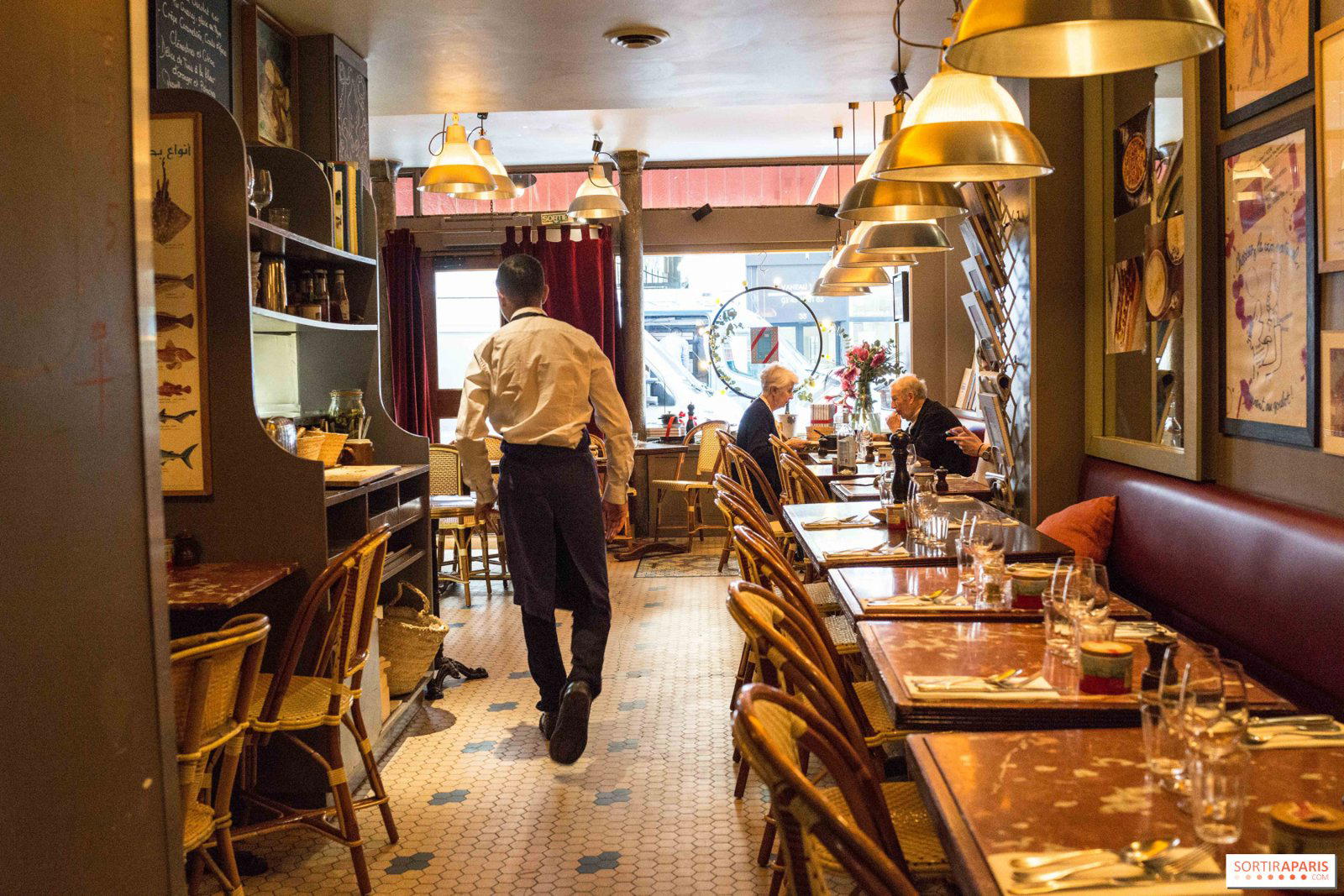
Warm, relaxed neighborhood bistro with cosy lighting and a welcoming atmosphere; unpretentious décor with bare wooden tables and a lived-in charm that feels like a local's refuge rather than a tourist destination.