Dining Inside the Mountain View There is a particular kind of dining format that has taken hold in premium mountain destinations over the past decade: the private dome, the heated bubble, the glass-enclosed table suspended against a landscape that would make any plate of food feel incidental. The 360° Dome at the Fairmont Banff Springs, positioned on the Upper Garden Terrace at 405 Spray Ave, belongs squarely to that format. What you are booking is not primarily a meal — it is a calibrated encounter with the Bow Valley, framed by a transparent enclosure that makes the Rockies the dominant presence at the table. The kitchen's contribution arrives within that context. This places the 360° Dome in a distinct competitive tier. Banff already has restaurants built around serious cooking: 1888 Chop house anchors the beef-and-fire tradition that the Canadian Rockies does well, and Eden at The Rimrock Resort positions itself as the town's most formally ambitious kitchen. The 360° Dome is neither of those things. It is an experience-format venue where the environment carries as much weight as the food, which is a legitimate category — but one that requires a different set of expectations from the diner. The Terrain as Ingredient In Canadian mountain dining, provenance has become a structural argument. Restaurants like Tanière³ in Quebec City and Eigensinn Farm in Singhampton have built their entire editorial identity around where the food comes from, the farm, the forest, the specific soil. That sourcing conversation has filtered into the Rockies more slowly, partly because the region's dining economy has long been driven by resort volume rather than by the kind of deliberate, relationship-driven supply chains that define the leading farm-to-table operations elsewhere in Canada. What the 360° Dome does, at minimum, is situate its guests inside the actual landscape that produces Alberta's most celebrated raw materials: the ranching country to the east, the cold-water streams, the game territory that surrounds the national park. Whether the kitchen programmes that proximity into the menu is a question of execution that varies by season and by what the Fairmont's culinary team is doing at any given moment. The honest read is that the dome's sourcing story is primarily geographic, you are eating inside the place, rather than a rigorously documented farm-to-fork programme of the sort that defines Restaurant Pearl Morissette in Lincoln or Narval in Rimouski. That distinction matters for how you frame the booking. If you want the sourcing argument to be the centrepiece of your meal, Banff's dining scene, including Balkan Mediterranean Restaurant and Añejo Restaurant, offers other angles. If you want the Rockies as your dining room and are comfortable with the food playing a supporting role to that experience, the dome delivers on its core premise. How the Format Works Against Its Peers Private heated domes have proliferated across European ski resorts and Canadian mountain towns at a pace that has made the format feel simultaneously fashionable and slightly overfamiliar. The leading examples, and this applies to operations well beyond Banff, earn their premium by pairing the environmental spectacle with cooking that could hold its own without the dome. The weakest examples treat the structure itself as sufficient justification for a price point that would otherwise require a kitchen of serious ambition. The restaurant sits within a major international hotel brand, the Fairmont, which brings both advantages and constraints. The advantages: logistical reliability, professional service infrastructure, and a culinary team with access to the supply relationships that a standalone restaurant would have to build from scratch. The constraint: the menu is unlikely to take the kind of creative risk that defines Canada's most discussed destination kitchens, places like Alo in Toronto or Kissa Tanto in Vancouver, where the cooking itself is the reason you travel. Within Banff's dining options, Banff Social and Bear Street Tavern serve a more casual register; the dome operates in a premium layer where the experience format, not the food alone, justifies the category. Planning the Visit The dome is located at M1 on the Upper Garden Terrace of the Fairmont Banff Springs, 405 Spray Ave. Access is through the hotel, and all booking and logistical questions should go directly through the Fairmont's reservations team, as no independent booking channel or published hours are attached to this experience. That is standard for private dome formats: availability shifts with season, weather, and event programming, so the Fairmont concierge desk is the correct starting point. Book as far ahead as the reservation window allows, particularly for summer and ski season dates, when Banff's accommodation occupancy compresses availability across all premium experiences in the area. For visitors building a broader Banff itinerary around serious Canadian cooking, the full Banff restaurants guide covers the town's range from accessible to formally ambitious. Internationally, the dome format finds closer parallels in the experience-first dining category than in restaurant-driven destination travel, which is a different planning posture than booking a table at Le Bernardin in New York City or Lazy Bear in San Francisco, where the cooking is unambiguously the primary event. For Montréal visitors comparing experience-format dining against culinary-destination dining, Jérôme Ferrer - Europea in Montréal represents the latter. The dome is the former. Both are valid; they answer different questions. Dress warmly regardless of season. The Upper Garden Terrace is an outdoor structure, and Banff evenings drop sharply even in August. The dome provides enclosure but not the controlled climate of an interior dining room. That physical condition is part of the experience's character, not an oversight. Frequently Asked Questions Does the restaurant work for a family meal?Bluntly: it depends on what age the children are and what your group expects from a premium Banff outing. The format is more event than restaurant, which can work well for older children or teenagers who will engage with the mountain setting, but the price point and atmosphere skew toward couples and adult groups.How would you describe the vibe at the restaurant?Private, theatrically framed, and anchored entirely in the Bow Valley landscape. Banff's dining scene runs from après-ski casual to formally ambitious, and the dome occupies its own register: intimate and high-production, without the kitchen-driven tension that defines the town's most award-focused restaurants. It is closer in feeling to a private event than to a conventional dinner service.What's the leading thing to order at the restaurant?Defer to whatever the Fairmont kitchen is running from Alberta's seasonal larder. The dome experience connects most naturally with Alberta beef and cold-water fish, ingredients with a clear geographic logic given the surrounding landscape. Specific menu details change with season and programming, so confirm current offerings directly with the Fairmont before arrival rather than arriving with a fixed dish in mind.Is the restaurant only available in winter, or does it run year-round?The dome format is associated most strongly with winter programming in Banff, where the enclosed structure, heated interior, and snow-covered Rockies create the immediate contrast between inside comfort and outside conditions. However, availability across other seasons depends on the Fairmont's current programming calendar, and the Upper Garden Terrace setting can be compelling in summer as well. Confirm current seasonal availability directly with the Fairmont Banff Springs reservations team before planning a specific date, this is not a walk-in experience at any time of year.For a broader read on where the restaurant sits within Canadian destination dining, the restaurant profiles at The Pine in Creemore and Bonimi in Etobicoke illustrate how the country's most considered dining experiences tend to build their identity through sourcing discipline and kitchen rigour rather than environmental theatre. The dome takes a different route. Understanding that distinction is especially useful thing you can do before deciding whether this is the right booking for your Banff trip.
Pearl is the En Primeur Club membership app — saves, bookings, and concierge access live there. Same editors, same standards.
- Address
- 405 Spray Ave, Banff, AB T1L 1J4 (M1 on the Upper Garden Terrace)
- Directions
- Get directions
 Saves & bookings on Pearl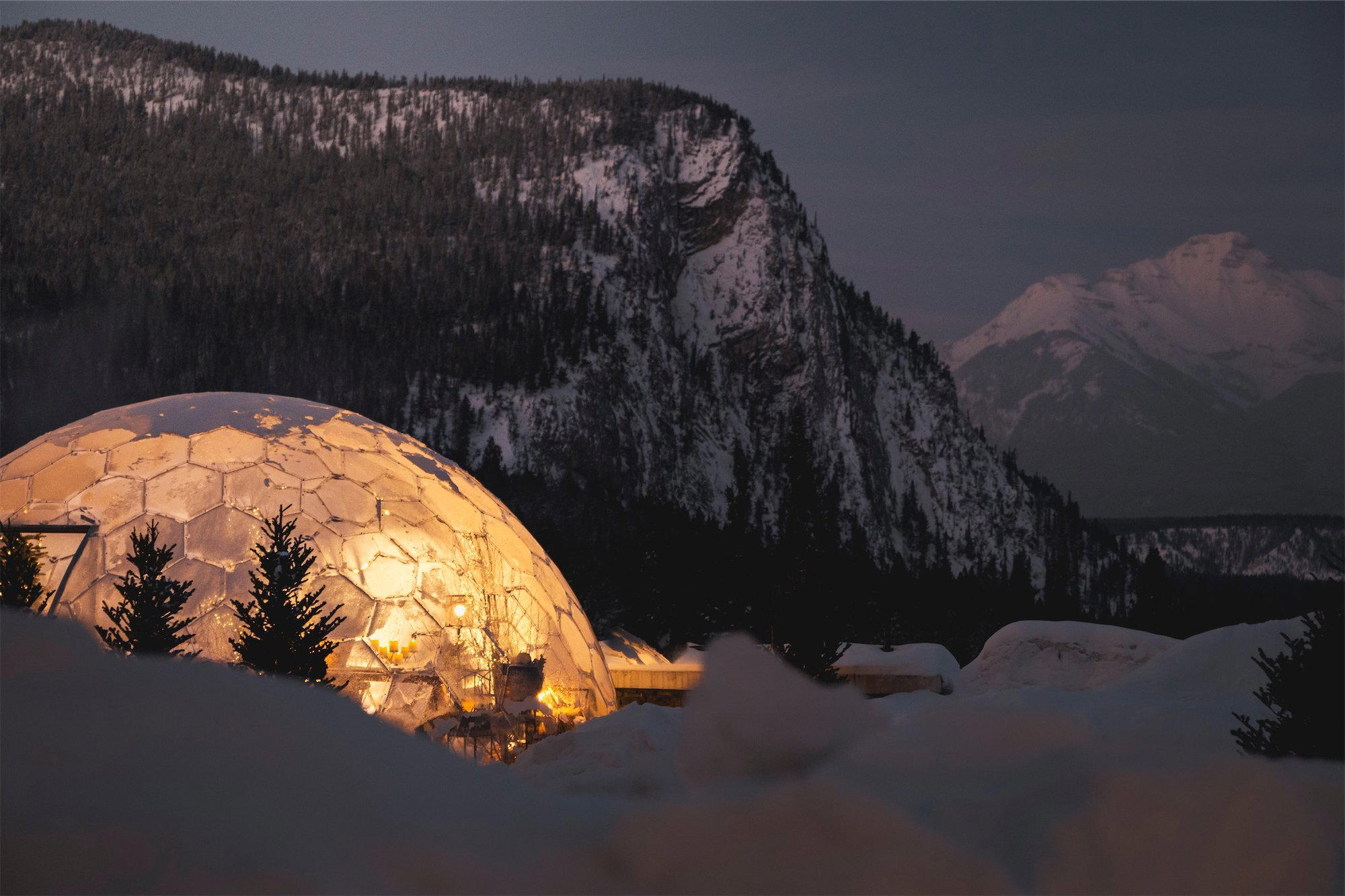
Dining Inside the Mountain View
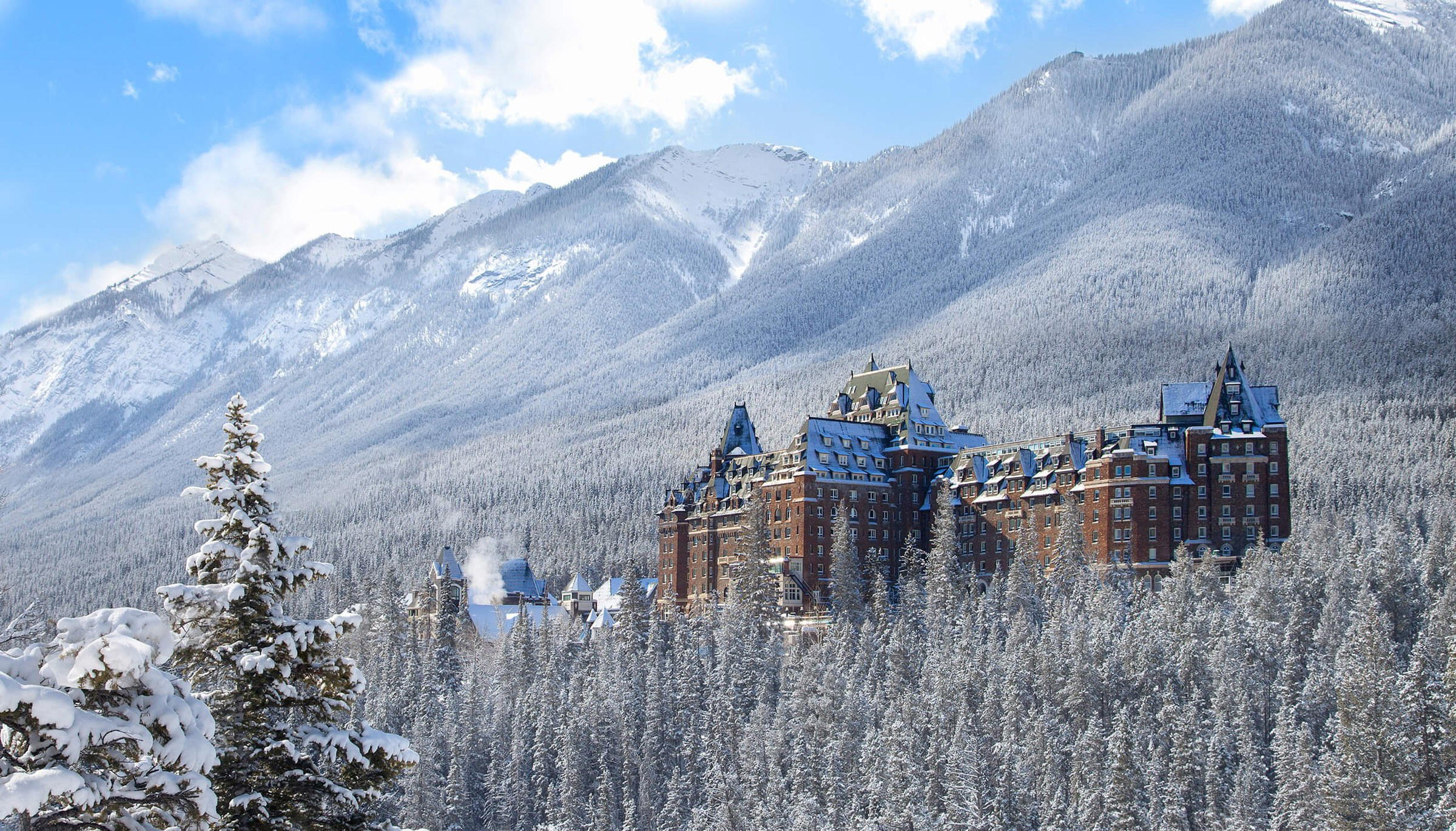
There is a particular kind of dining format that has taken hold in premium mountain destinations over the past decade: the private dome, the heated bubble, the glass-enclosed table suspended against a landscape that would make any plate of food feel incidental. The 360° Dome at the Fairmont Banff Springs, positioned on the Upper Garden Terrace at 405 Spray Ave, belongs squarely to that format. What you are booking is not primarily a meal — it is a calibrated encounter with the Bow Valley, framed by a transparent enclosure that makes the Rockies the dominant presence at the table. The kitchen's contribution arrives within that context.
This places the 360° Dome in a distinct competitive tier. Banff already has restaurants built around serious cooking: 1888 Chop house anchors the beef-and-fire tradition that the Canadian Rockies does well, and Eden at The Rimrock Resort positions itself as the town's most formally ambitious kitchen. The 360° Dome is neither of those things. It is an experience-format venue where the environment carries as much weight as the food, which is a legitimate category — but one that requires a different set of expectations from the diner.
The Terrain as Ingredient
In Canadian mountain dining, provenance has become a structural argument. Restaurants like Tanière³ in Quebec City and Eigensinn Farm in Singhampton have built their entire editorial identity around where the food comes from, the farm, the forest, the specific soil. That sourcing conversation has filtered into the Rockies more slowly, partly because the region's dining economy has long been driven by resort volume rather than by the kind of deliberate, relationship-driven supply chains that define the leading farm-to-table operations elsewhere in Canada.
What the 360° Dome does, at minimum, is situate its guests inside the actual landscape that produces Alberta's most celebrated raw materials: the ranching country to the east, the cold-water streams, the game territory that surrounds the national park. Whether the kitchen programmes that proximity into the menu is a question of execution that varies by season and by what the Fairmont's culinary team is doing at any given moment. The honest read is that the dome's sourcing story is primarily geographic, you are eating inside the place, rather than a rigorously documented farm-to-fork programme of the sort that defines Restaurant Pearl Morissette in Lincoln or Narval in Rimouski.
That distinction matters for how you frame the booking. If you want the sourcing argument to be the centrepiece of your meal, Banff's dining scene, including Balkan Mediterranean Restaurant and Añejo Restaurant, offers other angles. If you want the Rockies as your dining room and are comfortable with the food playing a supporting role to that experience, the dome delivers on its core premise.
How the Format Works Against Its Peers
Private heated domes have proliferated across European ski resorts and Canadian mountain towns at a pace that has made the format feel simultaneously fashionable and slightly overfamiliar. The leading examples, and this applies to operations well beyond Banff, earn their premium by pairing the environmental spectacle with cooking that could hold its own without the dome. The weakest examples treat the structure itself as sufficient justification for a price point that would otherwise require a kitchen of serious ambition.
The restaurant sits within a major international hotel brand, the Fairmont, which brings both advantages and constraints. The advantages: logistical reliability, professional service infrastructure, and a culinary team with access to the supply relationships that a standalone restaurant would have to build from scratch. The constraint: the menu is unlikely to take the kind of creative risk that defines Canada's most discussed destination kitchens, places like Alo in Toronto or Kissa Tanto in Vancouver, where the cooking itself is the reason you travel. Within Banff's dining options, Banff Social and Bear Street Tavern serve a more casual register; the dome operates in a premium layer where the experience format, not the food alone, justifies the category.
Planning the Visit
The dome is located at M1 on the Upper Garden Terrace of the Fairmont Banff Springs, 405 Spray Ave. Access is through the hotel, and all booking and logistical questions should go directly through the Fairmont's reservations team, as no independent booking channel or published hours are attached to this experience. That is standard for private dome formats: availability shifts with season, weather, and event programming, so the Fairmont concierge desk is the correct starting point. Book as far ahead as the reservation window allows, particularly for summer and ski season dates, when Banff's accommodation occupancy compresses availability across all premium experiences in the area.
For visitors building a broader Banff itinerary around serious Canadian cooking, the full Banff restaurants guide covers the town's range from accessible to formally ambitious. Internationally, the dome format finds closer parallels in the experience-first dining category than in restaurant-driven destination travel, which is a different planning posture than booking a table at Le Bernardin in New York City or Lazy Bear in San Francisco, where the cooking is unambiguously the primary event. For Montréal visitors comparing experience-format dining against culinary-destination dining, Jérôme Ferrer - Europea in Montréal represents the latter. The dome is the former. Both are valid; they answer different questions.
Dress warmly regardless of season. The Upper Garden Terrace is an outdoor structure, and Banff evenings drop sharply even in August. The dome provides enclosure but not the controlled climate of an interior dining room. That physical condition is part of the experience's character, not an oversight.
At a Glance
- Scenic
- Elegant
- Intimate
- Well Known
- Romantic
- Sophisticated
- Special Occasion
- Celebration
- Brunch
- Private Event
- Private Dining
- Panoramic View
- Hotel Restaurant
- Terrace
- Extensive Wine List
- Sommelier Led
- Local Sourcing
- Mountain
- Garden
Intimate and luxurious private dome with customizable temperature, music, and notable personalized service amidst dramatic mountain scenery.