
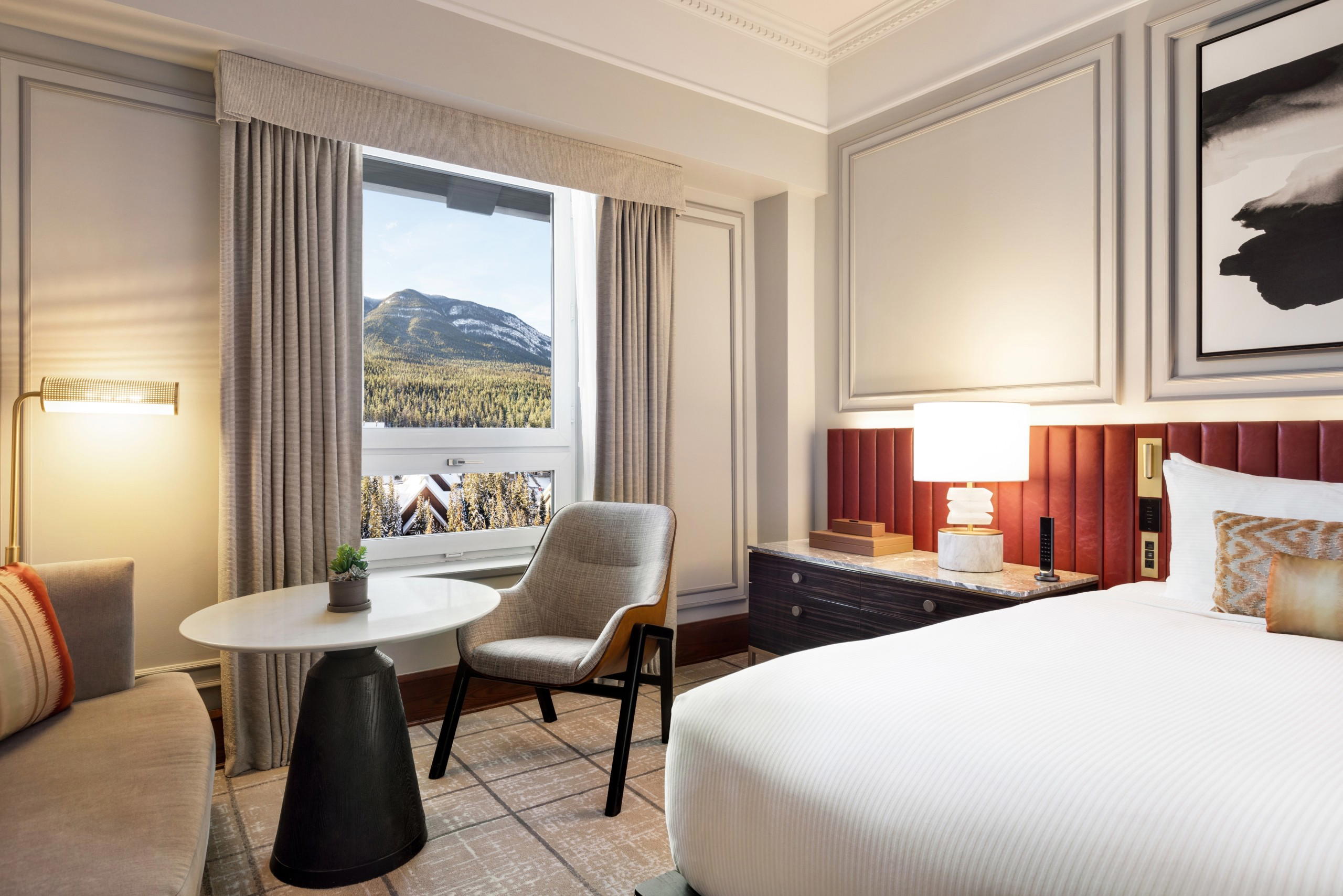
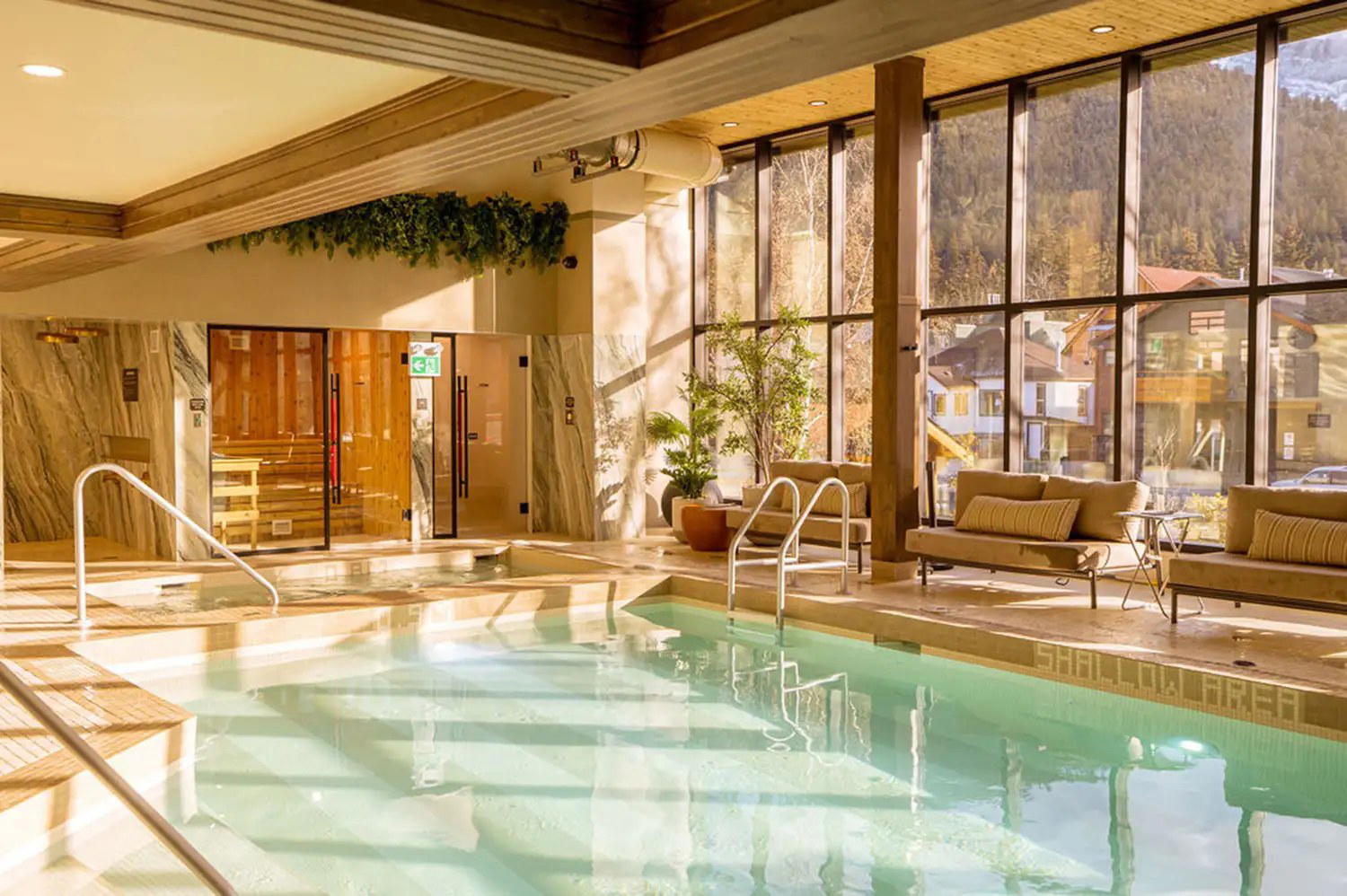
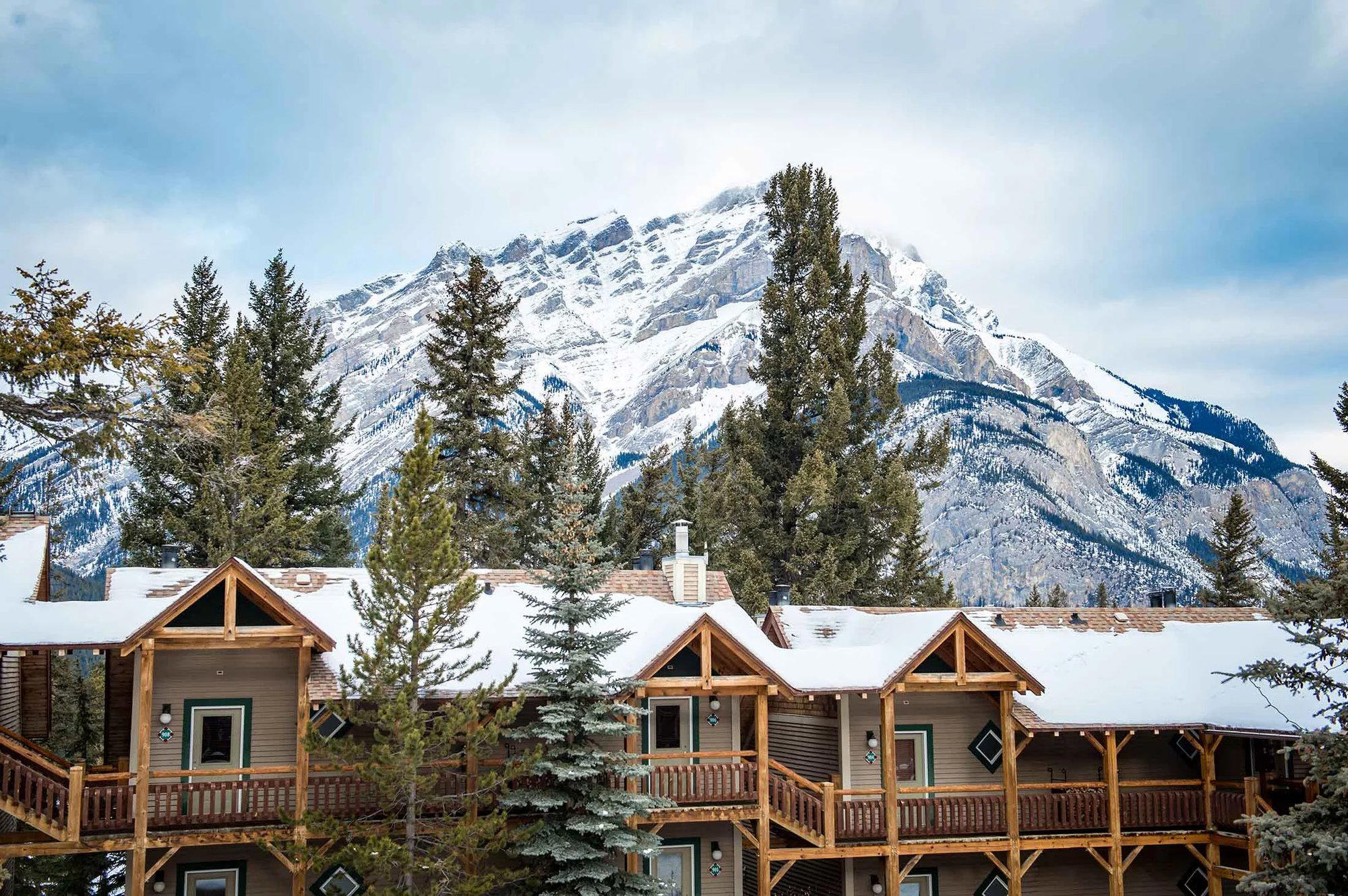
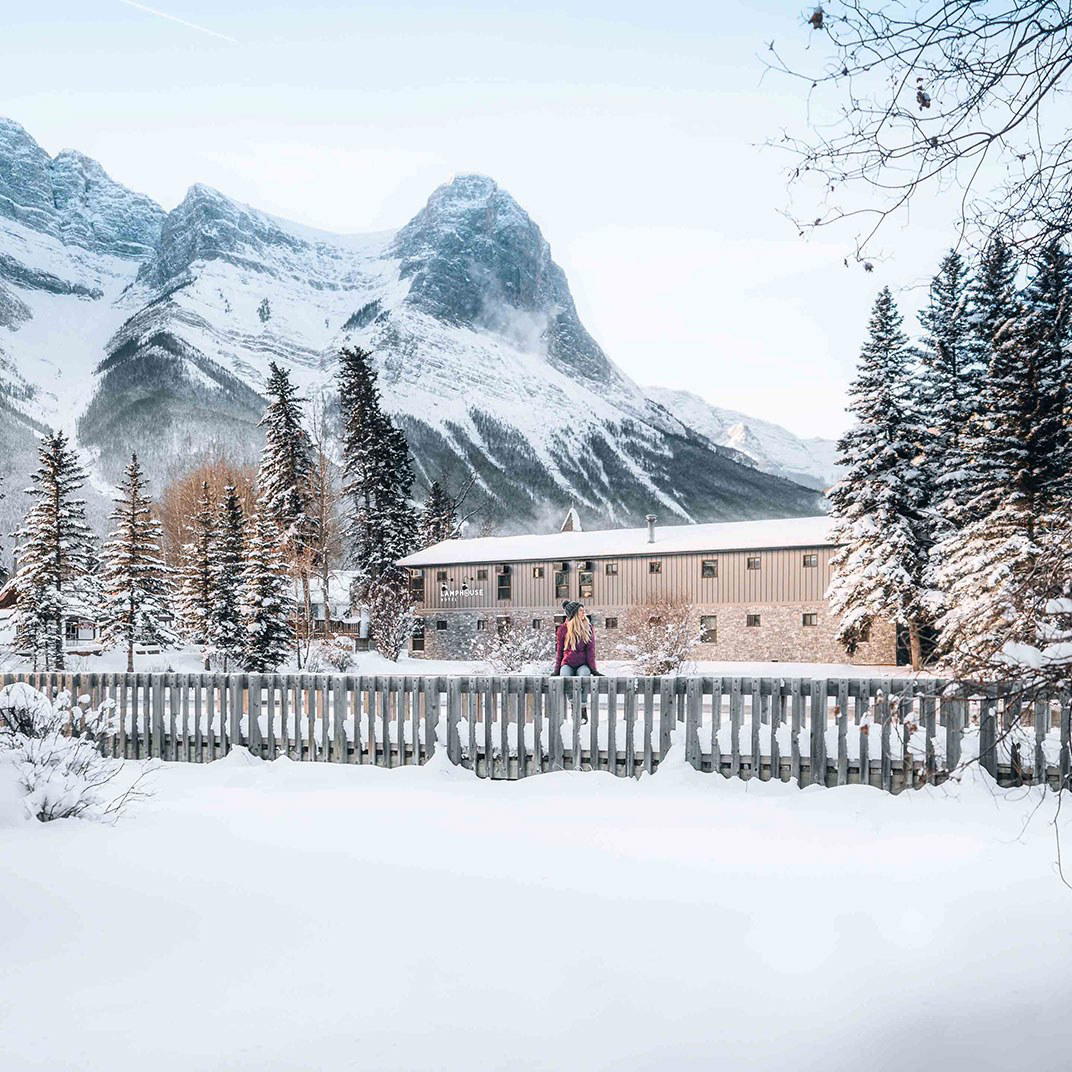
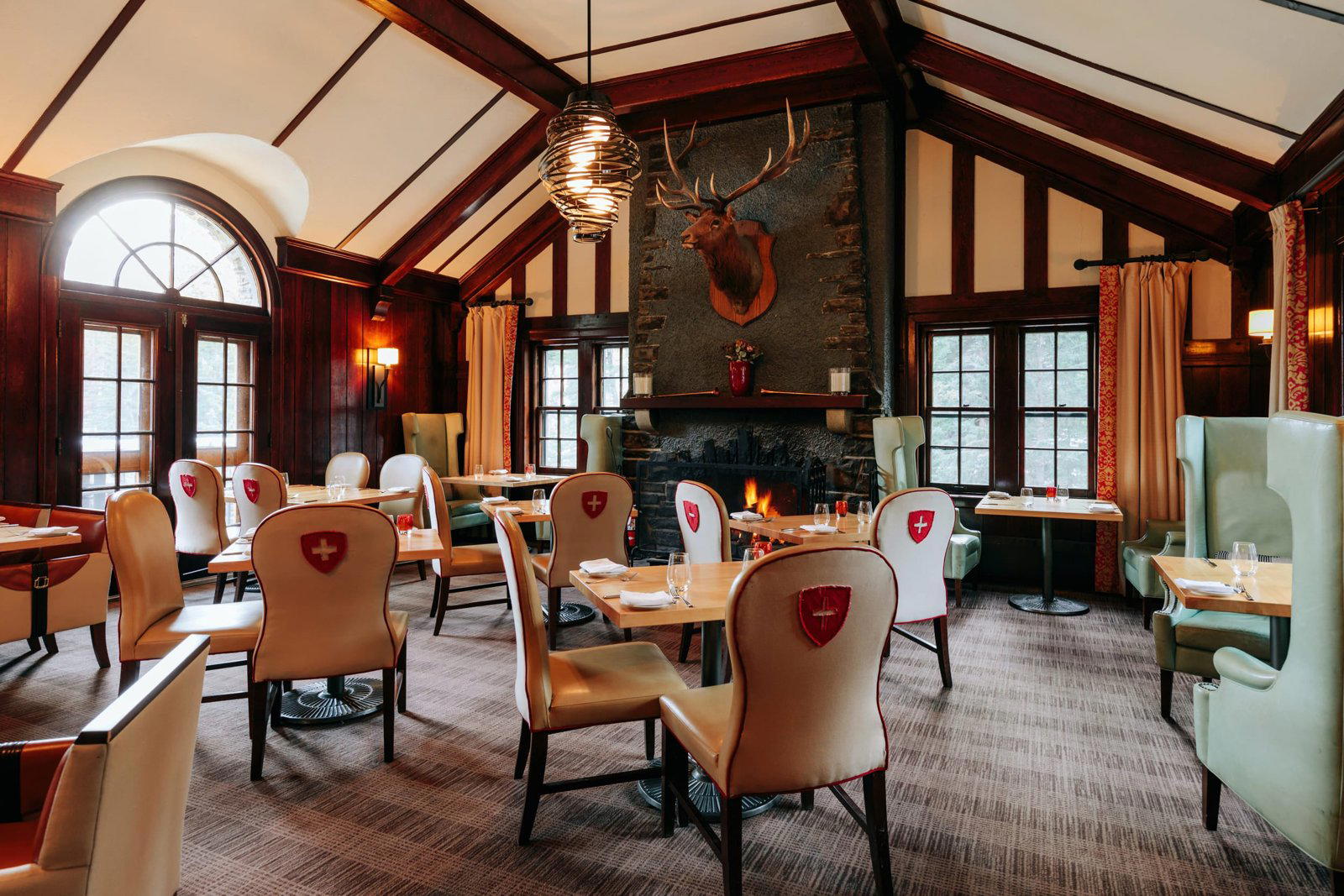
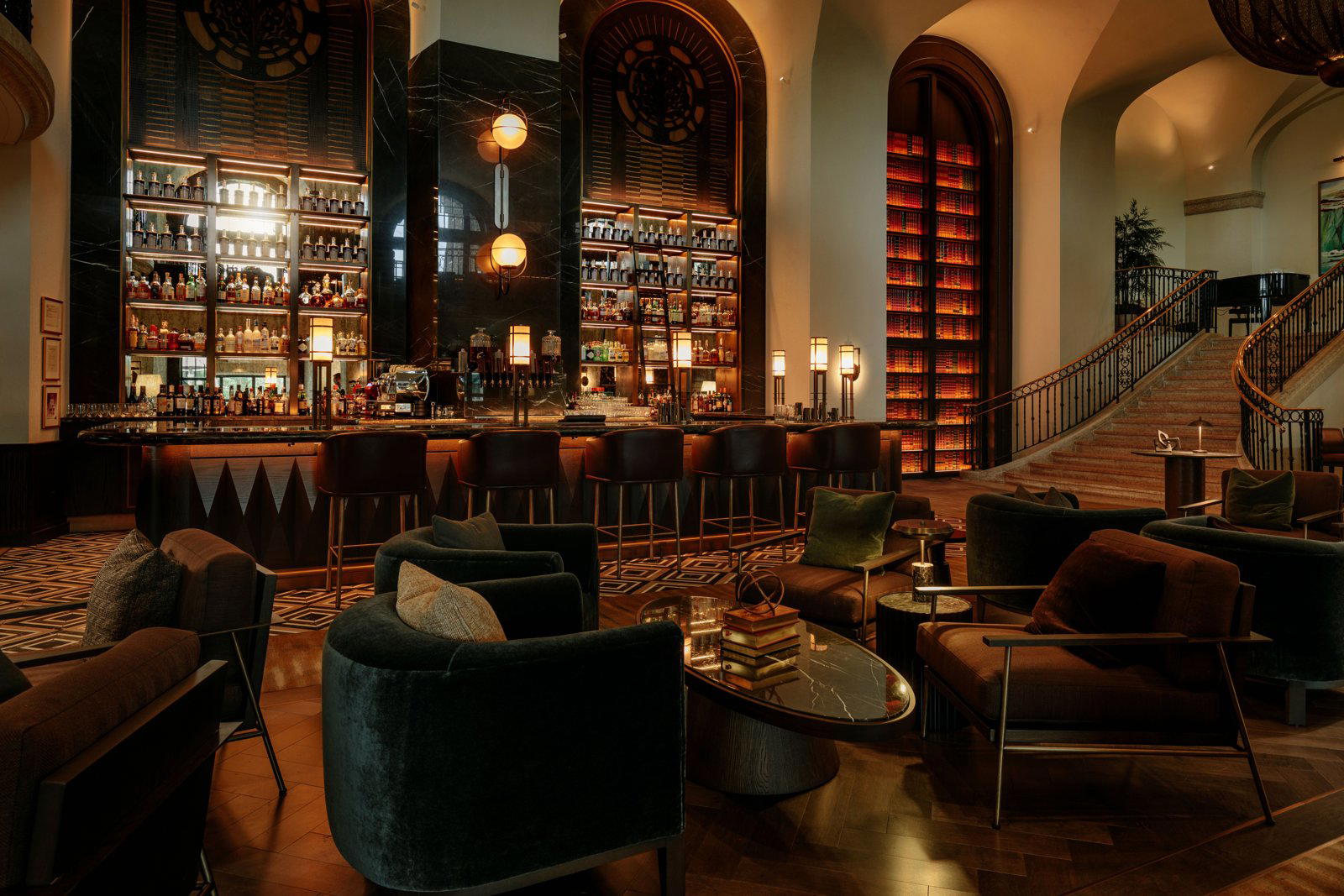
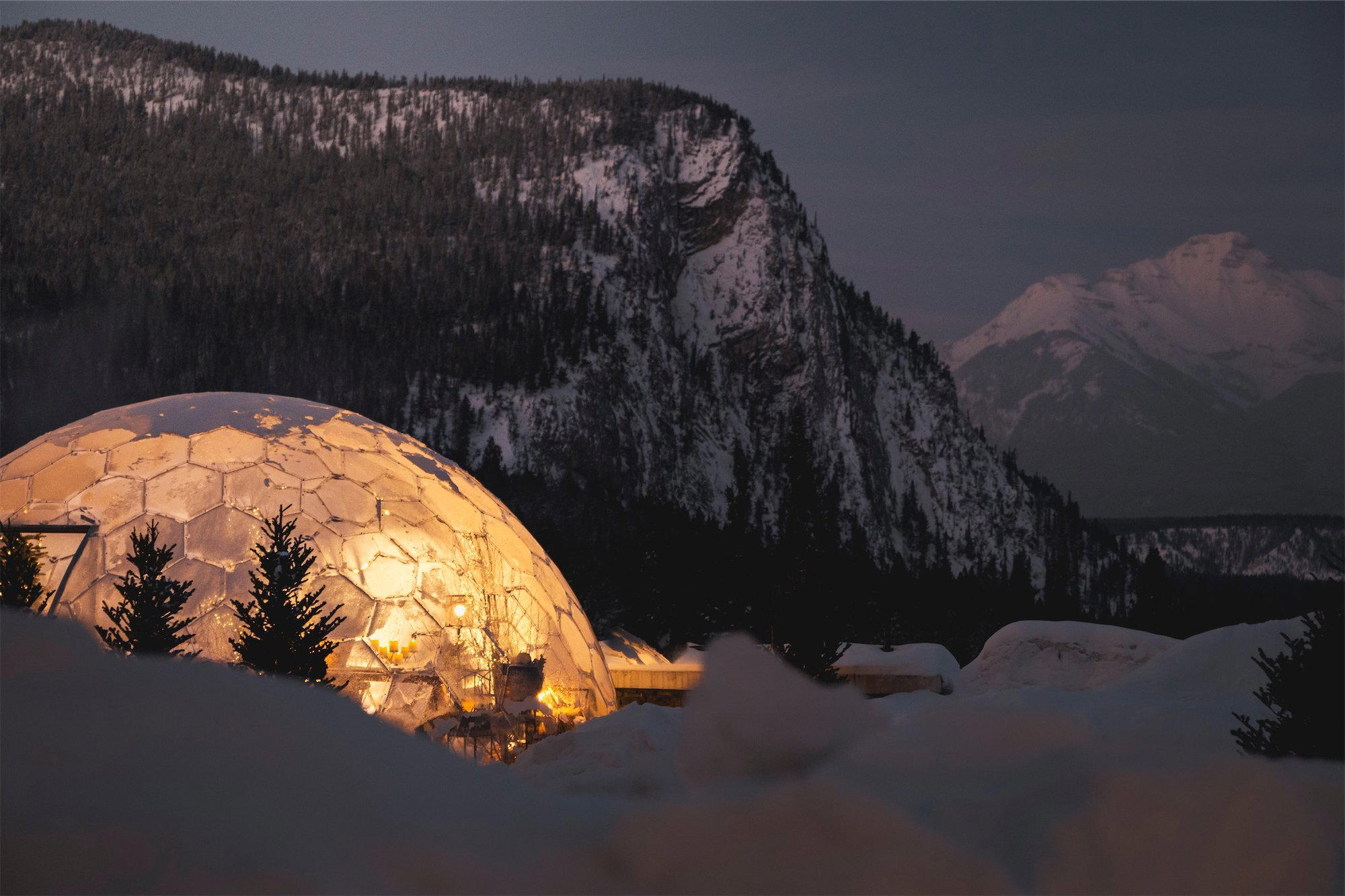
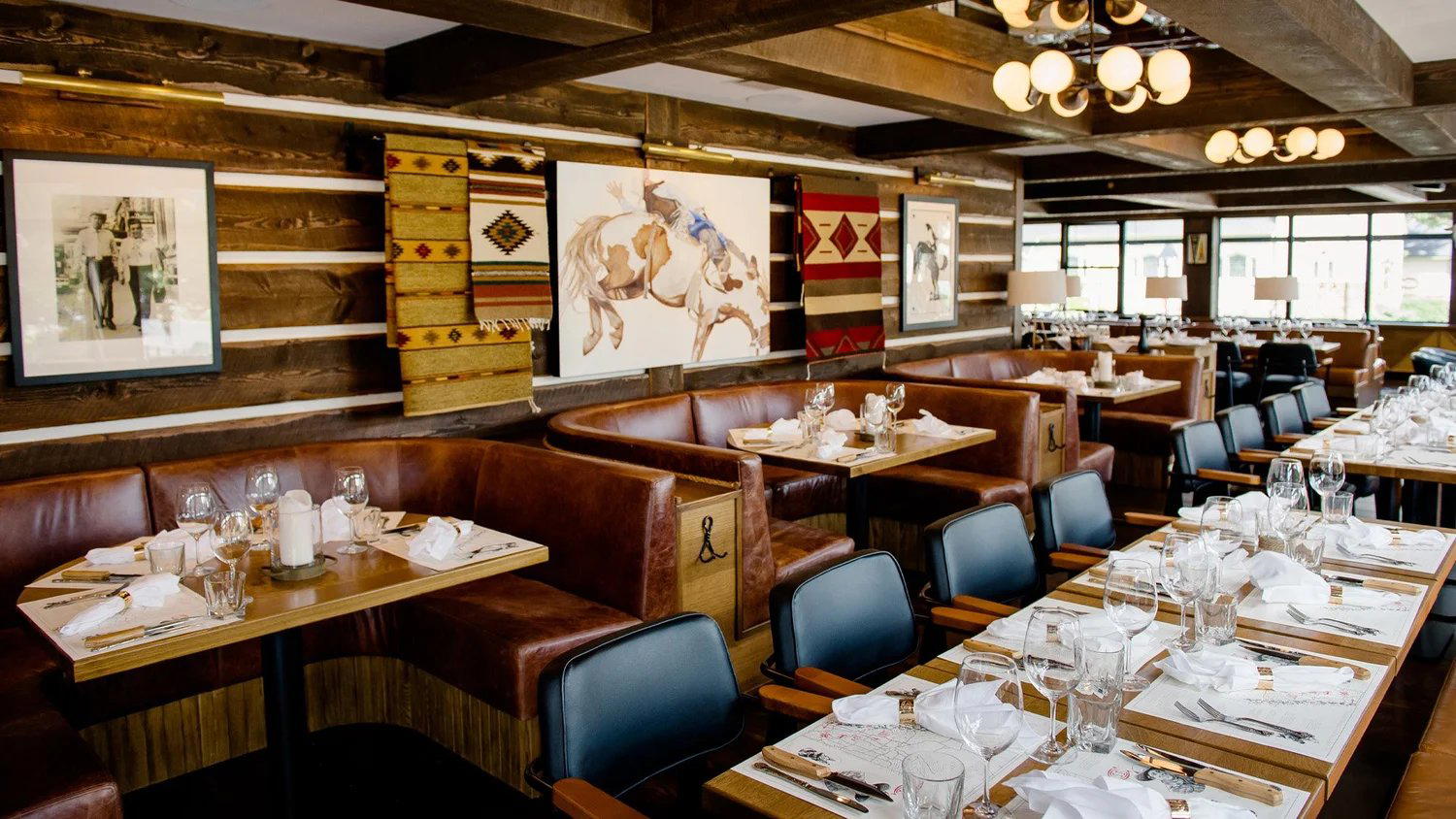
Deep in the heart of the Canadian Rocky Mountains is the picturesque resort town of Banff, surrounded by some of North America’s best ski resorts, most far-reaching mountain vistas, and home to the Rimrock Banff, Emblems Collection. Carved from the side of Sulphur Mountain, the hotel is designed to take full advantage of the views, with the entrance behind the hotel on the uphill side, on what is actually the seventh floor, from there, the building extends down the mountainside, so that almost all of the rooms face the same way to look out across the dramatic mountain vistas. In the Canadian Rockies, everything is big, and this hotel is no different, from the double height floor-to-ceiling windows in the lobby to the spacious rooms with their soft, neutral shades and layers of cozy textiles. The rooms are perfectly comfortable, but the backdrop is what’s important here, many rooms have balconies, and almost all have sweeping views of the majestic Rockies. Like any good mountain resort, the Rimrock Banff is pretty much self-contained, with 24-hour room service, a wellness area with thermal bathing, infinity pools, and saunas with mountain views, and a fitness center extensive enough to rival strong big-city health clubs. Parker’s Table, the signature restaurant, celebrates the local Canadian terroir, and naturally comes with spectacular views of Mount Rundle and Bow Valley through huge bay windows.
Pearl is the En Primeur Club membership app — saves, bookings, and concierge access live there. Same editors, same standards.
- Address
- 300 Mountain Ave, Banff, AB T1L 1J2, Canada
- Phone
- +1 403-762-3356
- Website
- all.accor.com
- Directions
- Get directions
 Saves & bookings on Pearl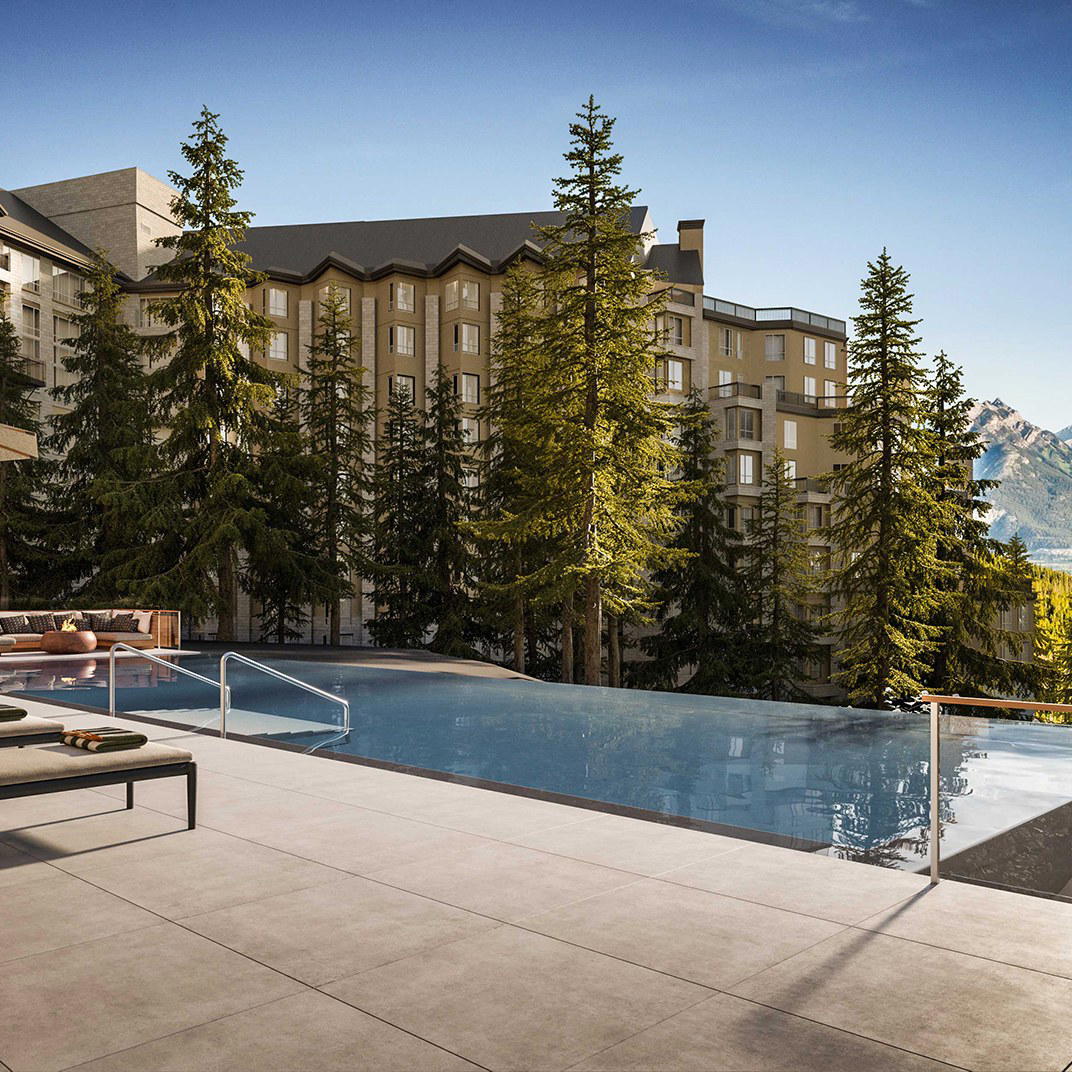
Mountain Architecture at Elevation: Where the Rockies Shape the Room
Banff sits inside a UNESCO World Heritage landscape where the built environment has always had to reckon with what surrounds it. The town's hotel stock divides into two broad categories: large heritage properties with castle-scale footprints, and smaller lodges that lean into timber and stone to borrow credibility from the terrain. Rimrock Banff, part of the Emblems Collection, occupies a position above the townsite on Sulphur Mountain that most properties in the valley cannot replicate. The elevation is not incidental, it determines sightlines, sets the architectural brief, and separates the guest experience from the commercial density of Banff Avenue below.
Rimrock Banff's collection affiliation signals its positioning as a distinctive full-service hotel with a strong local identity. Properties in that tier are selected for character and physical distinctiveness rather than standardised service delivery. Michelin's 2025 hotel selection includes Rimrock Banff. That dual classification places Rimrock in a narrow peer group within Banff, properties that carry both brand affiliation and independent editorial endorsement.
The Physical Argument: Design Against the Mountain
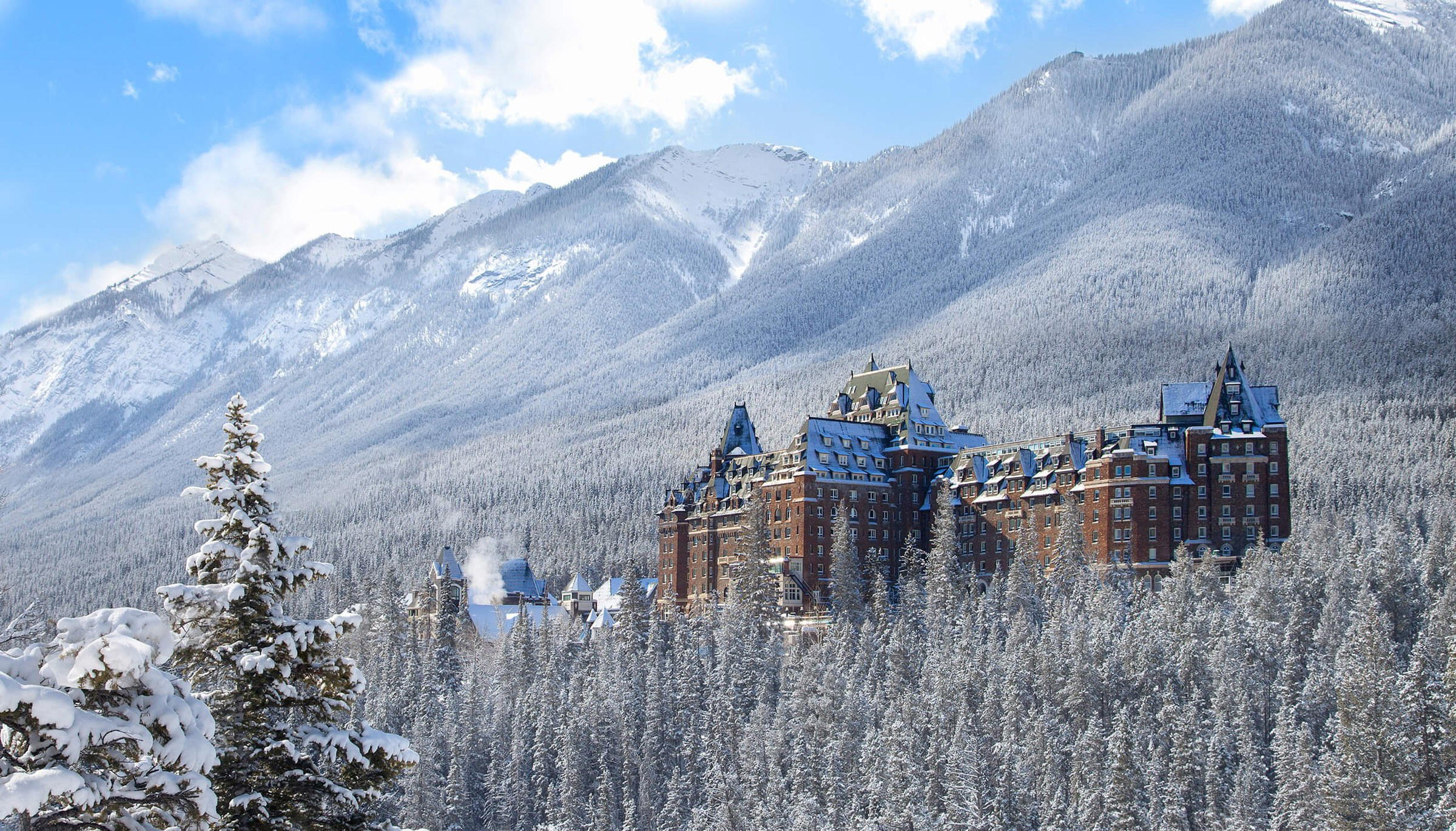
The architecture of mountain resort hotels in the Canadian Rockies has two dominant reference points. The first is the railway-era castle tradition, exemplified by the Fairmont Banff Springs and the Fairmont Chateau Lake Louise, properties where the architecture competes with the landscape through sheer scale. The second, more contemporary approach places the building in conversation with the terrain rather than in opposition to it. Rimrock sits in this second tradition, where the design priority is framing the view rather than commanding it.
Address at 300 Mountain Avenue, high on Sulphur Mountain's lower slopes, gives the property a sightline advantage over almost every other hotel in Banff. Hotels at valley-floor elevation in the townsite look up at the surrounding peaks; a property at Rimrock's elevation looks across at them. That spatial relationship changes how rooms, corridors, and public areas function architecturally. Glazing becomes the primary design element, and the mountain panorama serves as a permanent, unrepeatable feature that no interior specification can match or replicate elsewhere in the valley.
This is the category logic that separates Rimrock from properties like Buffalo Mountain Lodge, which uses craftsman-scale timber construction to create intimacy at ground level, or Fairmont Gold at Banff Springs, which trades on heritage and floor-level prestige. Each occupies a different register of the Banff premium market, and the architectural proposition of each is distinct.
Banff's Premium Hotel Tier: Context and Competition
The Banff premium accommodation market is shaped by geography as much as by investment. The town exists inside a national park, which constrains new development, limits expansion of existing footprints, and concentrates demand across a small number of established properties. That scarcity dynamic affects how the market stratifies. At the leading, large heritage properties like Fairmont Banff Springs carry brand recognition that drives group and leisure business at volume. Below that, a cluster of mid-to-upper properties, including Rimrock, compete on experience specificity rather than scale.
Michelin's hotel program curates properties that inspectors judge to offer a quality of experience worth recommending. In a market as geographically constrained as Banff, that curation carries weight precisely because the alternatives are limited and the gap between properties matters to guests making a multi-day or week-long commitment. For comparison, The Kenrick Hotel represents a different design-led approach, while properties further afield like Clayoquot Wilderness Lodge in Tofino and Fogo Island Inn in Joe Batt's Arm pursue the same logic of location-as-architecture in dramatically different Canadian contexts.
Planning Your Stay
Rimrock Banff sits at 300 Mountain Avenue, above the townsite, which means arrival by private vehicle or hotel transfer is the practical norm. Banff itself is accessible year-round, but the property's refined position and its appeal as a mountain resort make it a genuinely four-season destination: winter brings skiing at Banff Sunshine Village within proximity, while summer and autumn deliver the trail access and clear-air sightlines that justify the elevation advantage most directly. The broader Canadian mountain hotel circuit, which includes Fairmont Chateau Whistler in Whistler at a comparable tier, follows similar seasonal demand patterns. For those extending a Canadian trip to urban stays, Rosewood Hotel Georgia in Vancouver, Four Seasons Hotel Toronto, and Le Mount Stephen in Montréal offer premium urban foils to the mountain format.
Comparison Snapshot
Comparable venues nearby, for context on price, style, and recognition.
| Venue | Cuisine | Price | Awards | Notes |
|---|---|---|---|---|
| Rimrock Banff, Emblems CollectionThis venue — the venue you are viewing | luxury mountain retreat blending heritage and modern design | $$$$ | 5-Star | Not listed |
| Buffalo Mountain Lodge | rustic mountain lodge architecture | $$$ | 4-Star | Tunnel Mountain |
| Fairmont Gold at Banff Springs | Castle-like heritage resort with Fairmont Gold luxury upgrade | $$$$ | 5-Star | Banff National Park |
| The Kenrick Hotel | Transformed luxury boutique hotel blending modern design with mountain heritage, formerly High Country Inn, renovated in 2025. | $$$$ | 3-Star | Downtown Banff |
| Fairmont Banff Springs | Castle resort with luxurious heritage accommodations | $$$$ | Michelin 1 Key | Banff |
| Park Hyatt Vancouver | Urban luxury high‑rise hotel integrated into a landmark mixed‑use tower, combining Park Hyatt’s residential feel with contemporary West Coast design. | $$$$ | 5-Star | West End |
Recognition history
Dated appearances from independent guides and award organizations, with the underlying list record or original source where available.
Michelin Selected
Michelin
At a Glance
- Scenic
- Elegant
- Quiet
- Sophisticated
- Romantic Getaway
- Family Vacation
- Wellness Retreat
- Weekend Escape
- Panoramic View
- Destination Spa
- Pool
- Spa
- Wi Fi
- Room Service
- Concierge
- Mountain
- Pool
- Spa
- Wi Fi
- Room Service
- Concierge
Quiet and restorative atmosphere with morning light on peaks, deep calm, and effortless luxury attuned to mountain rhythms.