On Via Cavour in Lecce's historic centre, 3 Rane operates in the tradition of Salentine trattorie that anchor their cooking in the agricultural and coastal produce of the surrounding Puglia region. The address places it squarely within the city's tightly knit dining quarter, where the competition between cucina povera tradition and more contemporary local kitchens defines the character of eating out here.
Pearl is the En Primeur Club membership app — saves, bookings, and concierge access live there. Same editors, same standards.
- Address
- Via Cavour, 7, 73100 Lecce LE, Italy
- Phone
- +393755040165
- Website
- facebook.com
- Directions
- Get directions
 Saves & bookings on Pearl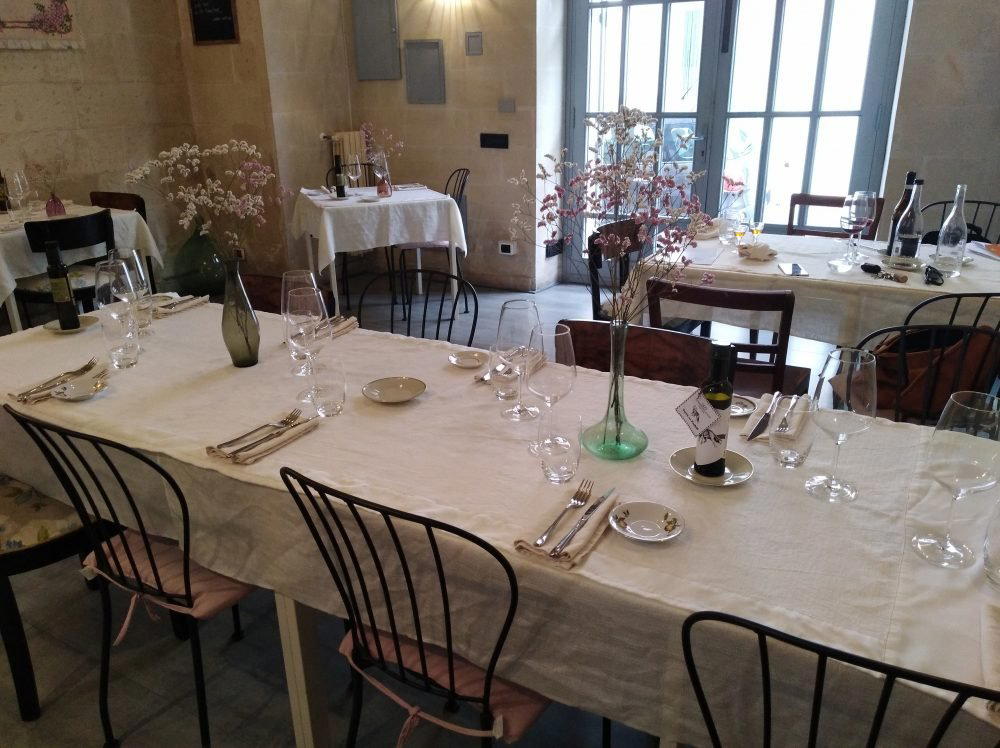
Where the Salento Kitchen Begins: In the Field, Not the Pan
Lecce's leading arguments about food tend to happen before anyone sits down. Across the Salento peninsula, the question that separates dining rooms worth returning to from those worth skipping is not what a kitchen does to its ingredients, but where those ingredients come from and how recently they arrived. The Adriatic coast to the east, the Ionian to the west, and the flat, sun-baked interior between them produce a larder that most of mainland Italy envies and most of Lecce takes for granted. 3 Rane is a restaurant in Lecce serving Modern Italian Fine Dining. At Via Cavour 7, it sits inside this tradition rather than above it, which in southern Puglia is the more considered position to occupy.
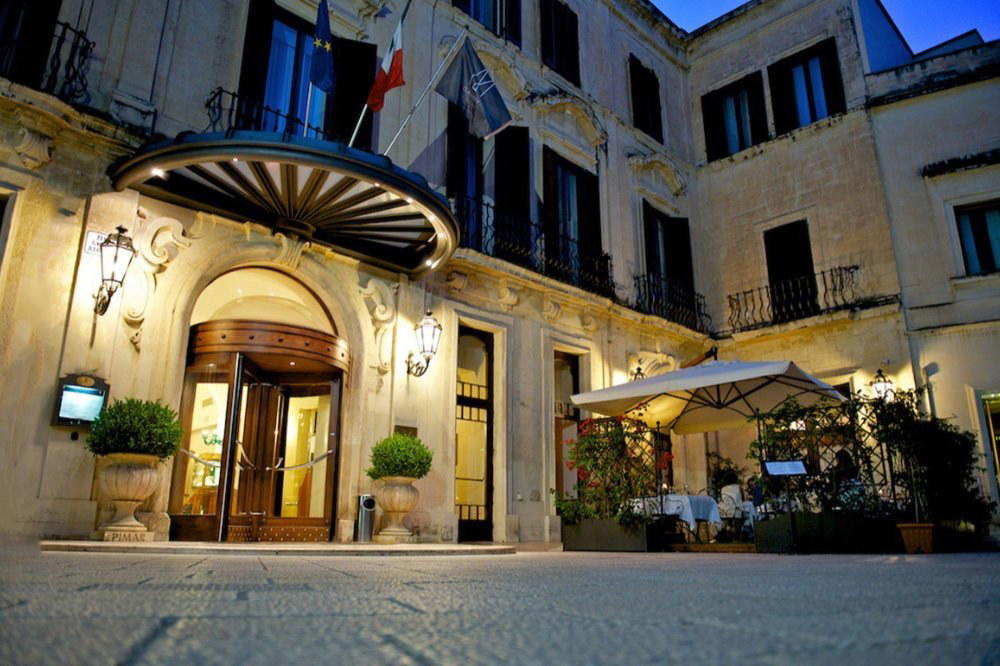
Via Cavour runs through the limestone heart of Lecce's historic centre, a few minutes from the Piazza del Duomo and the Basilica di Santa Croce. The address is not accidental. Restaurants in this quarter inherit a neighbourhood that has been feeding merchants, clergy, and travellers for several centuries, and the physical environment reflects that continuity. Baroque stone, narrow carriageways, and the particular afternoon light of the deep south frame an approach to the table that feels earned rather than staged. For dining rooms that source from the Salentine interior, proximity to the centre also signals access to the city's morning markets, where the provenance chain from smallholder to kitchen is shortest.
Puglia's Ingredient Logic and Why Lecce Practices It Differently
The agricultural identity of Puglia is not subtle. The region produces roughly 40 percent of Italy's olive oil, a figure that shapes how kitchens here think about fat, flavour, and cooking temperature in ways that Tuscan or Lombard kitchens simply do not. Lecce's position at the southern tip of the heel sharpens that identity further. The surrounding countryside grows cicoria selvatica, fave, lampascioni, and cardoncelli mushrooms with a reliability that allows kitchens to build menus around what is actually available rather than what is fashionable. The coastal access adds ricci di mare, cozze tarantine, and the smaller, sweeter prawns of the Ionian shallows to that picture.
This ingredient logic distinguishes serious Salentine trattorie from the broader category of southern Italian cucina. In Lecce's dining quarter, the restaurants that operate closest to this sourcing discipline include Duo Ristorante (Apulian), which applies a contemporary lens to the same regional larder, and Primo Restaurant (Mediterranean Cuisine), positioned at the higher end of the local price tier. 3 Rane occupies the middle ground where ingredient fidelity and everyday accessibility intersect, a position that in Lecce's compact dining scene carries its own kind of authority.
The Salentine Table in Its Broader Italian Context
To understand where ingredient-led cooking in Lecce sits relative to Italy's more decorated dining rooms, it helps to look at what formal recognition has done elsewhere in the country. Kitchens like Osteria Francescana in Modena and Le Calandre in Rubano operate at the speculative, technique-intensive end of Italian cooking, where the ingredient is often a starting point for transformation. Further south, the approach changes. Quattro Passi in Marina del Cantone and Uliassi in Senigallia demonstrate how coastal proximity and seasonal discipline can achieve recognition without abandoning a fundamentally product-driven philosophy. Lecce's trattorie tradition belongs to that southern Italian continuum, where the prestige of a dish derives from the quality of what arrived at the kitchen door that morning, not the number of stages it passed through before reaching the plate.
The comparison is worth extending. At Atelier Moessmer Norbert Niederkofler in Brunico, the sourcing discipline is formalised into a named philosophy. In Lecce, that same discipline operates without the manifesto, embedded instead in the everyday economics of a city where good produce is close, cheap relative to the north, and expected as a matter of course. That invisibility is part of what makes the Salentine kitchen distinctive when viewed from the outside.
Lecce's Dining Quarter: What the Neighbourhood Tells You
Lecce operates as a university city and a regional centre, which gives its dining quarter a range that smaller Apulian towns cannot match. The street-level density around Via Cavour includes everything from 400 Gradi to Alex and Classé La Dogana Restaurant, each occupying a distinct position in the local hierarchy. That density means diners make genuine choices rather than defaulting to whatever happens to be open, and kitchens respond accordingly. The ones that survive the comparison tend to be those with a clear sourcing identity rather than those attempting to impress with technique.
For a wider map of what the city's dining quarter currently offers, our full Lecce restaurants guide covers the range from high-end contemporary to neighbourhood-level traditional. The picture it draws is of a city that has quietly built a dining culture more sophisticated than its size might suggest, sustained by the agricultural and maritime produce on its doorstep rather than by imported prestige.
Planning Your Visit to 3 Rane
Via Cavour 7 is walkable from Lecce's main train station in under fifteen minutes, and the address sits within the pedestrian-heavy core of the baroque centre, making it accessible without a car.
Quick Comparison
Comparable venues nearby, for context on price, style, and recognition.
| Venue | Cuisine | Price | Awards | Notes |
|---|---|---|---|---|
| 3 RaneThis venue — the venue you are viewing | Modern Italian Fine Dining | $$$ | Not listed | Not listed |
| Alex | Modern Italian Seafood | $$$ | Not listed | historic center |
| La Succursale | Pizza & Cucina | Neapolitan Pizza & Italian Trattoria | $$ | Not listed | Near Lecce University |
| Duo Ristorante | Modern Apulian Fine Dining | $$$ | Michelin Plate | Lecce |
| Gimmi Restaurant | Modern Salento Italian | $$$$ | Michelin Plate | Lecce |
| La Vecchia Osteria da Totu | Traditional Salento Trattoria | $$ | Not listed | Porta Napoli |
Continue exploring
More in Lecce
Restaurants in Lecce
Browse all →
Bars in Lecce
Browse all →
Hotels in Lecce
Browse all →

At a Glance
- Intimate
- Cozy
- Elegant
- Date Night
- Special Occasion
- Open Kitchen
- Natural Wine
- Organic
- Local Sourcing
Current opening hours
- Monday
- 7:30–11 PM
- Tuesday
- 12:30–2 PM, 7:30–11 PM
- Wednesday
- 12:30–2 PM, 7:30–11 PM
- Thursday
- 12:30–2 PM, 7:30–11 PM
- Friday
- 12:30–2 PM, 7:30–11 PM
- Saturday
- 12:30–2 PM, 7:30–11 PM
- Sunday
- Closed
Hours can change for holidays and private events. Last verified .
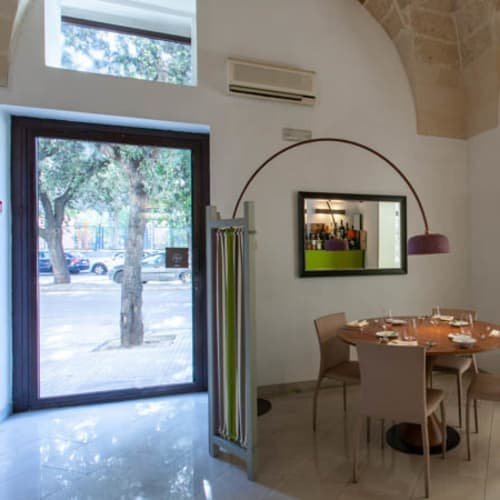
Cozy and intimate with stone walls, cathedral ceilings, and a streamlined design fostering a high-concept, serene dining atmosphere.