On Polk Street in Russian Hill, 1760 operates in a tier of San Francisco dining where the room is small, the cooking is precise, and the competition runs from Michelin-starred counters to ambitious neighborhood kitchens. The restaurant has tracked the city's appetite for ingredient-driven, restrained cooking through several iterations, making it a useful reference point for how mid-to-upper casual fine dining has shifted in San Francisco over the past decade.
Pearl is the En Primeur Club membership app — saves, bookings, and concierge access live there. Same editors, same standards.
- Address
- 1760 Polk St (at Washington St), San Francisco, CA 94109
- Directions
- Get directions
 Saves & bookings on Pearl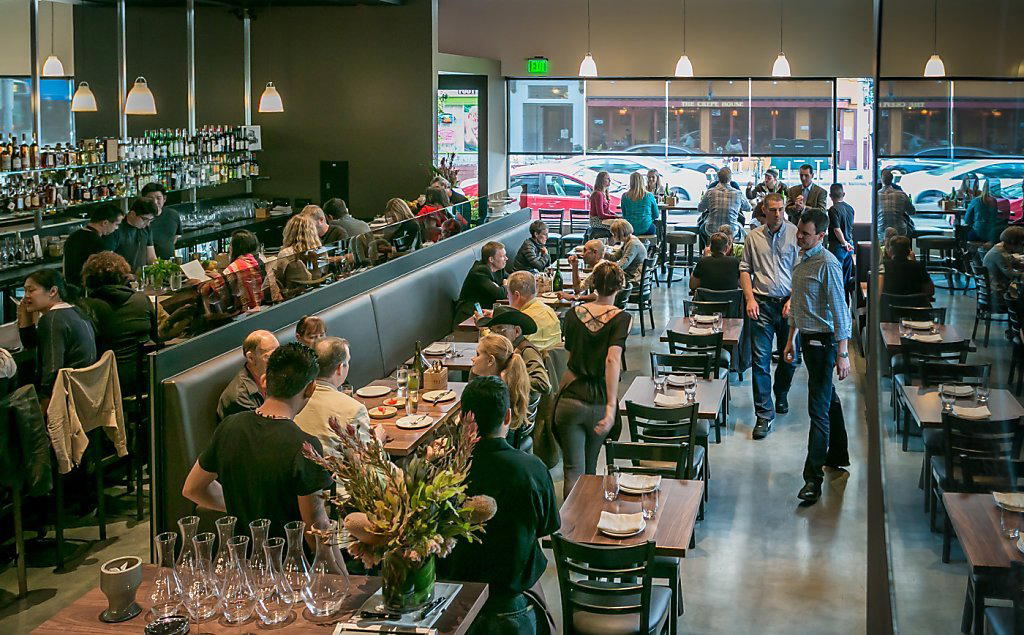
Polk Street and the Shifting Ground of San Francisco Fine Dining
Russian Hill's Polk Street corridor has never quite resolved its identity. It runs between the white-tablecloth ambitions of Nob Hill to the south and the looser, more bar-forward energy of Polk Gulch to the north, making it an address that rewards restaurants capable of threading that needle. 1760, situated at the corner of Polk and Washington, has occupied that in-between zone for long enough to serve as a kind of measure of how the city's mid-to-upper casual dining register has evolved. San Francisco's dining scene in the 2010s rewarded a particular posture: polished but not stiff, ingredient-forward but not lecture-heavy, ambitious without the full apparatus of multi-course tasting menus. That posture remains the operative mode at this price tier, even as the competition has intensified.
For context, the city's leading end is anchored by restaurants where the format itself is the commitment: Lazy Bear runs a communal tasting format, Atelier Crenn structures its menu as poetry, and Benu delivers a Franco-Chinese tasting sequence at a price point that signals occasion dining. Below that tier, a different kind of restaurant has had to work harder: à la carte or hybrid formats that need to deliver technical quality without the scaffolding of a fixed progression. 1760 has operated largely in this latter register, which is a more competitive and less forgiving position to hold.
How the Room Has Changed
The evolution of 1760 tracks a broader shift in what San Francisco diners expect from a serious neighborhood restaurant. In the years following the post-recession fine dining consolidation, when many white-tablecloth rooms in the city either closed or softened into something more casual, a different approach emerged: smaller rooms, shorter menus, and a more transparent relationship between what was on the plate and where it came from. This was not distinctive to San Francisco, but the city's proximity to Napa and Sonoma agricultural production, and to the farmers' market culture that had long defined Californian cooking, gave it particular intensity here.
1760 has moved through iterations of this approach. The core proposition, a focused menu that foregrounds seasonal California produce, has remained legible even as the specific execution has shifted. Restaurants in this category face a recurring pressure: the moment a format feels settled, the room risks reading as static against a dining public that tracks change closely. The solution, for 1760 and for comparable restaurants in other American cities, has generally been menu restructuring rather than concept overhaul. Compare this to how Saison has repositioned itself at the summit end of the Californian fine dining spectrum, or how Quince has maintained Italian-inflected precision while managing format expectations. 1760 occupies a different, less rigidly defined niche, which gives it flexibility but also makes its current direction harder to pin down from the outside.
What the Polk Street Address Signals
Location does real work in San Francisco's dining geography. Polk Street is not the Ferry Building, not Hayes Valley, not the SoMa warehouse corridor where Lazy Bear and its peers have clustered. It is a residential-adjacent address where foot traffic is local and the dinner crowd tends to be drawn from the neighborhood rather than the tourist or expense-account circuit. This shapes the room's character in ways that menu descriptions rarely capture. Restaurants on Polk Street that have sustained relevance have generally done so by earning genuine repeat business from Russian Hill and Nob Hill residents, rather than by positioning for destination-dining traffic.
That dynamic puts 1760 in a peer group that includes strong neighborhood anchors in other American cities: not the tasting-menu flagships like Alinea in Chicago or The French Laundry in Napa, and not the accessible-casual registers that have multiplied across every city, but the middle tier of serious, cook-driven rooms that serve a local audience at full technical stretch. Providence in Los Angeles holds a comparable position in its neighborhood; Addison in San Diego operates at a higher formality level but draws from a similar residential base. The challenge for all of them is sustaining the kitchen's ambition through the economics of a neighborhood footprint.
The Current Direction and What It Reflects
San Francisco's restaurant economy has been reshaped significantly since 2020. A number of the city's mid-range ambitious rooms did not reopen after the pandemic closure period, which had the effect of concentrating the remaining serious cooking into either the leading end or the more casual formats that weathered the disruption better. 1760's continued presence on Polk Street places it among a smaller cohort of rooms that have held their ground through that contraction. Whether that reflects a successful repositioning or the durability of a format that was already well-calibrated to its neighborhood is a question the room's current iteration would need to answer directly.
Across the country, the restaurants that have navigated similar pressures most successfully have tended to be those that treated reinvention as a continuous process rather than a periodic event. Blue Hill at Stone Barns in Tarrytown has done this through radical menu transparency; SingleThread Farm in Healdsburg has done it through vertical integration with its own farm. For restaurants without those structural advantages, the answer has usually been sharper seasonal rotation and a more explicit connection to named producers. California's agricultural depth makes that approach more credible here than in almost any other American market, which is one reason San Francisco's surviving serious rooms have leaned into it consistently.
For anyone considering 1760 as part of a broader San Francisco dining plan, the practical orientation is this: it sits in the $$$ tier, and it occupies an address that is most easily approached on foot from the Polk Street cable car stop or by rideshare. Those building a longer itinerary that extends beyond the Bay Area might also consider how 1760's register compares to rooms like Bacchanalia in Atlanta or The Inn at Little Washington, both of which represent different regional solutions to the same problem of sustaining serious cooking over the long term.
Cuisine and Credentials
Comparable venues nearby, for context on price, style, and recognition.
| Venue | Cuisine | Price | Notes |
|---|---|---|---|
| 1760This venue — the venue you are viewing | Global Fusion with Asian Influences | $$$ | Not listed |
| KAIYŌ | Nikkei: Japanese-Peruvian Fusion | $$$ | Financial District/South Beach |
| ama by Brad Kilgore | Italian-Japanese Itameshi | $$$ | Chinatown |
| Butterfly Restaurant | California-Asian Fusion | $$$ | Embarcadero |
| Ame | Modern Japanese-Californian Fine Dining | $$$$ | Financial District |
| Chaya Brasserie | French-Japanese Fusion Brasserie | $$$ | Embarcadero |
Continue exploring
More in San Francisco
Restaurants in San Francisco
Browse all →
Bars in San Francisco
Browse all →
Hotels in San Francisco
Browse all →
At a Glance
- Lively
- Trendy
- Modern
- Date Night
- Special Occasion
- Open Kitchen
- Craft Cocktails
- Street Scene
Hip and lively atmosphere with window booths overlooking the street, trading stately luxury for a lively, modern vibe.