Where the Ground Does the Cooking Furnas is not a conventional restaurant destination. The valley on São Miguel's eastern flank is better known for its fumaroles and the communal pot-in-the-ground tradition of cozido das Furnas, a slow-cooked stew that relies on geothermal heat rather than kitchen fire. That context matters when assessing any serious restaurant operating here: the ingredient story begins before a chef touches anything. Volcanic soil, mineral-rich water, and a humid microclimate that differs sharply from the coast produce dairy, produce, and protein with a regional character that is difficult to replicate elsewhere in the Atlantic. À TERRA, on Avenida Dr. Manuel de Arriaga at the centre of the village, sits inside that tradition rather than alongside it. The Azorean Sourcing Framework Portugal's most decorated restaurants draw on regional provenance as a central argument. Belcanto in Lisbon and Casa de Chá da Boa Nova in Leça da Palmeira both build tasting menus around what is particular to their geography. In the Azores, that argument is unusually concentrated: the islands are isolated enough that supply chains stay short by necessity, and the volcanic geology creates conditions that produce Azorean beef and dairy ranked among the most mineral-forward in the Atlantic. São Miguel's interior valleys, Furnas included, carry heavier rainfall and geothermal mineral exchange than the coastline, which registers in the pasture and, downstream, in the cattle and the milk. Restaurants operating in this environment face a distinct question: do they treat that ingredient quality as background, or do they build the plate around it? The more interesting places in the Azores take the latter approach, which means sourcing discipline has to precede culinary ambition. That is the framework within which À TERRA should be understood. Whether the kitchen fully exploits that sourcing advantage is the editorial question worth pressing. Furnas as a Dining Context The village has a small population and draws visitors primarily for the geothermal sites and the lake walks rather than restaurant culture. That tourism profile shapes what a serious dining room here can and cannot be. Unlike Ocean in Porches or Vila Joya in Albufeira, which sit inside the Algarve's established luxury-travel circuit, a restaurant in Furnas operates without that structural support. Guests arrive because of the valley, not because of a restaurant scene. That creates pressure on the dining room to justify itself on the strength of the plate and the ingredient argument rather than on ambient foot traffic or hotel-driven covers. That isolation has a corresponding advantage. Restaurants in remote, ingredient-rich locations often develop a clarity of identity that more competitive urban environments make harder to maintain. Herdade do Esporão in Reguengos de Monsaraz is a useful parallel: a serious dining operation in an agriculturally defined location, where the provenance of what is served doubles as the reason to make the journey. Furnas has the same structural logic, and À TERRA benefits from being positioned at that intersection. What the Ingredient Story Looks Like Azorean cattle graze on open pasture year-round, a condition that applies across São Miguel but that the Furnas microclimate intensifies through mineral-rich groundwater and heavier vegetation. The dairy output from this environment carries a fat content and a grassy depth that distinguish it from mainland Portuguese dairy. Beef from the interior is leaner and more mineral than coastal equivalents. These are not marketing claims; they reflect documented differences in the geological and climatic conditions of the interior valleys versus the coast. A kitchen working with these ingredients at À TERRA has access to a sourcing argument that is difficult for mainland Portuguese restaurants to replicate regardless of budget. Antiqvvm in Porto and A Cozinha in Guimaraes build their identity through regional provenance on the mainland; in the Azores, provenance is geographically enforced in a way that requires no curation strategy. The question is always execution: whether the kitchen presents those ingredients with enough restraint and precision to let their character register, rather than obscuring them under technique. That restraint-versus-technique tension runs through the more serious tier of Portuguese fine dining. At Il Gallo d'Oro in Funchal, across the Atlantic on Madeira, the kitchen handles island ingredients within a formal structure that has attracted Michelin recognition. The Azores has not yet produced a comparably decorated address, but the ingredient base on São Miguel arguably surpasses Madeira's in geological intensity. Placing À TERRA in the Broader Portuguese Restaurant Map Portugal's fine-dining circuit is concentrated on the mainland and in the archipelagos' main urban centres. The restaurants that draw international attention, from Gusto by Heinz Beck in Almancil to Lab by Sergi Arola in Sintra to The Yeatman in Vila Nova de Gaia, operate within established luxury-travel nodes. À TERRA's position in Furnas places it outside that circuit entirely, which can mean either an absence of critical attention or a deliberate commitment to place over prestige. Serious dining operations in geographically remote locations occasionally attract the kind of recognition that Lazy Bear in San Francisco built through format discipline, or that Le Bernardin in New York City has sustained through ingredient focus over decades. The mechanism is different, but the underlying logic, that what is on the plate has to earn the journey, applies equally in Furnas. For those building an Azores itinerary around serious eating, our full Furnas restaurants guide maps the village's options against the broader São Miguel dining context. Cross-island comparisons with Palatial in Braga, Ó Balcão in Santarém, or A Ver Tavira in Tavira reinforce how regional specificity functions differently across Portugal's geographies: in Furnas, the geology is the argument, and the restaurant's job is to not get in its way. Al Sud in Lagos offers another point of contrast, a coastal address where the sourcing logic runs through Atlantic seafood rather than inland volcanic terroir. Planning a Visit Furnas sits roughly an hour's drive east of Ponta Delgada, São Miguel's main entry point. Most visitors to the valley arrive as day-trippers, which means dinner service at a sit-down restaurant is a different proposition from lunch. Booking ahead is advisable given the village's limited capacity. The geothermal cozido served at the communal pots near the lake runs to a fixed midday schedule dictated by the cooking time underground, so À TERRA's evening operation occupies a separate niche from that tradition. The address on Avenida Dr. Manuel de Arriaga is direct to locate within the compact village centre. Frequently Asked Questions Does À TERRA work for a family meal?Furnas is a village-scale destination where dining options are limited rather than extensive, which tends to make restaurants here more accommodating across age groups than a specialist tasting-menu format in Lisbon or Porto would be.What's the vibe at À TERRA?Furnas sets a tone that no dining room in the village can fully escape: geothermal steam rising at the lake edge, volcanic soil underfoot, and a pace of life calibrated to walkers and day-trippers rather than urban restaurant culture. À TERRA's position on the main avenue places it inside that atmosphere. The expectation is a grounded, place-specific experience rather than the polished formality of a Lisbon four-star. Confirmed awards and price-tier data are not available in current records, but the Azorean context broadly favours informal warmth over ceremony.What's the must-try dish at À TERRA?The strongest editorial recommendation, grounded in the Azores' documented ingredient character, is to order whatever most directly reflects local sourcing: dairy, beef, or produce drawing on Furnas valley provenance. Dishes that showcase geothermal or volcanic-terroir ingredients carry the clearest argument for eating here rather than in Ponta Delgada, and a kitchen aware of its location will typically make that argument through its most ingredient-forward preparations.How does dining in Furnas differ from visiting a Michelin-recognised Azorean restaurant?The Azores does not yet have a Michelin-starred address to match the recognition that Madeira has achieved at Il Gallo d'Oro in Funchal, which means the island's serious dining is evaluated on ingredient quality and regional authenticity rather than formal critical hierarchy. Furnas, with its geothermally active soil and enclosed microclimate, produces ingredients with a character that the wider Portuguese fine-dining circuit cannot easily access. À TERRA's location in the valley positions it to make that argument through the plate, whether or not it is operating at tasting-menu ambition or a more casual register.
Pearl is the En Primeur Club membership app — saves, bookings, and concierge access live there. Same editors, same standards.
- Address
- Avenida Dr. Manuel de Arriaga, 9675-022 Furnas, Portugal
- Phone
- +351 296 249 200
- Website
- furnas.octanthotels.com
- Directions
- Get directions
 Saves & bookings on Pearl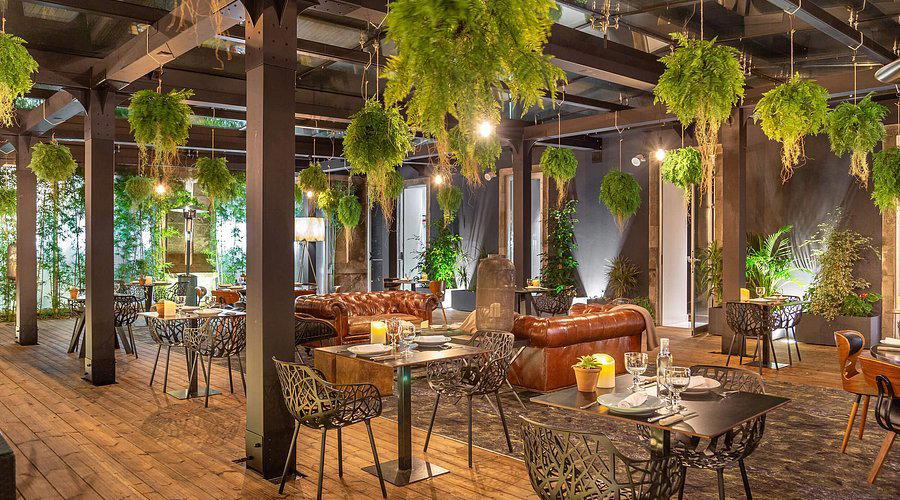
Where the Ground Does the Cooking
Furnas is not a conventional restaurant destination. The valley on São Miguel's eastern flank is better known for its fumaroles and the communal pot-in-the-ground tradition of cozido das Furnas, a slow-cooked stew that relies on geothermal heat rather than kitchen fire. That context matters when assessing any serious restaurant operating here: the ingredient story begins before a chef touches anything. Volcanic soil, mineral-rich water, and a humid microclimate that differs sharply from the coast produce dairy, produce, and protein with a regional character that is difficult to replicate elsewhere in the Atlantic. À TERRA, on Avenida Dr. Manuel de Arriaga at the centre of the village, sits inside that tradition rather than alongside it.
The Azorean Sourcing Framework
Portugal's most decorated restaurants draw on regional provenance as a central argument. Belcanto in Lisbon and Casa de Chá da Boa Nova in Leça da Palmeira both build tasting menus around what is particular to their geography. In the Azores, that argument is unusually concentrated: the islands are isolated enough that supply chains stay short by necessity, and the volcanic geology creates conditions that produce Azorean beef and dairy ranked among the most mineral-forward in the Atlantic. São Miguel's interior valleys, Furnas included, carry heavier rainfall and geothermal mineral exchange than the coastline, which registers in the pasture and, downstream, in the cattle and the milk.
Restaurants operating in this environment face a distinct question: do they treat that ingredient quality as background, or do they build the plate around it? The more interesting places in the Azores take the latter approach, which means sourcing discipline has to precede culinary ambition. That is the framework within which À TERRA should be understood. Whether the kitchen fully exploits that sourcing advantage is the editorial question worth pressing.
Furnas as a Dining Context
The village has a small population and draws visitors primarily for the geothermal sites and the lake walks rather than restaurant culture. That tourism profile shapes what a serious dining room here can and cannot be. Unlike Ocean in Porches or Vila Joya in Albufeira, which sit inside the Algarve's established luxury-travel circuit, a restaurant in Furnas operates without that structural support. Guests arrive because of the valley, not because of a restaurant scene. That creates pressure on the dining room to justify itself on the strength of the plate and the ingredient argument rather than on ambient foot traffic or hotel-driven covers.
That isolation has a corresponding advantage. Restaurants in remote, ingredient-rich locations often develop a clarity of identity that more competitive urban environments make harder to maintain. Herdade do Esporão in Reguengos de Monsaraz is a useful parallel: a serious dining operation in an agriculturally defined location, where the provenance of what is served doubles as the reason to make the journey. Furnas has the same structural logic, and À TERRA benefits from being positioned at that intersection.
What the Ingredient Story Looks Like
Azorean cattle graze on open pasture year-round, a condition that applies across São Miguel but that the Furnas microclimate intensifies through mineral-rich groundwater and heavier vegetation. The dairy output from this environment carries a fat content and a grassy depth that distinguish it from mainland Portuguese dairy. Beef from the interior is leaner and more mineral than coastal equivalents. These are not marketing claims; they reflect documented differences in the geological and climatic conditions of the interior valleys versus the coast.
A kitchen working with these ingredients at À TERRA has access to a sourcing argument that is difficult for mainland Portuguese restaurants to replicate regardless of budget. Antiqvvm in Porto and A Cozinha in Guimaraes build their identity through regional provenance on the mainland; in the Azores, provenance is geographically enforced in a way that requires no curation strategy. The question is always execution: whether the kitchen presents those ingredients with enough restraint and precision to let their character register, rather than obscuring them under technique.
That restraint-versus-technique tension runs through the more serious tier of Portuguese fine dining. At Il Gallo d'Oro in Funchal, across the Atlantic on Madeira, the kitchen handles island ingredients within a formal structure that has attracted Michelin recognition. The Azores has not yet produced a comparably decorated address, but the ingredient base on São Miguel arguably surpasses Madeira's in geological intensity.
Placing À TERRA in the Broader Portuguese Restaurant Map
Portugal's fine-dining circuit is concentrated on the mainland and in the archipelagos' main urban centres. The restaurants that draw international attention, from Gusto by Heinz Beck in Almancil to Lab by Sergi Arola in Sintra to The Yeatman in Vila Nova de Gaia, operate within established luxury-travel nodes. À TERRA's position in Furnas places it outside that circuit entirely, which can mean either an absence of critical attention or a deliberate commitment to place over prestige. Serious dining operations in geographically remote locations occasionally attract the kind of recognition that Lazy Bear in San Francisco built through format discipline, or that Le Bernardin in New York City has sustained through ingredient focus over decades. The mechanism is different, but the underlying logic, that what is on the plate has to earn the journey, applies equally in Furnas.
For those building an Azores itinerary around serious eating, our full Furnas restaurants guide maps the village's options against the broader São Miguel dining context. Cross-island comparisons with Palatial in Braga, Ó Balcão in Santarém, or A Ver Tavira in Tavira reinforce how regional specificity functions differently across Portugal's geographies: in Furnas, the geology is the argument, and the restaurant's job is to not get in its way. Al Sud in Lagos offers another point of contrast, a coastal address where the sourcing logic runs through Atlantic seafood rather than inland volcanic terroir.
Planning a Visit
Furnas sits roughly an hour's drive east of Ponta Delgada, São Miguel's main entry point. Most visitors to the valley arrive as day-trippers, which means dinner service at a sit-down restaurant is a different proposition from lunch. Booking ahead is advisable given the village's limited capacity. The geothermal cozido served at the communal pots near the lake runs to a fixed midday schedule dictated by the cooking time underground, so À TERRA's evening operation occupies a separate niche from that tradition. The address on Avenida Dr. Manuel de Arriaga is direct to locate within the compact village centre.
At a Glance
- Romantic
- Cozy
- Scenic
- Elegant
- Intimate
- Date Night
- Special Occasion
- Hotel Restaurant
- Terrace
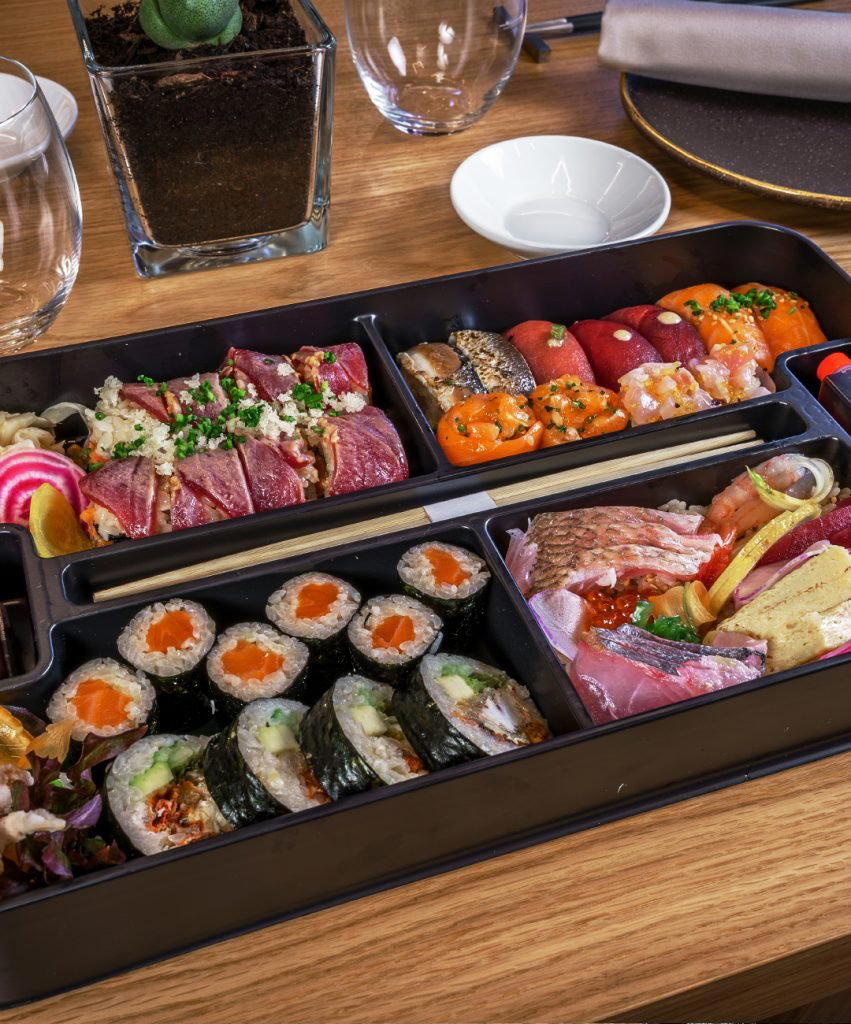
- Local Sourcing
- Farm To Table
- Garden
Current opening hours
- Monday
- 1–3 pm, 6:30–10 pm
- Tuesday
- 1–3 pm, 6:30–10 pm
- Wednesday
- 1–3 pm, 6:30–10 pm
- Thursday
- 1–3 pm, 6:30–10 pm
- Friday
- 1–3 pm, 6:30–10 pm
- Saturday
- 1–3 pm, 6:30–10 pm
- Sunday
- 1–3 pm, 6:30–10 pm
Hours can change for holidays and private events. Last verified .
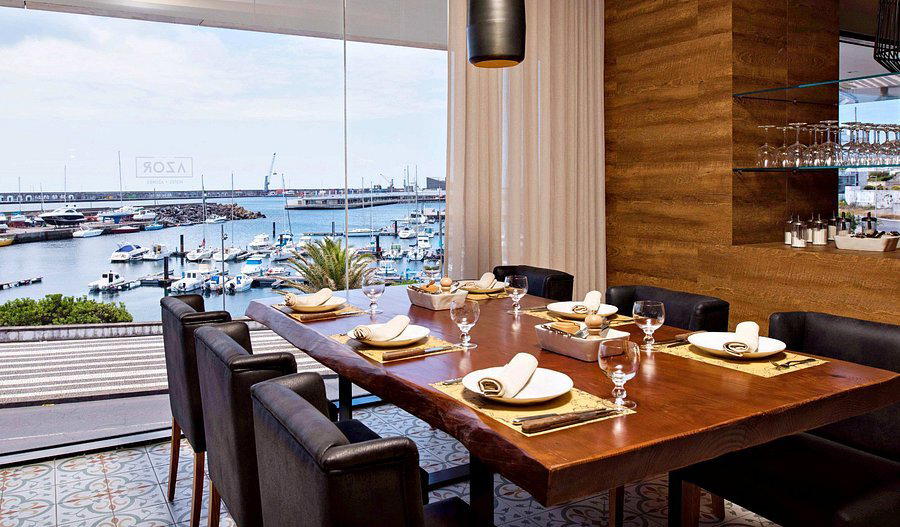
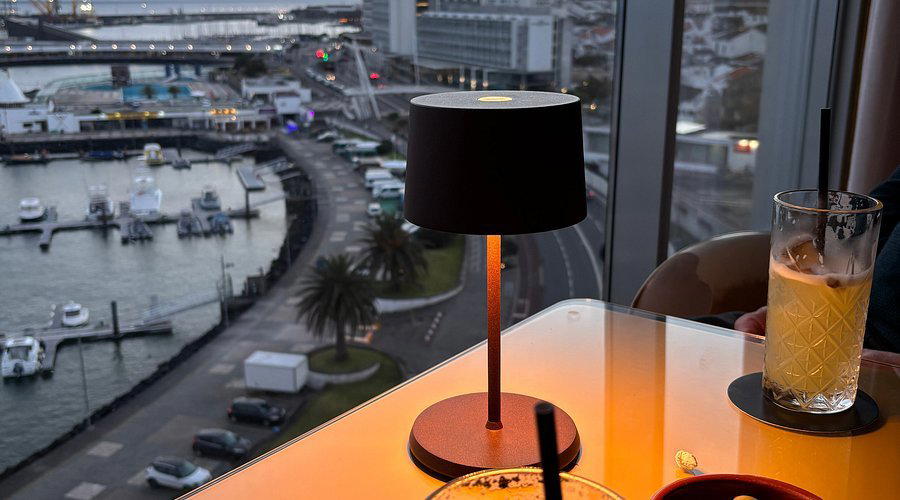
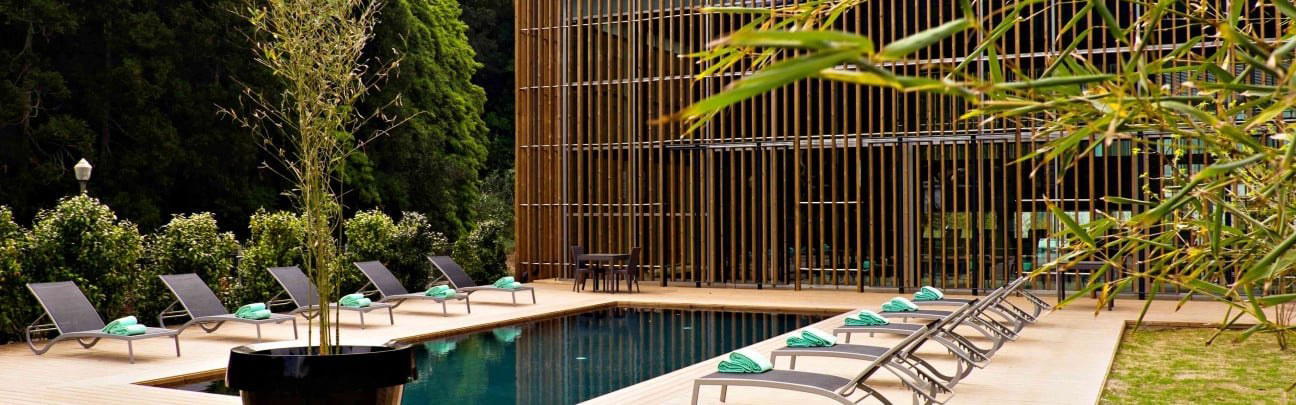
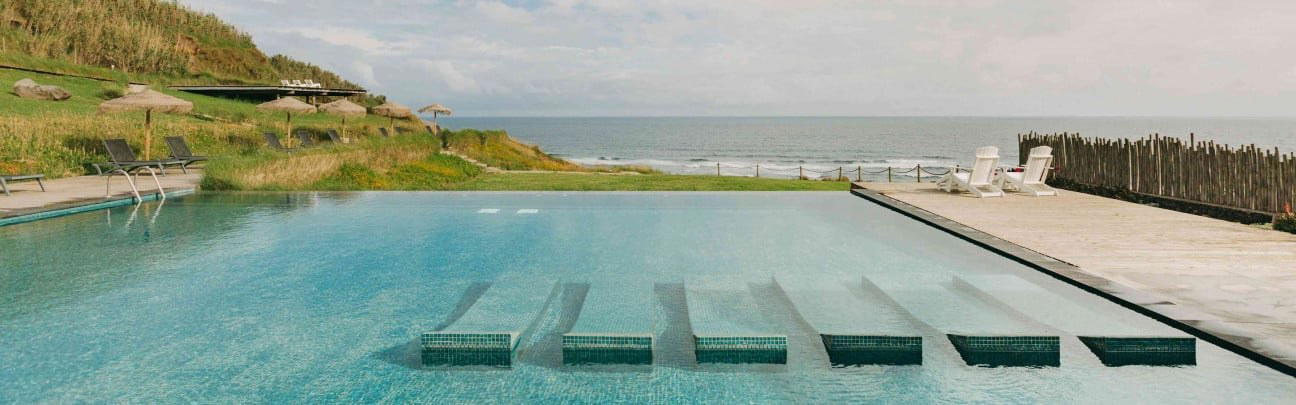
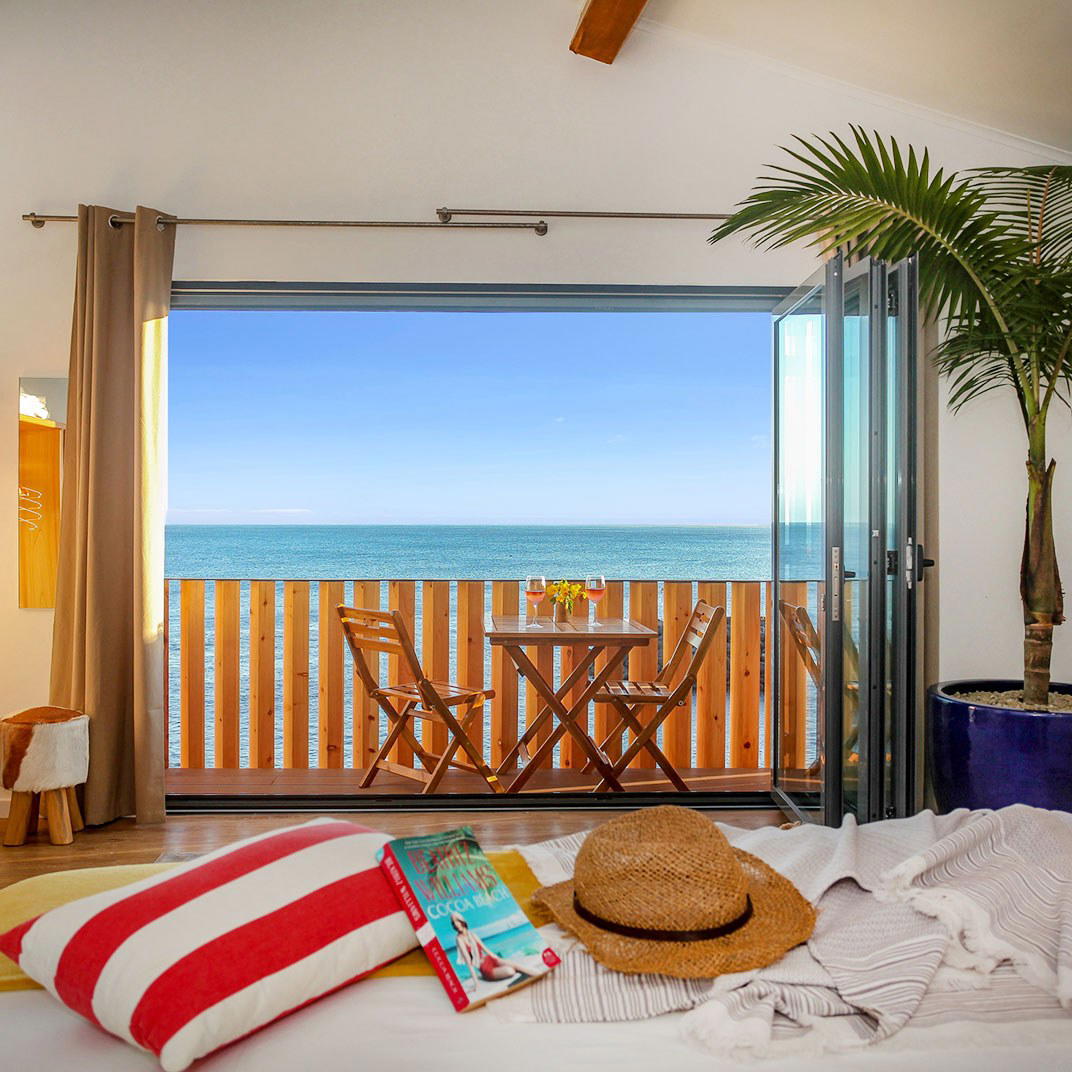
Warm, inviting atmosphere with a focus on shared energy and slowing down amidst volcanic landscapes and green views, well-suited for romantic tête-à-têtes.
Know Before You Go
- Getting there
- Avenida Dr. Manuel de Arriaga, 9675-022 Furnas, Portugal