A parish-road casa de pasto in the rural east of São Miguel, Casa de Pasto O Cardoso sits in Lomba da Fazenda, where volcanic pasture and Atlantic weather define what lands on the plate. This is the kind of address that Nordeste locals return to repeatedly, not because it chases any dining trend, but because the cooking stays close to what the land around it produces. Visitors who make the drive out from the main coastal road tend to eat better than those who stay in town.
Pearl is the En Primeur Club membership app — saves, bookings, and concierge access live there. Same editors, same standards.
- Address
- Estrada Regional 1 1 19, 9630-103 Lomba da Fazenda, Portugal
- Phone
- +351 296 486 138
- Website
- cdpcardoso.pt
- Directions
- Get directions
 Saves & bookings on Pearl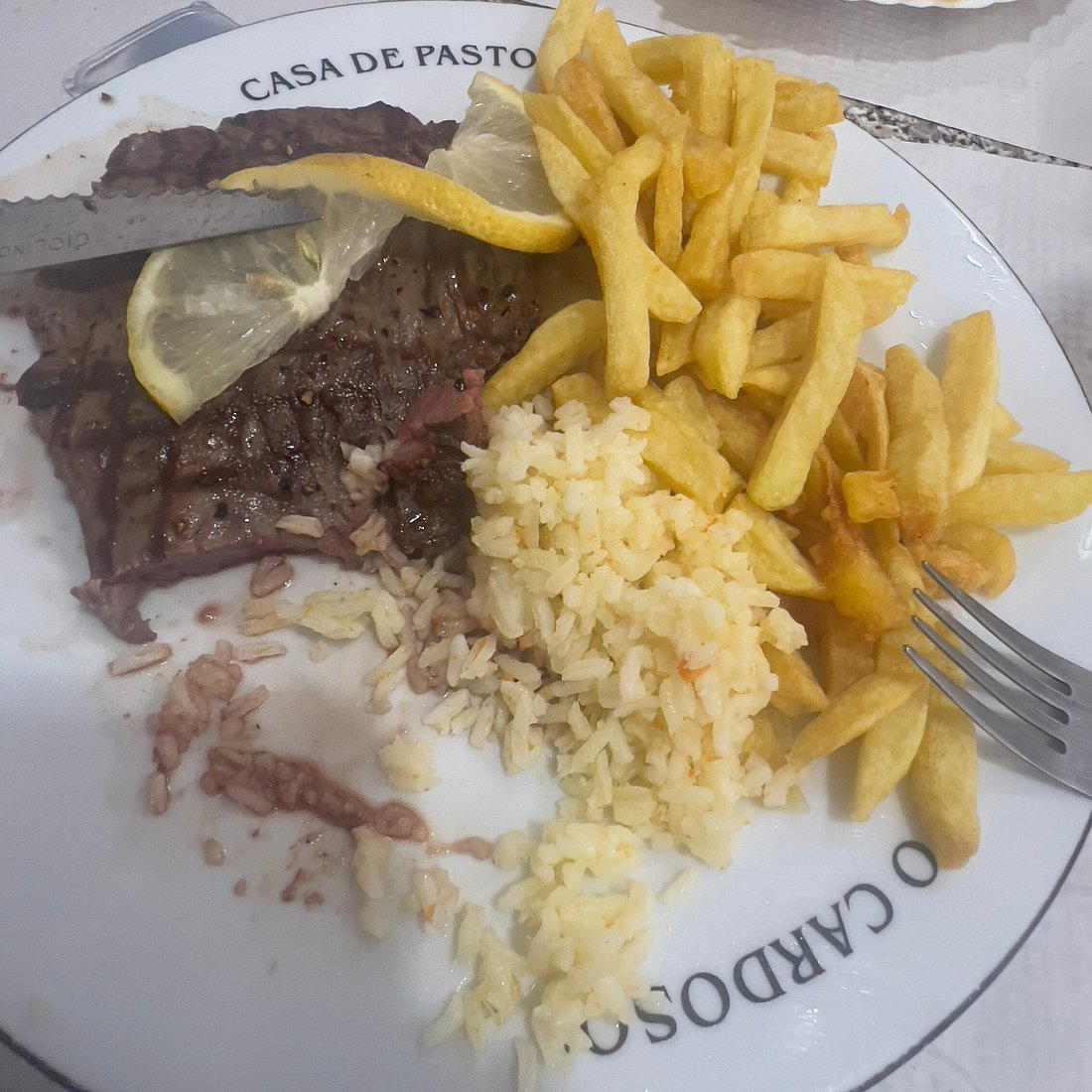
Where the Road Ends and the Cooking Begins
The eastern parishes of São Miguel are a different register from the tourist circuit of Ponta Delgada. Out along the Estrada Regional, past hydrangea-lined stone walls and fields that have been grazed by Azorean cattle for centuries, the settlements thin out and the signage becomes sparse. Lomba da Fazenda sits in this quieter zone of Nordeste, a parish of working farms and volcanic terrain where altitude and Atlantic exposure shape the agricultural calendar as much as any human decision. Casa de Pasto O Cardoso occupies a position on this road that reads less as a destination than as a fixture — the kind of place that earns its standing by being exactly what the surrounding landscape requires.
Portugal's casa de pasto tradition predates fine dining categorisation by several centuries. These are eating houses built around proximity: proximity to a market, to a harbour, to a particular farming community. The format is direct — a limited menu built from what the immediate region produces, cooked without ornamentation, and served at prices that reflect local economic reality rather than tourist margin. In the Azores, this format persists with more conviction than it does on the mainland, partly because the island supply chain still rewards local sourcing, and partly because the ingredient quality here makes elaboration unnecessary. The beef from Azorean pastures, the dairy from grass-fed herds, the fish pulled from water that has not yet been overfished, these are raw materials that hold up on their own terms.
Ingredient Geography: Why Nordeste Matters
São Miguel's eastern coast operates under a distinct microclimate compared to the island's warmer, more visited western end. The Nordeste municipality receives more rainfall and sits at higher elevation across significant stretches, conditions that produce some of the lushest permanent pasture in the Azorean archipelago. The cattle that graze these fields year-round on fresh grass yield beef with a depth of flavour that mainland equivalents, finished on mixed feeds or shorter grazing seasons, do not match. Azorean beef has long commanded recognition among Portuguese chefs who work with provenance-led menus, Belcanto in Lisbon and Casa de Chá da Boa Nova in Leça da Palmeira both operate in a national conversation where Azorean dairy and protein feature as prestige markers. At a roadside casa de pasto in Lomba da Fazenda, that same provenance arrives without the premium framing, because the source is literally the surrounding hillside.
The Azores also supply some of the most underrated seafood in the Portuguese kitchen. The deep cold water around São Miguel produces limpets, wrasse, and Atlantic blue-fin that don't make it to mainland markets in quantity. The fishing communities of the eastern parishes have access to this catch before it enters any distribution chain, which means a casa de pasto in Nordeste works with seafood at a freshness level that coastal restaurants further along Portugal's restaurant circuit cannot replicate through sourcing alone. For context on where the country's celebrated seafood cooking has gone at the fine-dining tier, Ocean in Porches and Vila Joya in Albufeira represent the Algarve end of that spectrum. The eastern Azores represent a different point on the same axis: maximum proximity, minimal intervention.
The Casa de Pasto Format and What It Demands of the Diner
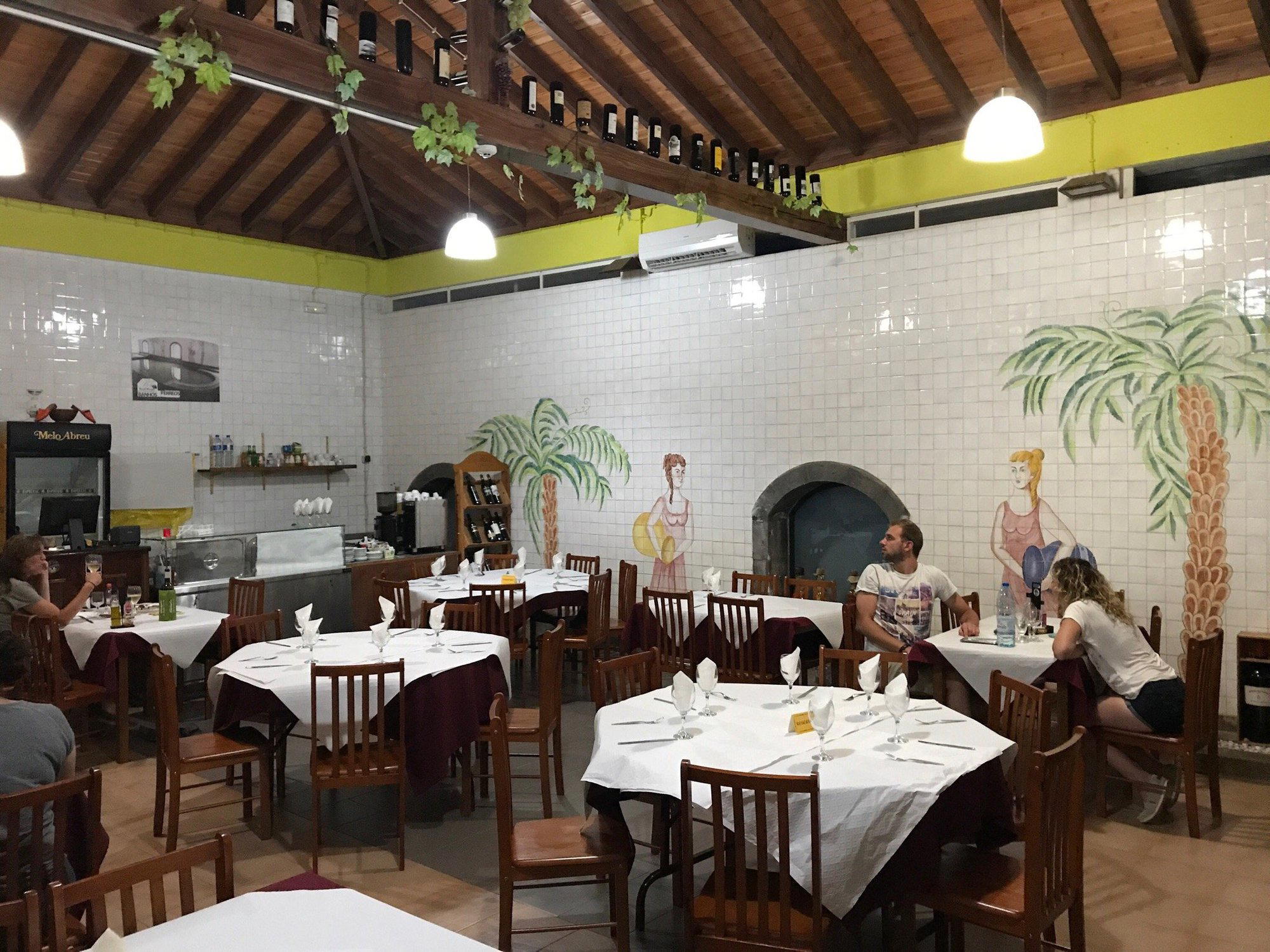
Eating well at a casa de pasto requires adjusting expectations formed by urban restaurant culture. There is no tasting menu architecture, no wine list curated by a sommelier, no front-of-house choreography. The menu is short because what's available that day is short. The room is functional because the function is feeding people, not staging an experience. Portugal's most decorated tables, The Yeatman in Vila Nova de Gaia, Antiqvvm in Porto, Fortaleza do Guincho in Cascais, operate at the other end of the service spectrum. A place like O Cardoso is their structural opposite, and that opposition is the point. The format rewards diners who engage with it correctly: arrive without fixed expectations, ask what's available, eat what the kitchen knows how to cook, and judge the meal against the ingredients rather than against any imported standard.
This is also a format that places significant responsibility on the kitchen. Without elaborate technique or presentation to carry a dish, the cooking has to be sound. Azorean cozinha tradicional relies on long-standing methods: slow braises, open-fire grilling, cured fish preparations, and potato and kale combinations that have fed these parishes through hard winters for generations. The alcatra, a slow-cooked beef stew from the island of Terceira that has spread across Azorean cooking, is a useful reference point, a dish that asks for nothing except time, good meat, and honest execution. The eastern parishes of São Miguel produce the conditions for exactly that kind of cooking.
Getting to Lomba da Fazenda
Nordeste is not difficult to reach from Ponta Delgada, but it does require commitment. The drive east along the coastal EN1-1A takes roughly an hour under normal conditions, and the road into the Lomba da Fazenda area adds time and requires comfort with narrow rural lanes. Car rental is effectively non-negotiable for this part of São Miguel; bus connections to the eastern parishes exist but operate on schedules designed for residents rather than visitors. The payoff is a stretch of island that functions on its own terms, with the volcanic ridgeline to the north and terraced agricultural land falling toward the sea. The address at Estrada Regional 1 1 19 places O Cardoso in the kind of location where GPS navigation is useful but not entirely reliable on older map data, local direction-asking remains a practical skill in this part of the Azores.
For visitors building a fuller picture of Portuguese restaurant culture before or after a trip to the Azores, Il Gallo d'Oro in Funchal offers a Michelin-starred Madeiran comparison point, while on the mainland, Mesa de Lemos in Passos de Silgueiros, Ó Balcão in Santarém, and Palatial in Braga each work within regional sourcing frameworks that share the same underlying logic as Azorean cozinha de proximidade. At a different scale entirely, Lab by Sergi Arola in Sintra, Gusto by Heinz Beck in Almancil, Oculto in Vila do Conde, and Al Sud in Lagos represent the creative-contemporary tier that a roadside Azorean casa de pasto deliberately sits apart from. Internationally, the community-rooted format that O Cardoso occupies has parallels in places like Lazy Bear in San Francisco and the sourcing philosophy of Le Bernardin in New York City, though the price points and contexts are separated by an ocean and a different dining culture entirely.
At a Glance
- Rustic
- Cozy
- Classic
- Family
- Casual Hangout
- Standalone
Current opening hours
- Monday
- 12–3 PM
- Tuesday
- 12–3 PM
- Wednesday
- 12–3 PM
- Thursday
- 12–3 PM
- Friday
- 12–3 PM
- Saturday
- 12–3 PM
- Sunday
- 12–3 PM
Hours can change for holidays and private events. Last verified .
Relaxed and pleasant family atmosphere with a lively Portuguese buzz.
Know Before You Go
- Getting there
- Estrada Regional 1 1 19, 9630-103 Lomba da Fazenda, Portugal