


At the upper edge of Fisterra, Ó Fragón positions itself around what the fish auction and local market deliver each morning. The kitchen works à la carte and two tasting menus, drawing a Michelin Plate recognition in 2025 for market-led Galician cooking with views across the port, estuary, and Langosteira beach. The cheese board, built from artisanal Galician producers and served with homemade bread, is reason enough to stay for a third course.
Pearl is the En Primeur Club membership app — saves, bookings, and concierge access live there. Same editors, same standards.
- Address
- Lugar San Martiño de Arriba, 22, 15154 Fisterra, A Coruña, Spain
- Phone
- +34 981 74 04 29
- Website
- ofragon.es
 Saves & bookings on Pearl
Where the Atlantic Decides the Menu
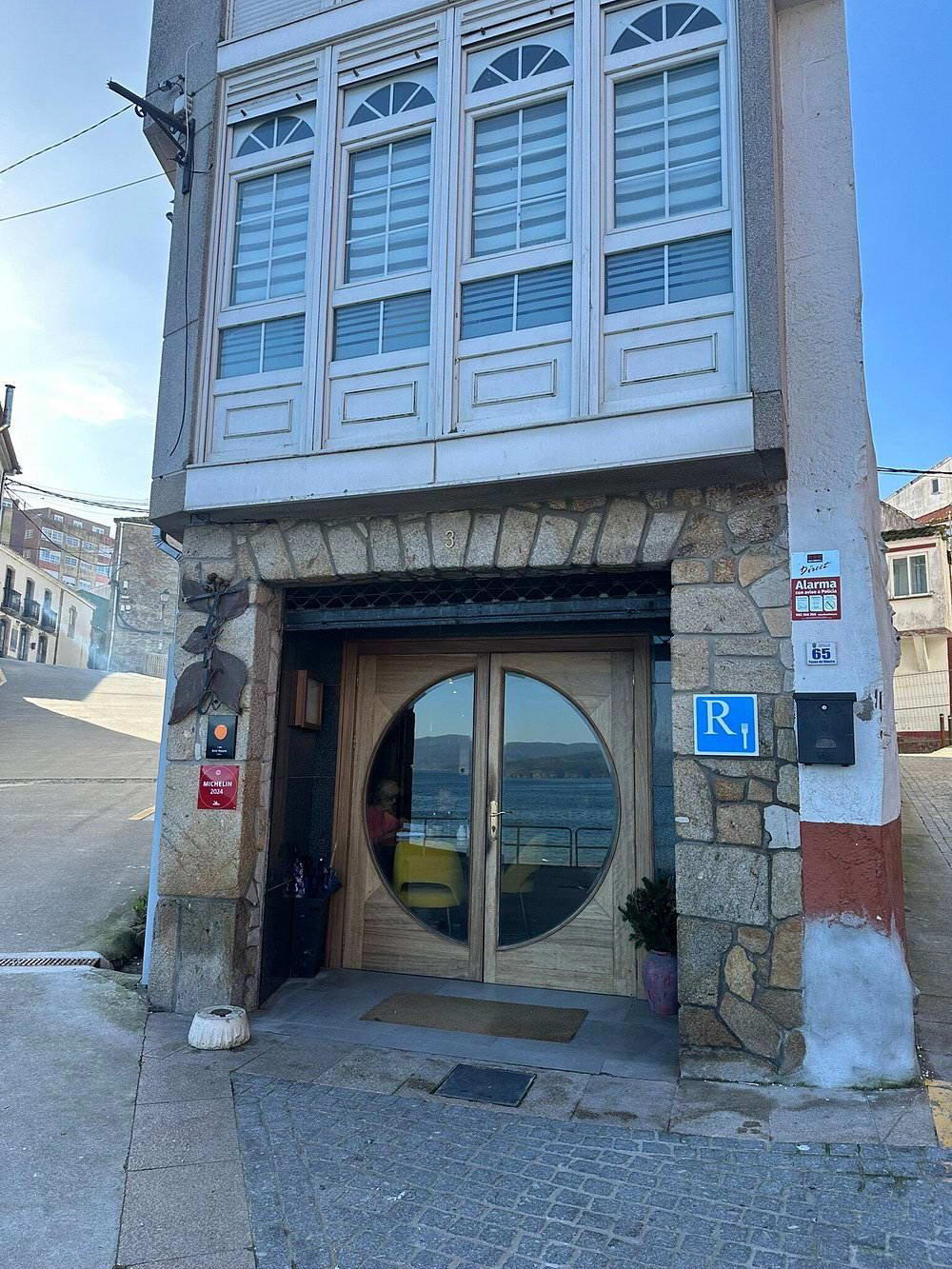
Fisterra sits at the edge of the known world, or at least that is how medieval pilgrims understood it, the westernmost point of the Iberian peninsula, where the Camino de Santiago trails off into clifftop wind and open ocean. The town's relationship with the sea is economic reality. The fish auction at the port shapes the city's leading restaurants. Ó Fragón, positioned in the upper part of town at Lugar San Martiño de Arriba, works exactly on that model: the menu reflects what came off the boats, and the view from the dining room frames the port, estuary, and the long arc of Langosteira beach below.
That elevation is not incidental. It places the room above the noise of the harbour while keeping the water in clear sight, and it gives the kitchen a useful framing device. You are eating seafood pulled from the water you can see. In a region where provenance claims have become routine marketing language, that visual argument is more direct than most.
Market Sourcing as a Kitchen Discipline
Galicia has the longest coastline of any Spanish autonomous community and a fishing infrastructure that supplies much of northern Europe. What that means in practice, for a kitchen in Fisterra, is access to a daily fish auction where the catch arrives, is graded, and moves to buyers within hours. Ó Fragón's menu is built around availability at that auction rather than fixed seasonal templates, which means the à la carte shifts and the tasting menus adjust when the catch does.
This is not an unusual claim in Galician coastal cooking, but it carries different weight depending on how closely a kitchen actually tracks the market. The Tira do Cordel, also in Fisterra, operates in the same sourcing tradition, giving visitors to the town two distinct interpretations of the same raw material. The comparison is instructive: Galician coastal restaurants in this tier are increasingly differentiated not by ingredient access, which is broadly shared, but by what the kitchen does with it once the fish is on the block.
Ó Fragón's answer is a modernised treatment that remains legible as Galician. The kitchen does not pursue the kind of technical abstraction found at the upper tier of Spanish fine dining, places like Aponiente in El Puerto de Santa María or Disfrutar in Barcelona, where the source ingredient can become almost unrecognisable. The cooking here is updated, not transformed. That is a deliberate position in the current Galician scene, where particularly interesting restaurants sit between raw-product simplicity and full creative reinvention.
The Cheese Course as a Signal
One detail from the venue's description deserves more attention than it usually gets: the cheese board. Artisanal Galician cheeses served with homemade bread is a specific commitment, not a generic gesture. Galicia produces a range of protected-designation cheeses, Arzúa-Ulloa, Tetilla, San Simón da Costa, and the artisanal tier within each category varies considerably. A kitchen that assembles a serious regional cheese selection is telling you something about how it thinks about sourcing beyond the fish auction: the same logic that drives daily market visits applies to dairy, and the homemade bread signals that the kitchen is not outsourcing the easy parts.
In the broader context of Spanish fine dining, cheese courses have long been the neglected middle chapter between savory and dessert. The El Celler de Can Roca in Girona and Arzak in San Sebastián operate at a tier where cheese trolleys become statements in themselves. At Ó Fragón's price point, priced in the €€ range, which places it well below destination tasting-menu territory, a well-curated Galician cheese selection reads as genuine regional investment rather than luxury padding.
Michelin Recognition and Its Context
The 2025 Michelin Plate designation places the restaurant within the Guide's acknowledged tier below starred restaurants, a recognition of food quality. In a region where Galician cooking spans everything from harbour-front pulperías to destination tasting-menu rooms, a Plate signals that the kitchen is cooking with care and that the food is the primary reason to visit.
For comparative reference, the Galician dining scene at the refined end includes As Garzas in Barizo and Ceibe in Ourense, both working with regional produce at different price points. Nationally, the starred Spanish kitchens that most closely share the restaurant's product-first philosophy include Mugaritz in Errenteria and Quique Dacosta in Dénia, though both operate at a technical and price level several tiers above. The Plate recognition means the restaurant is cooking at a level the Guide considers worth the detour, which in a town already drawing pilgrims and coastal tourists is a meaningful marker.
Planning Your Visit
Fisterra is not a casual urban drop-in. The town sits at the western tip of the Costa da Morte, reached from Santiago de Compostela in roughly 90 minutes by car, and from A Coruña in a comparable drive along the coast. Most visitors arrive as part of the Camino's final leg or as deliberate Atlantic-coast travellers. Given that framing, the restaurant sits in the upper part of town at Lugar San Martiño de Arriba, 22, a location that requires intent to reach but rewards it with the views noted above.
The €€ pricing makes the restaurant accessible without the advance financial planning that destination tasting menus require. Two formats, à la carte and two tasting menus, give different levels of commitment to the kitchen's current direction. The à la carte is the more flexible option for first visits or when the catch of the day matters more than a structured progression. For those who want to see how the kitchen shapes a narrative around the market, the tasting menu format is the better test.
For broader planning across Fisterra, EP Club's guides cover the full picture: our full Fisterra restaurants guide, hotels guide, bars guide, wineries guide, and experiences guide provide the context for building a full itinerary. For other reference points in Spain's upper-tier dining, Azurmendi in Larrabetzu, DiverXO in Madrid, Martin Berasategui in Lasarte-Oria, and Ricard Camarena in València define different ends of the national creative range.
Book ahead during the summer coastal season and around the peak Camino months of June through September, when both pilgrims and Atlantic-coast visitors converge on the town and table availability tightens across all of Fisterra's better kitchens.
A Quick Peer Check
Comparable venues nearby, for context on price, style, and recognition.
| Venue | Cuisine | Price | Awards | Notes |
|---|---|---|---|---|
| Ó Fragón | Modern Galician Seafood | $$$ | Michelin Plate | San Martiño de Arriba |
| Tira do Cordel | Traditional Galician Grilled Seafood | $$ | Michelin Plate | Fisterra |
| Terra | Modern Galician Fine Dining | $$$$ | Michelin 1 Star | Fisterra |
| Lume | Contemporary Galician Tasting Menu | $$$ | Michelin Plate | Santiago de Compostela |
| Posta do Sol | Traditional Galician Seafood | $$$ | Michelin Plate | Cambados |
| Divino Steak House | Galician Steakhouse | $$$ | Michelin Plate | Culleredo |
Recognition history
Dated appearances from independent guides and award organizations, with the underlying list record or original source where available.
Guía Repsol 1 Sol
Guía Repsol
Macarfi 8 Food Rating
Macarfi
Michelin Plate
Michelin
Michelin Plate
Michelin
Continue exploring
More in Fisterra
Restaurants in Fisterra
Browse all →
Wineries in Fisterra
Browse all →
At a Glance
- Modern
- Scenic
- Rustic
- Date Night
- Special Occasion
- Panoramic View
- Extensive Wine List
- Local Sourcing
- Waterfront
- Street Scene
Current opening hours
- Monday
- 1:15–5:30 p.m.
- Tuesday
- Closed
- Wednesday
- Closed
- Thursday
- Closed
- Friday
- 1:15–5:30 p.m.
- Saturday
- 1:15–5:30 p.m.
- Sunday
- 1:15–5:30 p.m.
Hours can change for holidays and private events. Last verified .
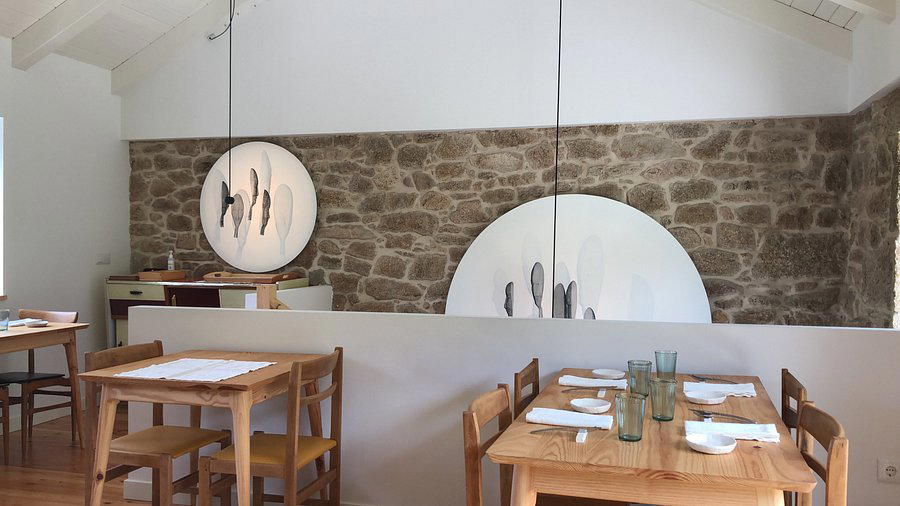
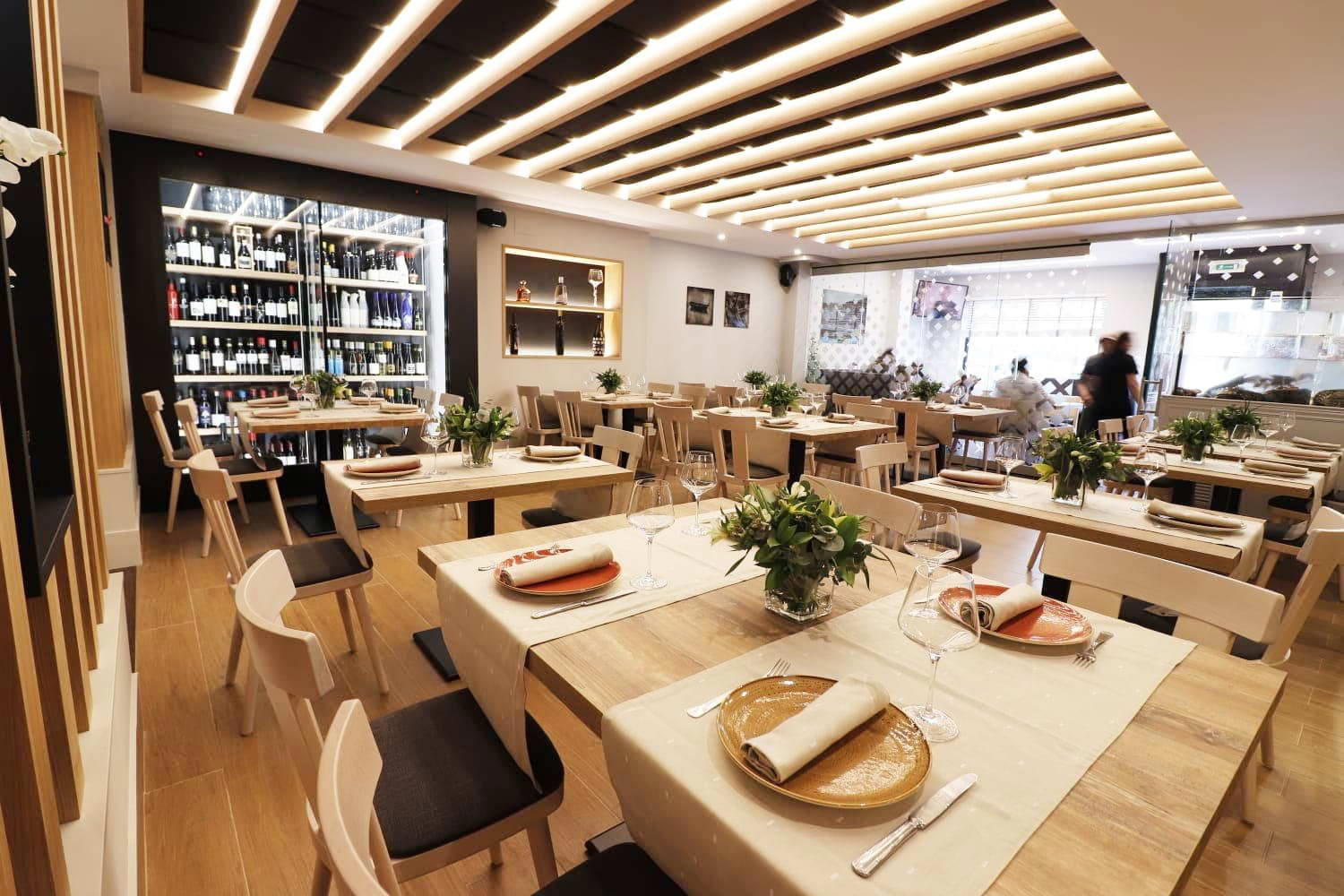
Minimalist modern interior with large windows offering dramatic sea views, described as austere yet magical with a quiet, sophisticated atmosphere.