

Zannier Omaanda sits on the N/a'an Ku Sê wildlife sanctuary east of Windhoek, where fifteen huts built from clay and thatch accommodate guests in a format that balances traditional Namibian architectural references with walk-in rain showers and freestanding tubs. Recognised by La Liste's Top Hotels with 90.5 points in 2026, it anchors the upper tier of southern African lodge design — where the terrain, not the interiors, is the primary draw.
 Discover on Pearl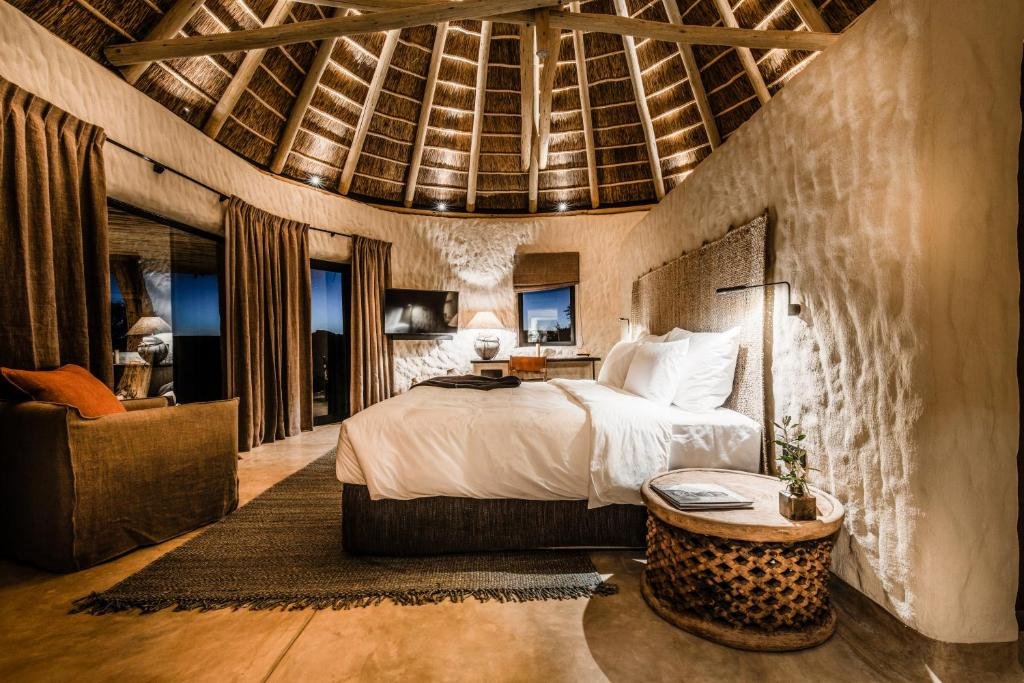
Where the Architecture Answers to the Land
The approach to Zannier Omaanda establishes the terms of the stay before you reach the lodge itself. Acacia scrub gives way to open savannah, and the thatched rooflines of the huts appear low against the horizon, as if pressed down by the sky rather than built up from the ground. This is deliberate. Southern African lodge design has long wrestled with a fundamental tension: how to deliver the material expectations of luxury travel while remaining visually subordinate to an environment that emphatically does not need improving. Omaanda, on Farm no. 78 of the Ondekaremba property east of Windhoek, works from a clear position on that question.
The fifteen guest huts draw their external language from traditional Namibian vernacular architecture: clay walls, curved forms, and dense thatch roofing that insulates as effectively as it references. These are not cosmetic gestures. The material choices carry genuine climatic logic in a region where daytime heat and cold desert nights demand walls that regulate temperature rather than simply contain space. In this respect, Omaanda belongs to a broader movement in high-end African hospitality that treats indigenous building traditions as engineering solutions rather than decorative motifs. Epako Safari Lodge & Spa in the Omaruru district and Gmundner Lodge in Dordabis both operate within the same regional idiom, though at different scales and with different degrees of intervention.
The Interior Proposition
Step through the threshold and the vernacular references coexist with the full infrastructure of contemporary luxury. Picture windows run wide across the views facing the sanctuary, framing the savannah in a way that makes the landscape feel curated even when it is entirely wild. Freestanding tubs and walk-in rain showers are present in each hut, not as gestures of excess but as the category standard at this price point, where rates begin around $424 per night. At fifteen rooms, Omaanda operates at the scale where privacy is structural rather than managed: the hut count is low enough that encounters with other guests are incidental.
The comparison most naturally invited is with Zannier Sonop in the Namib Desert, the sister property under the same group. Sonop operates in canvas, leaning into the theatrical impermanence of the Namib's landscape. Omaanda's clay walls make a more permanent claim on its terrain. Neither is definitively more luxurious than the other — La Liste's 2026 ranking placed Omaanda at 90.5 points, a score that positions both properties inside the same premium tier — but the experiences diverge in register. Sonop's canvas format produces a lighter, more provisional feeling; Omaanda's enclosed, clay-walled huts suggest rootedness. For guests whose preference runs toward the classic high-end safari format, that distinction matters.
For the widest possible frame of reference, properties like Amangiri in Canyon Point have made a comparable architectural argument in a different geography: that poured concrete and desert rock can produce interiors that feel as much excavated as constructed. Omaanda's approach is warmer in palette and softer in form, but the underlying editorial instinct , use local material logic to root a luxury property in its specific landscape , is the same.
What the Sanctuary Provides
The N/a'an Ku Sê wildlife sanctuary is the substance of the Omaanda stay. The lodge sits within its boundaries, which means game drives operate at sunrise and sunset with a focus that ranges across rhinos, elephants, big cats, and meerkats depending on the excursion format. This is not the open-vehicle, distance-dependent game viewing of the larger southern African parks; the sanctuary's managed environment means encounters can be structured around specific species in ways that larger, wilder reserves cannot always guarantee.
Al fresco three-course dinners, an infinity pool, and spa treatments complete the in-lodge offering. These are standard at this tier across the continent , properties from Shipwreck Lodge on the Skeleton Coast to andBeyond Sossusvlei Desert Lodge near Sesriem carry the same core amenities , but at Omaanda they function as a supporting frame for the sanctuary access rather than the primary draw. Guests who arrive primarily for spa treatments and pool time would do better to assess city or coastal properties first. Guests who arrive for the wildlife, and want a considered architectural context for that experience, are in the right place.
Where Omaanda Sits in the Namibian Context
Namibia's premium lodge market has expanded significantly over the past decade, with properties across the Namib, the Skeleton Coast, and the central plateau now competing for the same high-spend travellers. Within that market, proximity to Windhoek is a specific advantage: Omaanda is reachable without a domestic flight, which reduces the logistical complexity of a Namibian itinerary at its opening night. For guests arriving internationally and building a multi-property trip, that positions Omaanda as a logical first or last stop rather than a detour.
The N/a'an Ku Sê sanctuary itself carries conservation credentials that sit outside the standard lodge-marketing register. It operates rehabilitation programs for injured and orphaned wildlife, which means the animals guests encounter have often had documented histories with the sanctuary rather than being part of undifferentiated wild populations. Whether that adds or subtracts from a guest's sense of authentic wildlife experience is a matter of individual preference, but it is worth understanding before arrival.
For further context on what the Windhoek region offers across categories, our full Windhoek hotels guide, our Windhoek restaurants guide, and our Windhoek experiences guide cover the wider city offering. The bars guide and wineries guide round out the picture for those spending time in the city itself. Among global reference points for design-led wilderness lodges, properties including Hotel Esencia in Tulum and Castello di Reschio in Umbria share Omaanda's instinct to let a site's material and ecological character drive the design conversation, even when the landscape category differs entirely.
Planning Your Stay
Rates start at approximately $424 per night, situating Omaanda in the premium segment of the Namibian market. With fifteen rooms across the property, availability at peak travel periods , broadly May through October, when dry-season conditions produce the clearest game viewing , will require advance planning. The lodge is located on Farm no. 78, Ondekaremba, east of Windhoek, accessible by road from the capital without domestic air connections. For guests whose interests span a broader set of African design-led properties, the peer set includes Epako Safari Lodge & Spa and, farther afield in the Namibian desert, Zannier Sonop.
Frequently Asked Questions
Comparison Snapshot
These are the closest comparables we have in our database for quick context.
| Venue | Cuisine | Price | Awards | Notes |
|---|---|---|---|---|
| Zannier Omaanda | La Liste Top Hotels: 90.5pts | This venue | ||
| Epako Safari Lodge & Spa | ||||
| Gmundner Lodge | ||||
| andBeyond Sossusvlei Desert Lodge | ||||
| Shipwreck Lodge | ||||
| Zannier Sonop |
Preferential Rates?
Our members enjoy concierge-led booking support and priority upgrades at the world's finest hotels.
Get Exclusive Access