Rising from Subarna Shamsher Marg in central Kathmandu, Varnabas Museum Hotel combines a modern architectural presence with Nepalese heritage at its core. The property ascends through layers of considered design, culminating in a rooftop pool that positions it among the city's vertically ambitious hotels. For travellers seeking a base that engages with local culture rather than insulating from it, Varnabas occupies a distinct tier in the Kathmandu market.
 Discover on Pearl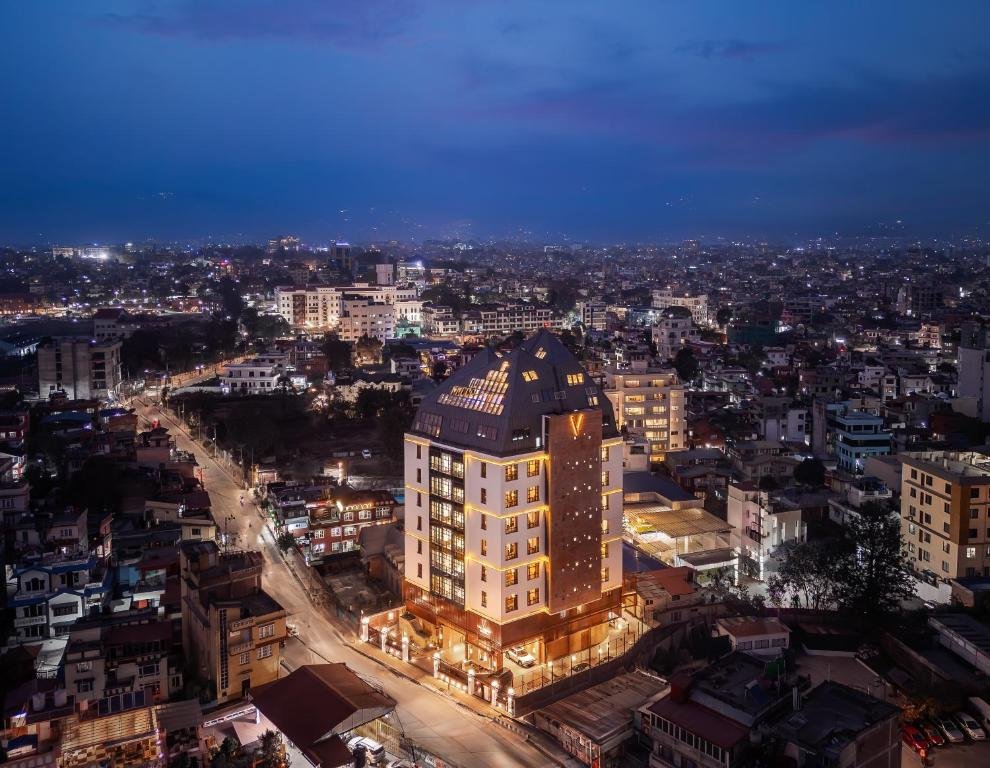
A City That Builds Upward, and a Hotel That Follows
Kathmandu has always been a city of vertical ambition — stupas that press skyward, temples stacked on tiered plinths, mountain views that dominate every rooftop conversation. The hotel sector has followed that logic in recent years, with a cohort of properties competing on elevation as much as heritage, offering rooftop pools and skyline views as an extension of the city's relationship with altitude. Varnabas Museum Hotel, on Subarna Shamsher Marg, sits inside that trend with particular conviction: its modern edifice rises through the street-level density of Kathmandu, and guests ascend through successive layers of the building toward a pool that skims the city's skyline.
That vertical narrative is more than an architectural gesture. In a city where the horizon is defined by the Himalayan range, positioning a rooftop amenity as the literal pinnacle of the guest experience is a considered piece of placemaking. The approach connects Varnabas to a broader shift in Kathmandu hospitality, where the divide between locally rooted properties and internationally formatted hotels has sharpened. On one side sit institutions like The Dwarika's Hotel, which has spent decades anchoring its identity in Newari craft and courtyard architecture. On the other, newer properties have pressed toward contemporary design languages while still weaving Nepalese heritage through their interiors.
Varnabas occupies the latter space. The hotel's interior makes Nepalese heritage the organizing principle of its design, rather than a decorative afterthought. That commitment, sustained through a modern architectural shell, is what gives the property its editorial identity within Kathmandu's competitive hotel set.
The Dining Programme: Heritage on the Plate
The editorial angle on any hotel in Kathmandu inevitably returns to food, because the city's culinary tradition is one of the more underexamined in South Asia. Nepalese cuisine operates across registers — from the simplicity of dal bhat, which functions as both comfort food and cultural anchor, to more elaborate preparations that draw on Newari ceremonial cooking traditions, Tibetan influence from the north, and Indian technique from the south. Hotels that engage seriously with this range, rather than defaulting to a pan-Asian menu and a token momo offering, occupy a different category in the market.
Kathmandu's premium hotel dining has historically been split between properties that use their restaurants as cultural showcases and those that prioritise international familiarity for foreign business travellers. The shift toward the former has accelerated as the city's incoming traveller profile has changed, with experiential tourism and trekking-adjacent luxury drawing guests who expect their hotel meals to extend, rather than interrupt, their engagement with place.
For a full picture of where Varnabas sits within the city's broader dining ecosystem, our full Kathmandu restaurants guide maps the scene by neighbourhood and register. Properties like Varnabas, which position heritage at the centre of the guest experience, are most meaningfully assessed alongside that wider context rather than in isolation.
Kathmandu's Hotel Tier: Where Varnabas Positions Itself
Understanding Varnabas requires a brief survey of how Kathmandu's premium hotel market is structured. The city has a defined upper bracket occupied by legacy properties with deep archival identities, and a growing middle tier of design-conscious hotels that arrived in the past decade with more contemporary formats. The Dwarika's Hotel remains the reference point for the heritage category, having built its reputation over decades of artisan restoration and cultural programming. Dwarika's Sanctuary in Dhulikhel extends that identity into the Himalayan foothills for guests willing to travel beyond the valley. At the more remote end of the spectrum, The Happy House in Phaplu operates in the Solu Khumbu region, serving a trekking-focused clientele at altitude.
Varnabas sits between the legacy heritage tier and the new-build contemporary category, drawing on both without fully belonging to either. Its modern structure is legible as a design hotel in the international sense, but its interior programming, anchored in Nepalese cultural material, resists that classification. That ambiguity is, in context, a coherent position: the property appeals to travellers who want design-forward comfort without surrendering the sense that they are somewhere specific.
For travellers building a wider Nepal itinerary or weighing Kathmandu hotel options before a trek, our full Kathmandu hotels guide provides the comparative framework. Those looking for nightlife and cocktail options around the city can consult our full Kathmandu bars guide, while our full Kathmandu experiences guide covers cultural programming and activity planning.
The Rooftop as Destination
In Kathmandu, the rooftop is a functional category as much as an amenity. The city's density at street level means that elevation offers not just views but also air, light, and the particular pleasure of seeing the Himalayan skyline without obstruction. Properties that invest seriously in rooftop infrastructure are betting on that spatial logic, and the bet generally pays in the premium segment.
The Varnabas rooftop pool, positioned as the hotel's apex experience, delivers on that premise. Whether guests use it for a morning swim with mountain views or as an evening social space, the pool functions as the property's clearest argument for its place in the market. Few urban amenities in Kathmandu offer the same combination of altitude and accessibility from a city-centre address.
For reference, design-led properties elsewhere that have used vertical amenities as their primary differentiator include Hotel Bel-Air in Los Angeles and Bvlgari Hotel Tokyo in Tokyo, both of which use signature outdoor spaces to anchor the guest experience within their respective urban contexts.
Planning Your Stay
Varnabas Museum Hotel is located on Subarna Shamsher Marg in central Kathmandu, placing it within reasonable reach of Thamel, Durbar Square, and the main trekking outfitter district. Kathmandu's peak travel seasons run broadly from October through November and from March through May, when trekking conditions in the surrounding ranges are most favourable and demand for premium accommodation in the city is highest. Guests planning stays in those windows should book with appropriate lead time. The hotel's website and direct reservation details are not currently listed in our database; contacting the property through its Subarna Shamsher Marg address or through a booking intermediary is the most direct route. Travellers with wider dining curiosity can also consult our full Kathmandu wineries guide for context on the city's emerging wine and spirits scene.
Frequently Asked Questions
Budget Reality Check
A fast peer set for context, pulled from similar venues in our database.
| Venue | Price | Awards | Notes |
|---|---|---|---|
| Varnabas Museum Hotel | Varnabas Museum Hotel has a certain mountain-like quality. Its modern edifice ri… | This venue | |
| The Dwarika's Hotel | |||
| Dwarika’s Sanctuary | |||
| The Happy House |
Preferential Rates?
Our members enjoy concierge-led booking support and priority upgrades at the world's finest hotels.
Get Exclusive Access