Thomahof

Thomahof is a Michelin Selected hotel in Hinterzarten, a spa village at the heart of the Black Forest that draws a quieter, more considered traveller than the Rhine Valley corridor. The property sits within a region where the physical fabric of a building, its relationship to forest and altitude, tends to define the experience more than amenity lists or restaurant stars.
Pearl is the En Primeur Club membership app — saves, bookings, and concierge access live there. Same editors, same standards.
- Address
- Erlenbrucker Straße 16, Hinterzarten, Germany
- Phone
- +49 7652 1230
 Saves & bookings on Pearl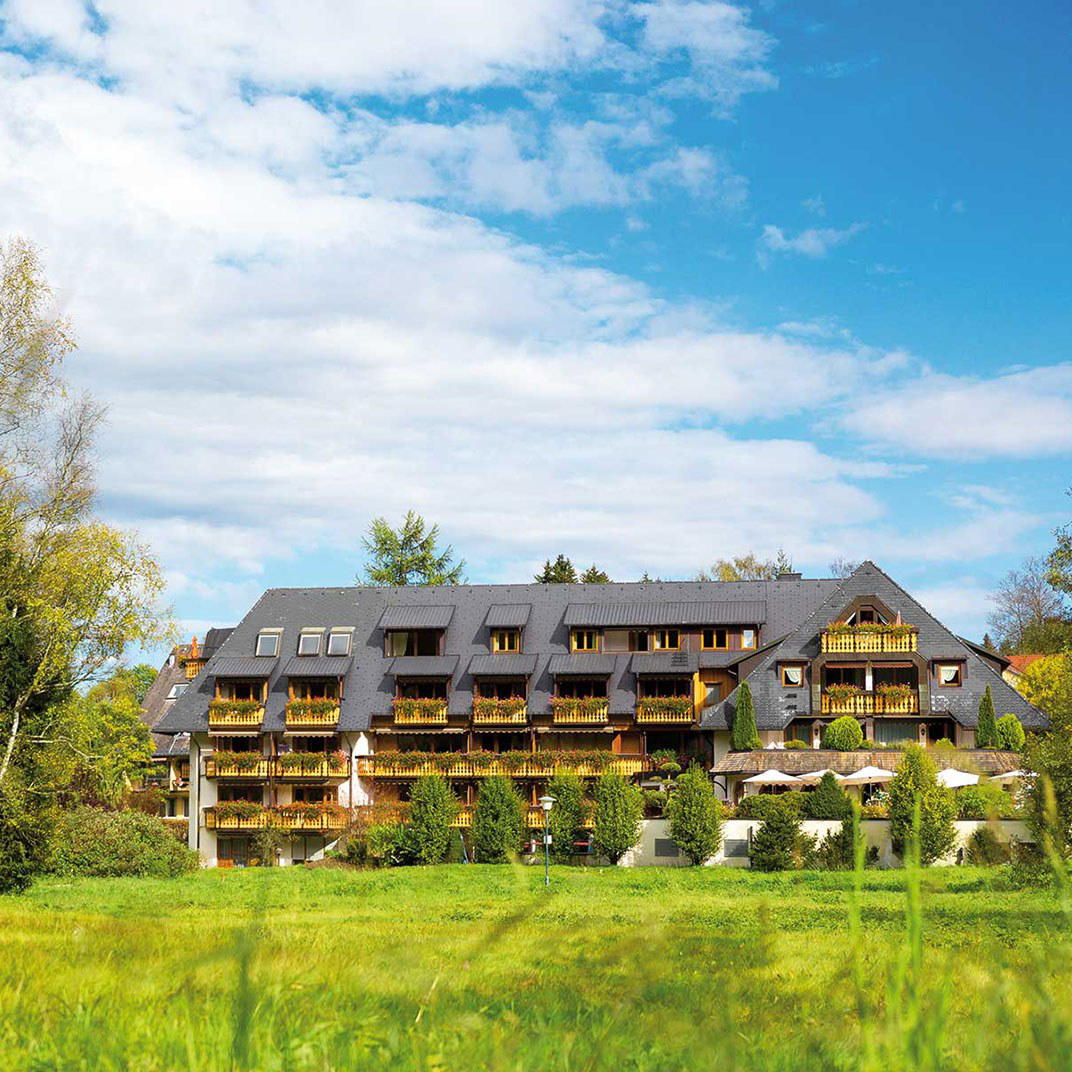
Where the Black Forest Sets the Terms
Hinterzarten occupies a plateau in the southern Black Forest at roughly 900 metres above sea level, and the altitude is not incidental. The air quality, the pace, and the architectural grammar of the village all respond to the elevation. It is a place with a century-long tradition of wellness, unhurried walking routes, and timber-frame buildings that sit comfortably within the surrounding fir canopy. In that context, Thomahof does not need to make a loud architectural statement to position itself. Its 4-star classification and 45 rooms place it among smaller Black Forest hotels where setting and scale shape the stay.
The Physical Logic of the Property
The architectural conversation in villages like Hinterzarten tends to follow one of two paths: either a building asserts a contemporary design language that stands apart from the vernacular, or it absorbs the regional idiom, using pitched roofs, wood cladding, and fenestration scaled to the forest rather than to a lobby spectacle. Thomahof, addressed at Erlenbrucker Straße 16, sits in the latter tradition. Properties in this register read differently from the outside than they photograph, and that gap between image and presence is often the point. The approach through a quiet residential street, with mature trees filtering the sightlines, conditions the arrival before a single interior element registers. That compression of expectation is a design choice, even when it looks like accident.
This contrasts directly with the design ambition of larger German luxury hotels, where arrival sequences are engineered for impact. The Fairmont Hotel Vier Jahreszeiten in Hamburg, for instance, commands an Alster lakefront position and deploys a grand civic facade that signals urban prestige immediately. Breidenbacher Hof in Düsseldorf operates in a similar register, using neoclassical bones to anchor a city-centre address. Thomahof belongs to neither of those categories. Its comparable set is closer to the quieter forest properties: places like Luisenhöhe in Horben, which occupies a comparable Black Forest position, or Das Kranzbach in Kranzbach, another Michelin Selected property where the building's relationship to an alpine landscape is the dominant editorial fact.
Black Forest Hotel Architecture as a Category
The Black Forest has developed a hotel typology that is worth understanding on its own terms. The region's premium properties are not trying to replicate the grandeur of Alpine resorts in Bavaria or Austria, nor the design-hotel density of a city like Frankfurt or Berlin. They tend to work in a register of substantive quiet: solid construction, generous room volumes, and a deliberate refusal to over-programme. The leading examples of this form prioritise physical comfort, spatial generosity, and access to forest landscape over restaurant prestige or brand affiliations. Hotel Traube Tonbach in Baiersbronn sits at the higher-profile end of that spectrum, with multiple Michelin-starred restaurants that give it a national and international culinary reputation. Der Öschberghof in Donaueschingen anchors its identity around golf.
Hinterzarten in the Broader German Spa Village Tradition
Germany's spa village tradition produces a distinctive type of guest: someone self-selecting for a stay that is structured around walking, rest, and the gradual decompression that altitude and clean air accelerate. Hinterzarten has operated in this tradition for over a century, and its visitor profile differs from, say, the wellness-resort traveller in the Bavarian Alps, who may be optimising for a spa facility spec sheet. The Hinterzarten traveller tends to want the village itself to be part of the experience. That means easy access to cross-country skiing routes in winter, the Hochschwarzwald plateau trails in summer, and a village centre that remains functional and unpretentious rather than boutique-ified. The Parkhotel Adler is the village's more prominent address, with a longer public profile and broader amenity set. Thomahof operates at a lower profile within that same village context, which for certain travellers is a reason to choose it rather than an argument against it.
Comparable Properties in the German Wellness and Forest Tier
For travellers calibrating Thomahof against the wider German market, a few reference points are useful. Gut Steinbach in Reit im Winkl occupies a similar mountain-village position in Bavaria, Michelin Selected and oriented around natural landscape rather than urban amenity. Althoff Seehotel Überfahrt in Rottach-Egern anchors a lake position rather than a forest one, but shares the southern German landscape ethos. At the higher complexity end, Schloss Elmau in the Bavarian Alps represents what happens when a property of this architectural character acquires a cultural programme and an international profile: the physical bones remain the story, but the programming layers compound dramatically. Thomahof, as currently documented, sits closer to the quieter end of that range, and the Michelin Selected distinction confirms it meets the baseline of editorial credibility without implying the same programming depth as Elmau.
Planning a Stay
Thomahof is reached most easily via Freiburg im Breisgau, approximately 30 kilometres to the west, which is served by regular intercity rail from most major German cities and connects to Hinterzarten via the Höllentalbahn, one of the more scenically considered train routes in the southwest of the country. For guests arriving by road, the B31 from Freiburg through the Höllental provides the same dramatic elevation gain and forest approach. The Michelin Selected designation applies to the 2025 edition of the guide, making it a current credential rather than a historical one. Prospective guests should book in advance, especially during the peak summer hiking season and the winter cross-country ski season.
How It Stacks Up
Comparable venues nearby, for context on price, style, and recognition.
| Venue | Cuisine | Price | Awards | Notes |
|---|---|---|---|---|
| ThomahofThis venue — the venue you are viewing | Exclusive elegant country style wellness hotel | $$$$ | 4-Star | Not listed |
| Parkhotel Adler | Historic Black Forest luxury hotel with modern wellness pavilion | $$$$ | Michelin 1 Key | Hinterzarten |
| LOUIS Hotel | Luxury boutique hotel with handcrafted interior design using natural materials, elegant modern aesthetic with Parisian Metro-inspired tiling. | $$$$ | 4-Star | Isarvorstadt |
| Stage 47 | Art-inspired luxury Garni hotel in a historic city center building. | $$$$ | 4-Star | Friedrichstadt |
| The Nikolai Hamburg | Historic Kontorhaus blending heritage and modernity | $$$$ | 4-Star | Hamburg-Altstadt |
| Boutiquehotel Blaue Burg Falkenstein | 19th-century castle hotel revived as boutique luxury retreat | $$$$ | Michelin 1 Key | Falkenstein |
Recognition history
Dated appearances from independent guides and award organizations, with the underlying list record or original source where available.
Michelin Selected
Michelin
Continue exploring
More in Hinterzarten
Hotels in Hinterzarten
Browse all →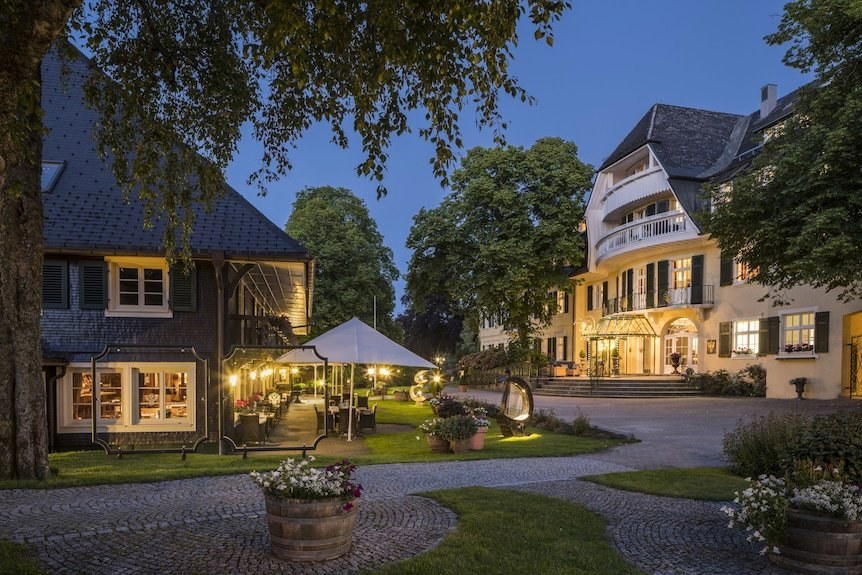
Restaurants in Hinterzarten
Browse all →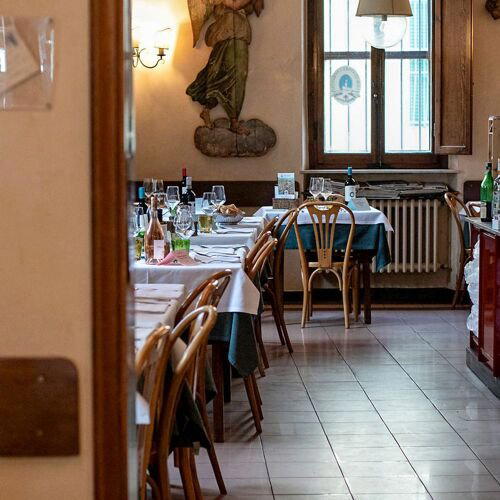
At a Glance
- Cozy
- Elegant
- Scenic
- Quiet
- Romantic
- Romantic Getaway
- Wellness Retreat
- Weekend Escape
- Ski In Ski Out
- Panoramic View
- Terrace
- Spa
- Pool
- Sauna
- Wi Fi
- Fitness Center
- Room Service
- Restaurant
- EV Charging
- Mountain
- Garden
- Spa
- Pool
- Sauna
- Wi Fi
- Fitness Center
- Room Service
- Restaurant
- EV Charging
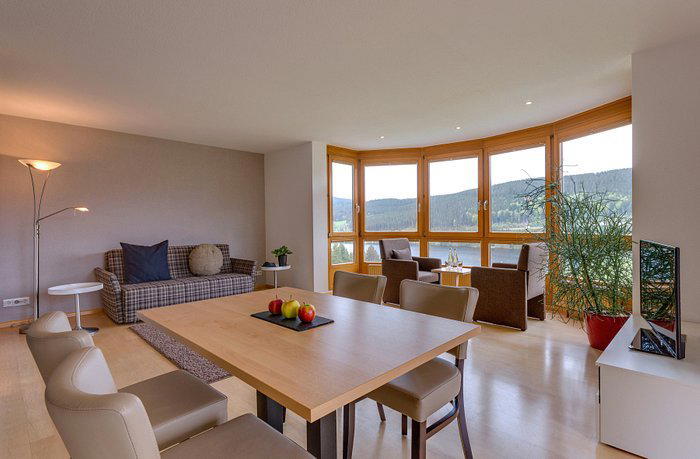
Elegant country style with Mediterranean tones, cozy and relaxing atmosphere enhanced by spa facilities and peaceful Black Forest setting.