





Spread across 1,500 acres of Uco Valley vineyards at the foot of the Andes, The Vines Resort & Spa is one of Argentina's most purposefully conceived wine-country retreats. Its 22 villas, Francis Mallmann's open-fire restaurant Siete Fuegos, and a private vineyard ownership program place it in a different tier from standard Mendoza lodging. La Liste ranked it 91 points in 2026, and Leading Hotels of the World membership affirms its position among Argentina's premium rural properties.
Pearl is the En Primeur Club membership app — saves, bookings, and concierge access live there. Same editors, same standards.
- Address
- RP94 km 11, 5565 Tunuyán, Mendoza
- Phone
- +54 261 461-3900
- Website
- vinesresortandspa.com
- Directions
- Get directions
 Saves & bookings on Pearl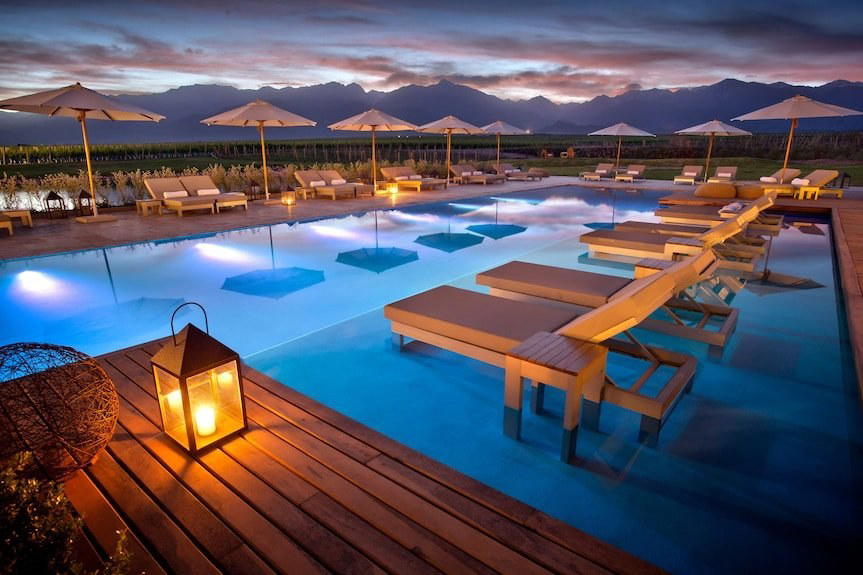
Where the Uco Valley Earned Its Reputation
The story of Argentine wine country's geographic split is now well established among serious collectors and travel editors alike. For decades, Luján de Cuyo held the prestige address: established bodegas, older vine stock, proximity to the city of Mendoza. But over the past two decades, the Uco Valley has attracted the more restless investment. Higher altitude, cooler nights, and a wider blank canvas for both viticulture and hospitality have drawn producers and properties that wanted room to work without inherited assumptions. The Vines Resort and Spa, positioned along RP94 in Tunuyán at the foot of the Andes, arrived as part of that shift and has helped define what premium Uco Valley lodging looks like at scale. La Liste placed it at 91 points in its 2026 rankings, and its membership in Leading Hotels of the World situates it within a peer group that includes properties like Awasi Mendoza in Luján de Cuyo and Cavas Wine Lodge in Alto Agrelo rather than anything in the city proper.
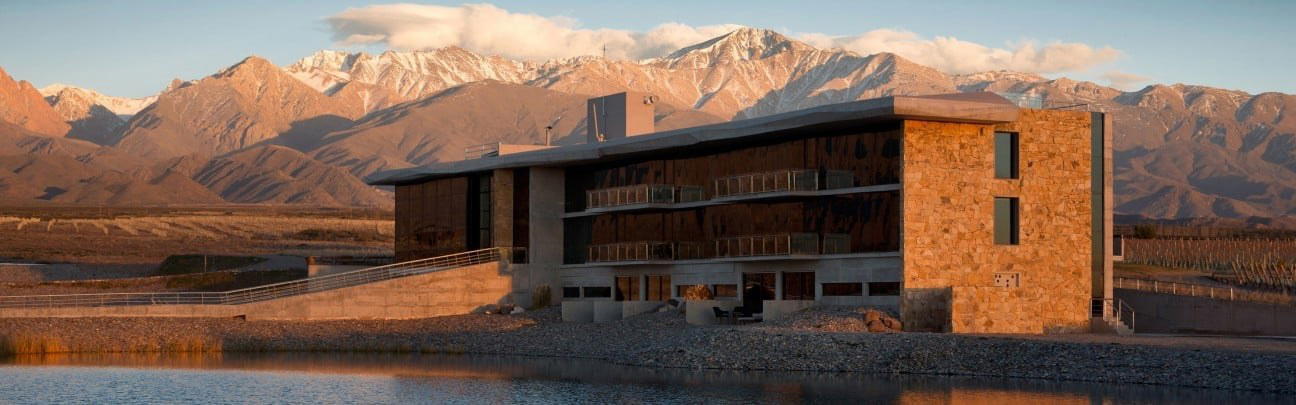
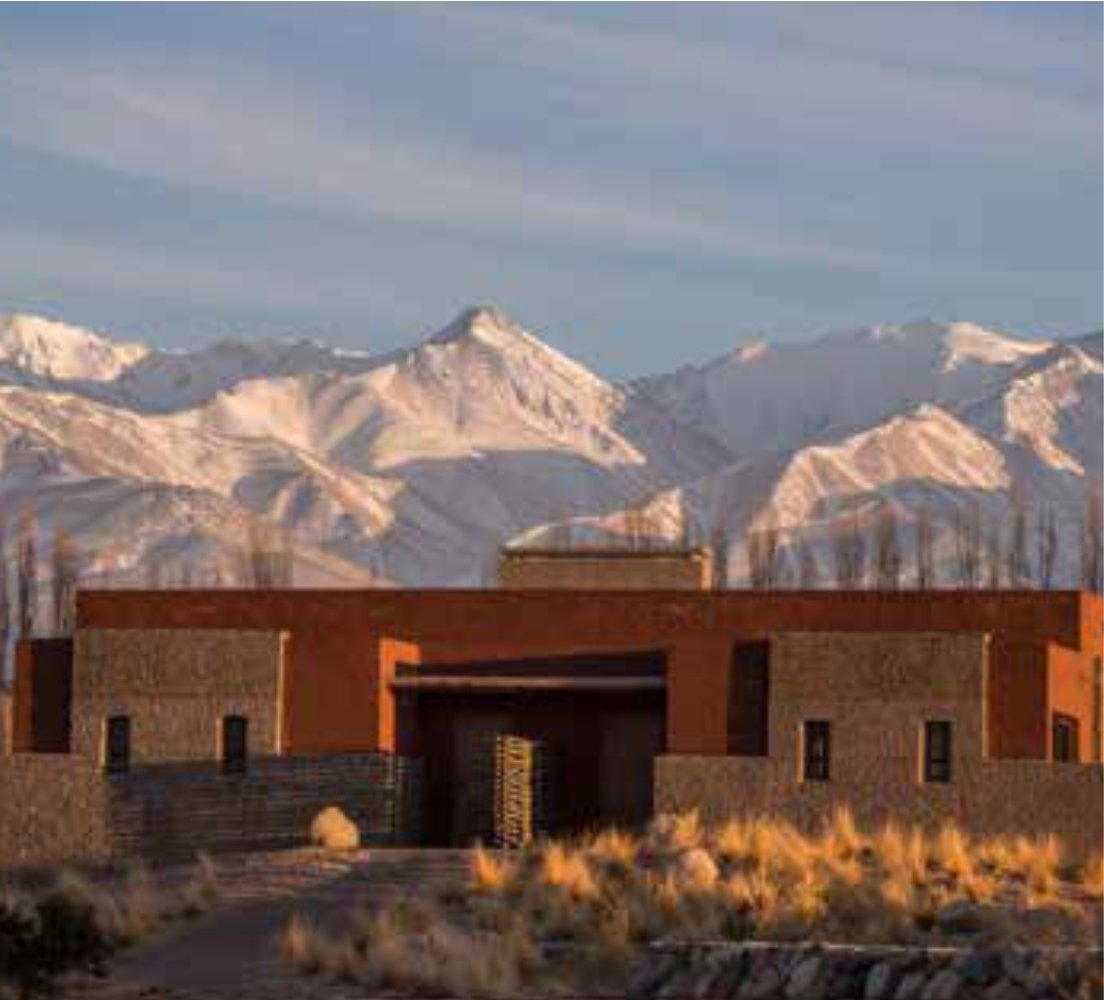
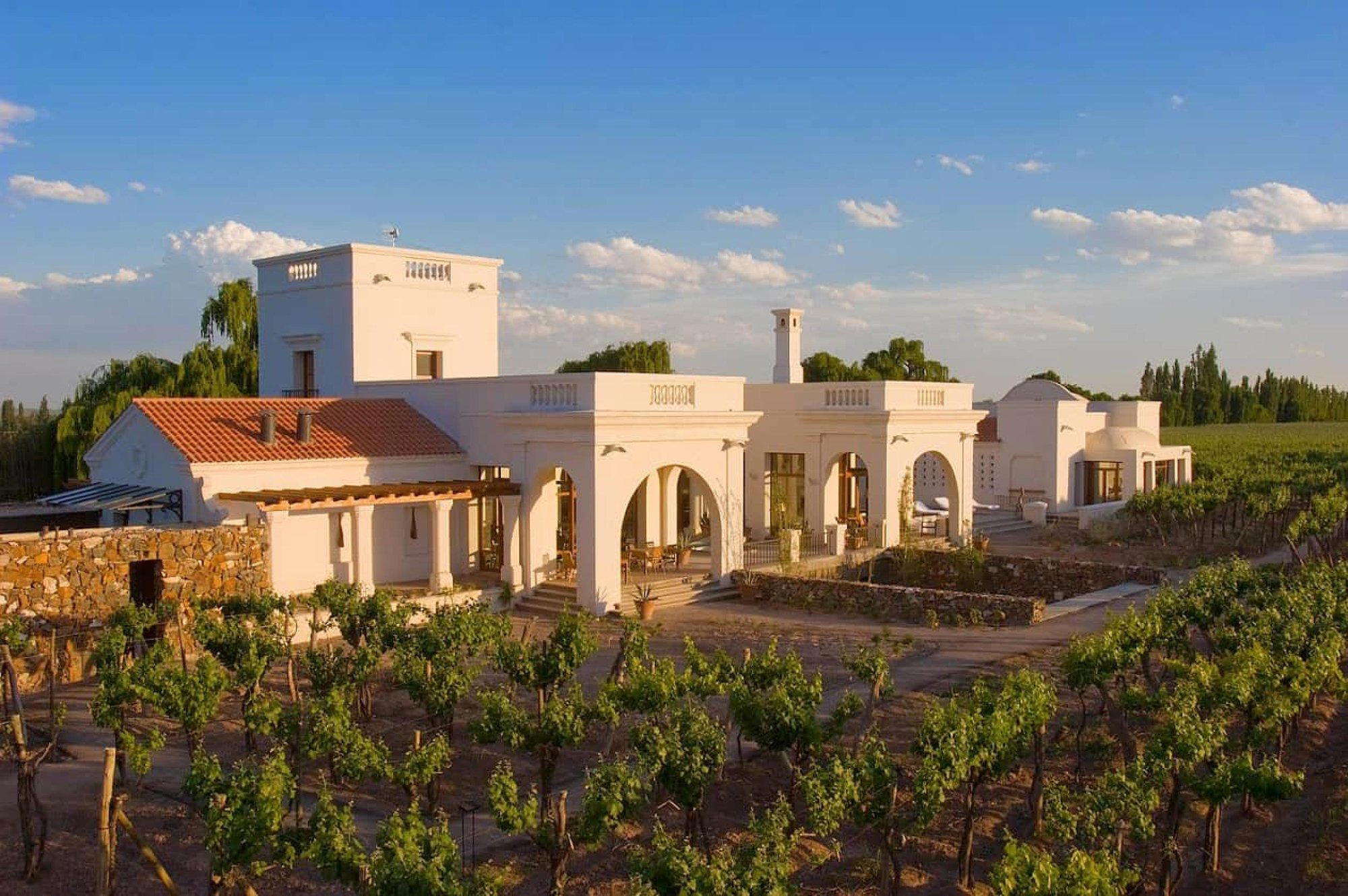
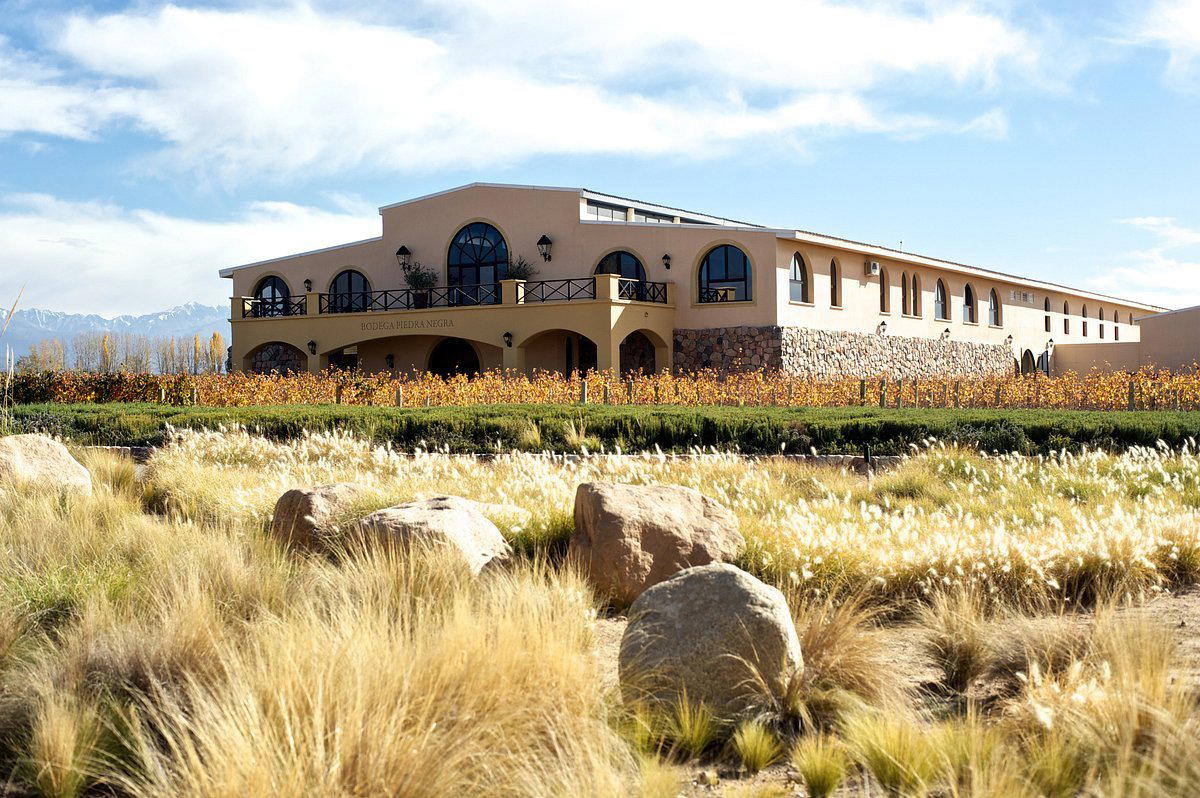
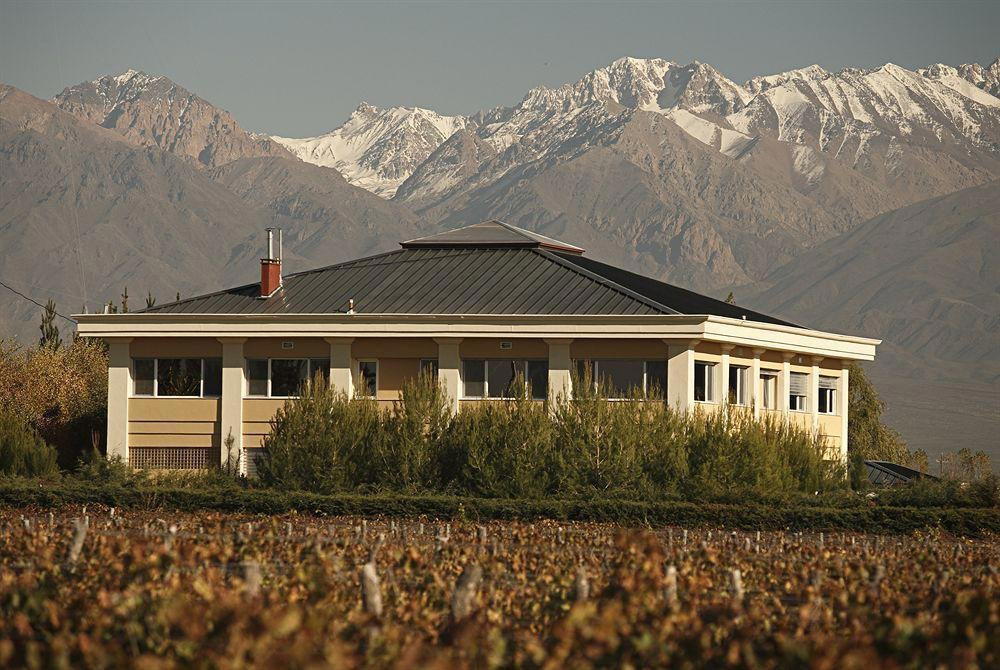
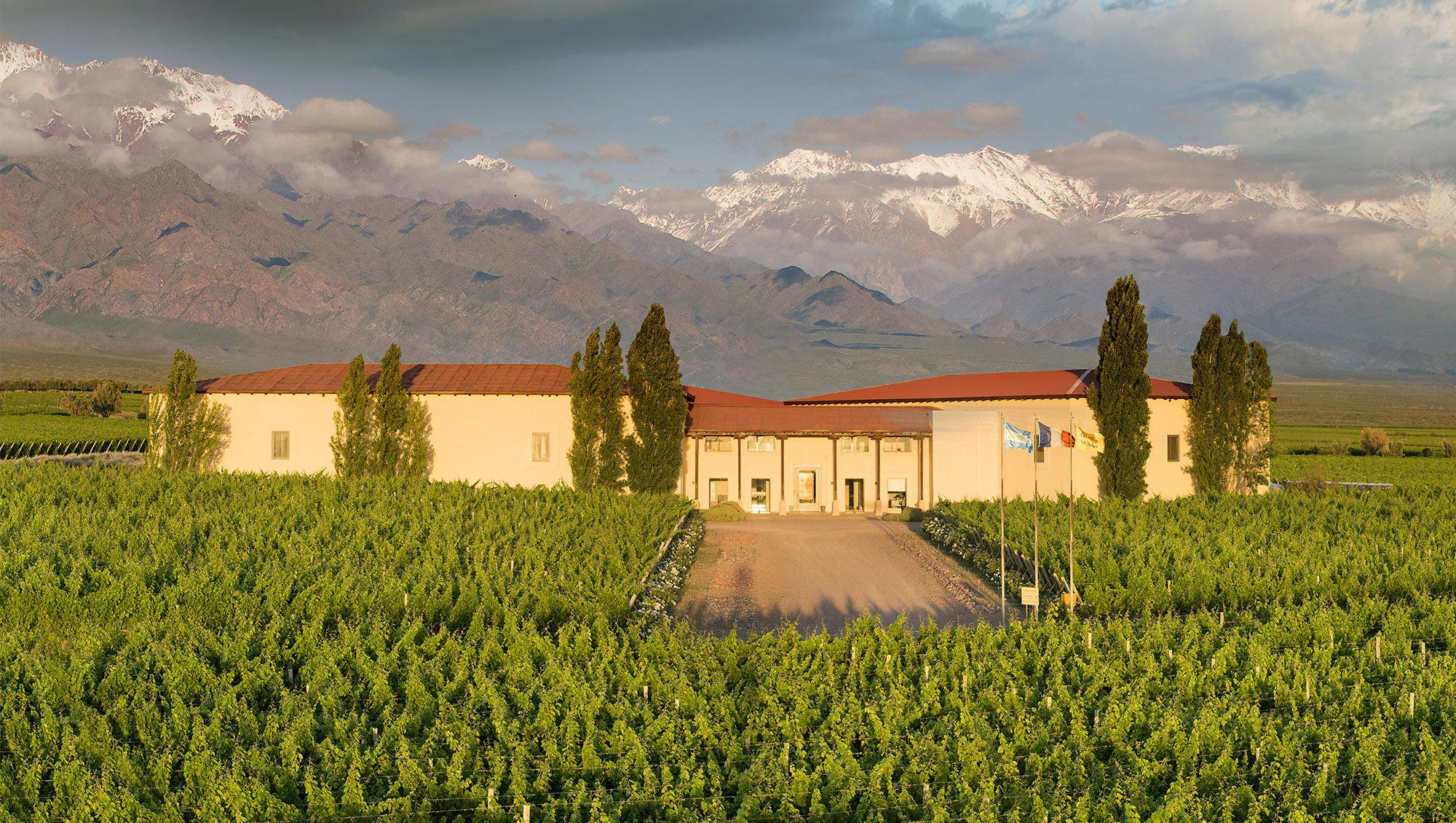
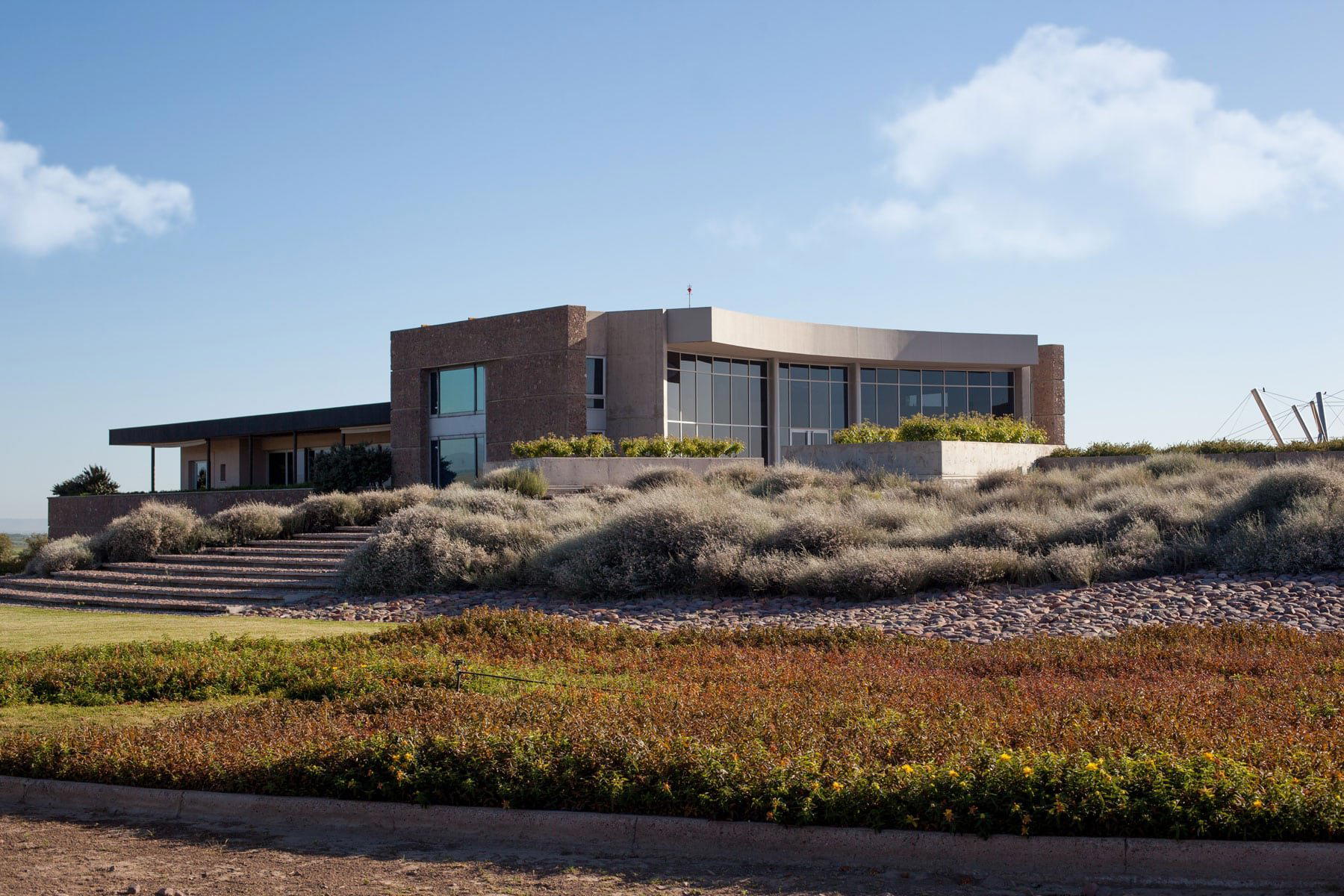
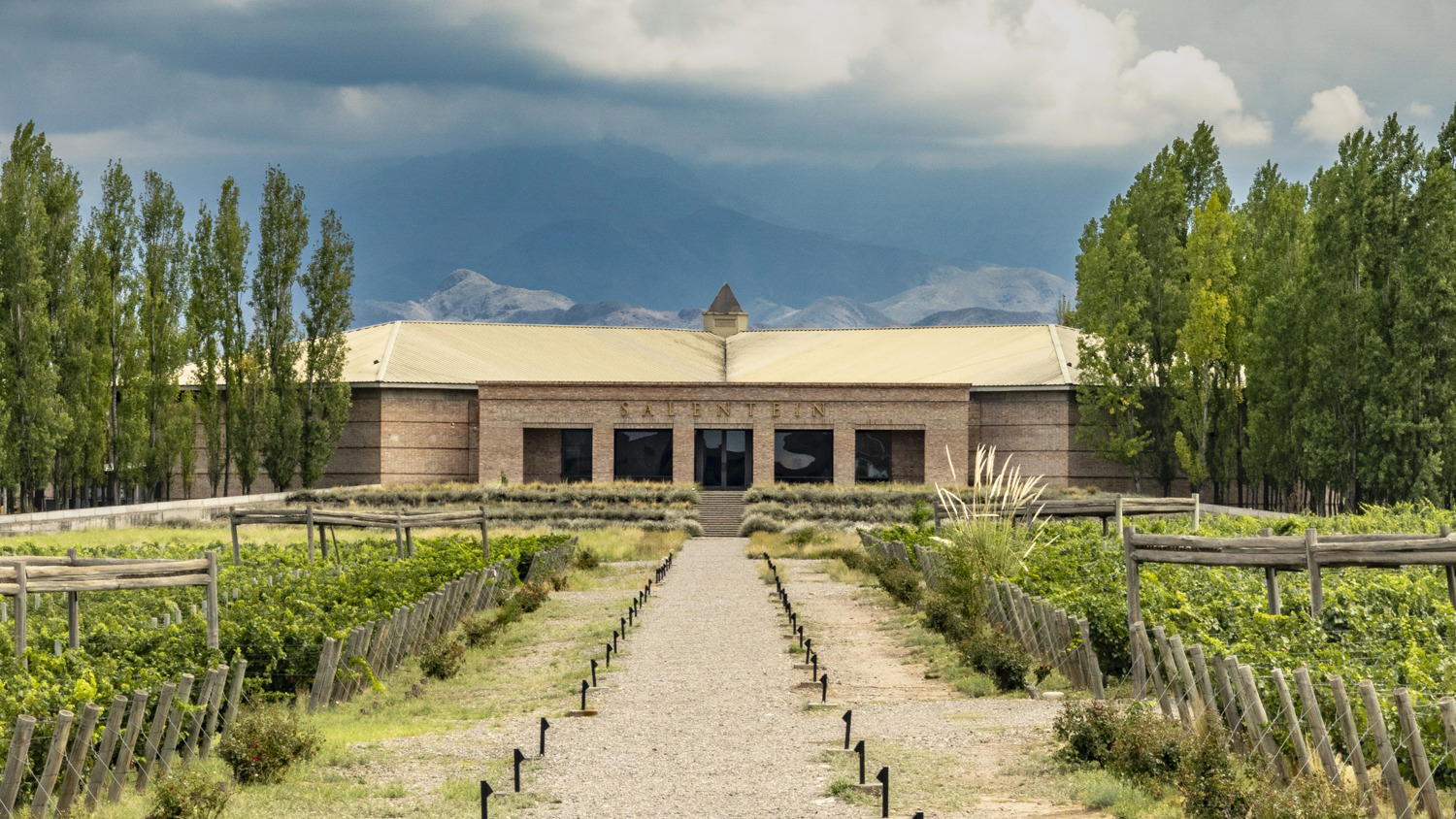
The valley's appeal is physical before it is conceptual. At this elevation, the Andes do not read as a backdrop so much as an enclosure. The mountain wall fills 180 degrees of horizon, and the vineyards that run toward its base are lit differently at different hours in ways that make time of day matter to anyone paying attention. Approaching the resort, the road passes through vine rows before the property's lodge and scattered villa silhouettes come into view. The architecture does not announce itself; the landscape does most of that work, and the built environment is calibrated not to compete with it.
The Villas and What They Signal About the Format
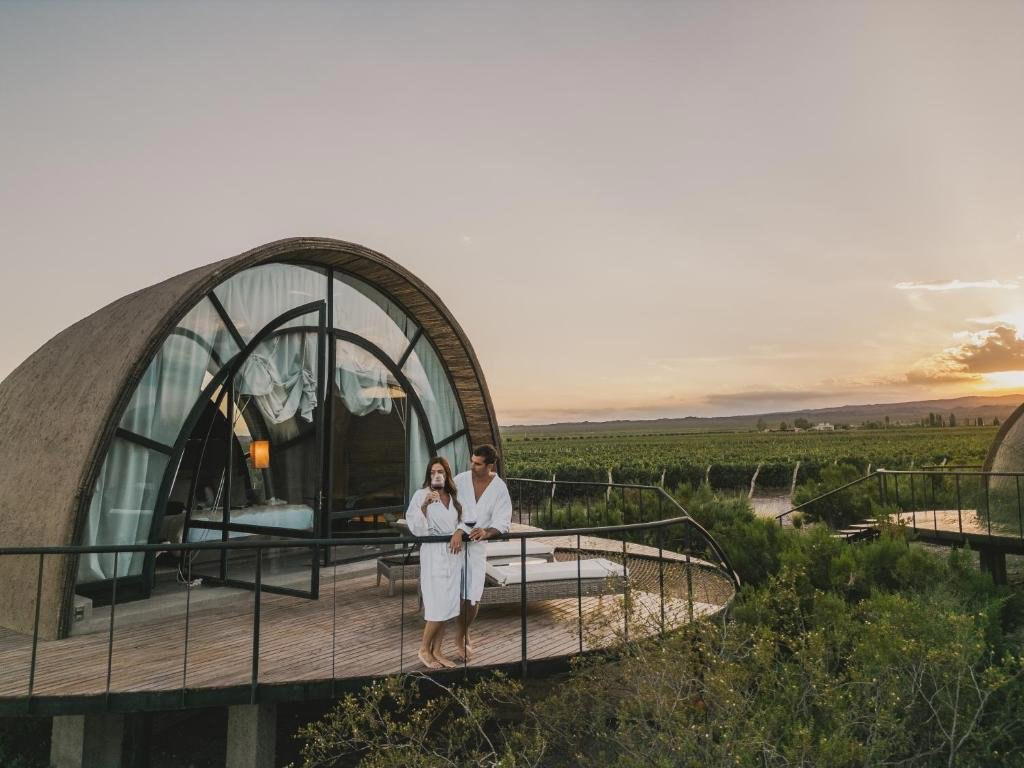
Luxury wine-country properties in Argentina have tended toward two models: small boutique lodges with under a dozen rooms, and larger estates with resort infrastructure. The Vines operates at the larger end of that spectrum while keeping room count controlled at 22 villas. The villas range from approximately 1,000 square feet in the one-bedroom configuration to 2,700 square feet in the two-bedroom plan, all with private decks, fully equipped kitchenettes, and bathrooms finished in natural stone. Deluxe villas add indoor and outdoor fireplaces and outdoor bathing options; some extend to rooftop terraces with unobstructed mountain views. The two-bedroom villa's handmade clay tub positioned to face the Andes reads as a deliberate design gesture rather than an amenity checkbox.
What distinguishes the accommodation model from comparable properties such as Casa de Uco in Tunuyán or Lodge Atamisque in Tupungato is the guest-services structure. Each stay is assigned a gaucho who functions as concierge, guide, and logistics coordinator. In a region where the distance between properties and the informality of local transport can frustrate self-directed planning, having a single point of contact with deep local knowledge reduces friction considerably and is one of the cleaner executions of the personalized-service model in Mendoza wine country.
Siete Fuegos and the Open-Fire Tradition
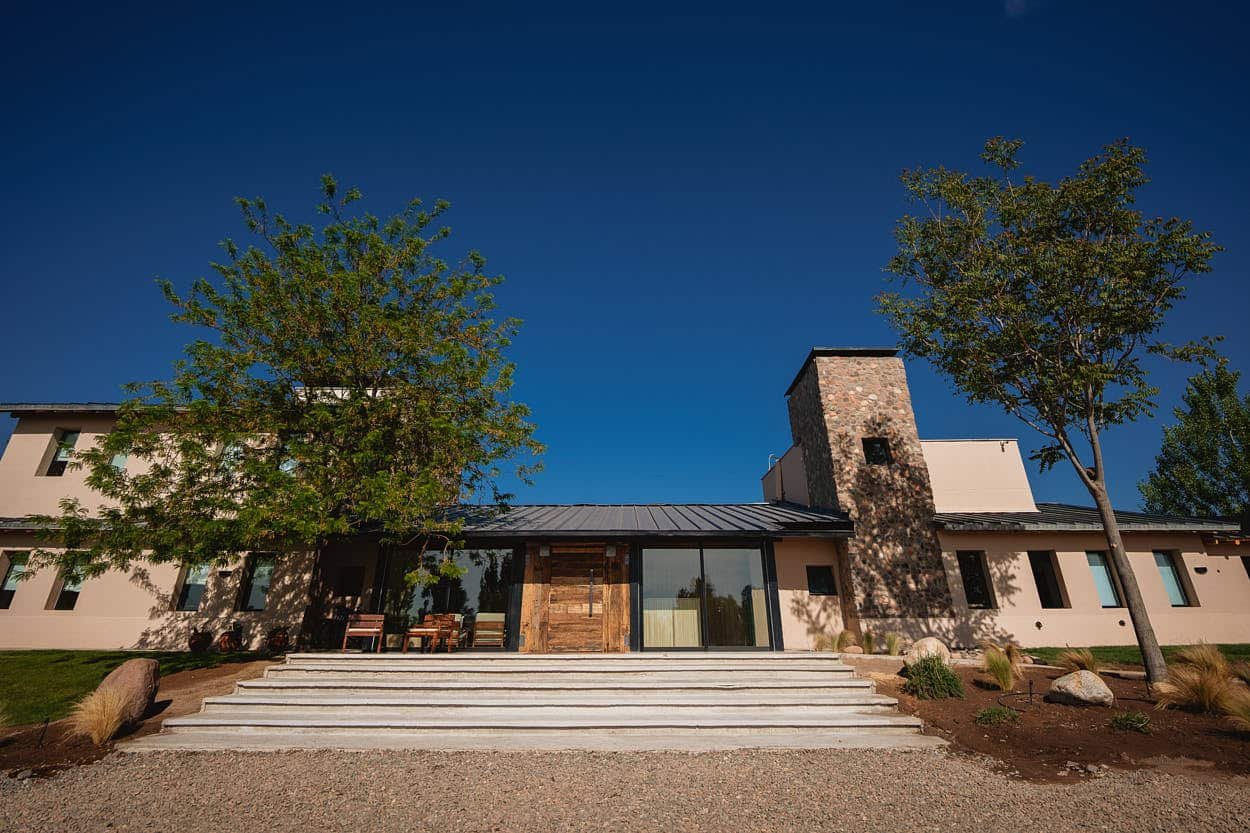
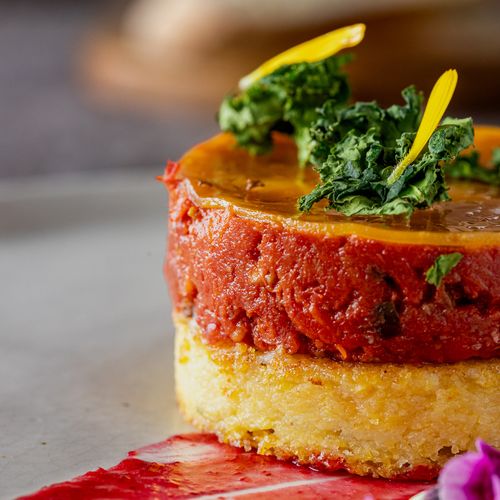
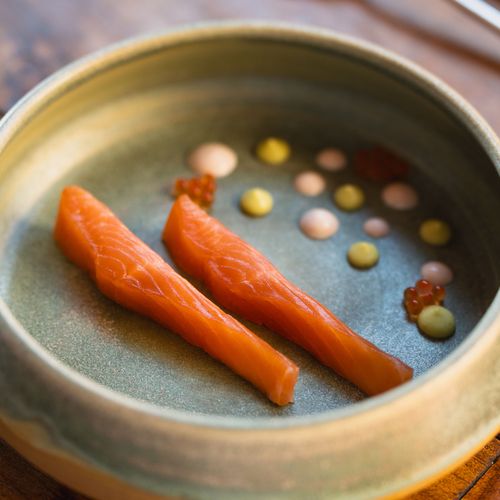
Open-flame cooking is not a culinary trend in Argentina; it is the baseline of the country's gastronomic identity. What Francis Mallmann contributed, beginning in the 1990s and codified through his books and international reputation, was a framework for understanding those techniques, naming and systematizing them in ways that gave asado culture an intellectual scaffolding it had not previously needed. Siete Fuegos, the resort's signature restaurant, is the most direct expression of that framework in a fixed-venue format. The name refers to seven distinct fire-cooking methods, and the menu draws on Argentine beef and regional produce as its primary material. Mallmann's consulting relationship with the property means the kitchen operates within a defined culinary philosophy rather than a generic wine-country menu format. For guests arriving from Buenos Aires properties like Home Hotel, Siete Fuegos represents a materially different register of dining, rooted in the landscape rather than urban technique.
The Vineyard Ownership Program
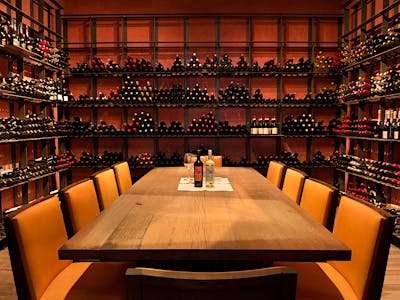
The more structurally unusual element of the property is its private vineyard program, which allows guests to purchase plots of three to ten acres within the estate's 1,500 acres and produce small-batch wine under the guidance of consulting winemaker Santiago Achaval. Achaval is a credentialed figure in Argentine wine, and the program is not a cosmetic experience add-on. Owners participate in actual winemaking decisions across the growing season, and the wines produced carry the owner's own label. For guests not interested in ownership, the tasting experience still includes wines made by program participants, which adds a layer of provenance specificity that standard winery visits rarely offer. The resort also runs grape-harvesting experiences and winemaking education sessions for non-owner guests, which Travel and Leisure and Condé Nast both cited in recognition that came in 2014 and 2015 respectively.
Activities and the Outdoor Context
The Uco Valley's outdoor activity offering is one of the strongest in Argentine wine country, and the resort's programming reflects the terrain. Horseback riding with the property's gauchos covers vineyard and mountain trails that are not accessible by vehicle. Hiking and biking itineraries extend across the estate and into the surrounding valley. The infinity pool, running over 100 square meters with private cabanas positioned toward the mountains, serves as the property's social gravity when afternoon temperatures drop the mood from active to contemplative. A spa and fitness center round out the indoor options, both oriented toward the vineyard views. For properties in similar Andean settings, compare the program structure with Charming Luxury Lodge in San Carlos de Bariloche or Arakur Ushuaia Resort and Spa, which serve different landscapes but comparable activity appetites.
Harvest season, which runs from late February through early April depending on the varietal, represents the period of highest experiential density. The vines are active, the light is at its richest in the late afternoon, and the winemaking program reaches its most participatory phase. Guests planning around this window should book well in advance, as villa availability contracts against winery owner visits and harvest program participants. The shoulder period from May through July brings cooler temperatures and quieter conditions, which suit guests whose primary interest is the restaurant program and the mountain landscape rather than vine activity.
Getting There and Comparative Context
The resort sits approximately 110 kilometers from Governor Francisco Gabrielli International Airport in Mendoza, accessible via RN40, RP92, and RP93, with the drive taking roughly 90 minutes under normal conditions. This distance is a meaningful consideration. Unlike city-based options such as Park Hyatt Mendoza, Lares de Chacras, or Villavicencio, the Uco Valley properties require a commitment to staying put or planning excursions deliberately. The remoteness is, for the right traveler, a feature rather than an inconvenience. Those who want access to Mendoza's urban dining and cultural programming alongside wine-country stays will find better logistical balance closer to the city, including at Damajuana Hostel at the budget end or Chozos Resort by AKEN Spirit in Agrelo as a middle-distance alternative. For those whose itinerary extends beyond Mendoza, Colomé Winery in Molinos and Algodón Wine Estates in San Rafael extend Argentina's wine-country lodge map south and west. See our full Mendoza restaurants and hotels guide for broader regional context.
Recognition history
Dated appearances from independent guides and award organizations, with the underlying list record or original source where available.
Fodor's Most Incredible Hotels in the World
Fodor's
La Liste Top Hotels
La Liste
Virtuoso Luxury Hotel Partner
Virtuoso
Leading Hotels of World Member
Leading Hotels of World
Michelin 1 Key
Michelin
Travel + Leisure 100 Favorite Hotels in the World #6
Travel + Leisure
Continue exploring
More in Mendoza
Hotels in Mendoza
Browse all →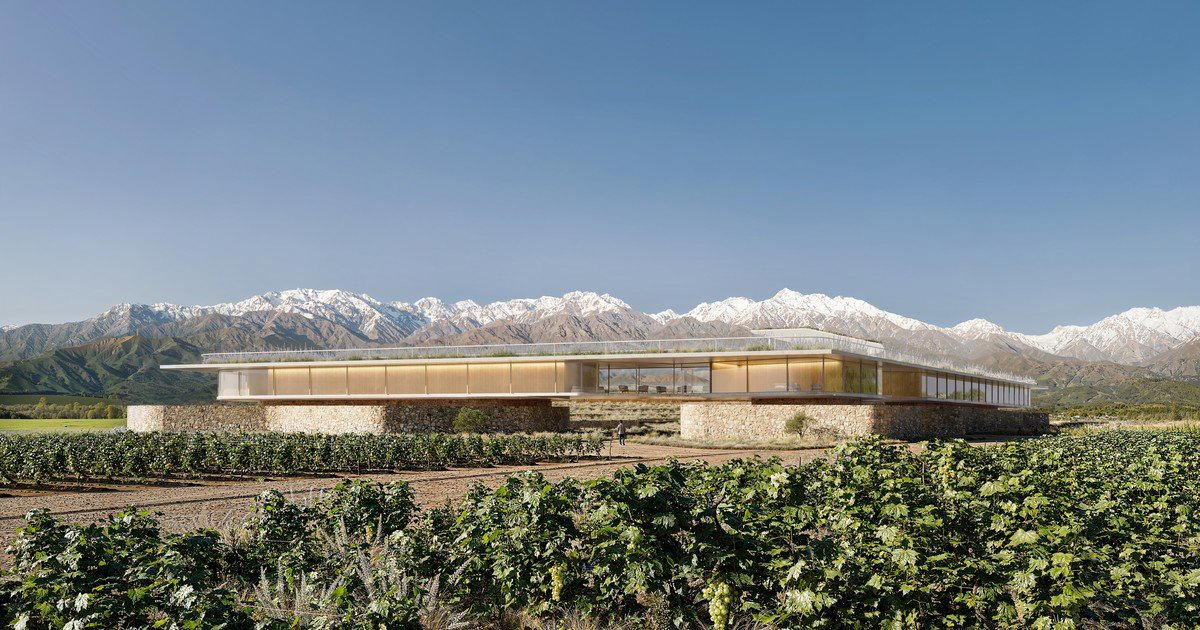
Bars in Mendoza
Browse all →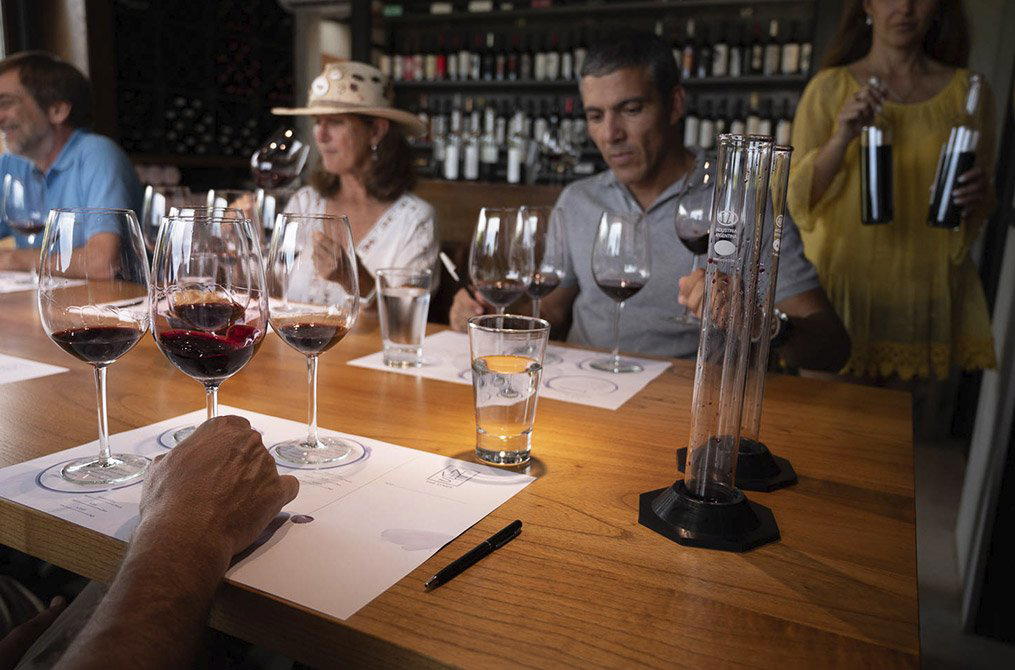
Restaurants in Mendoza
Browse all →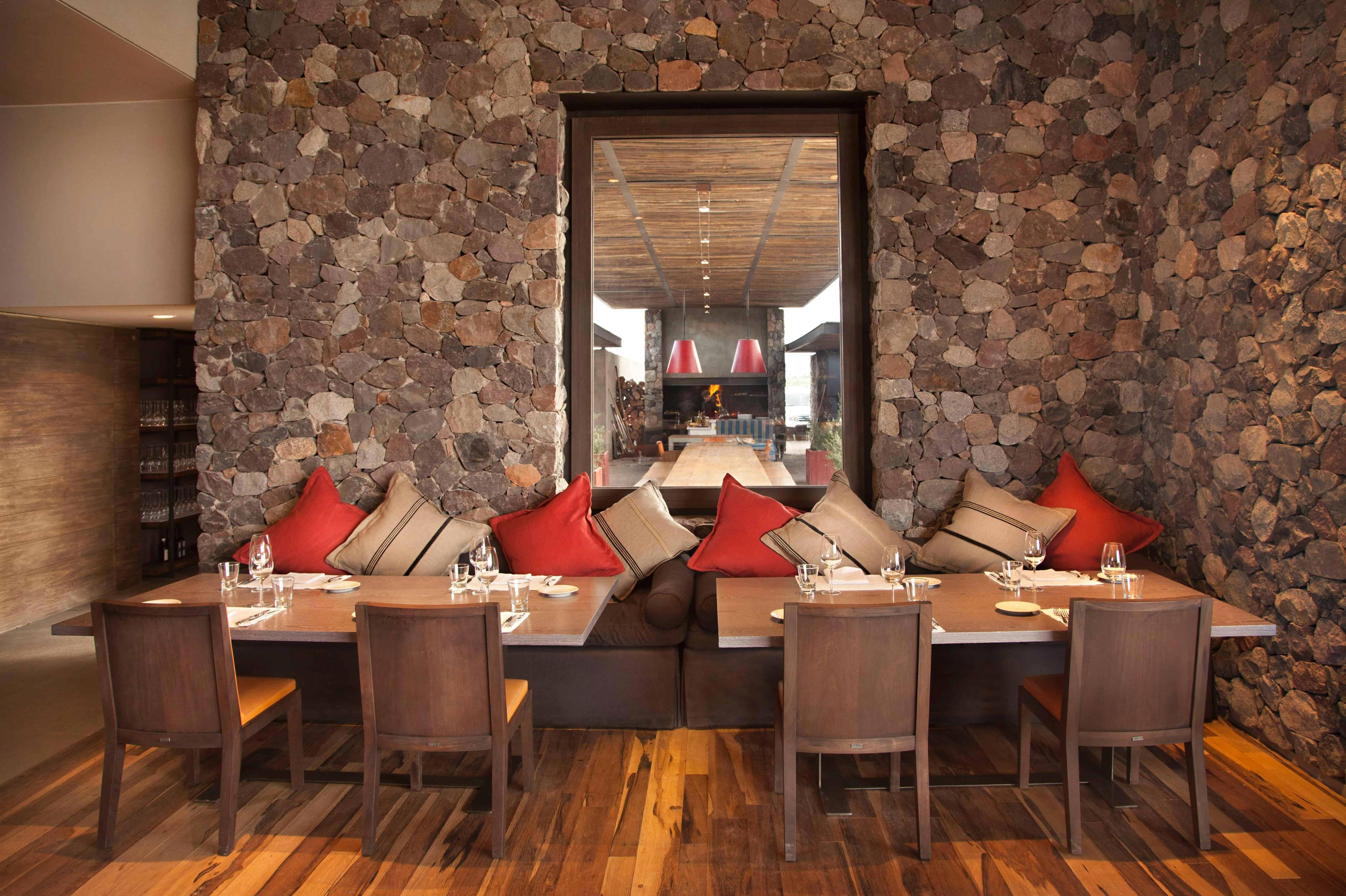
At a Glance
- Romantic
- Elegant
- Scenic
- Quiet
- Sophisticated
- Rustic
- Honeymoon
- Romantic Getaway
- Wellness Retreat
- Weekend Escape
- Panoramic View
- Destination Spa
- Terrace
- Pool
- Spa
- Fitness Center
- Wi Fi
- Room Service
- Concierge
- Restaurant
- Hot Tub
- Mountain
- Vineyard
- Garden
- Pool
- Spa
- Fitness Center
- Wi Fi
- Room Service
- Concierge
- Restaurant
- Hot Tub
Serene and elegant with natural light, blending rustic-chic earthy elegance and contemporary comfort amid vineyards and mountains.
Know Before You Go
- Getting there
- RP94 km 11, 5565 Tunuyán, Mendoza