The Veil


The Veil is one of Astana's most architecturally distinctive hotels, positioned at the intersection of Kazakhstan's modernist capital ambitions and internationally calibrated hospitality. Its futuristic interiors and eclectic dining program reflect the city's ongoing project of self-definition through bold built form. For travellers arriving in a capital where the skyline itself is the statement, The Veil is a credible address from which to read it.
 Discover on Pearl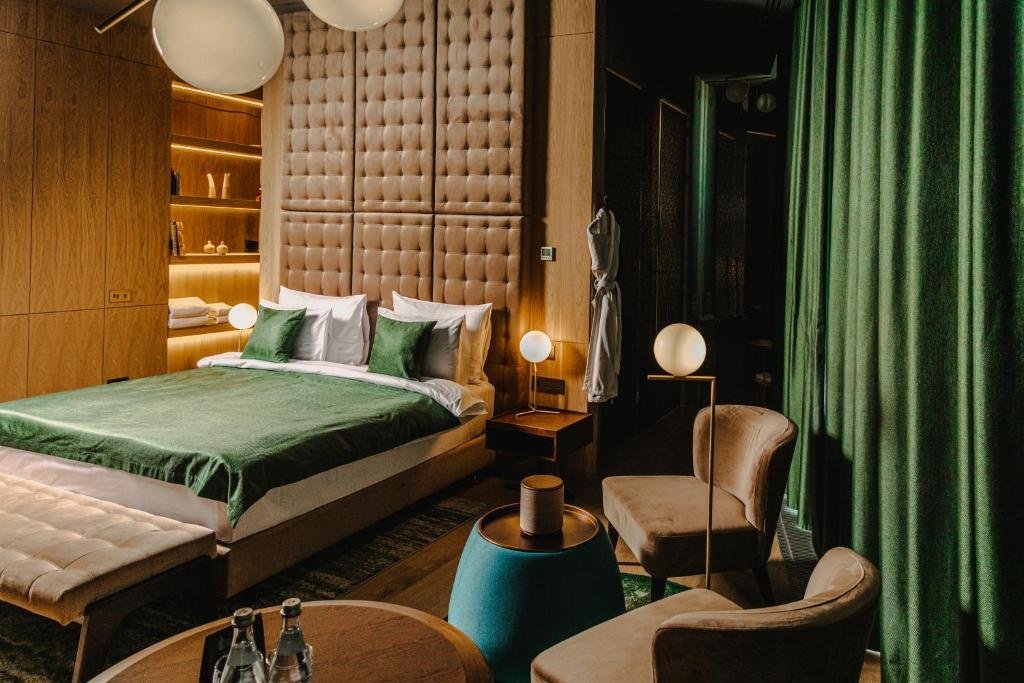
A Capital Built to Be Seen
Astana does not do understatement. Since Kazakhstan designated the city as its capital in 1997, successive waves of investment have turned a Soviet-era rail town on the steppe into one of the most architecturally self-conscious cities in Asia. Norman Foster's tent-like Khan Shatyr, Kisho Kurokawa's masterplan, the Ministry of Foreign Affairs tower with its pointed hat — the city reads as an open-air exhibition of post-Soviet ambition rendered in glass, steel, and concrete. Hotels here are not merely places to sleep; they are participants in a skyline conversation that the government has been conducting at scale for nearly three decades. The Ritz-Carlton, Astana and The St. Regis Astana anchor the established international-brand tier of this market. The Veil positions itself differently, as a property whose architecture and interior identity are the primary credential rather than a flag or legacy brand affiliation.
The Building as the Argument
Arriving at The Veil on Qadyrghali Zhalayyri Street, the impression is of a property that has been designed to hold attention before you enter it. In a city where futuristic geometry is almost a civic obligation, The Veil's visual register aligns with Astana's broader architectural programme while still operating as a distinct statement. This is a meaningful distinction in the local market: Astana has no shortage of glass towers, but relatively few hotels that treat interior design as a serious argument rather than an amenity checklist.
The shortlist, unlocked.
Hard-to-book tables, cellar releases, and concierge-planned trips.
Get Exclusive Access →The futuristic interior vocabulary connects to a broader global conversation about what luxury hospitality looks like when it is not anchored in European heritage aesthetics. Properties like Bvlgari Hotel Tokyo or Aman New York have shown that contemporary design-led hotels can hold their own against classical grand dames such as Hotel Plaza Athénée in Paris or Badrutt's Palace Hotel in St. Moritz. The Veil is making a version of that same wager in Central Asia, where the reference points for premium hospitality are still being established. That context gives the property's design emphasis a strategic logic beyond aesthetics: in a market defining its own luxury grammar, the hotel that controls the visual language holds a meaningful position.
Design Philosophy and Cultural Grounding
What distinguishes The Veil's design approach from generic futurism is the stated grounding in Kazakhstan's physical and cultural identity. The steppes, the nomadic traditions, the geometry of Central Asian decorative arts — these are not incidental references in the property's visual language but active inputs. This approach mirrors what the most considered design-led properties do globally: Amangiri in Canyon Point builds its entire spatial logic around the surrounding Utah desert geology, while Castello di Reschio in Lisciano Niccone treats Umbrian material culture as its design brief. The Veil operates in the same register, using local cultural material as a formal resource rather than decorative accent.
The eclectic cuisine program serves the same function architecturally as the interior design: it signals a hotel that is not content to import a generic international menu. In Central Asian luxury hospitality, where the dining offer has historically defaulted to either traditional Kazakh fare or broadly European cooking, a property that frames its food as eclectic and exploratory is staking out a distinct identity. Without specific menu data available, it is not possible to assess the execution in detail , but the positioning itself is deliberate and aligns with a globally recognisable model: the hotel whose restaurant is a destination for non-guests, not merely an amenity for those already checked in. For a fuller picture of what Astana's dining scene looks like beyond hotel walls, our full Astana restaurants guide maps the broader territory.
Where The Veil Sits in Astana's Hotel Market
Astana's premium hotel market is structured around a handful of internationally branded properties and a smaller cohort of locally distinctive addresses. The Ritz-Carlton and The St. Regis define the conventional luxury tier, bringing global service standards and the confidence that comes with brand recognition for international business travellers. The Veil operates alongside these properties rather than directly against them, addressing a different motivation: travellers for whom the design experience is part of the trip rather than background to it.
This split , between brand-anchored international luxury and design-led independent properties , is visible in other globally significant capital cities. Cheval Blanc Paris and La Réserve Paris operate in a different register from the Palace Hotels of the traditional Parisian market, just as HOTEL THE MITSUI KYOTO and Aman Venice hold their positions through spatial intelligence rather than franchise muscle. The Veil's architecture-forward proposition fits this emerging global pattern of properties that build their case through built form.
For travellers building a broader Astana itinerary, our full Astana hotels guide covers the complete market across brand tiers and price points. The city's bar and experience scenes are covered in our Astana bars guide and our Astana experiences guide.
Planning Your Stay
The Veil is located at Qadyrghali Zhalayyri St 4, Astana 010010, in the capital's central district. Astana's Nursultan Nazarbayev International Airport connects the city to major hubs across Asia, Europe, and the Middle East, making it more accessible than its steppe geography might suggest. The city operates in the GMT+5 timezone and experiences extreme seasonal temperature variation, with summers reaching above 35°C and winters dropping well below -20°C , a detail that materially affects how the city's outdoor public spaces and architecture are experienced. Visitors prioritising the architectural urban environment tend to find late spring (May to June) and early autumn (September) the most navigable seasons. Specific booking details, room categories, and current pricing for The Veil are leading confirmed directly with the property, as neither phone nor website data are available in the current record.
The shortlist, unlocked.
Hard-to-book tables, cellar releases, and concierge-planned trips.
Get Exclusive Access →Frequently Asked Questions
How It Stacks Up
A compact peer snapshot based on similar venues we track.
| Venue | Cuisine | Price | Awards | Notes |
|---|---|---|---|---|
| The Veil | An architectural icon in the heart of the capital, The Veil is a rising star on… | This venue | ||
| The Ritz-Carlton, Astana | ||||
| The St. Regis Astana |
Preferential Rates?
Our members enjoy concierge-led booking support and priority upgrades at the world's finest hotels.
Get Exclusive AccessThe shortlist, unlocked.
Hard-to-book tables, cellar releases, and concierge-planned trips.
Get Exclusive Access →