The Armstrong Hotel

1 Michelin Key
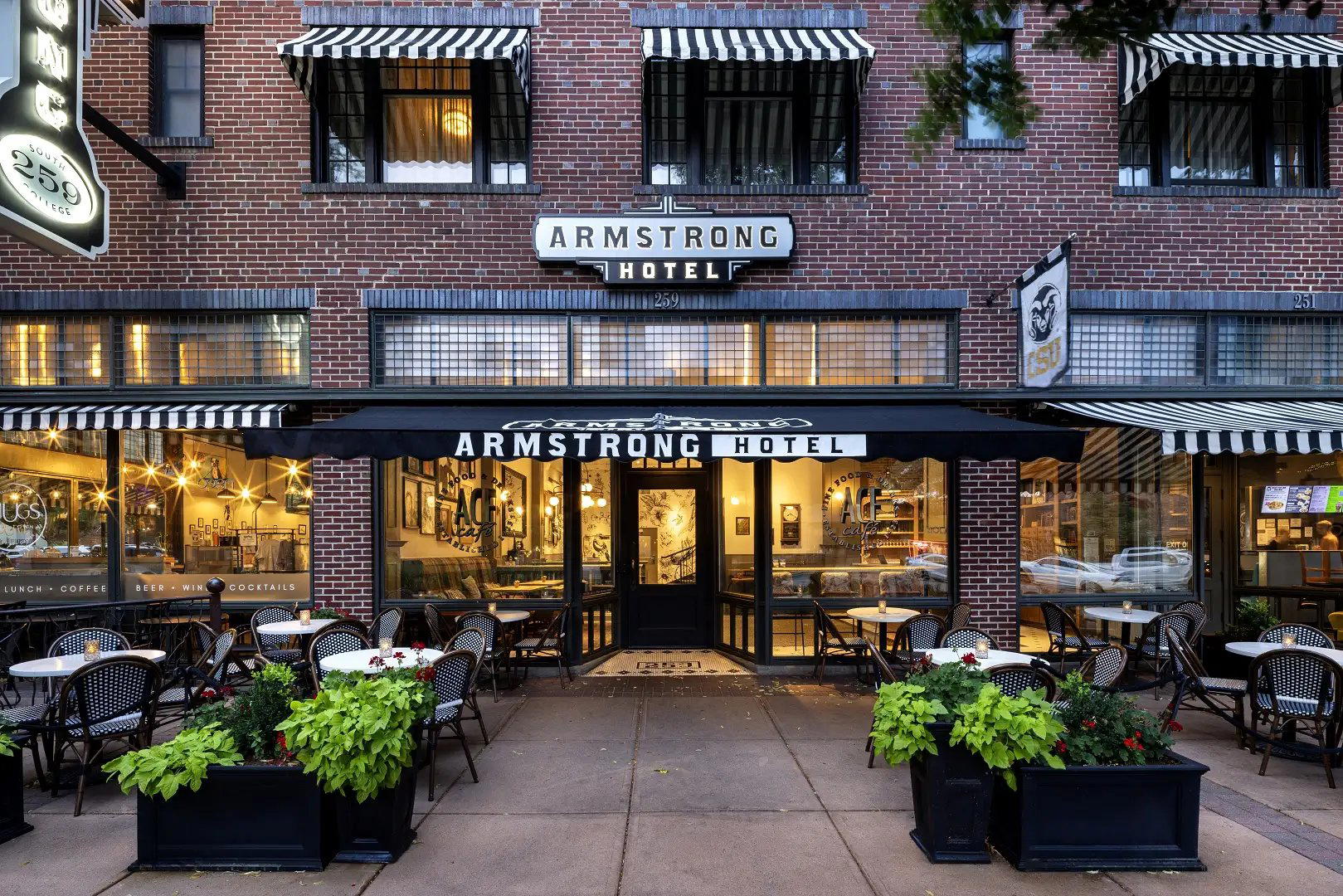
A 1923-built property on Fort Collins' main downtown corridor, The Armstrong Hotel earned a Michelin Key in 2024 after a thorough renovation brought its 54 rooms to contemporary boutique standards. Underground cocktail lounge Ace Gillett's and the street-level Ace Café anchor its food and drink program, positioning it as the most credentialed address in Old Town.

Pearl is the En Primeur Club membership app, where members save venues, book tables and use the concierge.
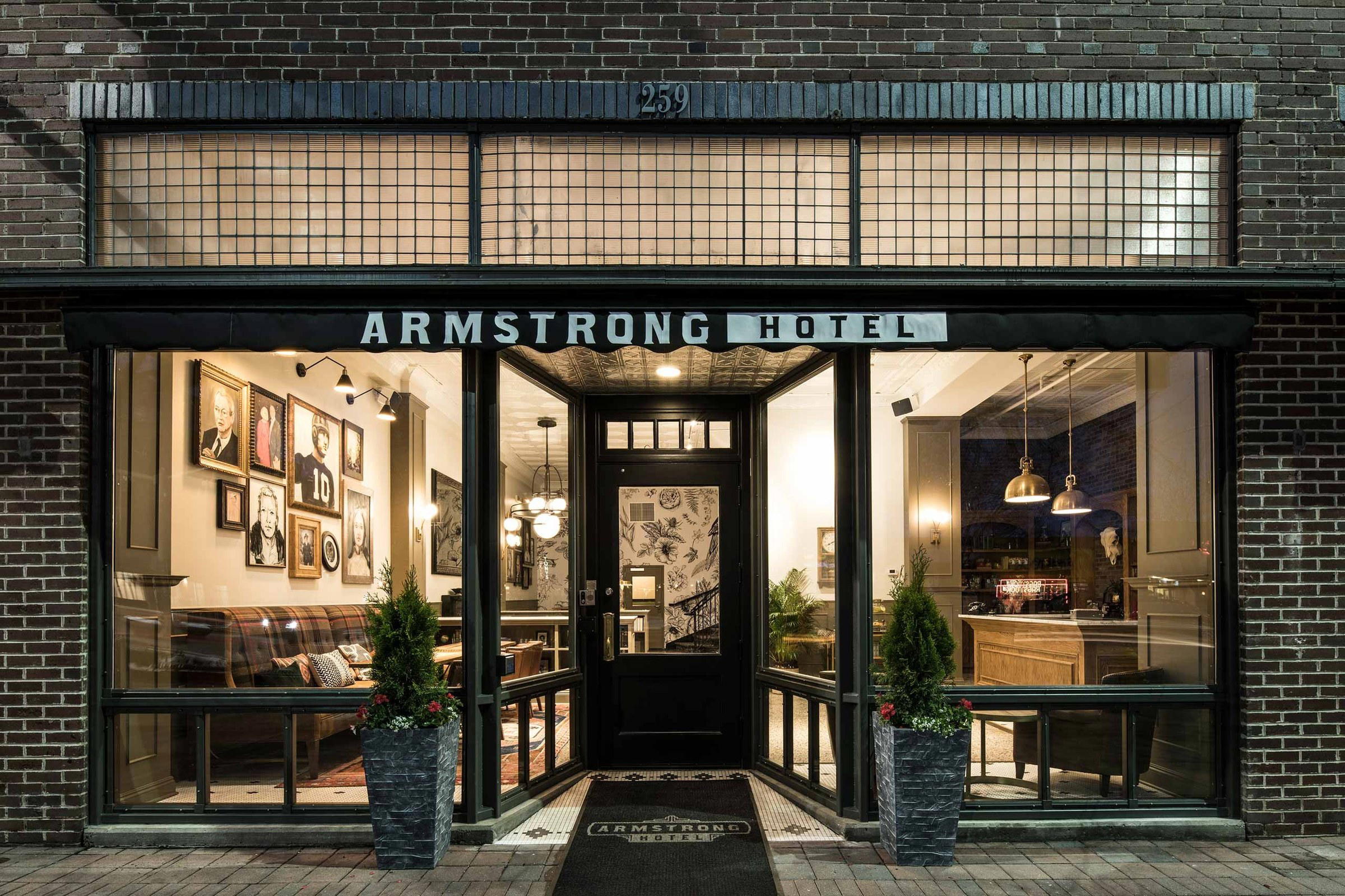
A Century of College Avenue
College Avenue in Old Town Fort Collins reads like a case study in American downtown persistence. The street has absorbed waves of growth tied to Colorado State University's expanding enrollment, the outdoor-recreation economy drawing traffic from Denver an hour south, and a craft beer culture that turned Fort Collins into one of the more recognizable brewery towns in the Mountain West. Against that backdrop, the built fabric of Old Town functions almost as a counterweight, low-rise brick commercial blocks that predate all of it, anchoring the corridor's identity even as the surrounding economy has shifted several times over.
The Armstrong Hotel at 259 S College Ave sits in that fabric as a 1923 structure, which by Fort Collins standards places it in a genuinely historic tier. The hotel's centenary renovation brought its 54 rooms to current boutique standards without erasing the building's bones, a balance that becomes harder to strike as the gap between original construction and modern expectation widens. Historic adaptive reuse in mid-sized American cities often tips one way or the other: heavy-handed modernization that hollows out the original character, or preservation-focused restoration that leaves the amenity set several decades behind. The Armstrong's recent overhaul appears to have landed in the narrower zone between those outcomes.
What Michelin's Key Recognition Signals
When the Michelin Guide added Key designations to its hotel coverage in 2024, the category was designed to track properties where the guest experience extends meaningfully beyond the room itself. The Armstrong's 2024 Key award places it in that tier for Fort Collins, a designation that carries more weight given the city's relatively limited field of boutique competitors. The recognition functions as an external calibration point: this is not a property coasting on historic charm alone, but one whose renovation and programming brought it to a standard that a major hospitality guide found worth flagging.
For context, a Michelin Key is calibrated differently from a restaurant star, it signals quality and character rather than ranking the property against every hotel in a region. Properties like Troutbeck in Amenia or Chicago Athletic Association in Chicago occupy the same general category: historic structures carrying forward a distinct architectural identity with updated programming. The Armstrong belongs to that conversation.
The Design Logic of the Renovation
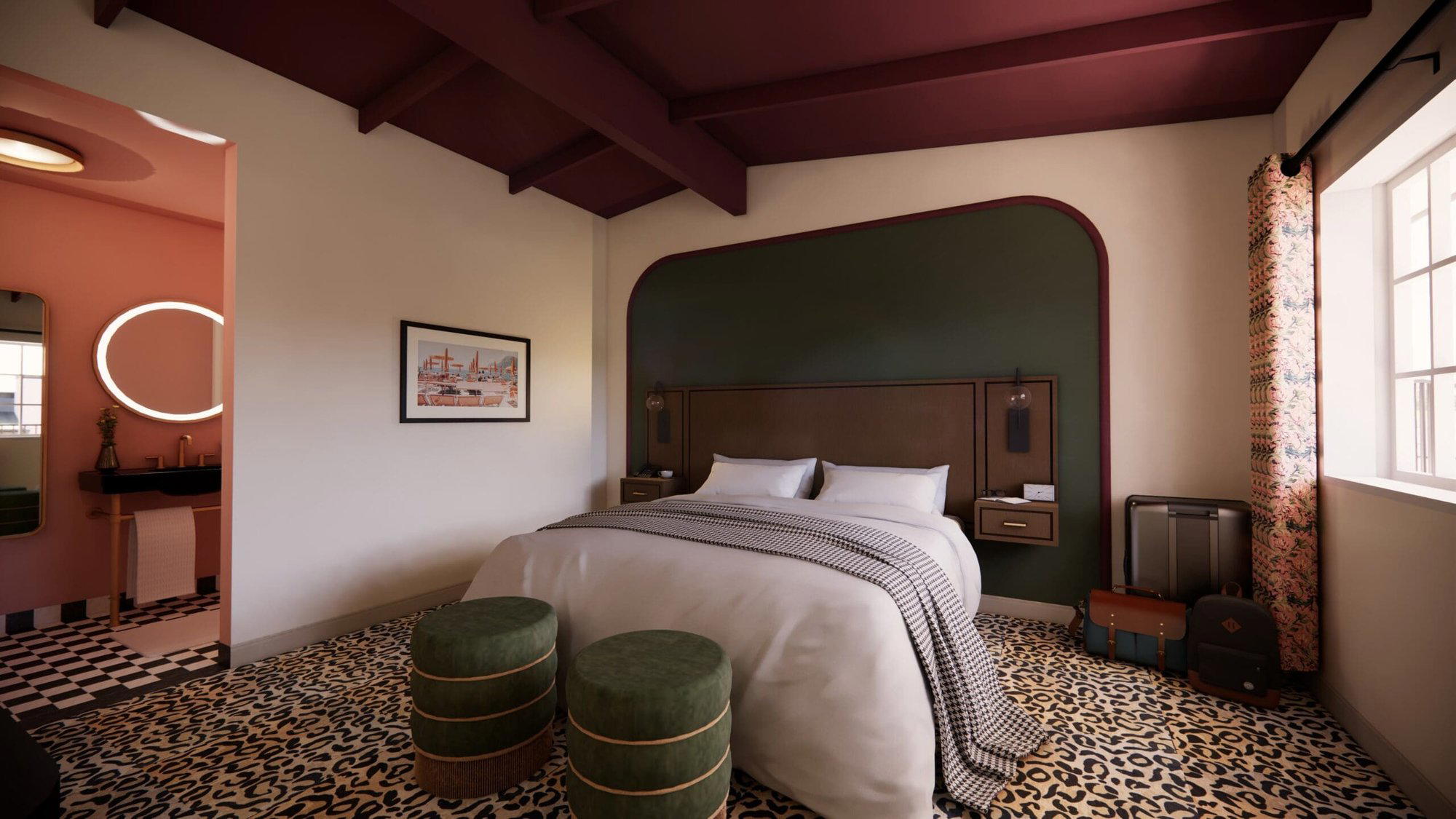
Boutique hotel renovations in historic buildings face a structural tension that the Armstrong's overhaul had to resolve: how much of the original character survives contact with contemporary expectations around comfort, connectivity, and design finish. At 54 rooms, the property operates at a scale where spatial decisions at the room level compound across the building, a choice that reads well in one or two rooms becomes the defining aesthetic of the entire hotel. The Armstrong's post-renovation rooms are described as swanky and stylish, language that positions them closer to design-hotel territory than period-restoration.
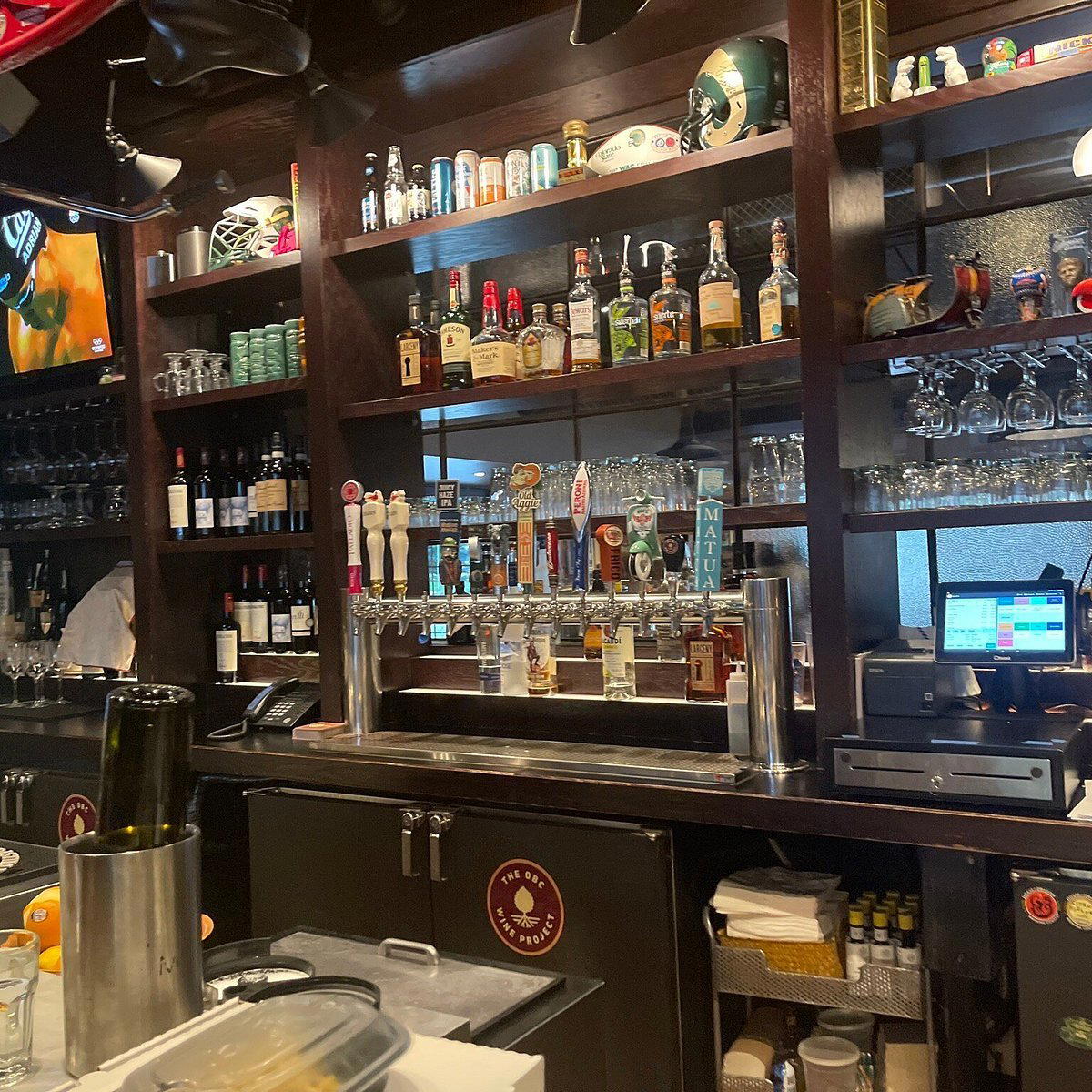
What separates the Armstrong's design approach from a generic boutique refresh is the way it treats the building's vertical layers. The underground level houses Ace Gillett's Lounge, a cocktail bar whose subterranean position gives it a distinct acoustic and visual register from the street-facing café above. The separation of functions by floor creates something that feels deliberate rather than accidental: street-level coffee and casual dining at Ace Café, lower-level cocktail programming in a space shaped by its basement character. The Mugs Coffee Lounge adds a third register, sunlit and daytime-oriented, occupying a different mood entirely from the evening spaces below.
That vertical distribution of programming is more architecturally thoughtful than most boutique hotels of similar scale manage. It creates internal variety without requiring the footprint of a large resort property. For travellers comparing the Armstrong against larger Mountain West properties like Amangani in Jackson Hole or Amangiri in Canyon Point, the Armstrong is operating at a different scale and price point, rooms from $170 per night, but the programming density punches above that tier.
Food and Drink as Structural Elements
The Armstrong's food and drink venues are not amenities bolted onto a hotel concept, they are structural to how the property functions within Old Town. Ace Gillett's Lounge underground and the Ace Café at street level serve as the hotel's primary public interface, drawing both guests and Fort Collins locals into the building at different hours and for different purposes. This dual-venue model is a reliable signal of a hotel that takes its role in the neighbourhood seriously, rather than running food and beverage as an internal service.
The Mugs Coffee Lounge operates on a different logic, a daytime space oriented toward the kind of slow-morning rhythm that makes a boutique hotel worth staying in rather than merely sleeping at. Together, the three venues cover enough of the day and night to make the Armstrong largely self-contained for guests who want to stay close to the building. For those who want to range further, our full Fort Collins restaurants guide maps the wider food and drink scene across the city.
Fort Collins as a Destination Context
Fort Collins is a harder city to frame than its components suggest. Colorado State University's presence gives it a population base and intellectual energy that outlasts the academic calendar. The Rocky Mountain foothills beginning at the city's western edge position it as a legitimate gateway for hiking, cycling, and skiing circuits that extend into Rocky Mountain National Park. And the craft beer sector, anchored by New Belgium Brewing among others, has given the city a tourism identity distinct from the broader Colorado outdoor-recreation narrative.
The Armstrong sits at the intersection of all three of those Fort Collins identities without being defined by any one of them. Its College Avenue address places it in Old Town's walkable commercial core, accessible to the university's orbit but not absorbed by it. For travellers building a Colorado itinerary that moves between mountain-town accommodation and urban bases, the Armstrong provides an urban anchor at a price point, from $170, that leaves room in the budget for the kind of outdoor activity that brought them to the region in the first place. That positions it differently from ultra-luxury Colorado properties like Alpine Falls Ranch in Superior while still carrying formal recognition through the Michelin Key.
For travellers considering the broader Rocky Mountain boutique hotel circuit, the Armstrong belongs on the same itinerary as properties in comparable gateway towns, not as a compromise, but as the credentialed downtown option that makes Fort Collins worth a proper stop rather than a drive-through. The Elizabeth Hotel, Autograph Collection is the Armstrong's most direct local comparison, offering a contrasting approach to the same downtown address with a music-forward identity.
Planning a Stay
Rooms at the Armstrong start from $170 per night, placing the property in the accessible end of the boutique hotel tier for a Michelin Key-recognised address, pricing that reflects Fort Collins' position relative to resort markets rather than any compromise in quality. The property's 54-room scale means availability tightens during Colorado State events, graduation weekends, and summer outdoor-season peaks, so booking several weeks ahead for those periods is the direct approach. Old Town Fort Collins is walkable from the hotel in all directions, and Denver International Airport sits approximately an hour south by car or shuttle, making the Armstrong a reasonable first or last night for travellers arriving or departing through DIA.
For travellers comparing properties across the wider US boutique hotel circuit, the Armstrong's combination of historic fabric, Michelin recognition, and multi-venue food and drink programming puts it in the same conversation as properties like Raffles Boston or 1 Hotel San Francisco in terms of the seriousness of its hospitality offering, even if the scale and market are quite different.
At-a-Glance Comparison
Comparable venues nearby, for context on price, style, and recognition.
| Venue | Cuisine | Price | Awards | Notes |
|---|---|---|---|---|
| The Armstrong HotelThis venue (the venue you are viewing) | Historic boutique with modern upgrades | $100–200 | 1 Michelin Key | Not listed |
| The Elizabeth Hotel, Autograph Collection | Music-themed boutique hotel blending bold local art with luxury comforts in downtown Fort Collins | Not listed | 1 Michelin Key | Old Town |
| Mollie Aspen | Contemporary Scandinavian and Japanese design blended with mountain-modern aesthetics, emphasizing understated luxury and natural comfort in a boutique setting. | $500–750 | 1 Michelin Key · Virtuoso Luxury Hotel Partner | Aspen Flyover 1/4 Section Grid |
| The Crawford Hotel | Historic luxury boutique in restored train station | $300–500 | 1 Michelin Key · Mr & Mrs Smith Seal of Approval | LoDo |
| Populus | Sustainable urban nature retreat | Not listed | 1 Michelin Key · Esquire Best New Hotels | Central Business District |
| The Ritz-Carlton, Denver | Luxury urban palace hotel blending contemporary design with classic Ritz-Carlton service standards; positioned as Denver's longest-running AAA Five-Diamond property. | $300–500 | Michelin Guide New Hotels New Hotel · Michelin Selected | Ballpark |
Recognition history
Dated appearances from independent guides and award organizations, with the underlying list record or original source where available.
Michelin 1 Key
Michelin
Full recognition history (3 entries)
Michelin 1 Key
Michelin
Michelin 1 Key
Michelin
Continue exploring
More in Fort Collins
Hotels in Fort Collins
All hotels in Fort Collins →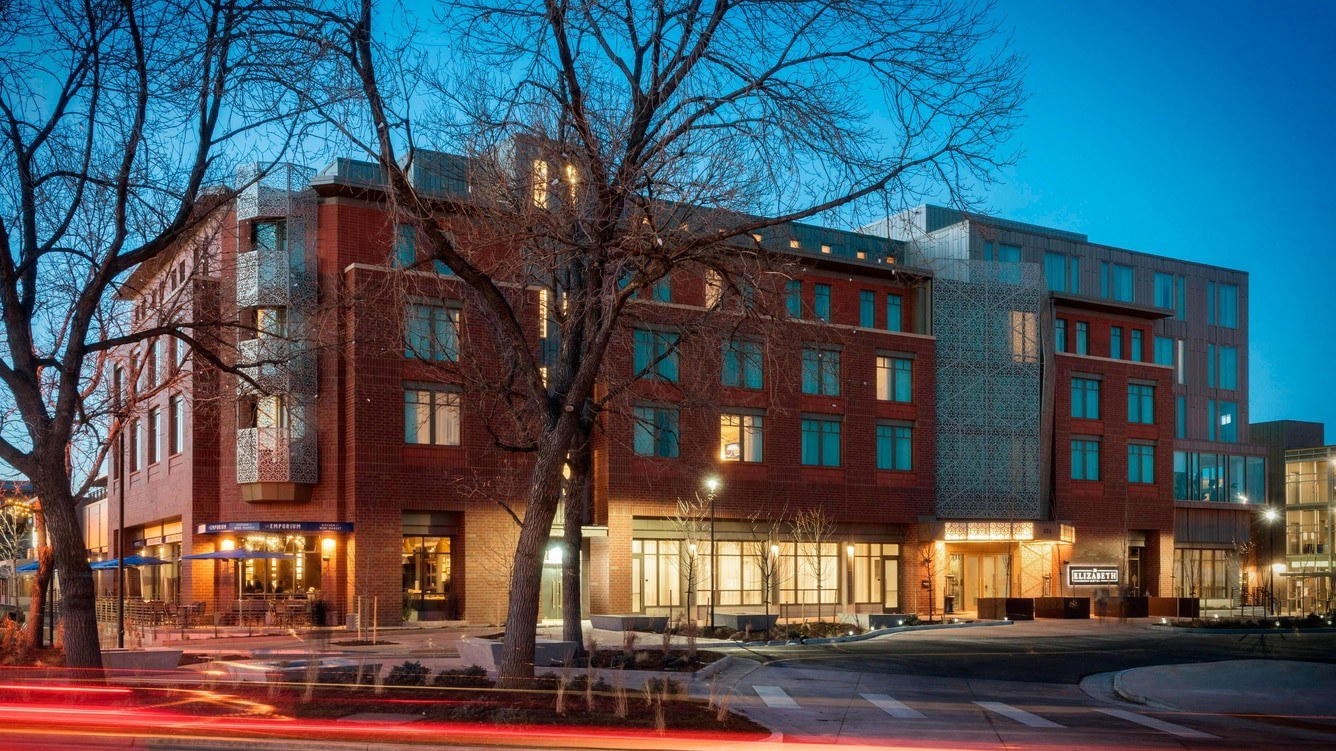
Bars in Fort Collins
All bars in Fort Collins →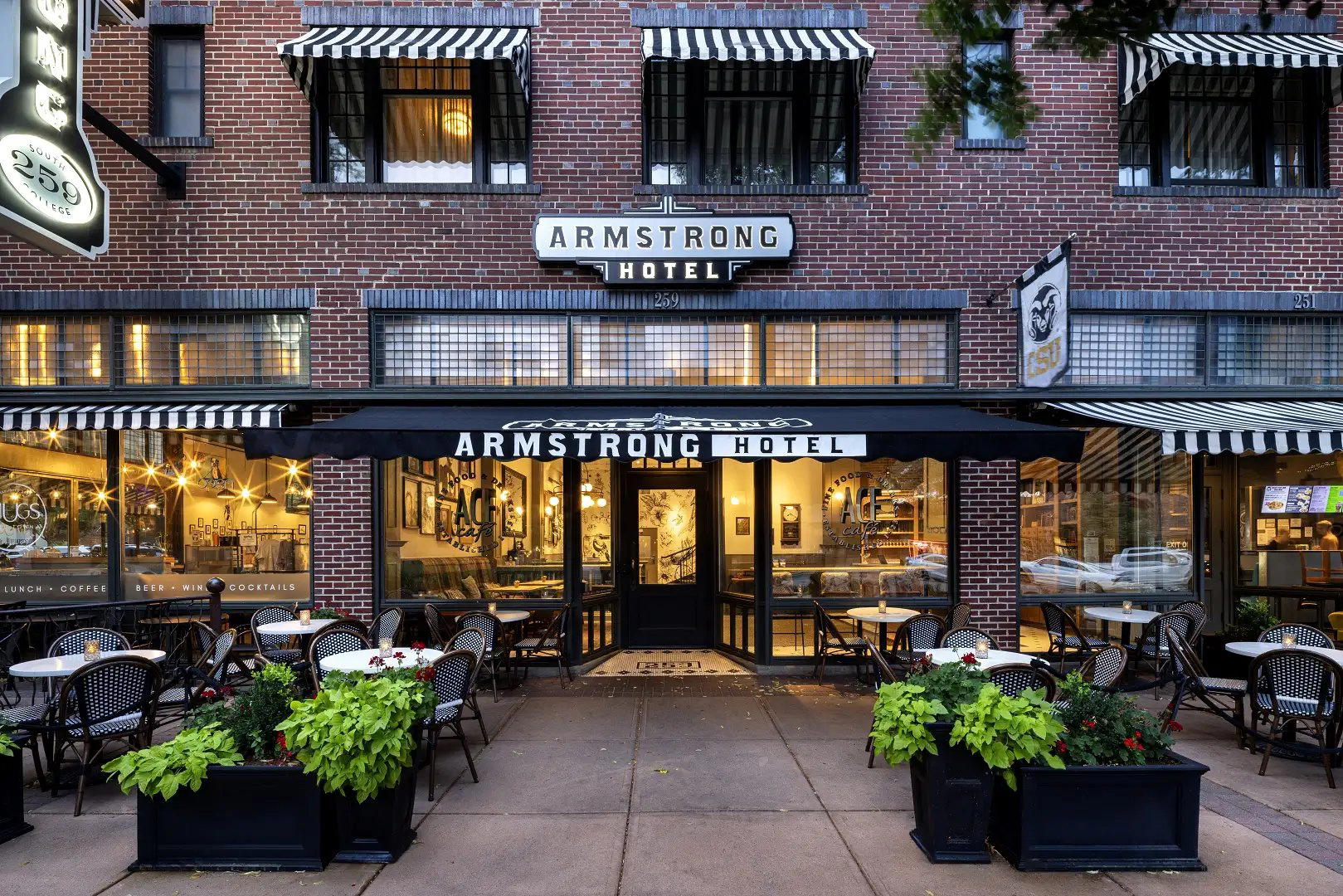

Details
- Classic
- Cozy
- Elegant
- Historic
- Romantic Getaway
- Business Trip
- Weekend Escape
- Historic Building
- Wi Fi
- Spa
- Restaurant
- Room Service
- Concierge
- Laundry Service
- Meeting Rooms
- Bicycle Rental
- Street Scene
- Wheelchair Accessible
- Elevator
- Step Free Entrance
- Accessible Parking
Charming and eclectic historic atmosphere with stylish decor, cozy lobby, speakeasy lounge vibe, though some street noise in downtown location mitigated by white noise machines.