Ten Thousand Waves
Ten Thousand Waves occupies a distinctive position in American spa culture: a Japanese mountain-house concept built into the pinon-covered hillside above Santa Fe, where high-altitude desert light and architectural restraint combine to create something the American Southwest rarely produces. The bathhouses, lodging, and outdoor soaking pools draw from a specific Japonisme tradition, not a generalized wellness formula.

Pearl is the En Primeur Club membership app — saves, bookings, and concierge access live there. Same editors, same standards.
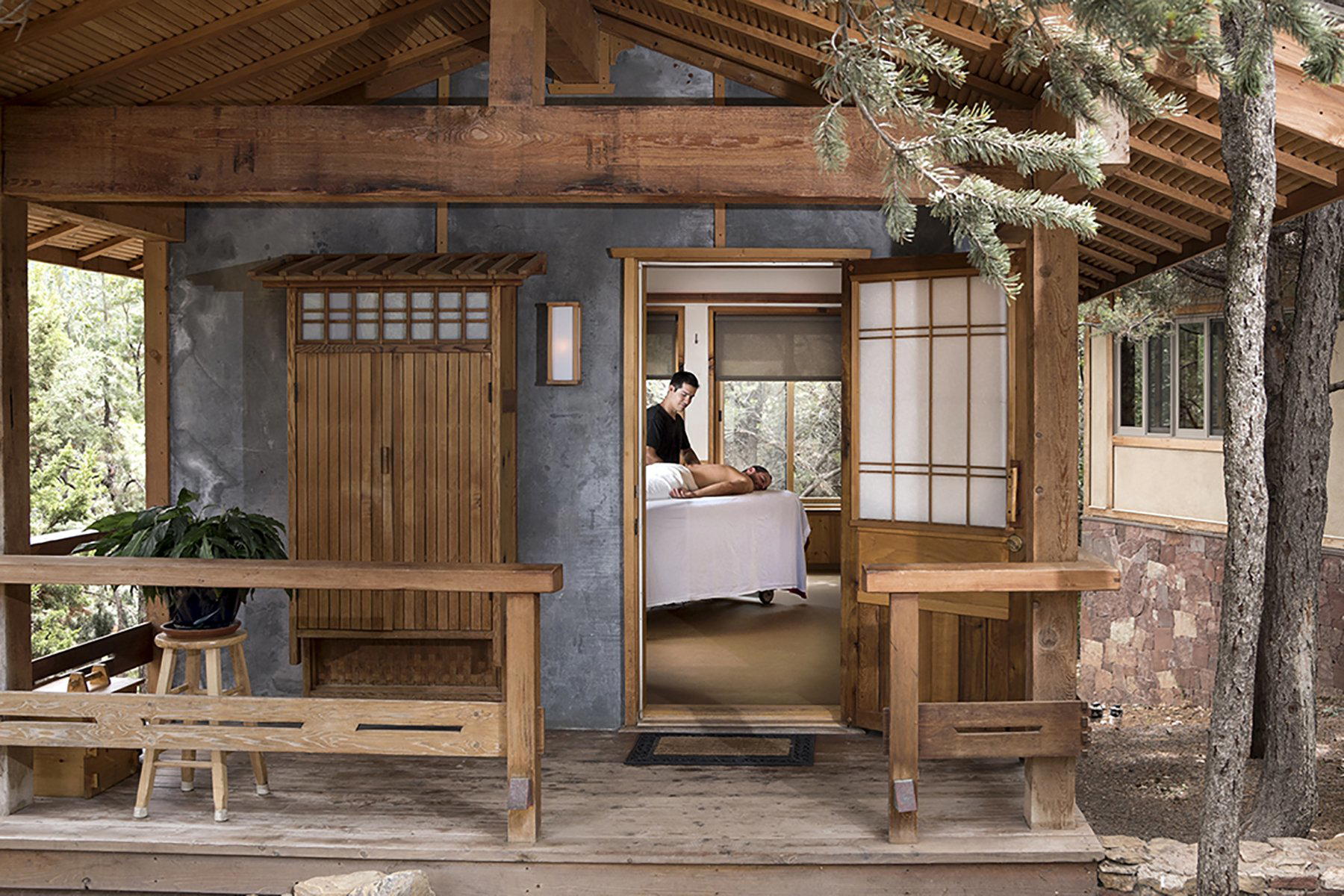
Mountain Architecture and the Aesthetic Logic Behind It
The drive up Artist Road from central Santa Fe already signals a shift in register. The high-desert scrub thins, the elevation climbs, and by the time the parking area appears, the city below feels genuinely remote. Ten Thousand Waves occupies a site on the southern slopes of the Sangre de Cristo Mountains, at roughly 7,000 feet, where the light arrives at a particular angle that the Japanese mountain-onsen tradition would recognise — not as accident, but as the entire point. The architecture at Ten Thousand Waves is not a gesture toward Japanese aesthetics. It operates from a more considered position: timber joinery, stone pathways worn smooth, structures that sit low against the hillside rather than imposing on it. The property was developed over decades, beginning in the early 1980s, which means the landscaping has had time to grow in around the buildings rather than look recently installed. This matters more than most spa architecture decisions. A pinon pine that has grown against a cedar-post wall for thirty years reads differently than one placed strategically at opening.
The outdoor soaking pools, which range from communal to fully private, are positioned to interact with the site rather than dominate it. Steam rising from hot mineral water against a backdrop of juniper and desert sky is a visual idiom that has become associated with this property specifically — and it works because the architecture does not compete with the landscape for attention. Compare this to properties like Ambiente, A Landscape Hotel in Sedona, which also deploys a terrain-first design philosophy in the Southwest, or Amangiri in Canyon Point, where concrete and canyon geology are placed in deliberate conversation. Ten Thousand Waves works from a softer, more timber-heavy vocabulary, but the underlying discipline is similar: build to the site, not against it.
The Onsen Tradition Translated to New Mexico
Japanese onsen culture is structured around specific principles, water temperature, communal bathing etiquette, the relationship between the body and outdoor elements, and these principles do not translate automatically into American contexts. What typically gets lost in translation is the patience embedded in the original format: the idea that you arrive, you slow down, you stay for several hours, and the architecture supports that pace. Ten Thousand Waves has spent four decades refining a version of this structure that reads as authentic rather than themed. The private tub facilities, the communal pools, and the treatment rooms are arranged to encourage a sequence rather than a transaction. You move through the property in a way that accumulates experience rather than simply consuming a service.
This places Ten Thousand Waves in a different category than resort spas that append Japanese-adjacent treatment names to otherwise standard wellness programming. The comparison set here is closer to properties like Canyon Ranch Tucson in Tucson, which operates as a destination rather than an amenity, or Post Ranch Inn in Big Sur, where landscape integration is itself the primary product. Among Southwest-specific options, it occupies a tier defined by concept discipline and long operating history rather than room count or brand affiliation.
The Lodging Component: Houses on the Hill
The accommodation at Ten Thousand Waves, known as Izanami's houses and individual guesthouses, extends the architectural logic of the bathhouse into overnight formats. The structures sit dispersed across the hillside, separated enough to avoid the corridor-hotel effect while maintaining proximity to the soaking pools. The design language across the guesthouses draws from sukiya-zukuri, the Japanese domestic building tradition associated with tea houses and retreating spaces, rather than the resort suite vocabulary that dominates American luxury lodging.
This positions Ten Thousand Waves differently from properties where the spa is the secondary offering. Here, the bathhouse is the anchor and the lodging is organized around access to it. Properties like Blackberry Farm in Walland or SingleThread Farm Inn in Healdsburg operate from a similar logic, where a central concept (farm-to-table sourcing, in those cases) organizes every other decision including lodging. The parallel is instructive: guests at Ten Thousand Waves are not primarily choosing a room, they are choosing a format.
Santa Fe as the Right Container for This Concept
Santa Fe's art-and-craft culture, its long history of cross-cultural exchange between Pueblo, Spanish colonial, and Anglo traditions, and its tolerance for alternative design vocabularies created the conditions that allowed a Japanese onsen concept to take root here in the early 1980s and persist with credibility. A property like Ten Thousand Waves would read differently sited in, say, suburban Phoenix or coastal Florida. The specific altitude, the specific light, the specific cultural permissiveness of northern New Mexico are load-bearing elements of the concept, not background detail. Our full Santa Fe County restaurants guide covers the broader dining and hospitality context for the region, which shares this same cross-cultural depth.
The city's position as a creative community with a high concentration of artists, architects, and designers also means that the aesthetic decisions made at Ten Thousand Waves are received by a locally informed audience. This is not a destination that relies on visitor ignorance of design to succeed. It competes on its own terms in a market where its guests often have significant reference points for both Japanese bathing culture and Southwestern architecture.
Planning a Visit
Ten Thousand Waves is located at 21 Ten Thousand Waves Way, Santa Fe, NM 87501, on the upper end of Artist Road, roughly fifteen minutes from the Plaza by car. The property operates at high elevation and in a climate where temperatures fluctuate significantly between day and night, which makes outdoor soaking in cooler months a genuine atmospheric experience rather than a concession. Reservations for private pools and treatment services are strongly advised, particularly on weekends and during Santa Fe's shoulder seasons in spring and fall when the city draws concentrated visitor traffic. Guests staying in the on-site lodging gain easier access to early-morning pool availability, which is the quieter end of the daily operating window. The property does not operate as a walk-in convenience; treating it as a half-day or full-day commitment is consistent with the format's intent.
Quick Comparison
| Venue | Price | Awards |
|---|---|---|
| Ten Thousand WavesThis venue (the venue you are viewing) | Not listed | Not listed |
| Aman New York | Not listed | 3 Michelin Keys · World's 50 Best #87 |
| Amangiri | $1,000–1,500 | 3 Michelin Keys · World's 50 Best #45 |
| Hotel Bel-Air | $750–1,000 | 3 Michelin Keys · World's 50 Best #57 |
| The Beverly Hills Hotel | Not listed | 3 Michelin Keys · World's 50 Best #65 |
| The Carlyle, A Rosewood Hotel | $1,500–2,500 | 2 Michelin Keys · World's 50 Best #64 |
Continue exploring
More in Santa Fe
Hotels in Santa Fe
All hotels in Santa Fe →
Details
- Romantic
- Quiet
- Scenic
- Rustic
- Intimate
- Romantic Getaway
- Wellness Retreat
- Anniversary
- Destination Spa
- Spa
- Hot Tub
- Mountain
Serene and tranquil with a Japanese sense of simplicity and natural beauty amid piñons and junipers.