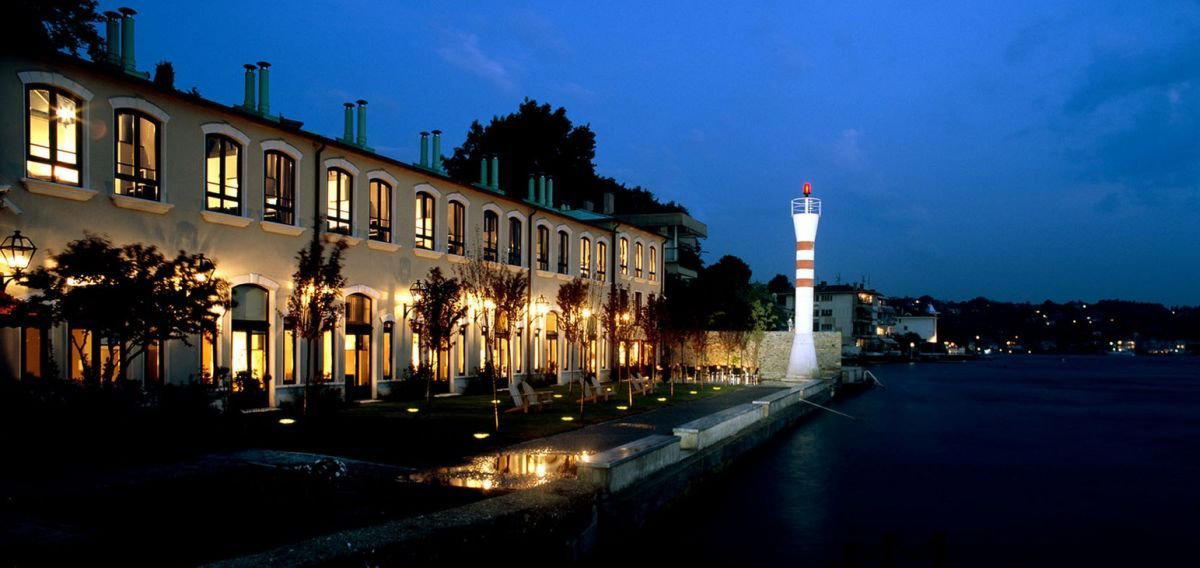
Positioned on the Asian shore of the Bosphorus in Çengelköy, Sumahan on The Water occupies a converted Ottoman distillery with direct water frontage that few Istanbul properties can match. The setting places guests on a quieter, residential stretch of the strait, removed from the congestion of the European side, while keeping the city's skyline as a constant backdrop. It is among the handful of Istanbul hotels where the Bosphorus is not a view but a threshold.

Pearl is the En Primeur Club membership app, where members save venues, book tables and use the concierge.
The Asian Shore, the Strait, and What Proximity to Water Actually Means
Approaching Sumahan on The Water by boat, which is how the property is leading reached, the Bosphorus does something it rarely does from a hotel terrace: it becomes immediate rather than decorative. The building sits at the water's edge in Çengelköy, on Istanbul's Asian side, in a neighbourhood defined by wooden yalıs, local tea gardens, and a pace that the European shore largely abandoned decades ago. This is not the Istanbul of Sultanahmet's tourist circuits or Beyoğlu's late-night density. It is the city as residents on the Asian bank have always known it: quieter, greener, and oriented toward the water rather than performing for it.
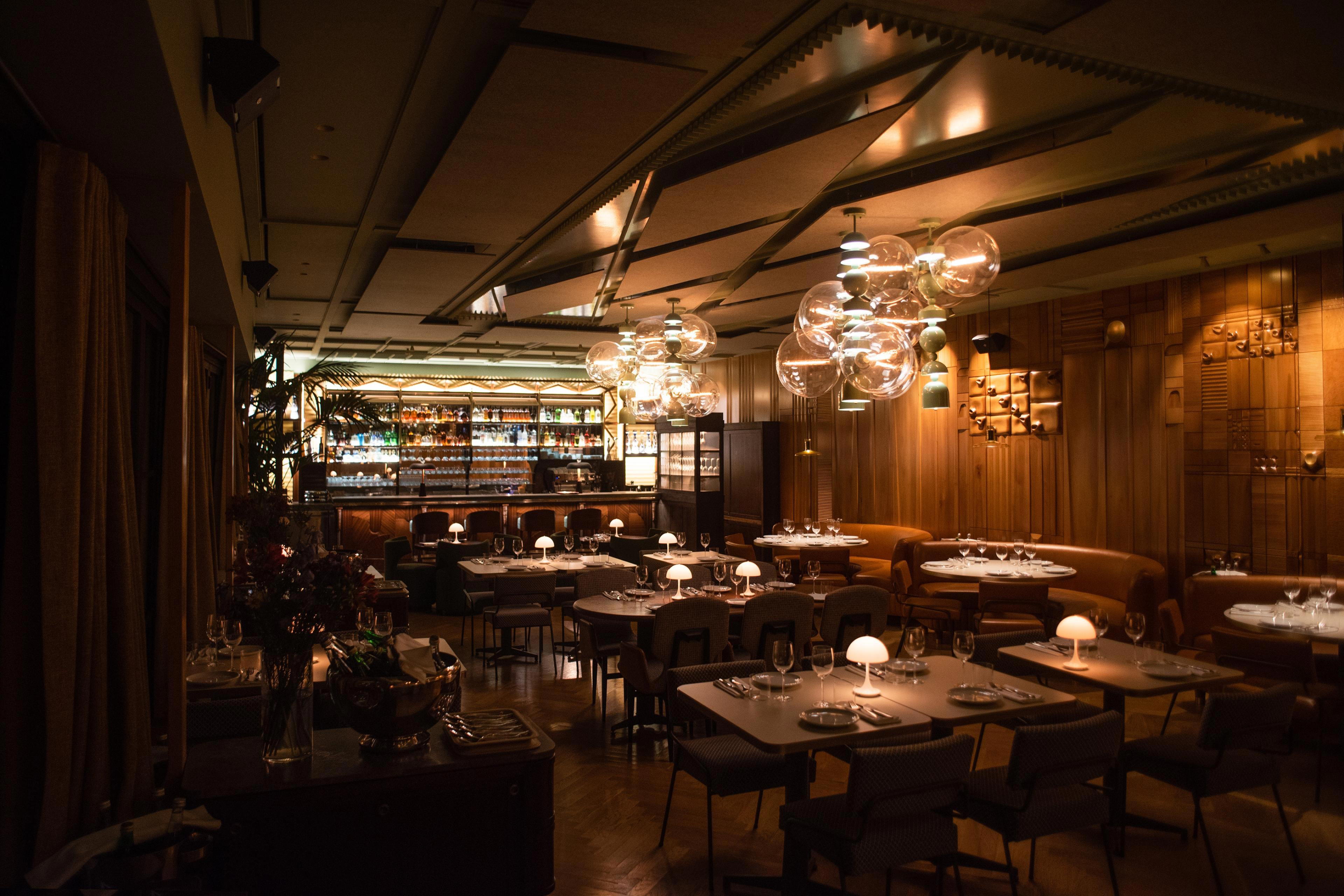
The property itself is a converted Ottoman-era distillery, a building type with almost no equivalent in Istanbul's hospitality stock. The industrial bones of the original structure have been retained rather than erased, which gives the interior a material specificity that generic luxury conversions rarely achieve. Stone, timber, and the footprint of a working building sit alongside the expectations of a contemporary hotel, and the tension between those two things is what makes the physical experience worth noting.
The Ritual of a Bosphorus Meal
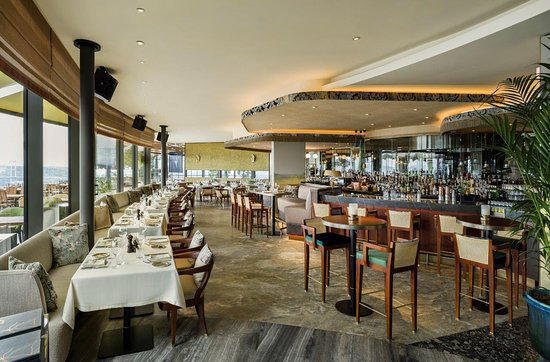
Dining at a Bosphorus-facing property carries its own set of conventions in Istanbul, and Sumahan fits within a tradition that runs from the old yalı households through to the contemporary waterfront restaurants on both shores. The meal is not rushed. The strait sets its own tempo: ferries crossing mid-channel, tankers moving south toward the Marmara, the light shifting off the water through a long summer evening. These are not incidental details. They are the pacing mechanism for a dinner that would feel abbreviated anywhere else.
Turkish dining culture at this level tends to operate through accumulation rather than sequence. Mezes arrive in clusters, conversation expands around the table, and the main course is less a destination than a midpoint. The format rewards unhurried guests, and the waterfront setting reinforces that unhurriedness structurally. Properties positioned directly on the Bosphorus, as Sumahan is, tend to attract guests who understand this rhythm, which shapes the atmosphere of the dining room in ways that no interior design decision could replicate.
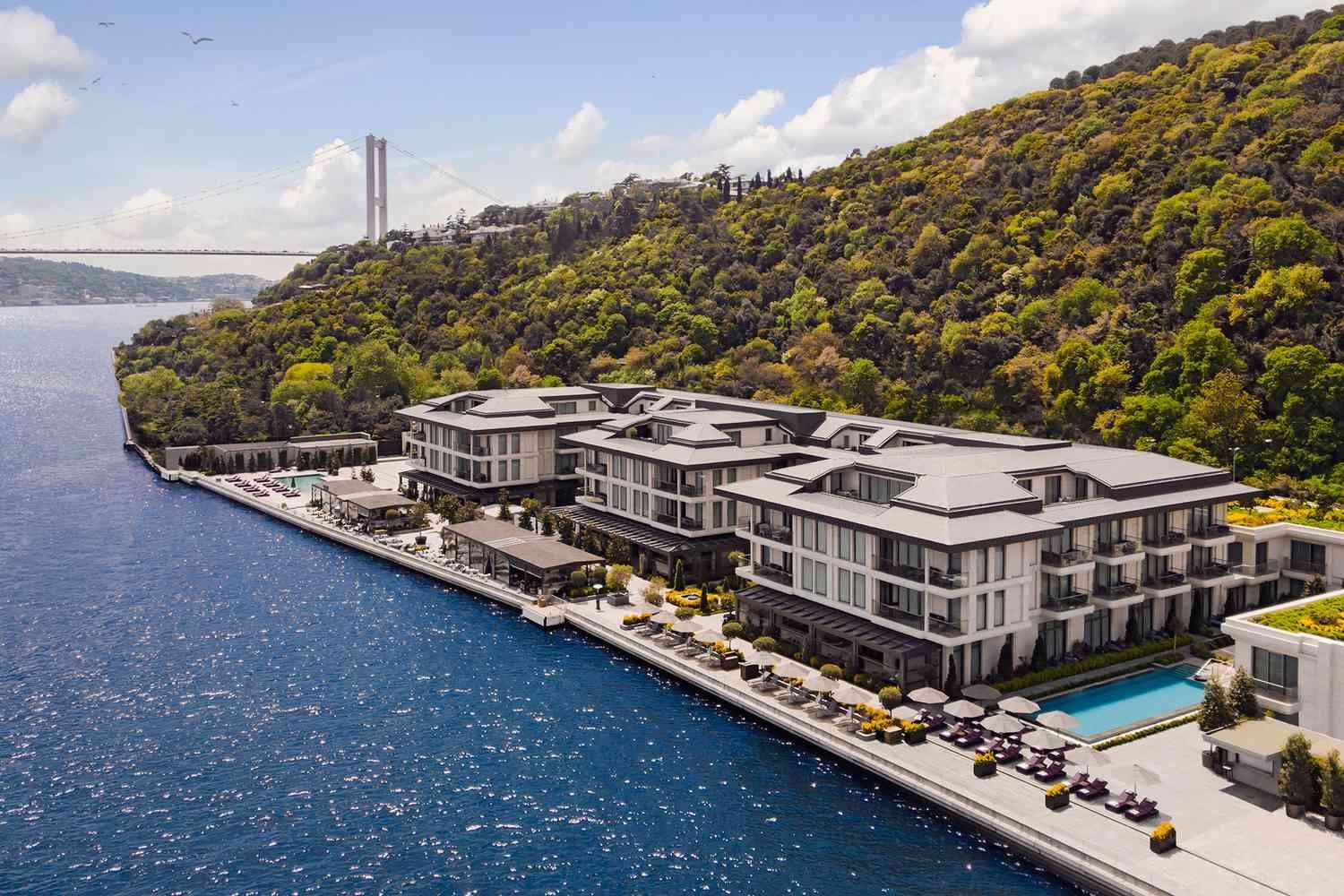
Istanbul's waterfront hotel dining falls broadly into two categories: the large international properties on the European side, where the restaurant is one amenity among many, and smaller, more architecturally specific places where the dining experience is inseparable from the building and its position. Sumahan sits in the second category. Comparable properties in terms of positioning and scale include Ajia, also on the Asian shore, which operates a similarly intimate waterfront format. The contrast with the European side's larger operations, including the Four Seasons at the Bosphorus and Çırağan Palace Kempinski, is not merely one of size but of orientation: those hotels face the water from a position of scale; Sumahan and its Asian-shore peers are embedded in it.
Çengelköy as Context
The neighbourhood matters as much as the building. Çengelköy sits between Kuzguncuk and Kandilli on the Asian bank, in a residential corridor that has retained its architectural character more consistently than comparable European-side waterfront areas. The local rhythm includes morning markets, established pastry shops, and a ferry connection to Beşiktaş and Eminönü that makes the European city accessible without requiring road crossings through the Bosphorus tunnel or bridge traffic. Guests who stay on the Asian side for multiple nights often describe a recalibration of how they understand Istanbul's geography: the city becomes less linear once the strait is part of your daily movement rather than an obstacle.
For Istanbul's broader hotel set, the Asian shore represents a distinct positioning choice. Properties like 10 Karakoy, Address Istanbul, and AJWA Sultanahmet operate on the European side, within walking distance of the city's primary historical sites. Sumahan trades that proximity for something harder to quantify: the quality of being across the water rather than in the middle of it. Both are legitimate choices, but they describe different Istanbul experiences.
Seasonal Considerations
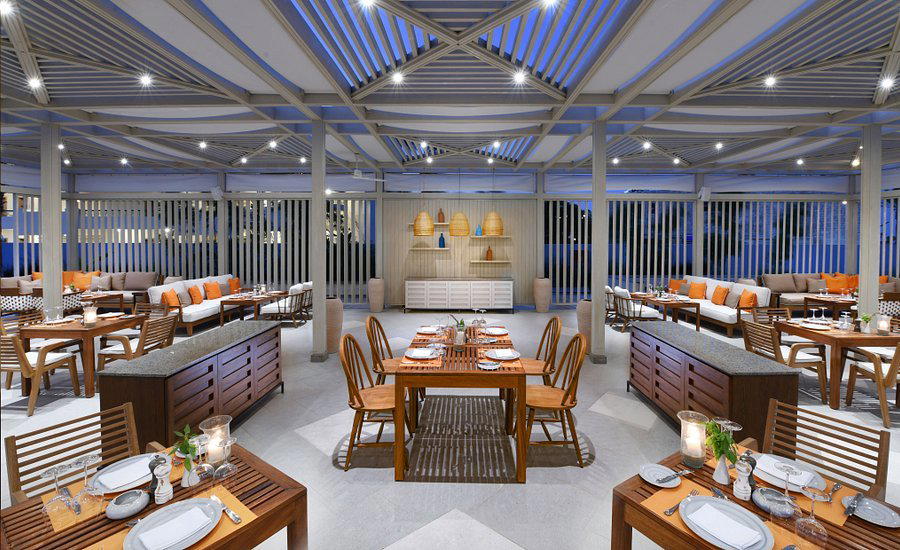
Late spring through early autumn is when the Bosphorus-facing position delivers most fully. The water's surface in May and June carries the last of the cooler Pontic air before Istanbul's summer heat settles in, and long evenings on an outdoor terrace in that period represent one of the city's more reliable pleasures. July and August concentrate the most visitors across Istanbul's hotel stock, which affects both rates and availability at properties with limited room counts. Shoulder season, particularly September and October, tends to offer the most comfortable temperatures alongside lighter booking pressure, and the light on the water in those months is a different quality than midsummer. Guests planning specifically around the dining experience and terrace access should weight their visits toward these months.
Istanbul's hotel market across all seasons has expanded considerably in recent years. The pipeline of new properties has been concentrated on the European side, with several international brands opening or repositioning in Beyoğlu and Beşiktaş. This makes the Asian shore options, including Sumahan, a smaller and more stable cohort by comparison. For travellers comparing Istanbul against other Turkish destinations, the contrast is worth noting: properties like MACAKIZI BODRUM in Bodrum or Alavya in Alaçatı offer comparable intimacy in coastal settings, but Istanbul's specific layering of water, urban density, and historical continuity is not replicable elsewhere in Turkey.
Planning a Stay
Reaching the property by private boat transfer or public ferry from Beşiktaş is the approach that makes the most sense spatially: arriving by road through the Asian side's traffic, while practical, misses the entry sequence that the water provides. The ferry from Beşiktaş to Çengelköy runs on regular timetables and takes under fifteen minutes, which also makes day-trip logistics from the European side direct for guests staying elsewhere. Those staying at the property should plan dinner reservations in advance for peak season months, as waterfront tables at properties of this scale book at a different rate than the room count alone would suggest. For further context on where Sumahan fits within Istanbul's hotel and dining options, the EP Club Istanbul guide covers the full range of the city's current hospitality stock across both shores.
Guests comparing options at the boutique end of Istanbul's market might also consider Bebek Hotel by The Stay on the European shore, or Aliée Istanbul for a Beyoğlu-based alternative. For those extending into other regions, Argos in Cappadocia and Hu of Cappadocia represent the same category of architecturally specific conversion hotels in a very different Turkish setting.
Peers Worth Knowing
Comparable options at a glance, pulled from our tracked venues.
| Venue | Price | Awards |
|---|---|---|
| Sumahan on The WaterThis venue (the venue you are viewing) | $200–300 | Not listed |
| Çırağan Palace Kempinski Istanbul | Not listed | Michelin Selected · La Liste Top Hotels |
| Fairmont Quasar Istanbul | Not listed | Michelin Selected · Forbes Recommended |
| Four Seasons Hotel Istanbul at Sultanahmet | Not listed | 3 Michelin Keys · La Liste Top Hotels |
| Four Seasons Hotel Istanbul at the Bosphorus | Not listed | 1 Michelin Key · La Liste Top Hotels |
| JW Marriott Hotel Istanbul Marmara Sea | Not listed | Michelin Selected · Forbes 4-Star |
Continue exploring
More in Istanbul
Hotels in Istanbul
All hotels in Istanbul →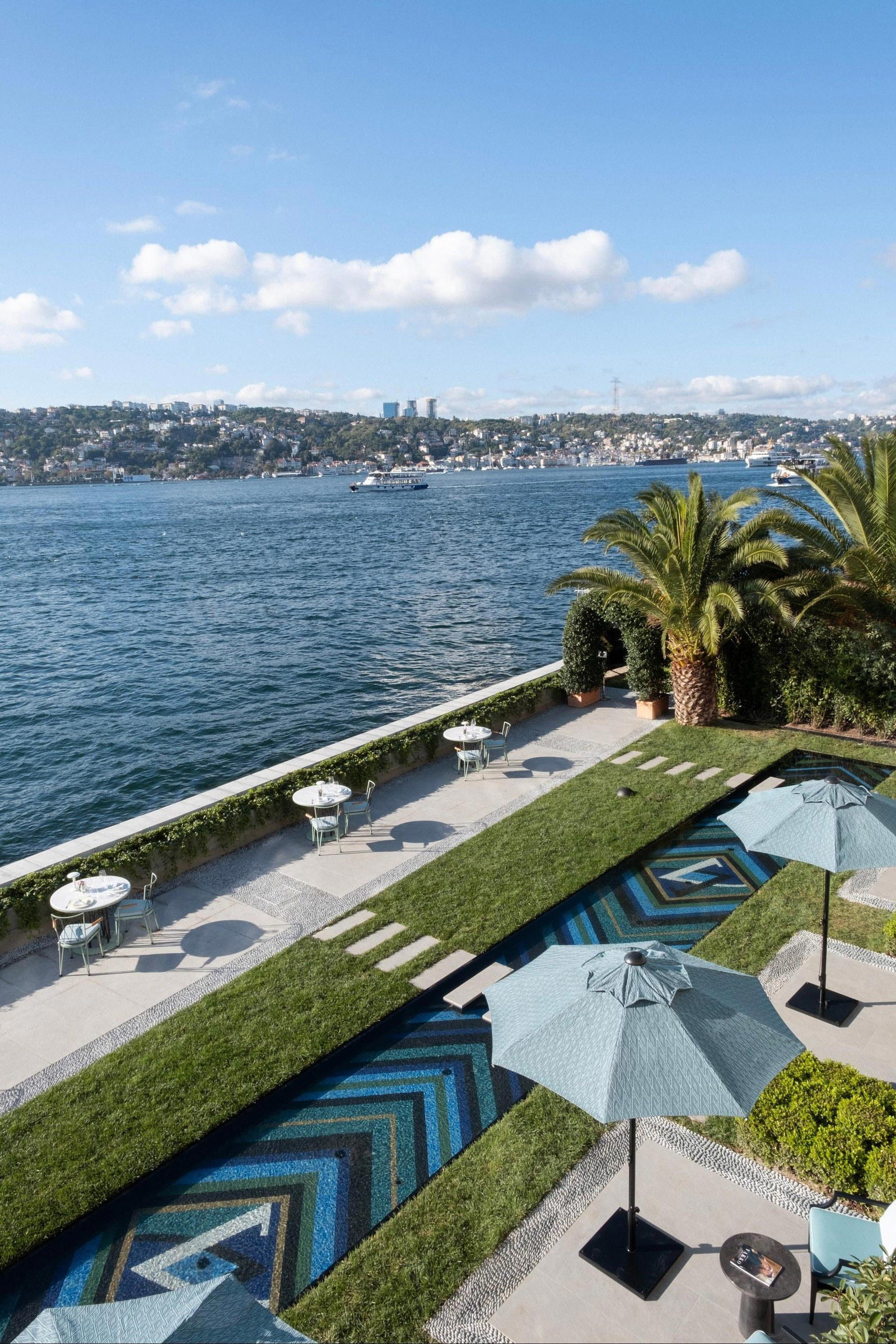
Bars in Istanbul
All bars in Istanbul →
Details
- Romantic
- Elegant
- Sophisticated
- Intimate
- Scenic
- Honeymoon
- Romantic Getaway
- Anniversary
- Weekend Escape
- Waterfront
- Historic Building
- Panoramic View
- Terrace
- Wi Fi
- Spa
- Fitness Center
- Room Service
- Concierge
- Restaurant
- Waterfront
- Skyline
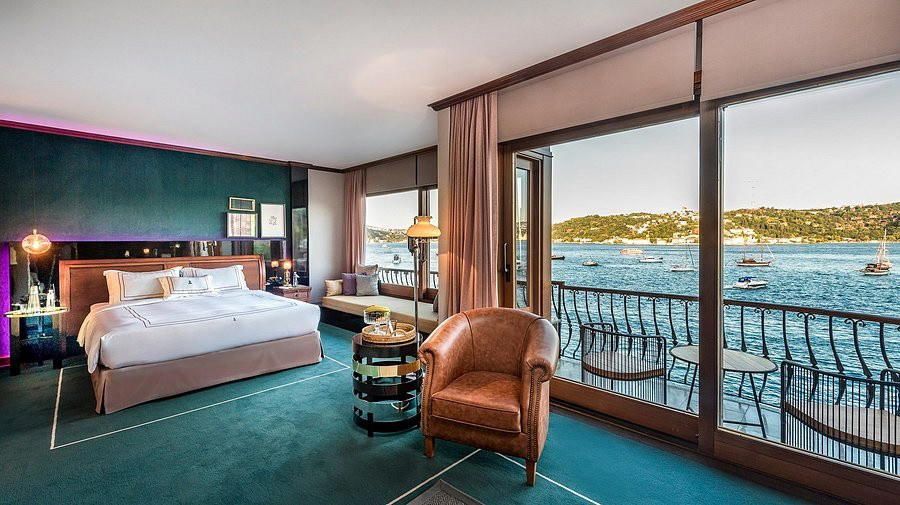
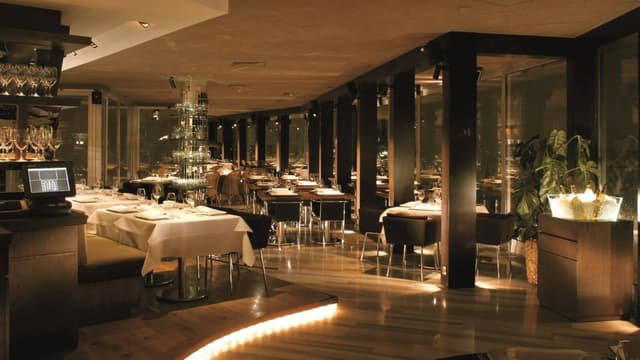
Elegant and serene with blues, greens, and grays mirroring the Bosphorus, featuring natural light, fireplaces, and a tranquil waterfront atmosphere.